
Private-door entry
For a residential lockout, the locksmith confirms authority and assesses the flat entrance. The commercial unit’s cooperation with the route does not authorise work upstairs.
Door register · timed access · shared stairs · secure close
For a home above commercial premises, a locksmith visit has to fit through the building as well as solve the lock problem. Identify every controlled doorway on the route, arrange the delivery or contractor window and make clear which occupier can authorise the final work.
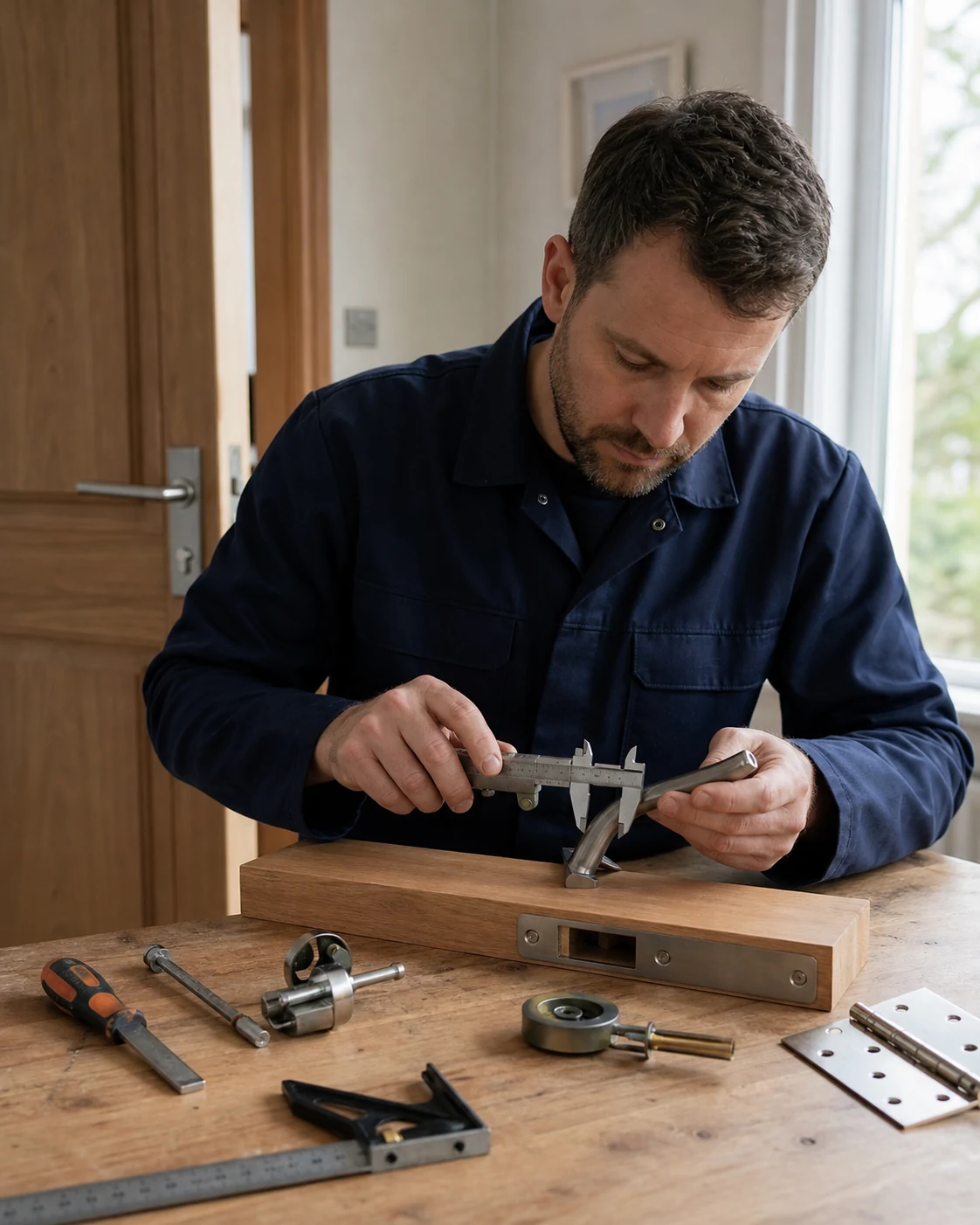
Create a door register
A Covent Garden property may have a public-facing commercial entrance, a staff or delivery door, a shared hallway and a private flat entrance. A report that simply says “the downstairs lock” can point to more than one asset. Walk through the route on paper. Give each door a plain name, state who normally uses it and identify the person or organisation responsible for authorising changes.
This register is useful even when only one lock has failed. The locksmith needs to reach it lawfully, carry tools without obstructing a stair and leave every intervening entrance secure. If a delivery corridor is the agreed route, confirm when it is available and who will meet the engineer. Never share sensitive codes more widely than necessary; use the building’s authorised handover method. Where a door is powered or linked to a fire or access system, flag that fact without assuming ordinary lock work covers the connected system.
| Door reference | Normal controller | Booking detail to settle |
|---|---|---|
| Public commercial entrance | Business owner or duty manager | Whether work can occur during trading and how customers are diverted |
| Delivery or service door | Premises or building operations contact | Permitted access window, key collection and safe tool route |
| Shared residential street door | Freeholder or managing agent | Authority for mechanical change and arrangements for other residents |
| Common stair door | Responsible building party | Fire-door, closer or access-control information already held |
| Private flat entrance | Resident, owner or authorised landlord | Evidence of access rights and approval for opening or replacement |
Prepare the working window
Delivery access may be tightly managed, while the resident is available at a different time. Coordinate both before confirming the appointment. Tell the commercial occupier that an engineer will be carrying tools through the agreed route, and make sure no stock, refuse or deliveries block the door. In shared stairs, protect residents’ passage and do not leave a fire or security door wedged open.
At the target door, clear furniture and stored items without taking off handles, covers or escutcheons. Keep all keys and broken pieces. If the door has been damaged, follow any police or insurer instructions before disturbing evidence. Photographs can show the whole leaf, the edge and frame, but they cannot prove the internal condition or promise a particular opening method.
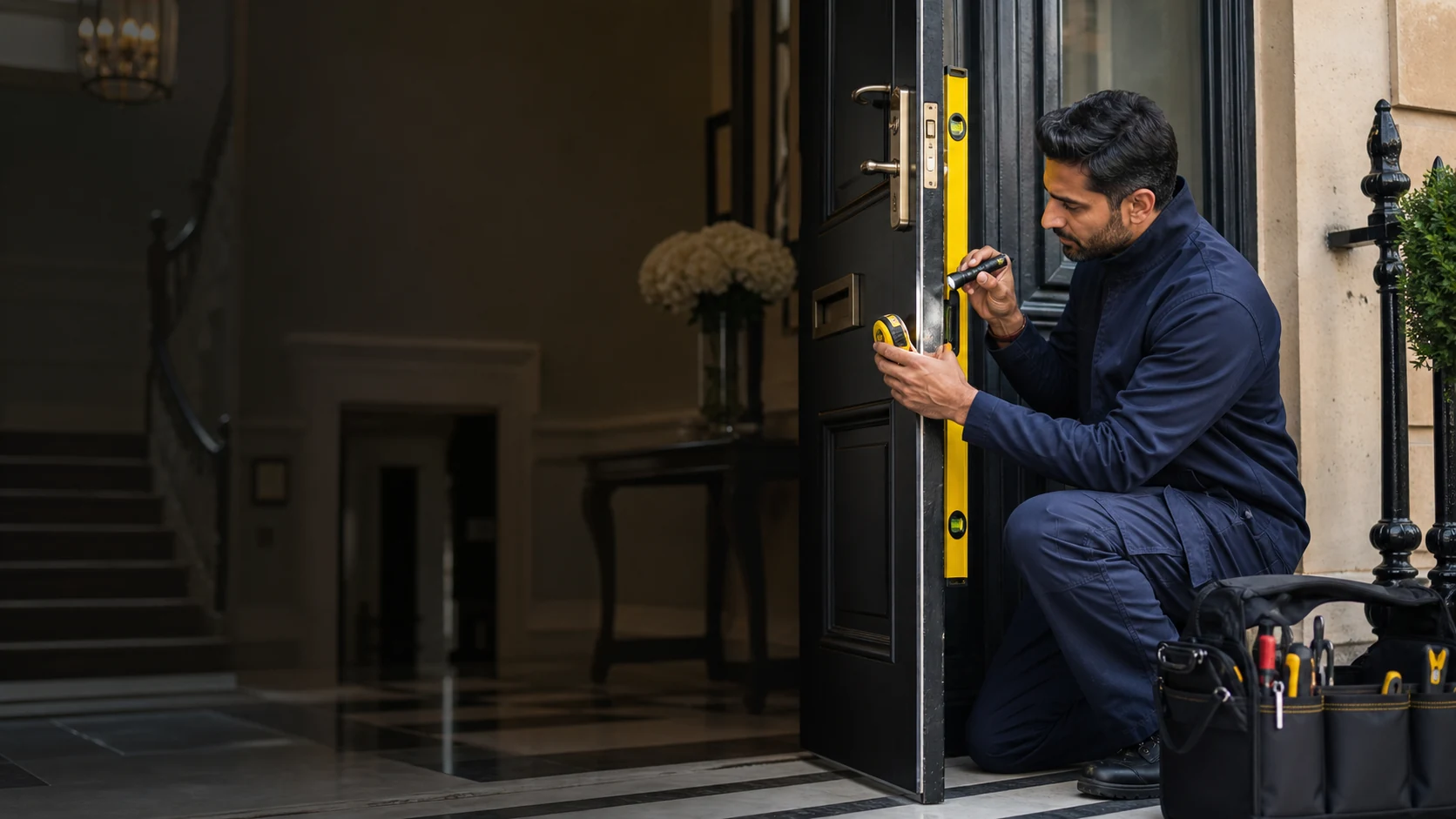
Read the symptom at the right door
| What has been observed | What to do now | Who may need to be involved |
|---|---|---|
| Flat key will not turn after entering the building | Stop applying force, keep the key and confirm whether the private door is open or shut | Resident or owner for the flat-door locksmith scope |
| Shared street door does not latch | Notify management and prevent informal packing or adjustment by occupiers | Building manager, locksmith and possibly a door specialist |
| Service entrance cannot be secured | Keep an authorised staff member present and control the route | Business contact plus the owner of the entrance hardware |
| Handle lifts but a multipoint door will not lock | Do not force the key or handle; report operation with the door open only if safe | Authorised occupier and locksmith assessing the complete door system |
| Powered release sounds but door stays closed | Record the response without opening controls or repeating tests excessively | Building access-control contact and mechanical locksmith as appropriate |
| Entrance is damaged and will not close | Protect people, retain relevant evidence and request a defined securing plan | Locksmith, door repairer, glazing provider or insurer according to damage |
Service choices
For a residential lockout, the locksmith confirms authority and assesses the flat entrance. The commercial unit’s cooperation with the route does not authorise work upstairs.
Communal latching or key faults need building approval and consideration of every authorised user. A report should separate the lock from closer, frame and powered release.
Mechanical work can be planned around trading and delivery needs. The duty manager should be able to isolate the door from public use while work is underway.
Do not push the fragment deeper or use glue. Extraction may preserve the lock, after which operation and the reason for failure can be assessed.
Replacement follows confirmed dimensions, door condition, key needs and the relevant owner’s security requirement. Visible finish and old cut-outs also belong in the plan.
An urgent measure can restore controlled closure without pretending to be full reinstatement. Allocate permanent door, frame or decorative work to a named next step.
Quote the route as well as the lock
No price can be responsibly derived from the Covent Garden name alone. The quote needs the actual door, access window, method, labour, hardware and any associated damage. In a mixed-use building, waiting for keys or losing the agreed service route can materially change the practical visit, so disclose those arrangements early.
| Part of the scope | Input required | Written point to check |
|---|---|---|
| Building access | Entrance sequence, available hours, key collection and meeting person | What happens if an intermediate door or escort is unavailable |
| Fault assessment | Direct symptoms, door state, known hardware and visible damage | Whether diagnosis is included before a repair price is confirmed |
| Opening | Authority, lock condition and accepted approach | Approval required before any destructive method |
| Repair or replacement | Identified component, measurements, finish and key quantities | Specific parts, labour and operational checks included |
| Occupier coordination | Business interruption, resident passage and handover contacts | Who manages people and accepts the door at completion |
| Related repair | Frame, leaf, glazing, powered system and surface condition | Which work is excluded or assigned to another trade |
Ask for a changed-scope process. If examination reveals a different mechanism, hidden door damage or a non-mechanical fault, the authorised contact should receive the evidence, options and revised cost before extra work begins.
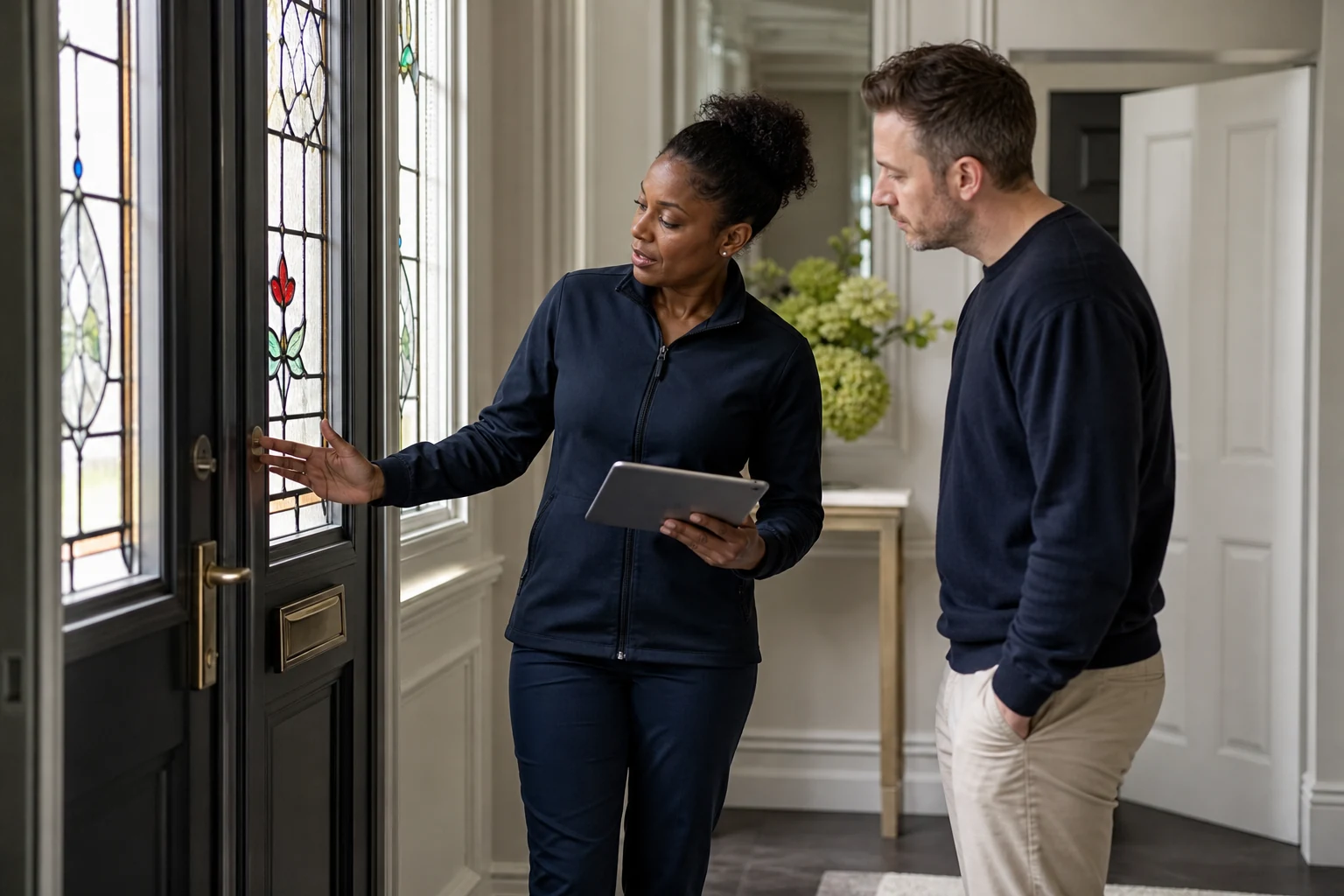
Covent Garden property context
Residential units above shops and hospitality premises can depend on narrow common routes. The business may unlock a ground-floor corridor while the landlord controls the main residential entrance and the tenant controls the flat. Put these permissions in the order the locksmith will encounter them. If one key holder cannot attend, arrange an authorised substitute rather than leaving the problem for the engineer to negotiate.
Delivery areas are designed around commercial operations, so their availability can change through the day. Confirm the specific contractor window and safe place for tool handling. Where access crosses customer space, the premises should manage people and keep the path clear. The locksmith should not be expected to guard stock, direct deliveries or decide whether a business can remain open.
For an older timber door, measurements and frame condition matter; for a multipoint door, alignment and the connected mechanism matter. Neither building age nor use identifies the component by itself. Send the evidence available and let the on-site assessment define what is repairable.
Secure closure and handover
Completion is more than testing the new key at the target. Check that intermediate doors are no longer held open, borrowed keys are returned and the authorised recipient understands the finished operation. For a shared entrance, management should communicate any key or use change to the affected occupiers through its normal channel.
The written handover should identify temporary measures, inaccessible areas and non-locksmith faults. If a business contact opened the route but a resident receives the flat keys, record those as separate events. Clear custody is particularly valuable when several shifts, tenants or contractors use the building.
Covent Garden locksmith FAQ
Arrange an authorised person for every controlled stage of the route. The commercial occupier may open downstairs, while the resident or owner authorises the private flat work.
Only with permission and during the agreed window. Confirm the route, key collection and safe handling area with the business or building contact.
Contact the managing agent or freeholder. Communal work can affect other residents and may involve closer, fire-door or access-control responsibilities.
Sometimes, depending on fragment position and lock condition. Keep both pieces and avoid glue, drills or improvised tools before assessment.
The locksmith needs a reasonable basis to confirm occupancy, ownership or management authority. Explain if identification is inside so verification can be planned.
That depends on the work area and door function. The business must keep customers, staff and deliveries away from tools and any unsecured entrance.
Only when the quote states them. Mechanical lock work, joinery, glazing, powered access and decoration may require separate scopes.
The locksmith should explain the new finding, proposed response, disruption and revised amount to the named decision-maker before continuing.
Nearby coverage
The nearby pages below address their own building and entrance arrangements.
Book every door on the route
Send the Covent Garden address, entrance sequence, available access time, observed lock problem and named person who will approve the work.
