
An intact decorative edge
Describe the visible coating and its junction with the wall. An apparently sound profile still needs suitability considered alongside the material and extent of the mark.
Maida Vale / PROPERTY CONDITION
A small decorative edge can need a precise brief.
Where a Maida Vale window reveal meets decorative trim, a narrow mark may cross more than one finish. Show the profile, the surrounding plaster and any visible looseness before asking for treatment. Removing growth should not be confused with restoring fragile detail or promising a uniform decorative result.
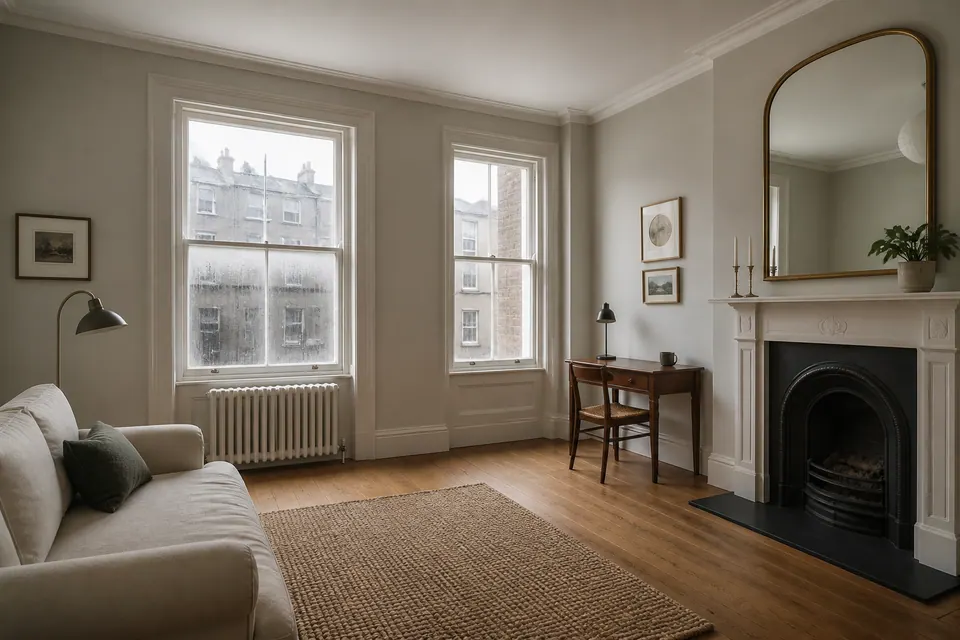
Profile · coating · delicate material
Maida Vale / ACCESS & PEOPLE
Describe the visible coating and its junction with the wall. An apparently sound profile still needs suitability considered alongside the material and extent of the mark.
Explain what can be seen without flexing or pulling the detail. Damage may affect the appropriate scope and should not be presented as something removal will automatically restore.
Show curtains, blinds or a window seat in the layout. Ask how access will be arranged before assuming that a fitting can be removed or protected as part of the surface visit.
Tenants can provide photographs and describe existing damage while checking permission for the proposed work. They should not need to manipulate decorative material to establish a stronger-looking case.
Landlords can supply any specification or repair information they hold. If the coating or profile material is unknown, say so rather than assuming a standard painted surface.
Homeowners should distinguish treating growth from restoration, stain covering and matching a previous finish. Ask which limitations may remain before arranging a decorative contractor.
02 / LOCATE THE ISSUE
Choose the room setting, then explain the material edge involved. The shape of a decorative feature can help locate the concern without establishing its cause or suitability for a particular method.
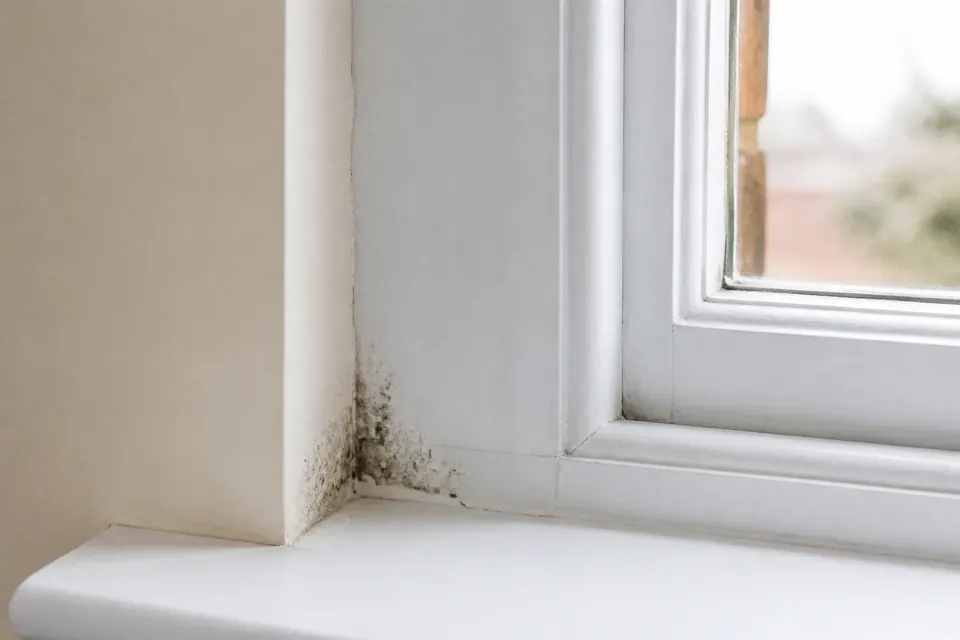
Include the moulding profile, frame and plaster in the wider image. A close view can then show the mark without hiding which surface it lies on. Do not test the edge to demonstrate looseness.
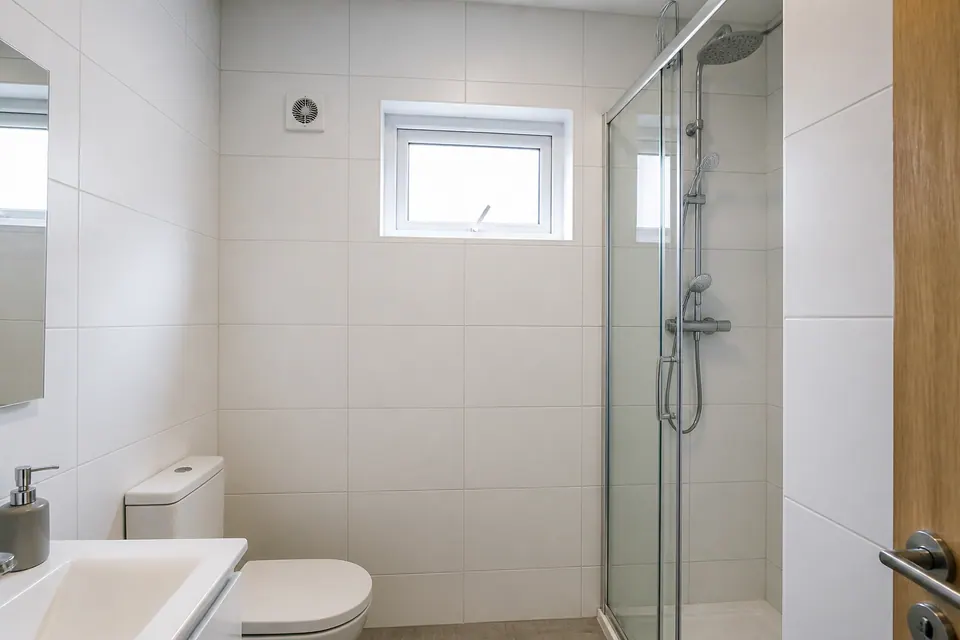
Identify the coating and any decorative or fitted edge separately from surrounding surfaces. Repeated wetness may be relevant, but a delicate component should not be treated as interchangeable with an intact painted ceiling.
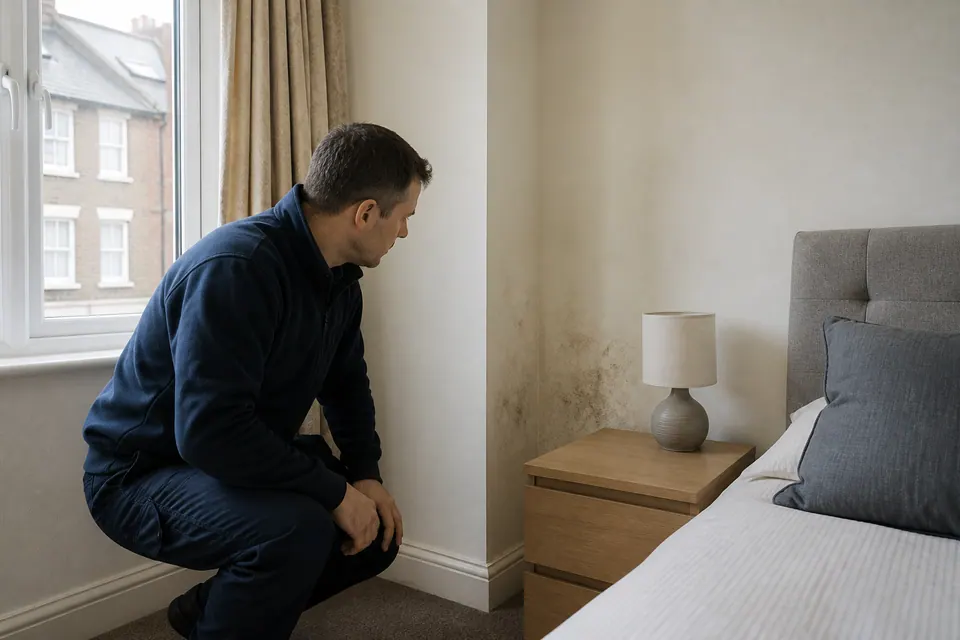
Show a blind, curtain fitting or seat that restricts the reveal. Access to the room does not necessarily provide reach to the full profile, and removal of fittings needs an agreed arrangement.
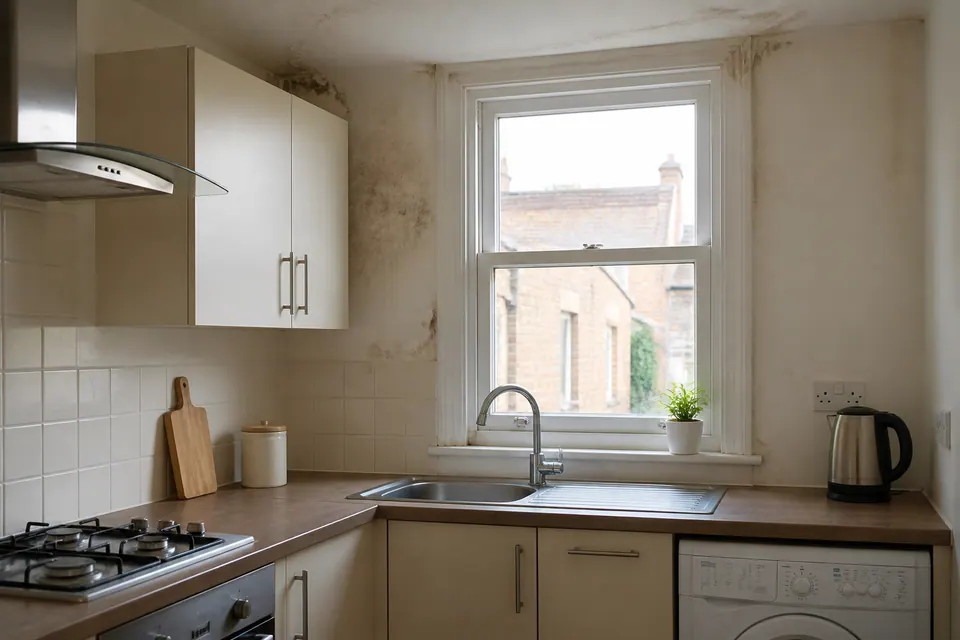
Distinguish trim, unit finish and adjoining wall where the mark crosses them. A uniform-looking colour does not establish that the materials beneath it are the same or suitable for identical work.
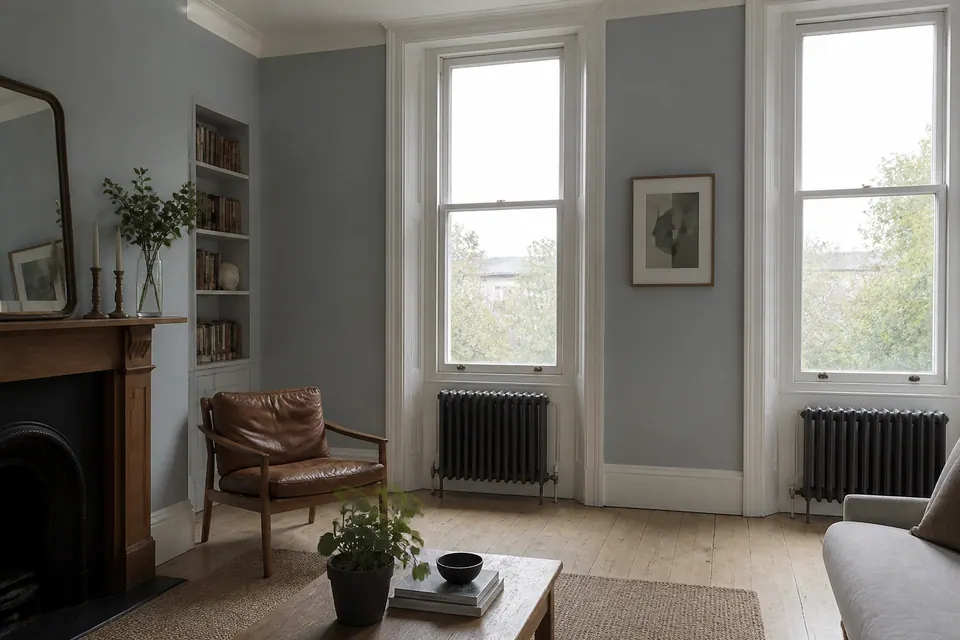
Photograph the detail within the elevation so its position and surrounding condition are clear. Describe damage as well as growth, keeping restoration of a profile outside an assumed removal result.
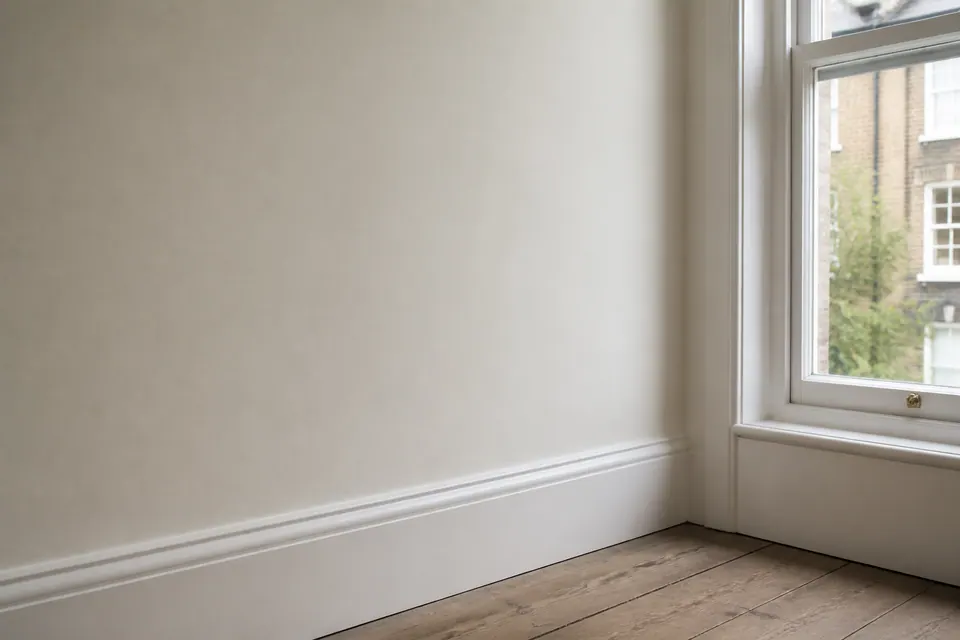
Explain where the visible change stops on each side of the junction. Loose coating, bare backing and an intact decorative edge can require different decisions even across a short distance.
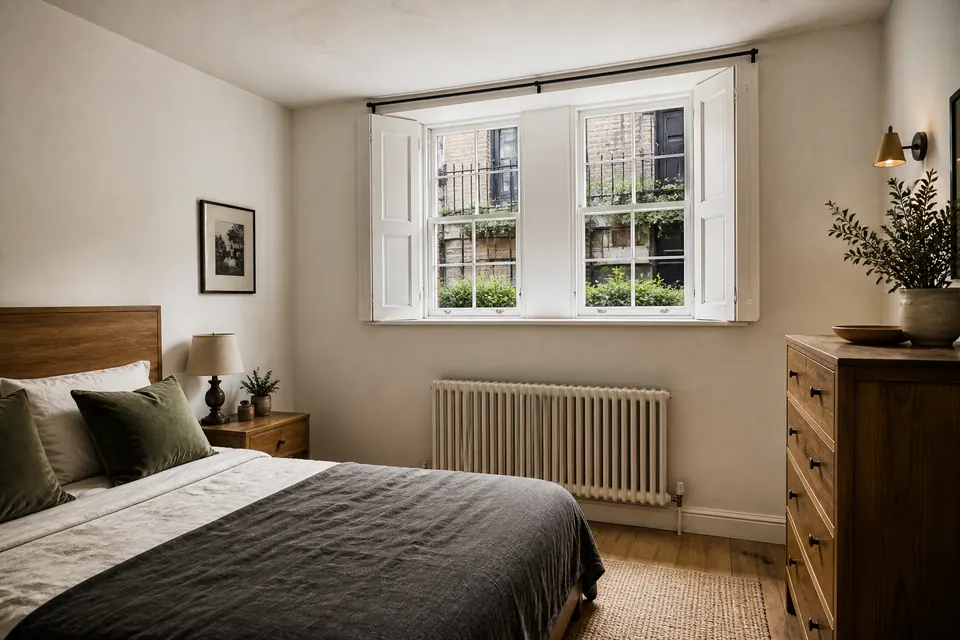
State what can be viewed without disturbing the fitting and what remains obscured. Do not remove trim or covered material solely to make the initial enquiry appear more complete.
Avoid promising yourself a matched finish from the photograph alone. The visible mark, the condition of the detail and the later decorative expectation are separate matters to clarify.
03 / SEPARATE THE QUESTIONS
A mark beside a profile can be described precisely while its moisture contributor remains uncertain. Keep the material detail and the suspected explanation separate in the enquiry.
| Visible issue | Possible contributing factor | What may need checking |
|---|---|---|
| Spotting between frame and reveal | Moisture near the window may contribute | Review the frame, coating and surrounding observations separately |
| Marks near a bathroom detail | Repeated wetting may be relevant | Consider the finish condition alongside ordinary room use |
| Staining after a recorded frame repair | Past or retained moisture may matter | Clarify the repair scope and the condition of adjacent material |
| A profile marks again after repainting | A contributor may remain unresolved | Review recurrence without treating a new coating as moisture repair |
Decorative restoration, frame repair, moisture investigation and replacement of fragile material need their own agreement where relevant. Surface removal should not be described as automatically achieving those tasks.
Mould concerns fungal growth, damp concerns excess moisture, and a damaged profile raises a material question. One decorative detail can involve all three without a single automatic solution.
| Question | Mould | Damp |
|---|---|---|
| What does the term describe? | Growth affecting the finish | Excess moisture in material or surroundings |
| Useful evidence | The outline across the trim and plaster | Known water history and observed moisture |
| How may they connect? | Growth can recur where moisture persists | Moisture can support growth without identifying a particular defect |
| What needs deciding? | Which finish is suitable for treatment? | Does the moisture question need further assessment? |
Maida Vale / THE PROPERTY BRIEF
Small dimensions do not remove finish limitations.
If the affected reveal includes decorative trim, identify the material where known and show how it meets the plaster. Explain any fixed furnishing that limits access. The enquiry should establish suitable treatment and realistic finish expectations without assuming that growth removal restores a fragile profile.
05 / QUOTATION, NOT GUESSWORK
The quotation should account for the finish, condition and access as well as the dimensions. A small suitable area may be considered from photographs, while fragile or uncertain material can require assessment. Do not assume decorative restoration is included because the affected strip is short.
See the main mould-removal service ↗| Scope | Quotation basis | Limit to clarify |
|---|---|---|
| An intact suitable accessible finish | Photographs may support a quotation | Identify the material and exact visible boundary |
| Several finishes or recurring marks | Assessment may be required | Separate the trim and plaster histories and conditions |
| Fragile profile or damaged backing | Specialist quotation may be needed | Clarify restoration or replacement separately from removal |
Ask for explicit inclusions and exclusions. Replacing trim, repairing its profile or matching a decorative finish should not be inferred from a mould-removal price.
06 / DIRECT ANSWERS
No. Material, fragility and access can matter as much as size. A clear photograph may support a quote, but an uncertain or damaged detail can require assessment.
Decoration is a separate decision and not a substitute for considering growth and moisture. Ask what condition must be clarified before another coating or cosmetic repair.
The position does not establish that conclusion. Record the recurrence and relevant water observations without assigning a cause based on the decorative feature alone.
Do not assume it. Explain the access limitation and agree any fitting-related preparation before the appointment, including who is responsible for it.
Follow the instructions for the selected method and circumstances. Ask about returning furnishings near the finish rather than using appearance or departure time as the only guide.
Describe that condition and ask about suitability. Replacement or restoration may need separate consideration rather than an assumption that cleaning can recover the component.
Their materials and condition need review. A continuous mark across the junction should not imply one uniform approach or a matched final appearance.
Only explicitly agreed appropriate work should be assumed included. Growth removal, decorative repair and moisture-source work have different purposes and limits.
07 / A CONTROLLED APPROACH
Review the profile, surrounding material and visible damage together. Identify uncertain coating or fragile portions before agreeing which suitable surfaces can be addressed.
Confirm access around any curtain, blind or fitted seat and agree preparation without unrequested removal of decorative material. The practical reach should match the proposed scope.
Carry out the appropriate agreed surface work while keeping restoration or replacement outside an assumed treatment result. Different finishes should not be treated as identical merely because the patch is small.
Explain remaining staining, damage or decorative limitations and the relevant room-use instructions. Any later finishing work should have a clear separate decision.
The illustration does not promise restoration of a decorative profile or a seamless colour match across different materials.
Record the profile and its surrounding finish.
Respect the suitability limits agreed for the detail.
Distinguish growth removal from decorative reinstatement.
These stages are illustrative, not customer restoration evidence. Continuing moisture and existing damage can remain relevant after suitable surface work.
08 / ROOM-BY-ROOM CONTEXT
Bathroom coatings and decorative edges should be identified separately. Damage to a component may need another decision rather than being treated as routine surface cleaning.
A bedroom reveal may be partly obscured by a blind or fitted furnishing. Show the practical reach without assuming the fitting can be removed during treatment.
Kitchen trim and wall coating can differ even when painted the same colour. Label them separately so a quotation does not hide a material limitation.
In a living room, show the decorative feature within the wall elevation. Discuss any hoped-for cosmetic match separately from the removal of suitable growth.
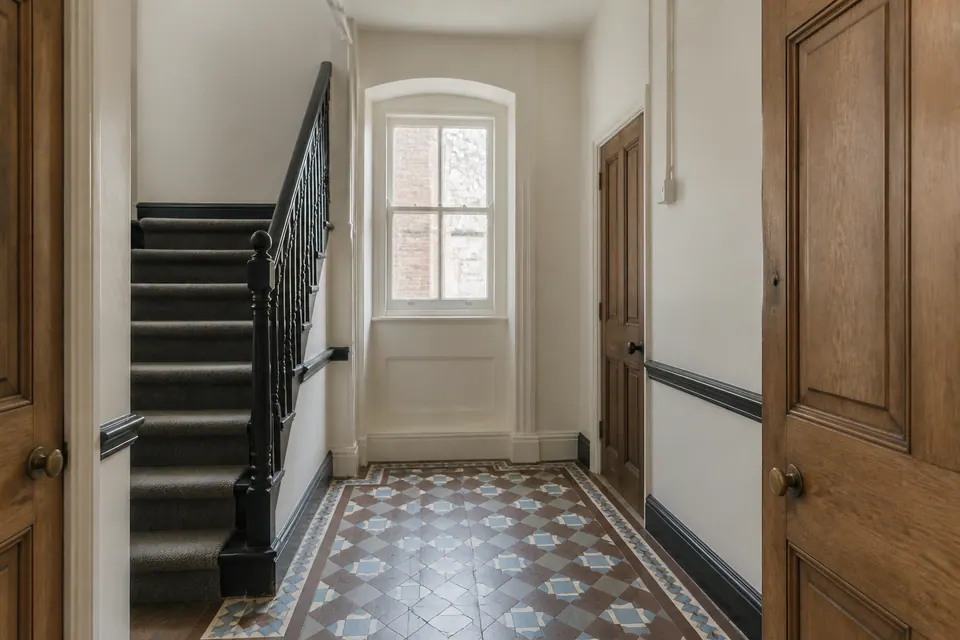
If the detail belongs to a shared area, confirm permission and scope independently. Access through the space does not authorise treatment of its decorative finishes.
A lower-ground setting needs its moisture history supplied alongside the decorative detail. A delicate finish does not change the need to consider persistent wetness or damage.
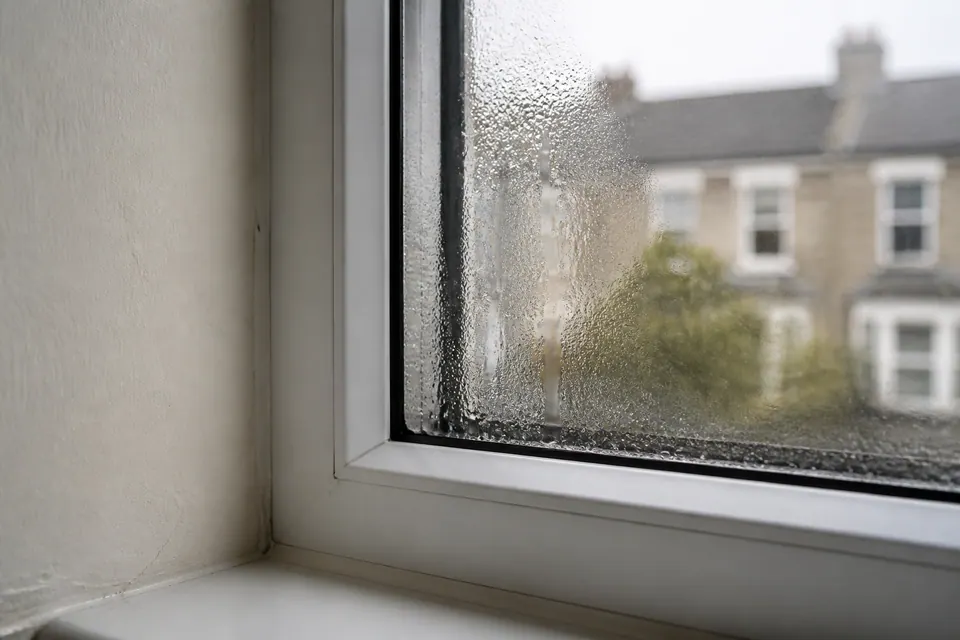
09 / WHEN IT COMES BACK
Compare the marked detail with an earlier image that includes the same profile. State any known repainting or repair between observations, without removing a new layer to recreate the previous appearance.
A return may mean moisture remains relevant, but the decorative junction alone does not establish the explanation. Report water observations and known frame work separately from the condition of the trim.
Describe changes in the coating or outline without using pressure, scraping or lifting to demonstrate them. An undisturbed view and a reliable history are preferable to a damaged comparison.
Maida Vale / PLAN THE APPOINTMENT
Send the postcode with the wide window view and the closer detail. Explain any fitting that restricts reach, and identify who can agree preparation or provide known information about the decorative finish.
Keep a planned restoration appointment separate from the surface enquiry until the relevant suitability and timing questions have been clarified.
View the Maida Vale area map.
Maida Vale / BEFORE BOOKING
Describe the edge without disturbing it, then agree suitability, preparation and the limits of the expected finish.
No lifting should be assumed necessary for the initial enquiry. Photograph the visible profile and describe what is loose or obscured without changing its condition.
State that the material is unknown. A photograph and ordinary description can support the first discussion without testing or scraping the feature.
It should be identified separately where the material changes. The proposal can then make any different suitability or finish limitation clear.
No universal decorative match should be assumed. Residual staining, existing damage and later repainting need to be distinguished from treatment of growth.
Explain their position and ask for preparation instructions first. Do not assume fitting removal is necessary or included without agreement.
Yes, if it identifies known coating or repair work. Keep the information factual and avoid guessing a specification where no record exists.
Its condition requires assessment rather than a conclusion from a close-up alone. Ask whether another scope is needed and avoid manipulating it to demonstrate weakness.
Ask which conditions and instructions must be satisfied before the next task. The treatment appointment should not automatically become a fixed decorative deadline.
Keep the wide view, detail image and agreed limitations together. They help distinguish the material treated from any restoration, frame or moisture question left for another decision.
A PROPERTY-SPECIFIC NEXT STEP
Send the postcode, profile photograph and known finish information. Ask what can be treated appropriately and which decorative expectations need a separate agreement.
The property illustrations are not records of customer decorative restoration or evidence that a particular fragile finish has been treated.
