
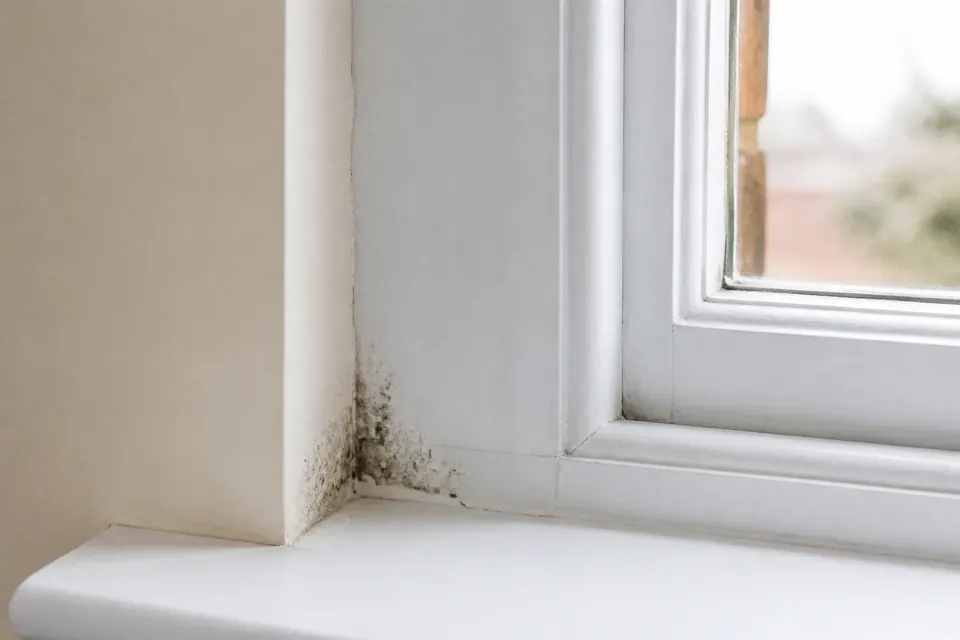
On the window surround
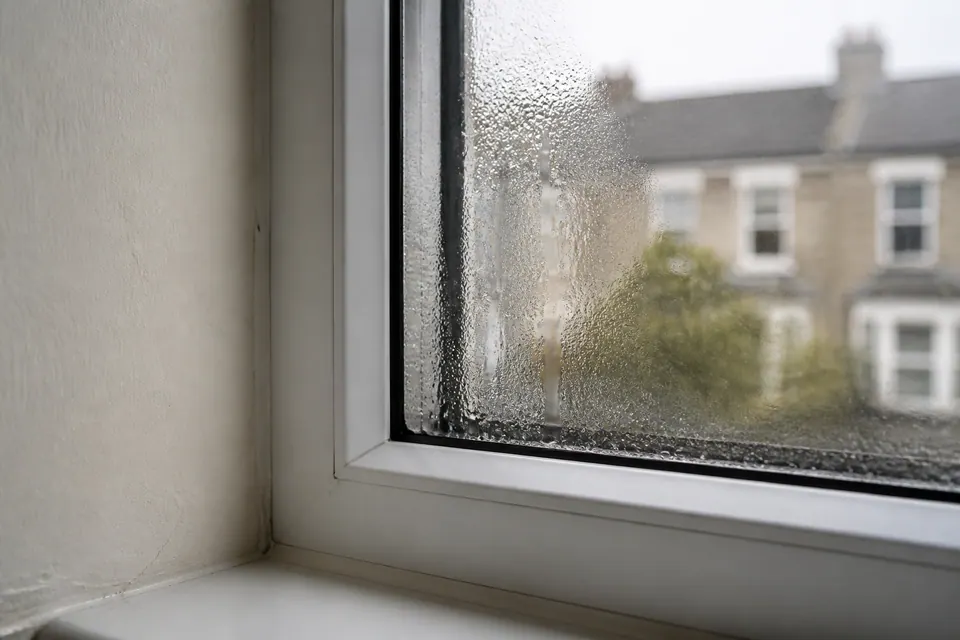
Distinguish the reveal from the frame, sill and glazing. A single wide view can help locate the detail, but treatment suitability concerns the marked material itself.
West Hampstead / INSIDE THE FLAT
The window, the surrounding finish and the building are not one work item.
For spotting beside a flat window, identify the part seen from inside and explain how the home is reached. An interior treatment request should distinguish suitable growth removal from glazing, exterior work or common-building repairs. Current photographs help define that boundary without asking you to investigate outside.
Component · finish · entry route
01 / SEPARATE THE QUESTIONS
Condensation can be relevant, but the location alone is not a diagnosis. Provide observations about moisture and any known incidents while keeping the component and condition clear.
| Visible issue | Useful context | What needs clarification |
|---|---|---|
| Spots on a painted reveal | When they were noticed or returned | Treatment suitability and moisture context |
| A marked frame edge | Known material and visible deterioration | Whether a separate repair is involved |
| Staining above the opening | Confirmed water events, if any | Whether investigation is needed |
| Several affected bay faces | Which parts and dimensions | The actual extent rather than one general window label |
The frame, plaster finish and adjacent wall can present different conditions. A quotation should make clear which suitable faces it concerns and what is outside the work.
An interior patch can prompt both questions without establishing that either is fully answered by a photograph.
| Question | Mould | Damp |
|---|---|---|
| Condition | Visible growth | Excess moisture in or around a material |
| Examples of observations | Current spots and their position | Wetness, staining or a known water incident |
| What a photograph cannot settle alone | Every material’s suitability | The source of a continuing condition |
| The relevant next step | Assess the proposed interior treatment | Clarify any separate investigation or repair |
02 / LOCATE THE ISSUE
Start with the inside position, not a broad statement that the window is mouldy. Similar-looking marks on different components can need different decisions.
Distinguish the reveal from the frame, sill and glazing. A single wide view can help locate the detail, but treatment suitability concerns the marked material itself.
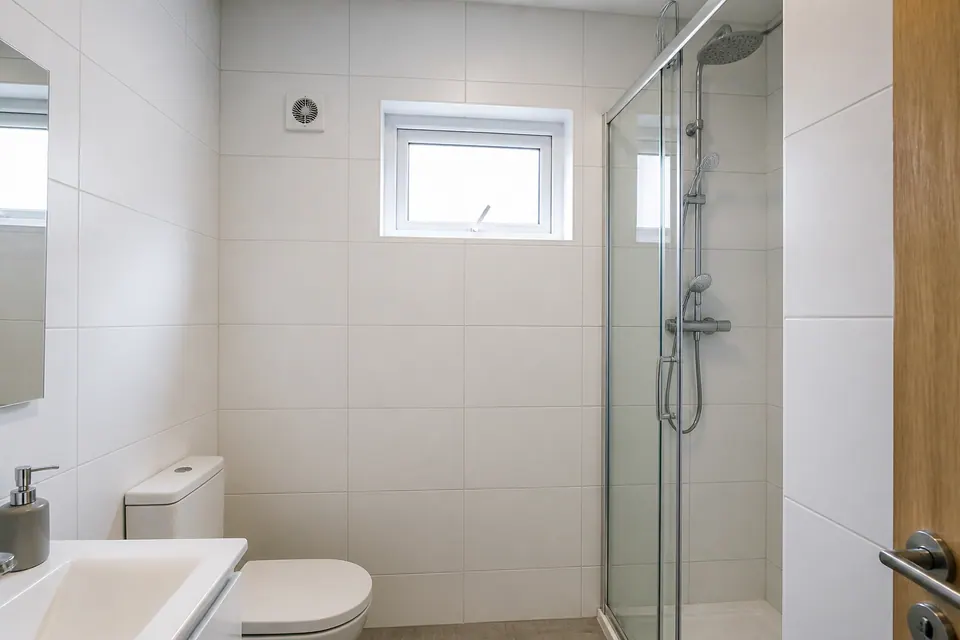
Show the wall or ceiling face and its present coating. Keep any concern about a seal or fitting separately described.
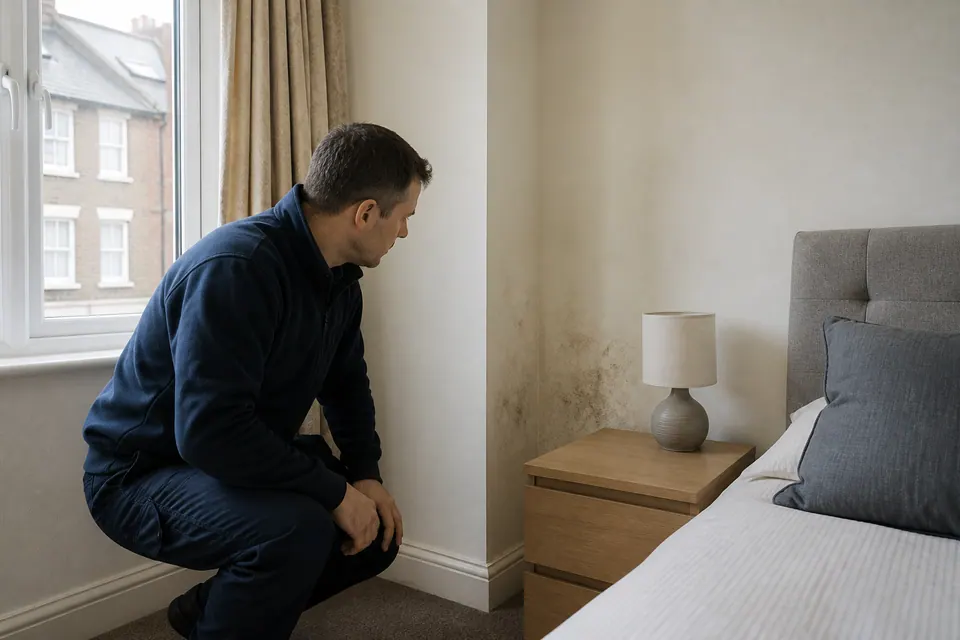
State whether the concern reaches the nearby wall or is confined to one component. Mention a blind or furnishing that currently limits the view.
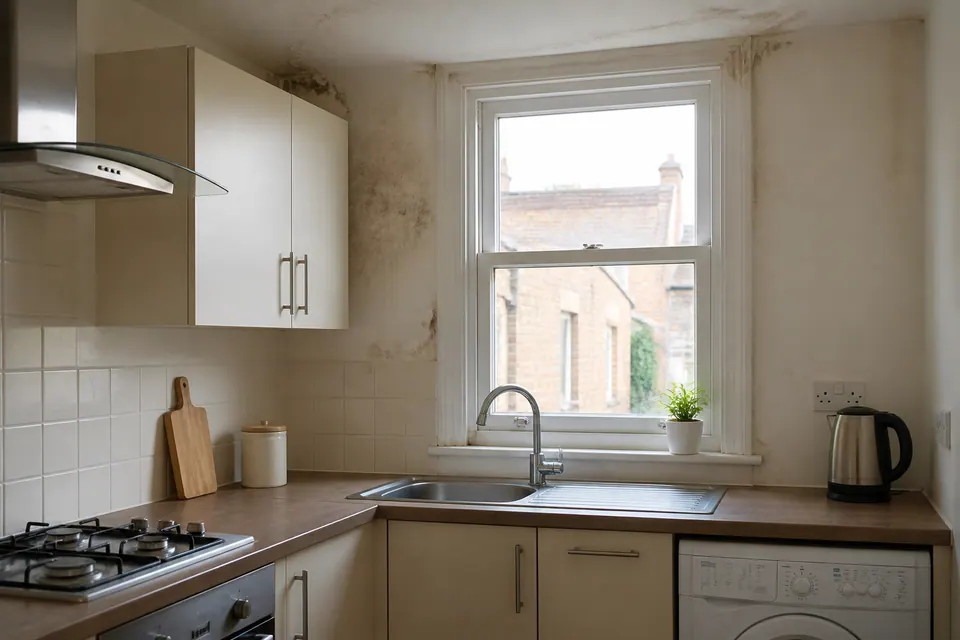
Identify the exposed finish and relevant observations. Do not assume a mark next to a window has the same cause as another elsewhere in the flat.
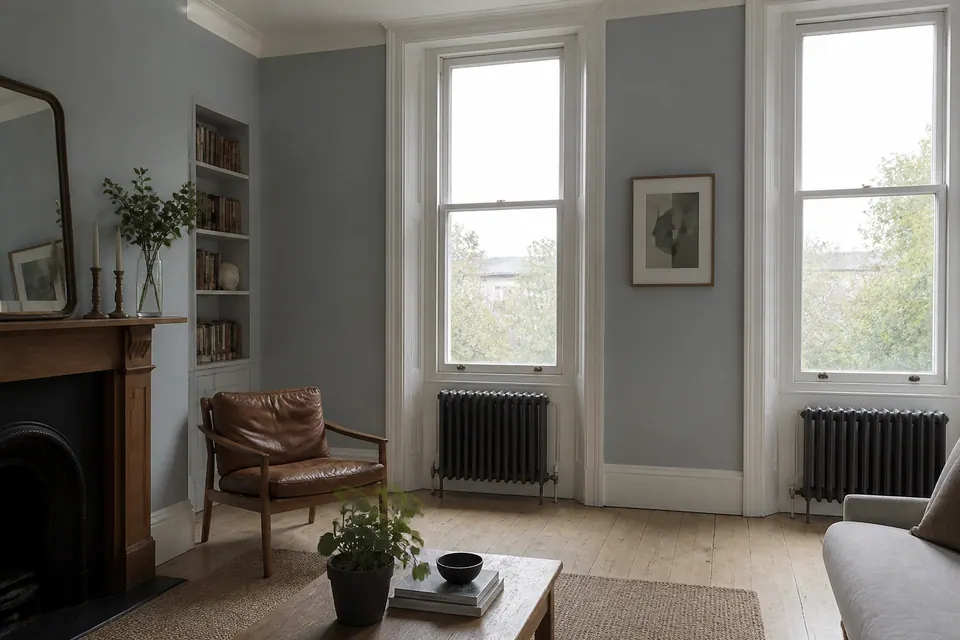
Label each affected part of the bay so one photograph is not assumed to represent every face. Include visible deterioration where present.
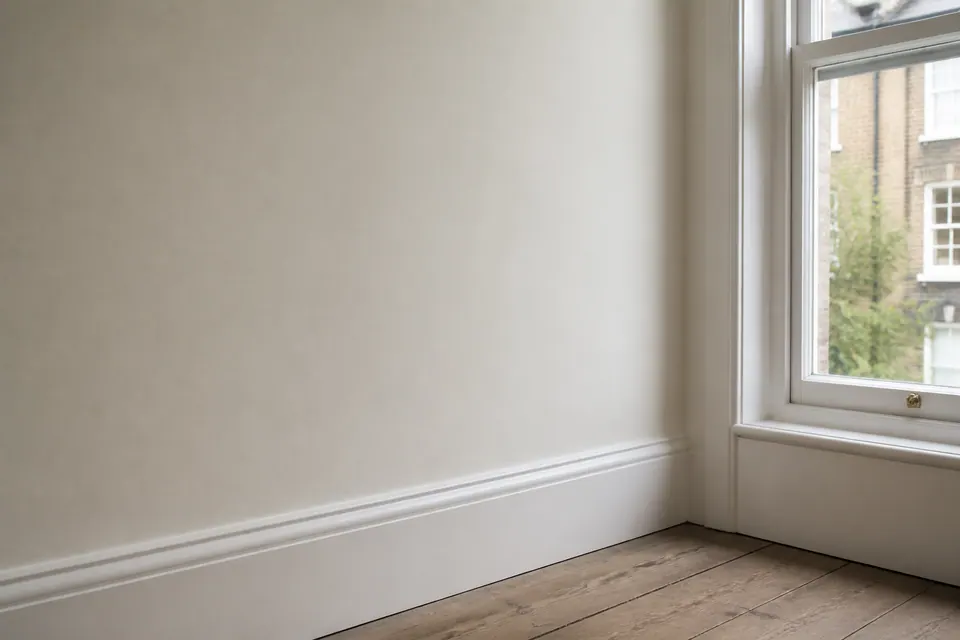
Use an indoor floor-level image and describe the location. Exterior inspection or high-level access should not be improvised for an enquiry.
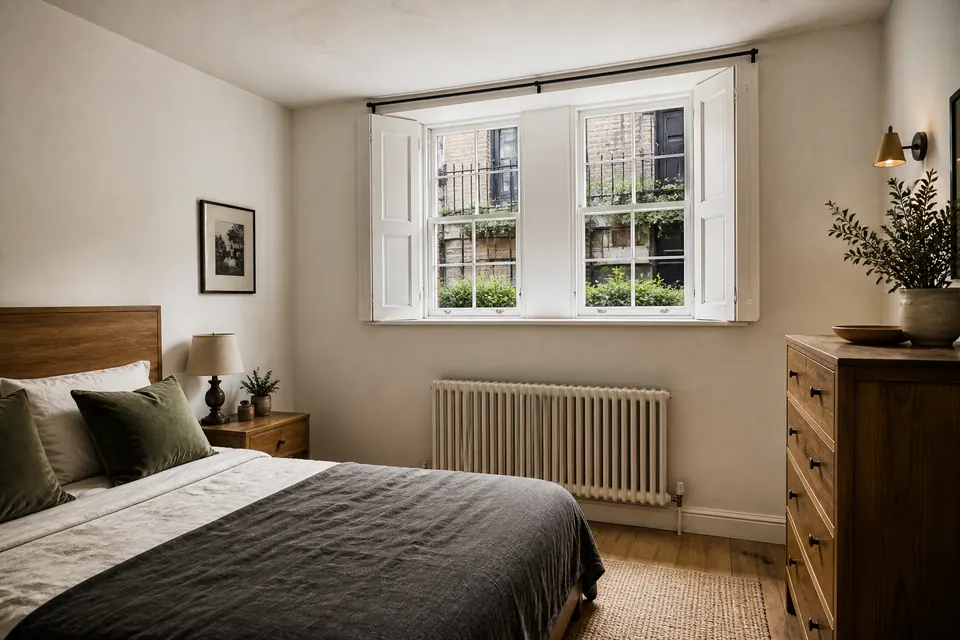
Explain whether the marked surface is inside a unit or part of the room wall. The relationship to the window should be described, not treated as proof of a cause.
Clear component names help avoid treating glazing replacement, seal repairs and suitable surface growth removal as interchangeable services.
West Hampstead / THE PROPERTY BRIEF
The internal work needs an accessible route.
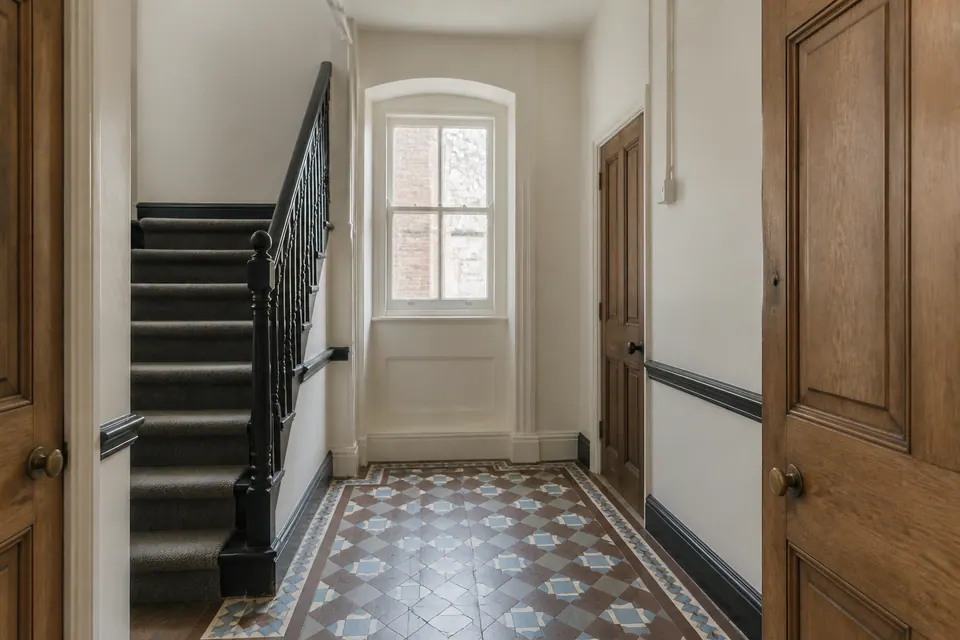
Include the floor, normal entrance and any practical arrangement needed to reach your home. If a building manager is discussing an exterior issue, describe that separately from the interior patch. Do not assume an appointment within the flat includes inspection or repair of the wider building.
04 / A CONTROLLED APPROACH
Identify the component, current finish and moisture observations available without asking for an unsafe external inspection.
Clarify the normal route into the flat and any agreed clearance around the position. Do not dismantle fittings unless specifically arranged.
The interior area defined in the scope is the work item. Glazing, damaged components and external repairs are not silently added to it.
Keep any moisture, repair or return guidance clear so the end of surface treatment is not mistaken for completion of every building concern.
The useful outcome is clarity about the treated area and any separate questions still requiring attention.
The marked component is located.
Preparation follows the agreed requirements.
Suitable treatment stays within its scope.
Illustrated stages do not show a completed West Hampstead flat or promise that every window condition is resolved.
05 / QUOTATION, NOT GUESSWORK
A broad request about all the windows can conceal several different materials and extents. Send labelled views and the access information, then clarify what the quotation includes rather than assuming a fixed price for each opening or an exterior repair package.
Read the main service’s assessment and pricing approach ↗| Extent and condition | Possible approach | Limit to confirm |
|---|---|---|
| One small suitable accessible face | Photographic quotation may be considered | The specific interior component |
| Several openings or recurring spotting | Assessment of the described positions | The combined extent and preparation |
| Damaged finishes or complex moisture | Specialist quotation as required | Repair and investigation separately |
No standard amount is implied by the number of windows alone. Confirm the actual suitable work and exclusions before relying on a proposal.
06 / WHEN IT COMES BACK
If spotting returns, identify the reveal, frame edge or adjoining wall rather than saying the window is bad again. Compare with the earlier view and include known dates of treatment, decoration or repairs separately.
Persistent moisture can contribute to renewed growth. The fact that the position is near glazing does not settle the source or mean that another surface treatment alone will resolve it permanently.
A repaired frame, a redecorated reveal and a treated patch describe different actions. State which actually occurred and leave uncertain details open.
West Hampstead / ACCESS & PEOPLE
Explain the normal internal access. Do not assume external access equipment or inspections are part of a room treatment enquiry.
Label the openings by room or a fixed feature so photographs and quotations refer to the same positions.
Mention any practical entry arrangements and separate building work already being discussed. Avoid merging that discussion into an interior cleaning request.
Describe what you can see from inside and when moisture is noticed. No technical or legal conclusion is needed to make the enquiry clear.
Keep the flat’s access instructions with the confirmed scope. Shared-building tasks should remain separately identified.
Explain known material repairs and desired reinstatement without assuming surface growth removal delivers those additional results.
08 / ROOM-BY-ROOM CONTEXT
Separate the window reveal from nearby sealing and painted ceiling areas.
Show whether spotting continues onto the adjoining wall.
Describe the actual exposed material rather than all fittings around the opening.
Label affected bay faces individually where more than one is marked.
Clarify authorisation and distinguish this space from the private flat.
Provide current observations and known history without assigning a cause from the floor level.
09 / DIRECT ANSWERS
No external access is needed for the initial description. Use indoor views and do not lean out or climb to improve an image.
Identify them separately. Their materials and present condition can differ, so the suitable work should not be assumed from a general window description.
It is a relevant observation, not a complete diagnosis of every mark. Explain when and where moisture is seen.
Do not assume it. Building-envelope, glazing or other repairs need their own explicit scope and arrangements.
Suitable accessible patches may be considered from photographs. Several components, recurrence or damage may require assessment or a specialist quotation.
Clarify practical authorisation and access with the appropriate people for your property. The enquiry does not establish legal responsibility for building work.
Painting over the concern does not replace treatment or consideration of moisture. Ask about preparation before changing the finish.
Follow instructions for the actual method and agreed work. Do not infer a whole-flat closure or an immediate return from the location alone.
West Hampstead / PLAN THE APPOINTMENT
Send the postcode, floor and normal entrance arrangement with the indoor photographs. Clarify the proposed appointment before coordinating access with another person.
Mention any separate building works, but keep their permissions, scope and timing distinct from the interior treatment enquiry.
Load the area map.
West Hampstead / BEFORE BOOKING
Clarify the interior position before arranging access.
Use a fixed room reference, such as the opening nearest the doorway. Keep that label with both wider and detailed photographs.
Describe what it conceals and ask about preparation. Do not dismantle a fitting merely to complete an initial enquiry.
Do not assume that. Identify both materials and ask what suitable work or separate repair each requires.
It supplies context but may not describe the affected growth, dimensions or finish. Include the actual marked position as well.
Mention that confirmed arrangement separately. It should not be confused with the interior surface-treatment request.
It helps explain access, but does not make exterior inspection or building repair part of the work automatically.
If other positions are part of the request, describe them too. One photograph should not imply a quotation for every opening.
State what work is known and when it happened. Do not assume that it confirms the present surrounding finish or moisture condition.
No permanent guarantee should be inferred. Continuing moisture or other unresolved issues can require separate assessment.
West Hampstead / DEFINE THE INSIDE WORK
Provide the postcode, room labels and indoor views. Ask about the suitable scope while keeping any glazing or building repairs separately identified.
The property illustrations explain interior concerns; they are not evidence of completed customer window repairs or treatments.
