
Is this priced as a first small patch?
Tell Alesta that the area has returned or been repeatedly covered. Recurrence may require assessment rather than a straightforward photo quotation for a first suitable accessible patch.
SHEPHERD’S BUSH / AFTER DECORATION
A repaint changes the view, not necessarily the underlying condition.
If a mark has returned through newer paint, start the Shepherd’s Bush enquiry with the sequence of work. What was covered, what was treated and what was repaired are different questions. Earlier photographs can help, but the present finish still needs its own assessment.
Earlier image · present coating · recurring outline
01 / DIRECT ANSWERS
Tell Alesta that the area has returned or been repeatedly covered. Recurrence may require assessment rather than a straightforward photo quotation for a first suitable accessible patch.
Do not use another covering as a substitute for assessment. The current visible condition and known work history are useful evidence to retain.
Not automatically. Residual staining, damaged paint and renewed growth are different possibilities. Compare the actual previous scope with the present observation.
Material condition and suitability may affect the proposed work. Ask after review rather than expecting the same timetable as an intact plain finish.
Do not assume stripping is part of the appointment. Ask for preparation instructions for the agreed treatment and any separately required repair.
The current finish can be assessed. Failed coating and any underlying moisture question may require work beyond removal of suitable growth.
Record both actions and their dates. Sealing history may be relevant, but the paint appearance does not establish whether the repair resolved moisture.
Only separately agreed decorative work would do so. A mould-removal scope should not promise a colour match or invisible repair by implication.
02 / SEPARATE THE QUESTIONS
The work history can reveal unanswered questions without proving which explanation is correct.
| Present observation | Possible context | History to clarify |
|---|---|---|
| A reveal outline visible again | Residual staining or moisture-related change | Whether frame repair or only painting occurred |
| Spots over a repainted bathroom ceiling | Persistent wetting or a coating issue | Treatment and decoration dates separately |
| Discolouration after a repaired leak | Remaining staining, damage or renewed moisture | Confirmed repair status and subsequent changes |
| The same wall patch after several coats | A continuing condition not settled by decoration | Exactly what preceded each new appearance |
Removing suitable growth, correcting a water source and restoring paint are separate scopes. Ask what has actually been done before assuming the next appointment only needs another surface pass.
A wall can retain a mark without that mark identifying the present condition.
| Question | Mould | Damp / moisture |
|---|---|---|
| What is being described? | Fungal growth on an affected finish | Excess moisture relevant to that material |
| What may survive decoration? | An unresolved growth concern or residual visible mark | A moisture source not changed by painting |
| Why consider both? | Covering appearance does not confirm suitable treatment | Persistent moisture can permit new growth later |
| What needs assessment? | The current exposed coating and visible change | The confirmed repair history and any ongoing wetness |
03 / ROOM-BY-ROOM CONTEXT
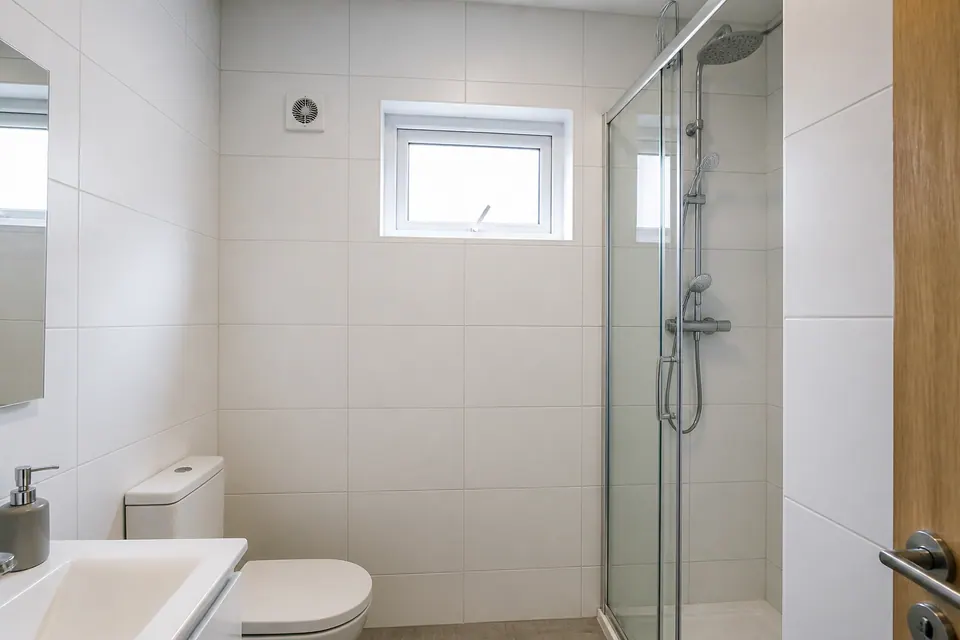
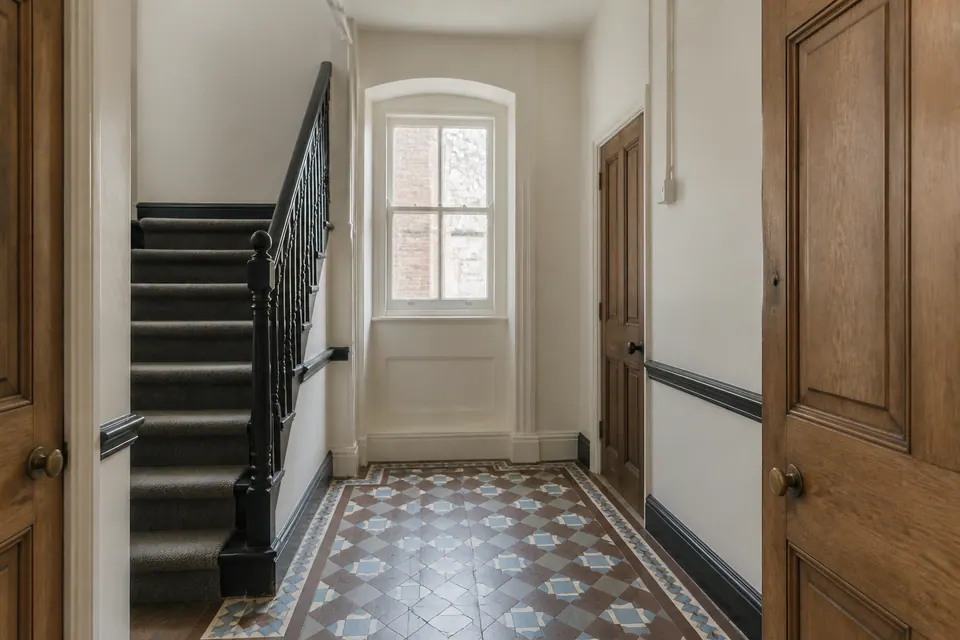
Record whether spotting or peeling was noticed first. A repeated ceiling coating is not evidence of a completed moisture repair.
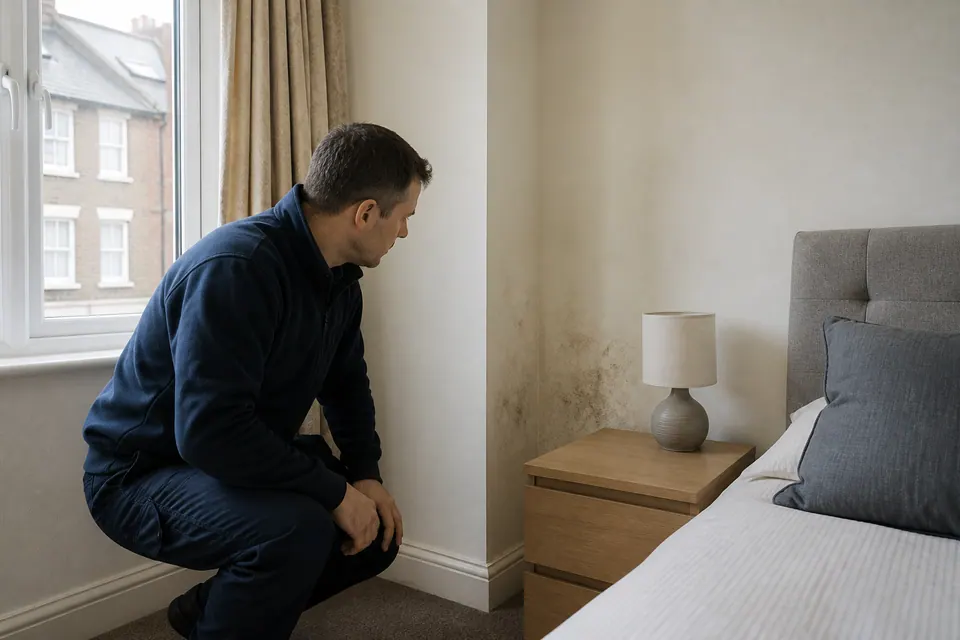
Compare existing images of the same location. Do not disturb the newest layer merely to recreate an earlier view.
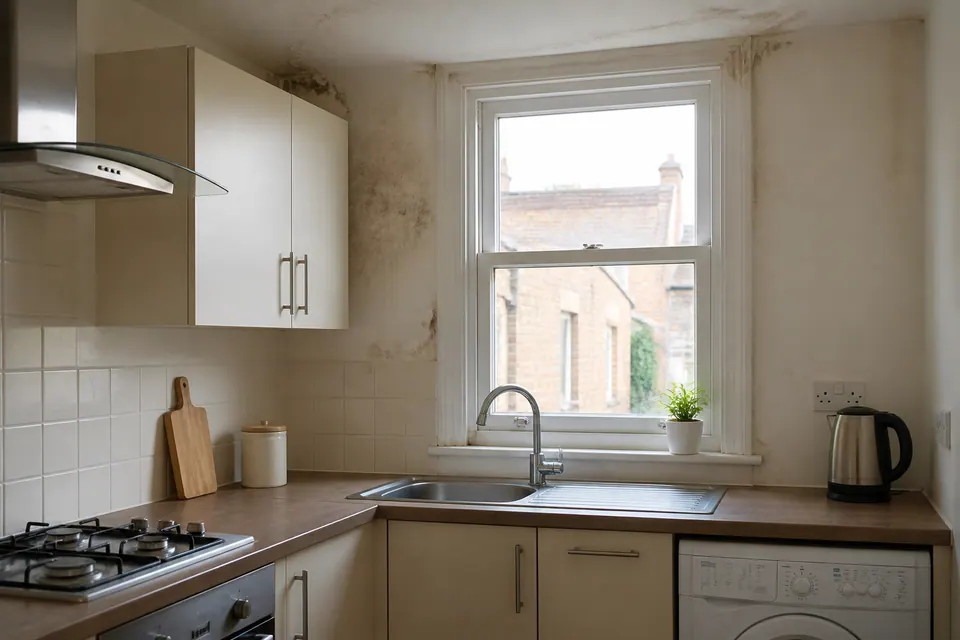
Separate a plumbing repair from the paint applied afterwards. Current material condition needs its own description.
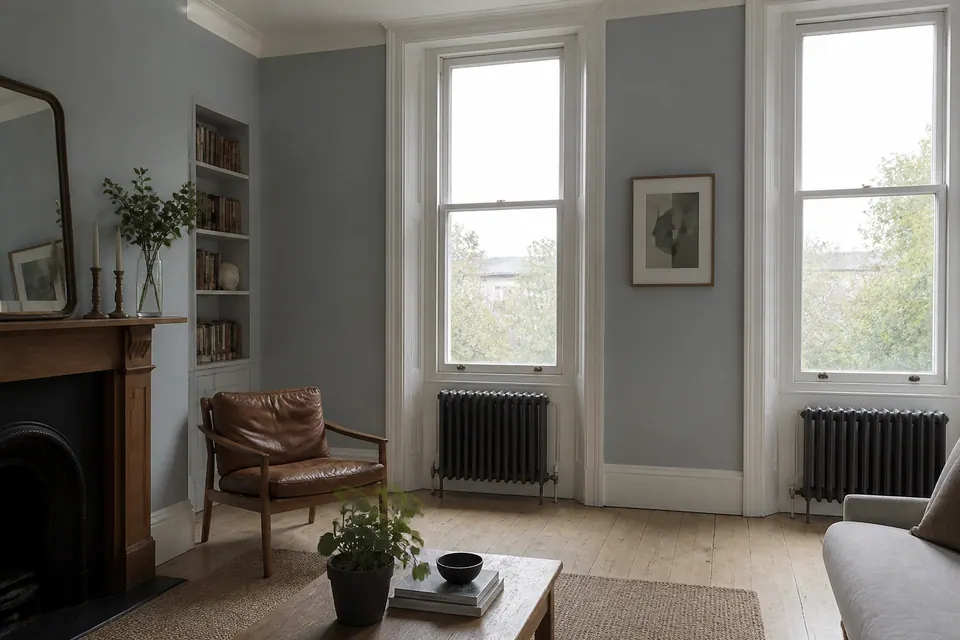
Note whether the new outline matches the old one or appears outside it. Colour and pattern may affect visibility.
Identify which contact holds earlier work records, especially in shared areas. A general building repaint may not describe this surface.

Give the actual water history rather than assuming floor level explains recurrence. Coating and underlying condition remain separate questions.
Shepherd’s Bush / MARKS AFTER REPAINTING
“It was done before” is not enough detail.
In a Shepherd’s Bush room that has been decorated more than once, note what each visit actually involved. A general clean, a mould treatment, a leak repair and a repaint do not mean the same thing. Explain how long the appearance changed after each known step. If records are missing, acknowledge that rather than assuming a previous coat included treatment.
05 / QUOTATION, NOT GUESSWORK
For a Shepherd’s Bush recurrence enquiry, send present photographs and the available sequence of repairs, treatment and decoration. Multiple or returning areas require assessment; complex damp or unstable materials may need specialist quotation rather than an assumed repeat price.
Read the treatment quotation guidance ↗| Current condition | Quotation approach | History required |
|---|---|---|
| A first suitable accessible area | Photographs may support quotation | Explain any older mark beneath the coating |
| A recurring or repeatedly covered patch | Assessment of the current surface | Separate dates for treatment and painting |
| Failed coating or complex moisture concern | Specialist quotation where necessary | Known damage and confirmed repair information |
Confirm the treatment boundary before booking a painter. Previous expenditure on decoration does not establish what the next surface appointment includes.
Shepherd’s Bush / ACCESS & PEOPLE
Write a simple action list: what was cleaned, treated, repaired or painted. Missing details should remain unknown rather than being filled with assumptions.
Use available records and present observations. Do not treat a general statement that the property was refurbished as a complete surface history.
Describe visible peeling and softness without disturbing it. The next decision may concern suitability or repair, not simply a repeat of earlier treatment.
Retain existing photographs and report the visible change through the relevant booking arrangement. Do not strip paint to prove responsibility for the issue.
Provide actual earlier scopes where available. A decorator invoice and a treatment record answer different questions about the affected wall.
Separate desired appearance from the current material decision. Ask what must be assessed before another decorative finish is planned.
07 / LOCATE THE ISSUE
Choose the room and identify the current coating. Earlier appearance helps the history but does not establish present material condition.
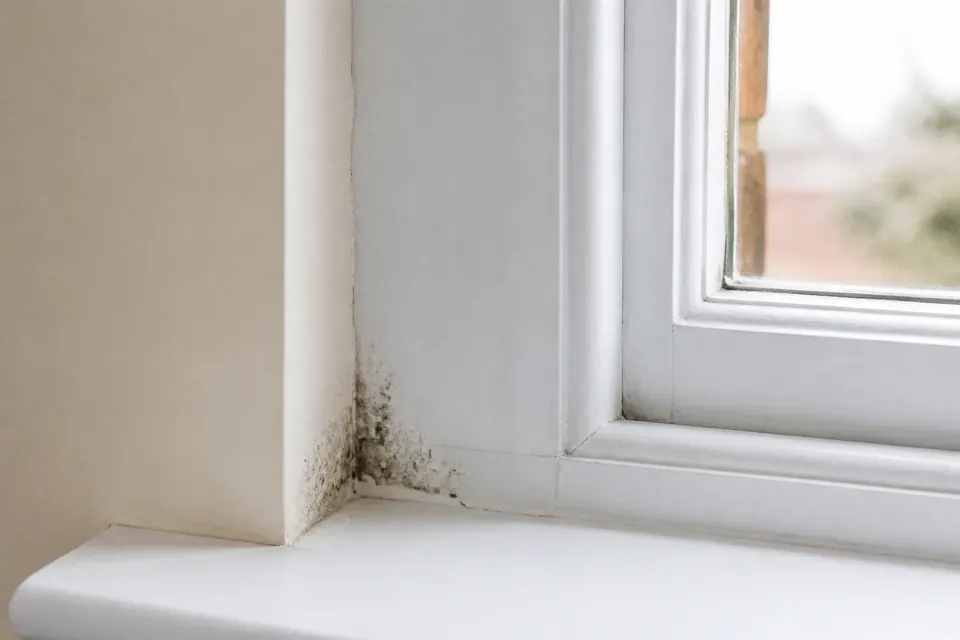
Show whether the old outline is on plaster or joinery. Include any separate frame repairs rather than treating fresh paint as proof that the opening was repaired.
Mention whether the coating lifted or spotting returned first. Repeated decoration does not establish the cause of wetting, and failed paint may need another decision.
Use an existing earlier photograph if available and show the current furniture arrangement. Do not strip paint or move heavy objects just to reproduce the old image.
Keep the plumbing repair date separate from repainting. Describe current wetness or new growth rather than assuming an old stain proves ongoing leakage.
Explain whether the new mark matches the previous boundary or appears elsewhere. A patterned or differently coloured layer may change how the outline is seen.
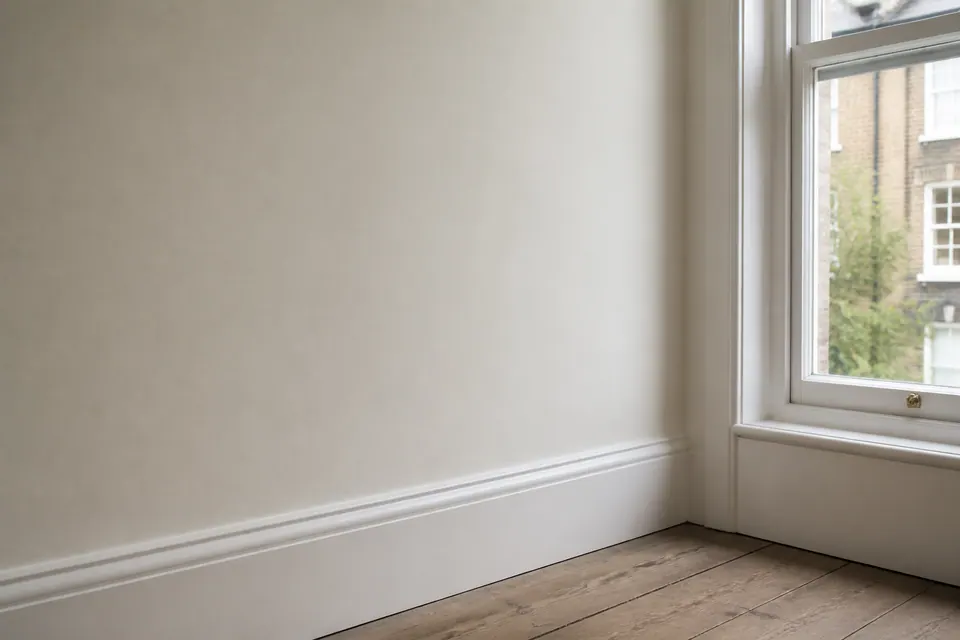
Describe visible bubbles, peeling or cracks without probing the surface. Treatment of suitable growth is distinct from removing failed layers and repairing what lies beneath.
State what is visible with the cupboard in ordinary use. A covered backing or restricted corner may still conceal material that has never been assessed.
A mark seen through paint may require more than one explanation. Do not equate its colour with confirmed renewed growth.
08 / A CONTROLLED APPROACH
Compare current evidence with known previous actions. Establish the condition and suitability of the exposed coating rather than assuming it matches the old surface.
Agree preparation without unnecessary stripping or covering. Identify furniture and fragile finishes before the selected work is scheduled.
Carry out appropriate work within the agreed suitable-surface scope. Failed coating or unexpected damage requires discussion about a separate response.
Distinguish residual staining, repair needs and the treated growth. Clarify any further steps before decorative work is arranged.
The sequence is not a guarantee that another visit creates a flawless painted result.
Record the actions between earlier and current photographs.
Follow the agreed scope rather than repeating an assumed previous method.
Clarify remaining marks and material condition separately.
These are schematic stages rather than customer before-and-after proof. Continued moisture can allow further growth.
09 / WHEN IT COMES BACK
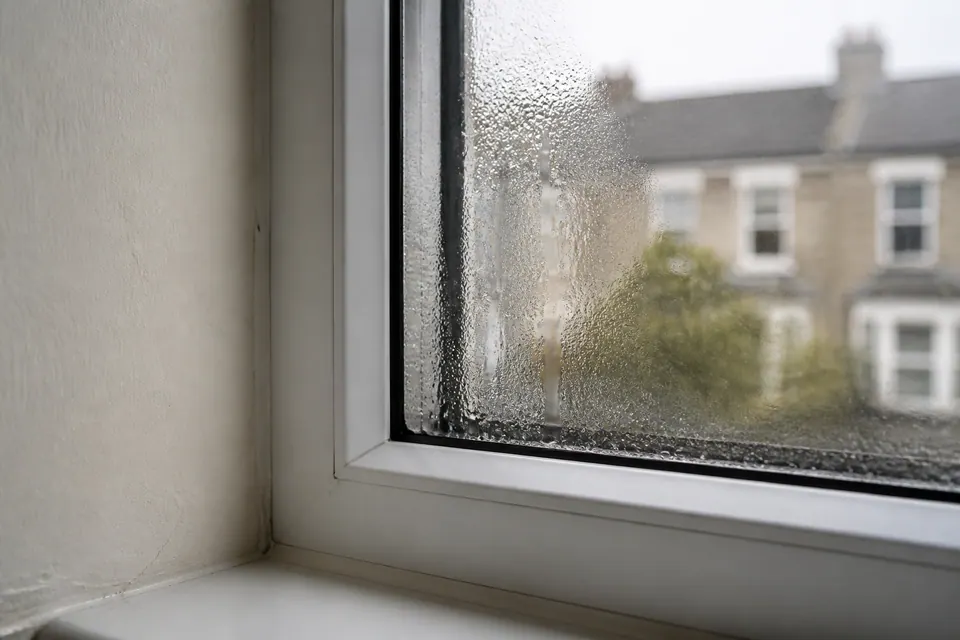
The interval can be useful even if the exact first day is unknown. Say whether the room use, water history or visible coating condition changed, and distinguish a new patch from an old stain still showing.
Do not infer a single explanation from repeated appearance. A fresh assessment should consider what the earlier work actually addressed and what remains unresolved, rather than simply prescribing another cosmetic layer.
Save earlier images and written scopes without disturbing the wall to create more evidence. Clearly label any uncertainty in dates or actions.
Shepherd’s Bush / PLAN THE APPOINTMENT
Send the Shepherd’s Bush postcode with the current surface view and available work timeline. Confirm availability after the history and practical access have been discussed.
If a decorator is already scheduled, explain that timing without assuming treatment will establish immediate readiness to repaint.
Open the area map when discussing the property location.
Shepherd’s Bush / BEFORE BOOKING
The work sequence matters more than the number of times the wall was covered.
Not by itself. State what you know was done and keep decoration separate from any documented treatment or repair.
No stripping is needed for an initial enquiry. Use existing photographs if available and describe the current visible condition.
Give an approximate sequence and identify uncertainty. A qualified recollection is more useful than an invented precise timeline.
A visible mark and active growth are not interchangeable descriptions. Ask for assessment of the current condition rather than assuming either explanation.
Only if that work is explicitly agreed. A treatment quotation does not automatically include stripping, filling or repainting.
Ask for preparation advice first. Do not obscure the evidence or mix cleaning products in an attempt to make the wall ready.
Do not assume the finish will be ready. Material condition, moisture and the selected work need review before decorative timing is agreed.
Its history may raise unresolved moisture or material questions. Include previous actions so the scope is based on the present situation.
Keep the named treated area, date, agreed work and any remaining condition. That makes a later change easier to describe accurately.
BRING THE TIMELINE, NOT ANOTHER COAT
Send current photographs and any earlier records already available. Separate painting, treatment and repair dates so the next step addresses the actual condition.
Interior illustrations are not proof of a particular painted-wall treatment result.
