
Freestanding heavy furniture
Explain what can and cannot be moved routinely. Do not leave the proposed treatment dependent on unplanned lifting when the team arrives.
EALING / ACCESS BEHIND FURNITURE
You do not need to expose everything before asking.
When a wardrobe or sofa blocks the view, an honest account of the visible edge is more useful than an unsafe attempt to reveal the whole wall. For your Ealing enquiry, show the room arrangement and say what cannot be reached. Furniture movement and contents handling should be agreed before treatment.
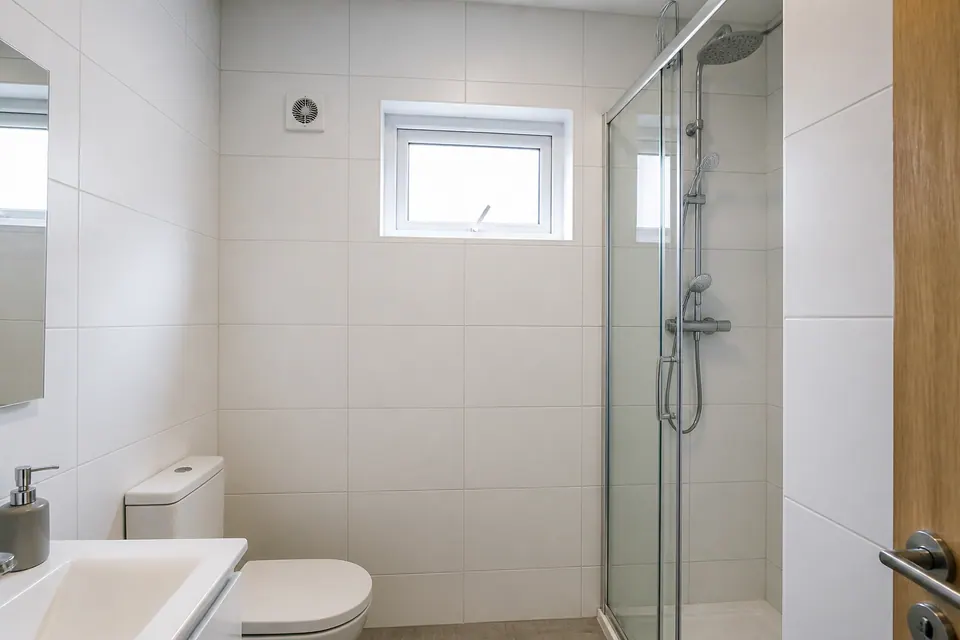
Available view · obstruction · safe preparation
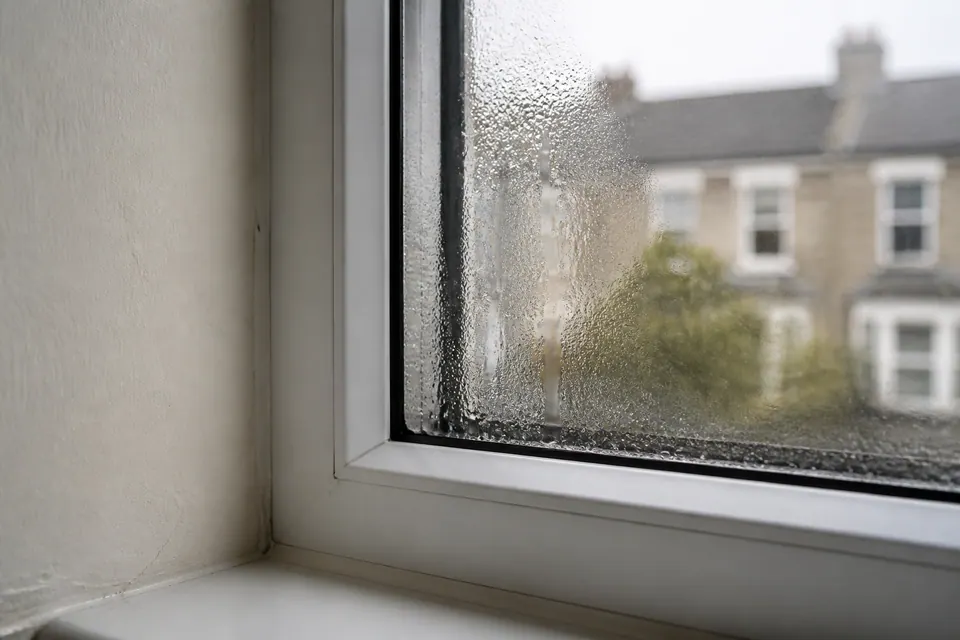
01 / WHEN IT COMES BACK
Record the interval and any changes to the furniture position or room use. Keep the previous treatment scope so a newly visible edge is not confused with an area that was never accessible.
Restricted space can be useful context, but do not conclude that furniture placement is the sole explanation. Report actual moisture observations and any known water events for renewed assessment.
Note which wall portions were seen and treated previously. A later photograph of a newly exposed area should be labelled as a new observation.
Ealing / ACCESS & PEOPLE
Explain what can and cannot be moved routinely. Do not leave the proposed treatment dependent on unplanned lifting when the team arrives.
Identify fixed panels and doors limiting inspection. Dismantling and reinstatement require their own arrangements rather than an assumed room-preparation task.
Mention these early and ask how they should be handled. Avoid carrying items into other rooms merely to clear the wall for a photograph.
Provide the available view and confirm booking permissions. Reporting a restricted surface does not require dismantling furniture or deciding legal repair responsibility.
Ensure the occupant understands any agreed clearance plan. Share relevant water or repair history separately from assumptions about how furnishings caused the issue.
Distinguish wall treatment from moving, repairing or replacing furniture. Ask which decisions are needed before the accessible scope can be confirmed.
03 / DIRECT ANSWERS
A photo can start the discussion, but uncertain extent or restricted access may require assessment. A small visible edge should not be priced as a confirmed whole-wall scope.
No decorative covering should substitute for assessing the affected finish. It can obscure the evidence without resolving the moisture or access question.
Its position can be relevant, but proximity alone is not a diagnosis. Report the arrangement and any observed moisture without assigning a single cause.
Not necessarily. The exposed material may have different extent or damage than expected. Handling, preparation and method still need agreement.
Describe them and ask for instructions suited to the proposed work. Do not assume either that everything must move or that affected possessions can stay untouched.
State that clearly. Treatment of an accessible wall does not include dismantling the unit unless another scope explicitly provides for it.
The practical approach and finish need assessment. Do not assume that seeing a strip means it can be safely reached for the selected method.
Not automatically. Furniture, textiles, stored items and the wall are distinct subjects to identify and agree.
04 / A CONTROLLED APPROACH
Use room photographs to identify the exposed edge and the inspection limit. Decide what further access is needed before defining treatment.
Confirm handling instructions, assistance and any separate movement arrangement. Do not improvise by shifting affected items through the home.
Work on the suitable accessible finish agreed after review. Newly exposed damage may change the decision and should be discussed explicitly.
Ask about room use, contents handling and the condition left behind. Putting furniture back is not an automatic instruction at the end of attendance.
Exposing more of a wall may reveal a different scope, not merely a larger version of the same patch.
Identify the visible edge and what remains concealed.
Treat suitable material within the confirmed accessible area.
Obtain applicable instructions for room and furniture use.
The drawings illustrate stages, not a documented furniture-moving job. Continuing moisture can permit growth to return.
Ealing / FURNITURE-OBSCURED WALLS
Restricted access is information, not a reason to improvise.
Show the wardrobe, sofa or shelving in its normal position and describe the portion of wall that can already be seen. If furniture backs or belongings also appear affected, identify them separately. Do not estimate a concealed surface as confirmed growth. The next step may involve a clearance plan or further assessment before an accurate treatment boundary can be agreed.
Ealing / PLAN THE APPOINTMENT
Send the Ealing postcode, a room view and the obstruction details. Confirm what preparation is practical before selecting a visit that assumes the wall will be clear.
If another person or service is needed for movement, discuss that separately so the appointment does not depend on unconfirmed assistance.
Use the area map when discussing access to the property.
07 / QUOTATION, NOT GUESSWORK
For an Ealing wall behind furniture, explain the obstruction before requesting a total. Small suitable accessible areas can be quoted from photographs. Uncertain reach, recurrence or damaged materials may need assessment or a specialist quotation.
Check the main assessment approach ↗| Known condition | How it is considered | Important limit |
|---|---|---|
| Small suitable area with clear access | Photographic quotation may be possible | Confirm that the whole proposed area is visible |
| Partly hidden or recurring patches | Assessment to define extent and approach | Do not count uninspected portions as confirmed |
| Damaged wall or complex concealed concern | Specialist quotation where required | Access and investigation may need separate work |
Ask who provides any agreed clearance and what it includes. Furniture dismantling or contents care must not be assumed within a wall-treatment price.
08 / SEPARATE THE QUESTIONS
Furniture position may be relevant context, but the moisture explanation still needs assessment.
| What is visible | Possible context | What remains to clarify |
|---|---|---|
| Spotting beside a wardrobe near a window | Moisture at the opening or surrounding wall | Whether water is observed and what is concealed |
| Marks behind bathroom storage | Repeated wetting or restricted drying | The accessible finish and storage arrangement |
| A wall change after a known leak | Moisture or damaged material behind the object | Repair status and the uninspected extent |
| A patch returning after furniture moved back | Conditions continuing at that location | Previous work, placement and observed moisture |
Furniture handling, dismantling, treatment of belongings and repair of a moisture source need explicit agreements. A quotation for an accessible finish should not silently include those additional tasks.
Growth concerns the surface; moisture concerns the condition that may support it.
| Assessment question | Mould | Damp / moisture |
|---|---|---|
| What is described? | Fungal growth on a visible affected finish | Excess moisture involving the material or nearby area |
| What can the enquiry establish? | The observed edge, not the full concealed wall | Reported water and repair history, not an unseen diagnosis |
| Why distinguish them? | Removing growth does not change every moisture condition | Persistent moisture may allow later growth behind furnishings |
| What needs planning? | Access to suitable material for assessment and treatment | Any separate investigation or repair beyond that material |
09 / LOCATE THE ISSUE
Use the room setting to explain the obstruction. The first enquiry should distinguish what is visible from what has not been inspected.
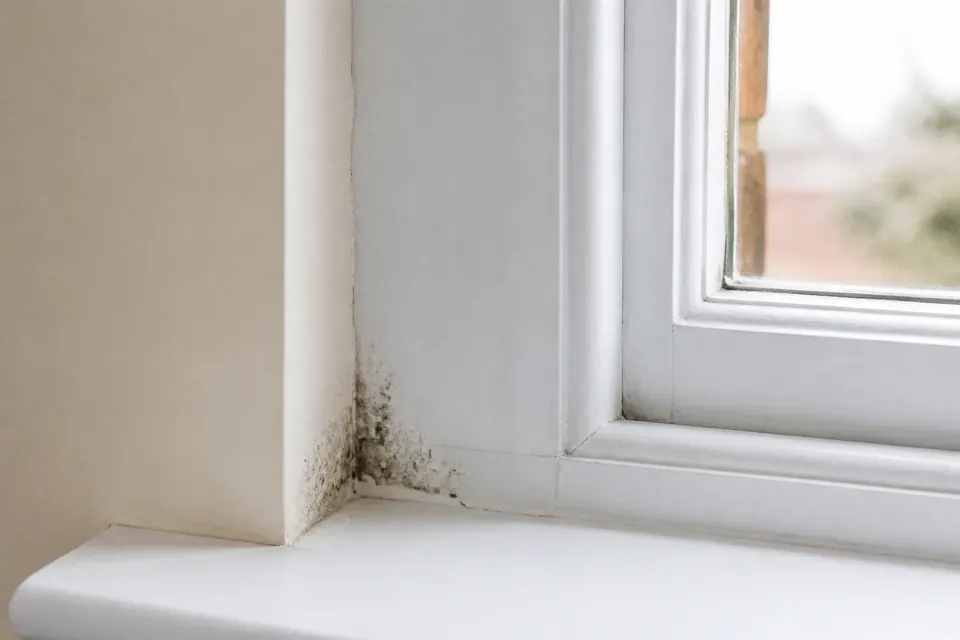
Show the accessible reveal and the object limiting reach. Do not squeeze furniture against another marked finish to obtain a better angle. Frame and wall materials remain separate assessment questions.
Describe freestanding storage or fixed units without removing them. A visible mark outside a cabinet does not establish the condition of the wall behind it.
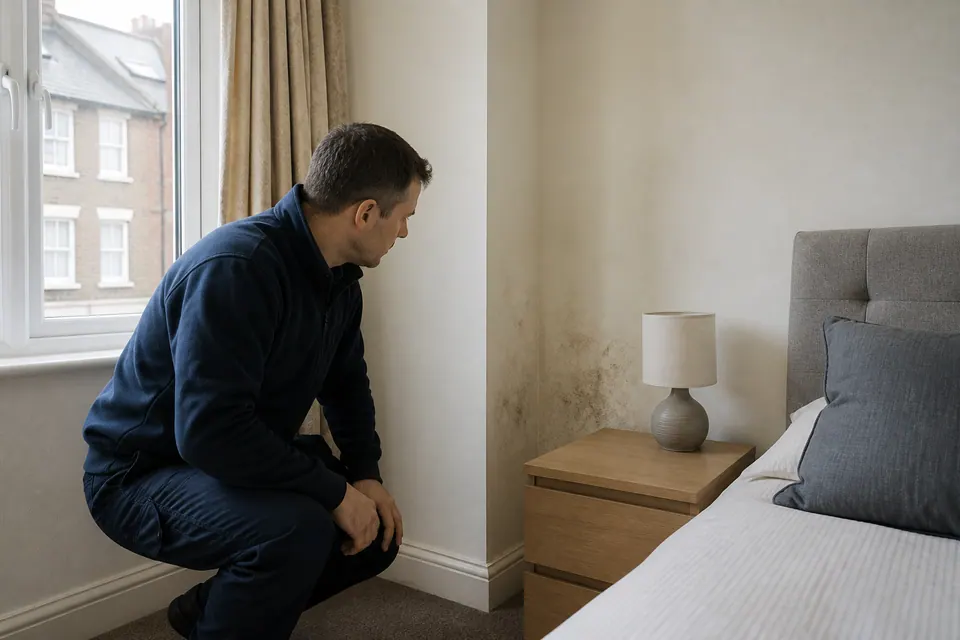
Photograph the overall arrangement and accessible edge. Ask about handling before moving bedding, heavy furniture or apparently affected contents through the room.
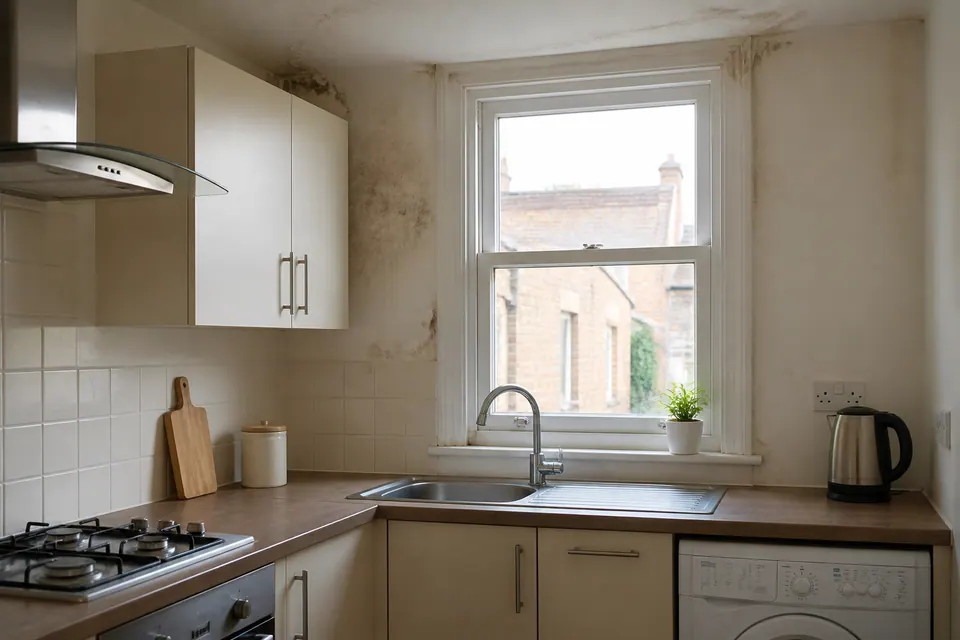
Fixed cabinets and heavy equipment can restrict both inspection and treatment. Identify what can be reached without dismantling or appliance movement; those tasks need their own plan.
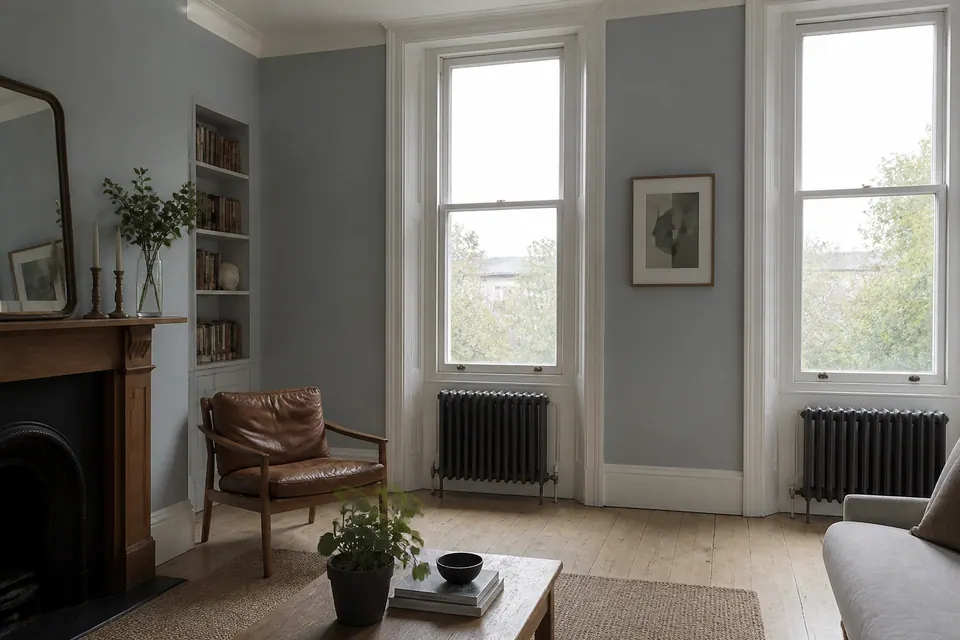
Explain the clearance and whether the back or nearby textiles show changes. Upholstery is not automatically covered by a wall-surface quotation.
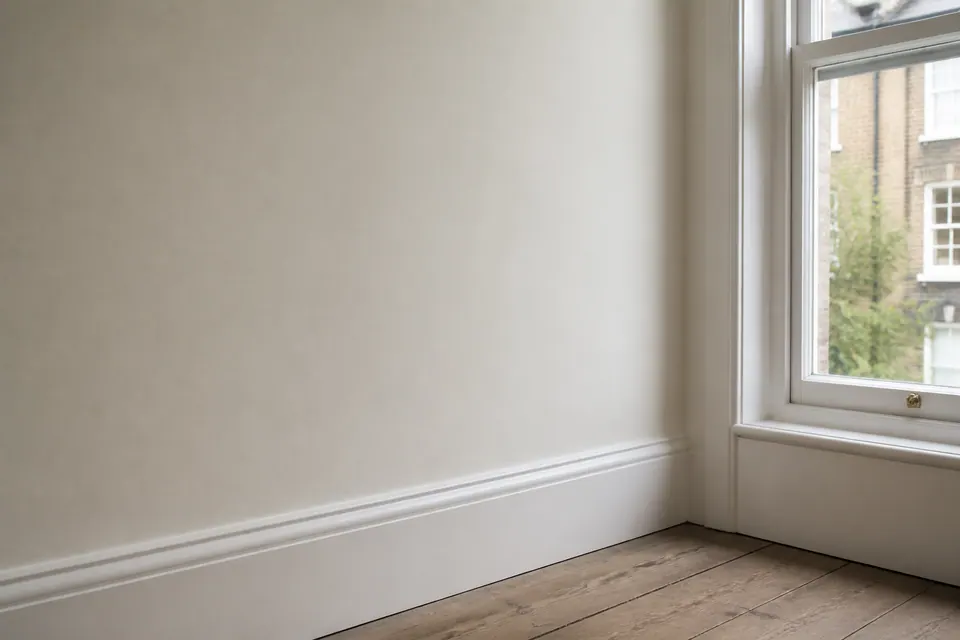
A bed or cabinet must not become an improvised access platform. Describe the height and obstruction from a safe position while the appropriate approach is discussed.
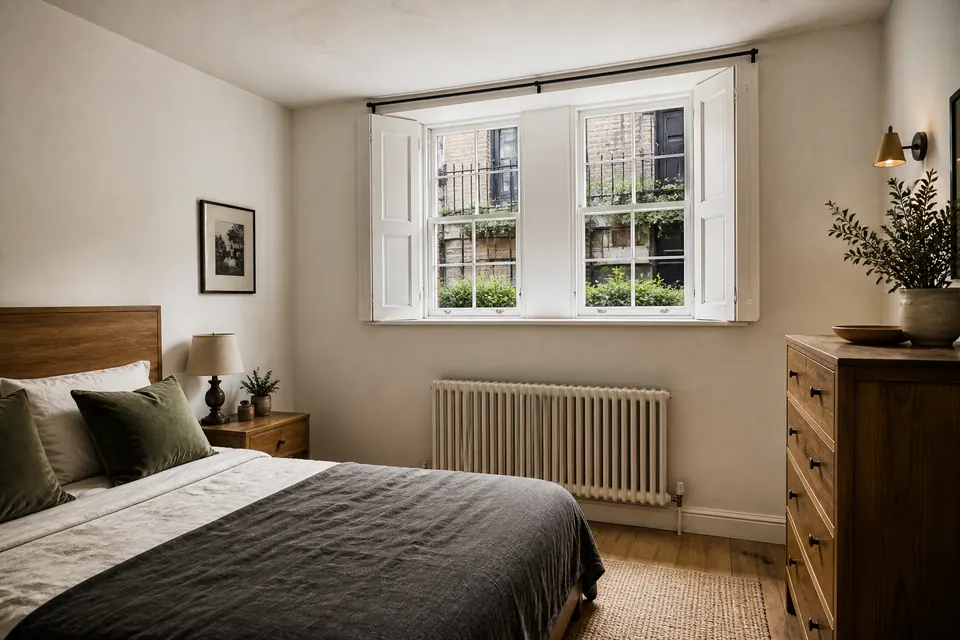
Keep the accessible wall and stored contents distinct in the description. A musty smell does not prove the extent of concealed growth, and emptying affected items may need guidance.
Do not claim that a hidden area is affected or unaffected. Record the limit and ask how further access should be arranged.
10 / ROOM-BY-ROOM CONTEXT
State whether storage is fixed or freestanding. Accessible wall treatment and work behind a fitted unit are separate questions.
Show the bed or wardrobe beside the patch. Agree handling before moving heavy items or affected bedding.
Identify units and appliances that block the finish. Plumbing or appliance work is not a side effect of booking mould removal.
Keep the wall and any upholstery changes separate. A sofa does not share the wall method merely because it touches the surface.
Explain whether clearing the area affects a shared route or requires another contact. Passage access and treatment permission differ.
Describe the visible surface, level and known water history. A hidden corner cannot be diagnosed from the presence of stored items.
Ealing / BEFORE BOOKING
An accurate account of what cannot be seen is valuable enquiry information.
Ask for preparation advice first. Send the available view and explain the obstruction rather than making an unplanned move beside the affected finish.
Give the visible measurement and identify the concealed portion as unknown. Do not present an estimated hidden area as confirmed growth.
Identify it separately. Its material and condition may require a different decision, and it is not automatically included in the wall scope.
Explain which panels are fixed and what view is available. Dismantling or reinstating joinery requires a separately agreed plan.
Do not assume so. Ask who will provide any needed handling and what the agreement covers before confirming the visit.
Seek instructions first, particularly where items appear affected. Clearing space should not depend on improvised handling of contents.
Follow the applicable room-use and preparation guidance. Completion of attendance does not automatically establish when every item should be repositioned.
The concealed extent, limited reach or material condition can make the scope uncertain. A small exposed edge is not proof of a small accessible job.
Report the newly exposed condition before assuming it belongs to the original quote. Additional extent or damage may require a revised discussion.
START WITH THE VIEW YOU HAVE
Send the postcode, a wider room photograph and the visible edge. Explain fixed or heavy items and any affected belongings so preparation can be planned responsibly.
The room images illustrate context rather than a documented customer clearance or treatment.
