
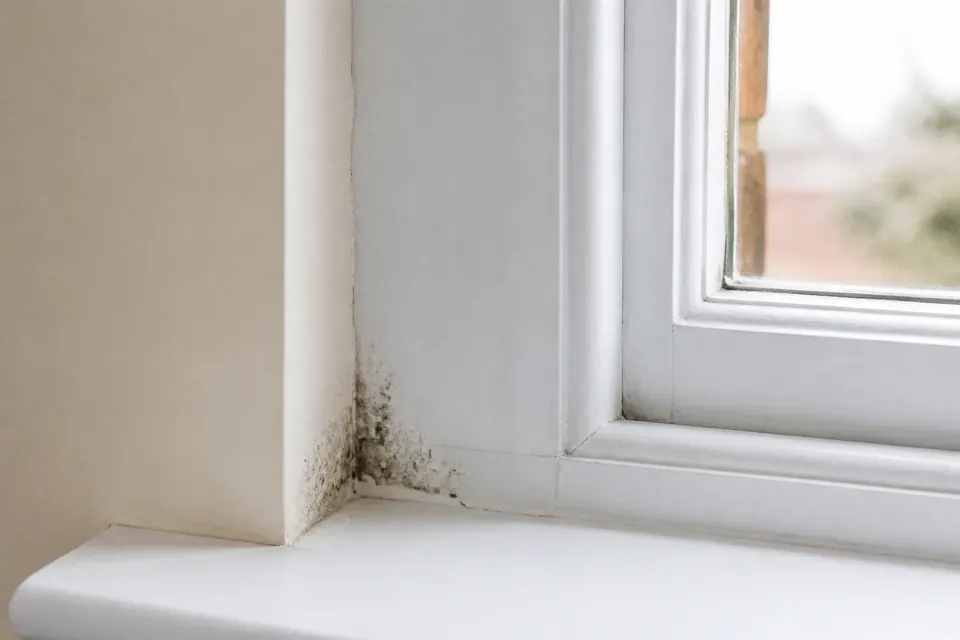
Below a repaired window
Keep the frame repair information with photographs of the adjoining reveal. A mark below the sill may be older than the repair, so give dates rather than interpreting its position as proof of another leak.
Ruislip / AFTER THE REPAIR
A completed repair is one part of the story.
When the plumber has finished but a marked wall remains, the next decision is not automatically to paint it. Tell Alesta what was repaired, when it happened and what is visible now so a suitable mould-removal scope can be considered.
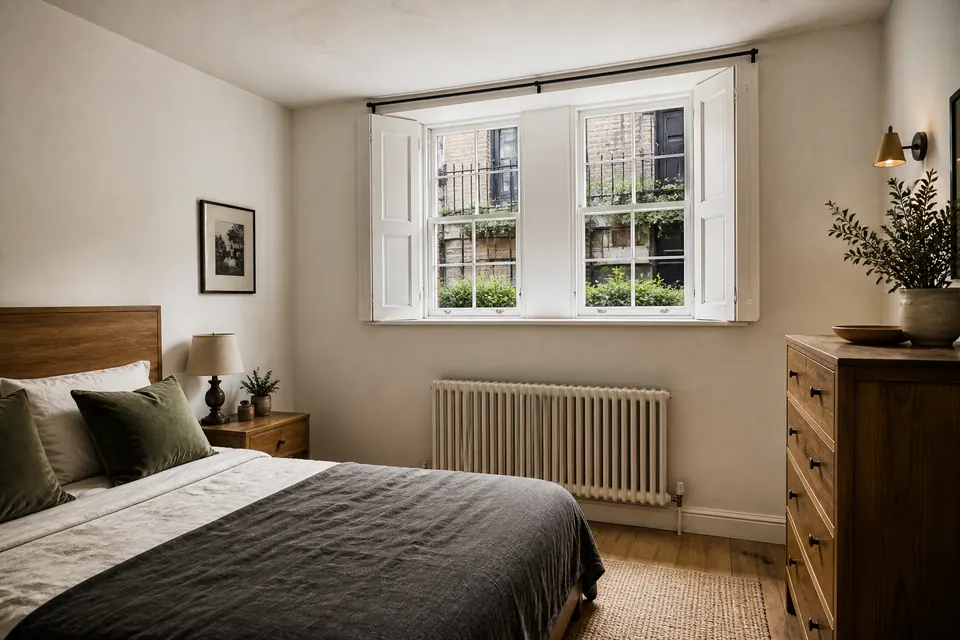
Dates · visible changes · material condition
01 / LOCATE THE ISSUE
An earlier water event can affect several finishes. Select the relevant setting and explain whether you are showing an old outline, suspected new growth or visible damage; these are not interchangeable descriptions.
Keep the frame repair information with photographs of the adjoining reveal. A mark below the sill may be older than the repair, so give dates rather than interpreting its position as proof of another leak.
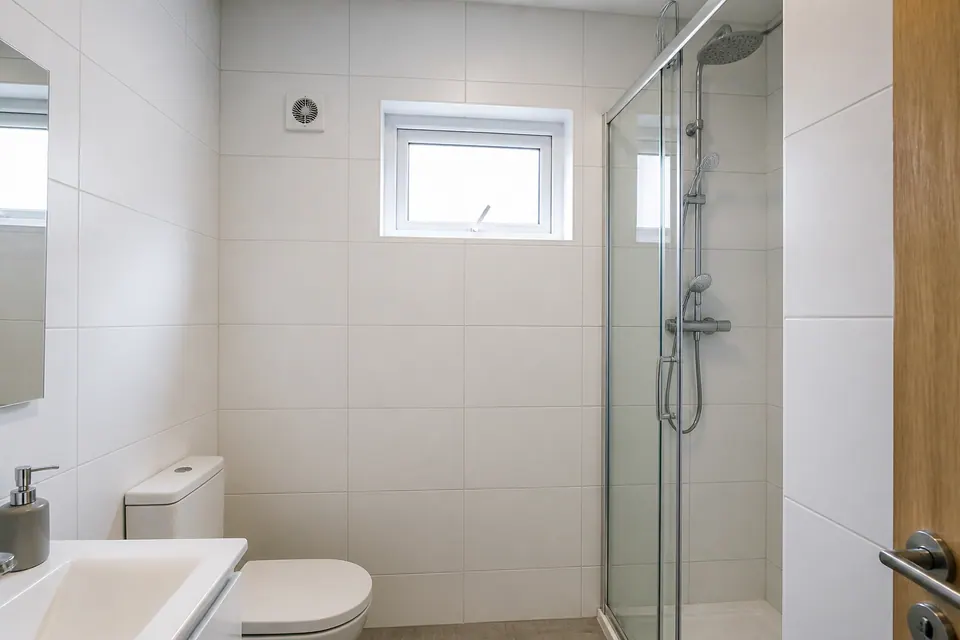
Say whether the work involved pipework, an overflow or a seal. These details help describe the incident, but the present ceiling or wall still needs its own suitability decision.
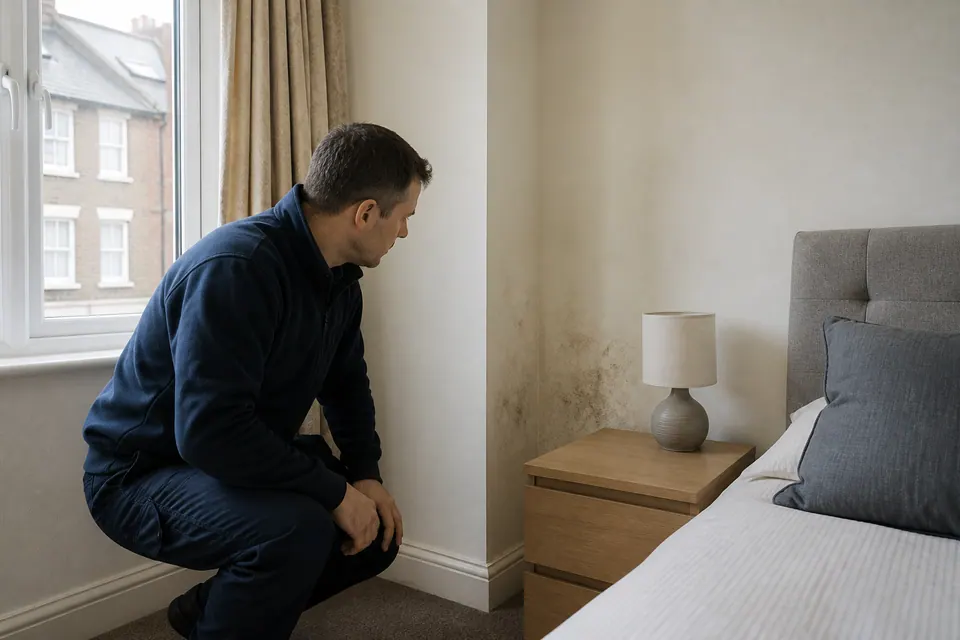
Identify affected wallpaper, paint and furnishings separately. Do not assume that the wall is ready for treatment because a bed has been moved back into the room.
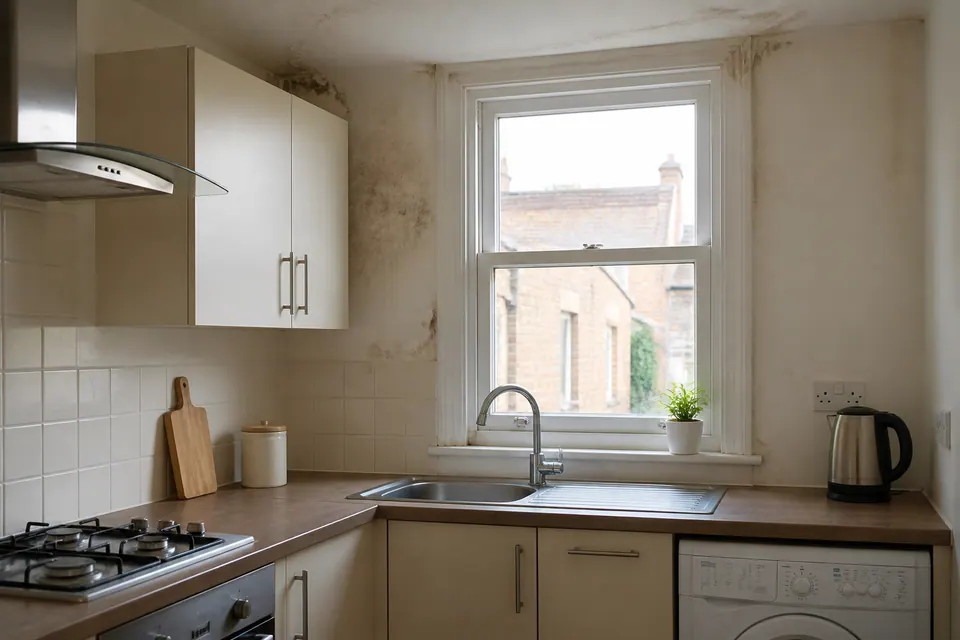
Include the fitting that was repaired in a wide view, then show the current wall finish. Leave fitted panels in place unless access has been separately authorised.
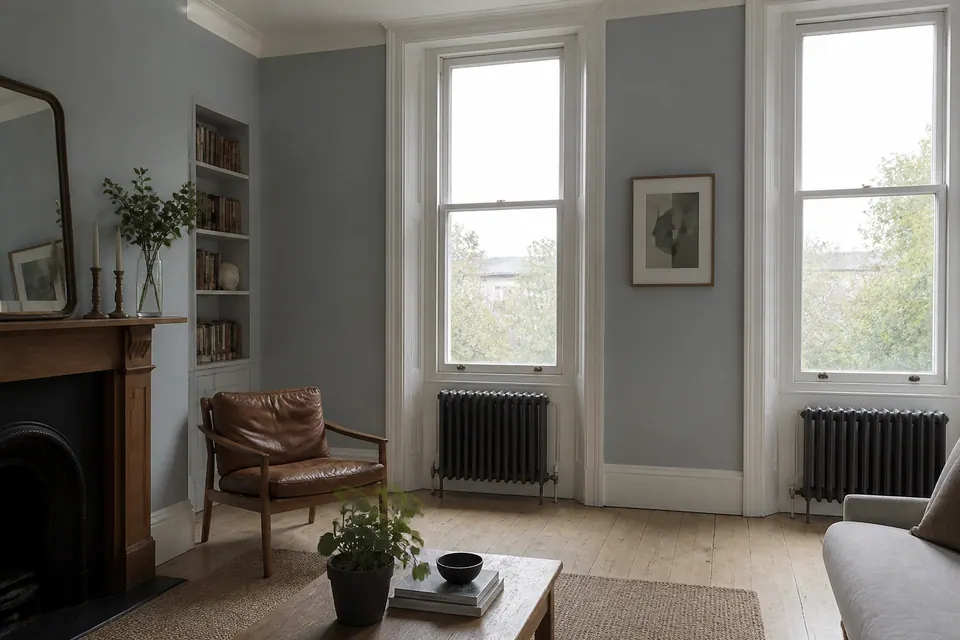
Describe whether the outline has remained stable or whether distinct spots have appeared within it. An unchanged stain and a changing patch should not be reported as the same observation.
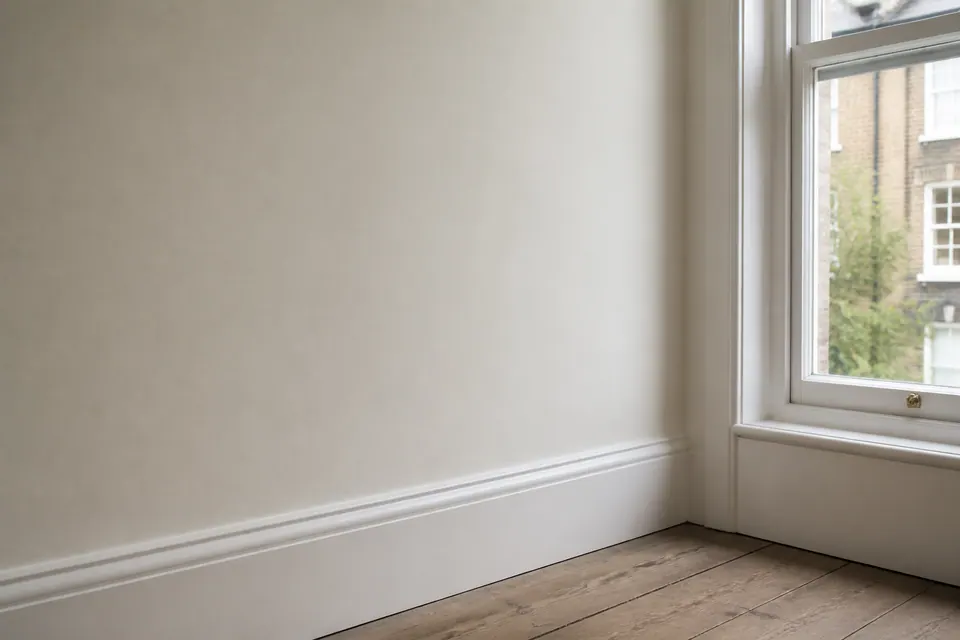
Provide any known information about the incident above, without opening the ceiling. Loose or altered material can affect the next step even if the original water source was addressed.
Show the accessible interior and explain which areas cannot be seen. Treatment of the visible section should not be taken as confirmation about an enclosed backing or the contents stored against it.
Photographs can document change, but they do not certify dryness or establish whether a repair has resolved every moisture concern.
Ruislip / ACCESS & PEOPLE
The resident may see changes that the booking contact has not witnessed. Combine their current observations with the available repair record without treating either as a complete inspection.
Label photographs by level and room. An incident above one ceiling does not establish the condition of another wall elsewhere in the house.
Explain the proposed decorating date, but do not use it as a deadline that overrides suitability. The finish may need a different sequence of work.
Describe what has changed since access was provided to the repair contractor. Confirm who can authorise the next proposed work without assuming this page determines legal responsibility.
Supply the description of completed work and any outstanding items. Pass the treatment preparation information to the person who will actually meet the team.
Ask which part of the condition is being treated and which part may require another trade. A coordinated timetable still needs separate, clearly understood scopes.
Ruislip / THE PROPERTY BRIEF
Describe both, without treating one as proof of the other.
For a Ruislip home with completed plumbing or building work, keep the contractor’s description of that work distinct from your current observations. A receipt may identify what was repaired; it cannot, by itself, tell Alesta which remaining finish is suitable for mould treatment.
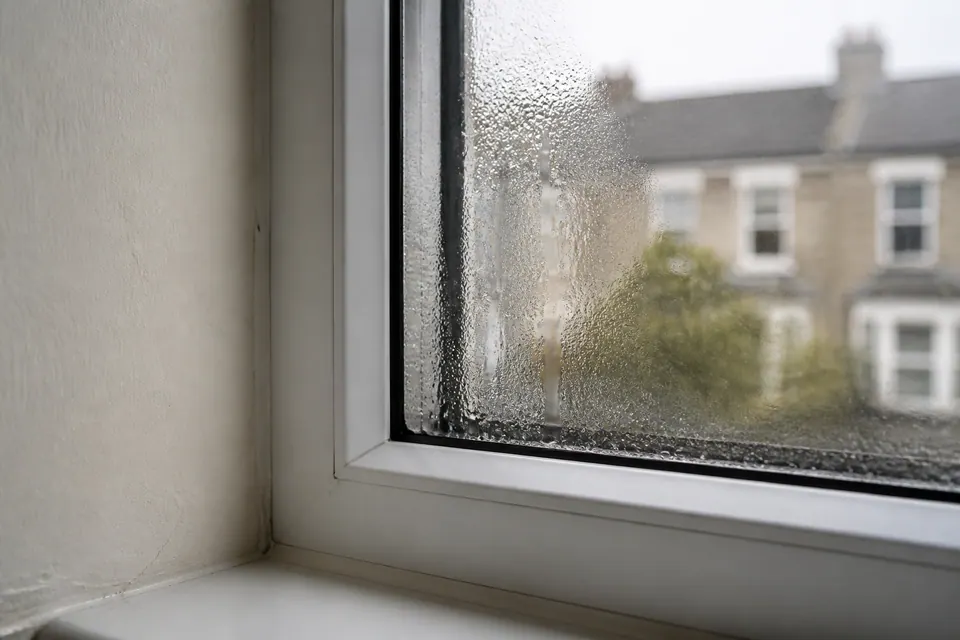
04 / WHEN IT COMES BACK
A later photograph is most useful when it can be compared with the same part of the wall. Keep the angle and surrounding features recognisable; different lighting can make an old outline appear more pronounced without showing new growth.
If fresh wetness, a new position or returning spots are noticed, report them individually. Continuing moisture can support recurrence, but neither a repair invoice nor the colour of a patch settles the explanation.
Note the first incident, repair completion, any decoration and the dates of later observations. Leave uncertain dates uncertain rather than constructing a more precise history than the evidence supports.
05 / A CONTROLLED APPROACH
Compare the current photographs with known incident dates and repair information. Identify what is observed now rather than assuming every mark belongs to the same event.
Clarify the preparation needed for the proposed work and any unresolved wetness or material concern. Make arrangements only once those conditions have been discussed.
Carry out the agreed mould-removal work on the accessible surfaces considered suitable. A damaged finish is not automatically restored by that treatment.
Distinguish the treated growth from residual marks or reinstatement needs. Ask which subsequent changes should prompt another enquiry or a separate repair review.
These stages describe different questions; none is a promise that an earlier leak can never recur.
Record the latest appearance against the dated history.
Treat the suitable area described in the scope.
Review remaining staining or damage separately.
The sequence is illustrative, not a customer’s before-and-after result or a guarantee of permanent removal.
06 / QUOTATION, NOT GUESSWORK
The scale of an earlier leak is not a reliable measure of the treatment now needed. Alesta needs the present affected dimensions, the finish and any limits on access to decide how the quotation should be approached.
Read the current mould-removal service ↗| Current finding | Quotation approach | Useful supporting detail |
|---|---|---|
| A small suitable accessible patch | Photographs may support a quotation | Show its present dimensions and adjoining finish |
| Several areas or a returning patch | Assessment before the scope is settled | Label each location and give the sequence of changes |
| Damaged material or complex moisture concerns | Specialist quotation required | Explain the repair history and unresolved condition |
Ask which current marks and materials the price covers. A treatment quotation should not silently include repainting, replacement plaster or another visit by the original repair contractor.
07 / SEPARATE THE QUESTIONS
A visible outline can persist after an incident. Equally, a new change deserves to be reported rather than dismissed because earlier work has been completed.
| What you notice | Relevant background | What needs clarification |
|---|---|---|
| An outline unchanged since the leak | The coating was previously stained | Is there growth or only residual discolouration? |
| Spots first recorded after the repair | The older image does not show them | What conditions remain around the affected finish? |
| Paint lifting around a former wet area | The material was exposed during the incident | Does the damaged coating need separate reinstatement? |
| New wetness beside a repaired fitting | A further change has been observed | Should the repair contact review this before treatment? |
Share it where relevant, but ask for the proposed mould-removal area and limitations in their own words. Repairing plumbing, treating suitable growth and reinstating a decorative finish are separate decisions.
Appearance alone cannot distinguish every consequence of an earlier moisture event.
| Question | Mould | Damp |
|---|---|---|
| The issue being described | Growth that may need suitable treatment | Moisture affecting the building material |
| The evidence available | Current spots or patches on an accessible finish | The incident record and any continuing wetness |
| The relationship to the repair | Removing growth does not verify the repaired component | A completed repair does not establish the condition of every affected layer |
| The practical next question | Which current surfaces can be included in the quotation? | Is further checking needed before the next work proceeds? |
08 / ROOM-BY-ROOM CONTEXT
Distinguish the previously wet ceiling from seals or fittings involved in the repair. The existing paint condition may affect what is suitable now.
Mention whether wallpaper, a painted corner or the area beside furniture carries the mark. Arrange access and later use around the treatment instructions.
Keep confirmed plumbing work separate from assumptions about nearby appliances. Show what remains accessible once the fittings are back in place.
Photograph the decorative finish and an unaffected adjoining section. An old outline may remain visible even when a separate treatment decision is needed.
Clarify whether the marked part belongs to the dwelling or a shared route. Repair information and permission to work there may come from different contacts.
Give the known incident history without treating the floor level as a diagnosis. Persistent wetness or damaged layers can require work beyond surface treatment.
09 / DIRECT ANSWERS
No single price follows from having had a leak. Small suitable accessible areas may be quoted from photographs; several affected areas, recurrence or damaged materials can require assessment or a specialist quotation.
Ask what the mark represents and whether the finish is ready for decoration. Painting does not replace mould treatment, and damaged or damp material may need other attention first.
Not necessarily. Report the change and its timing without assigning a cause. The repair contact and the treatment enquiry may need different information to review what has happened.
Give the actual completion date and describe current wetness or damage. Timing depends on the assessed condition and proposed work, not a universal interval after a plumber leaves.
Describe the normal sleeping arrangements before booking. Any restrictions and return instructions need to match the agreed treatment, rather than being inferred from the repair schedule.
Peeling paint is a material-condition issue as well as a cosmetic concern. Include it in the enquiry so treatment of suitable growth is not mistaken for repair of an unstable coating.
No restored appearance should be assumed. Remaining staining, joinery defects or decorative damage may need separate work after the treatment scope has been clarified.
A surface mould-removal booking does not imply a plumbing inspection. Provide known repair details and ask separately about any unresolved water issue.
Ruislip / PLAN THE APPOINTMENT
For the Ruislip address, send the full postcode and say who can provide the repair information. Confirm availability before coordinating another contractor around the proposed appointment.
Mention any access restrictions left by unfinished reinstatement, including a room that has not yet been returned to ordinary use.
Load the area map.
Ruislip / BEFORE BOOKING
Bring the repair history without assuming it answers every question about the remaining finish.
Relevant repair details can help explain what was done. Send the current photographs too, because an invoice does not show the appearance or suitability of the remaining surface.
Yes, the removal of suitable growth and the disappearance of every decorative mark are different outcomes. Discuss any expected residual staining before arranging later decoration.
Give the best information available and identify it as approximate. It is more useful to be clear about uncertainty than to attach a precise date without a record.
Report a continuing water concern promptly to the appropriate contact and mention it in the treatment enquiry. Do not assume a mould-removal appointment will resolve it.
Do not disturb loose or affected material just to improve the image. Describe the peeling and show it from an accessible position so the next step can be discussed.
Provide the visible affected dimensions and a wider contextual image. The appropriate scope is decided from the condition and assessment, not automatically from the wall’s total size.
Clarify suitability, remaining marks and any other work first. They may need different arrangements; a booked treatment time is not confirmation that decoration can immediately follow.
Add it as a separate observation with its own photographs and history. Do not assume it shares the same cause or is already included in a quotation for the original patch.
A surface-treatment visit is not certification of a plumbing or building repair. Ask the relevant repair contact about that work and keep its confirmation distinct from the treatment scope.
Ruislip / AFTER REPAIRS
Share the repair record, recent photographs and any question still unresolved. Alesta can discuss the accessible treatment area without assuming the incident and its consequences are the same job.
Property imagery illustrates the enquiry context and does not document a completed customer repair or treatment.
