
Room beside the kitchen
Explain which observations belong to each room rather than calling the entire rear area affected.
PEST CONTROL / CHISWICK
Utility rooms and rear access.
Follow the observation, not a theory about the leak.
A utility room brings laundry equipment, storage and an outside door into a small space. If signs keep appearing there, describe each position and any known moisture issue. For a Chiswick enquiry, useful details are what you saw and what can be reached—not an assumed explanation.
05 / PROPERTY BRIEF
Explain which observations belong to each room rather than calling the entire rear area affected.
Mention restricted working space and connected equipment that cannot be moved readily.
Give the gate and door arrangements if they are relevant to attendance or assessment.
Identify the person responsible for authorising any separate appliance or maintenance work.
Describe how the household uses the laundry area and any method-related access considerations.
Discuss your homeAsk about suitability expressly. Residential treatment does not establish a programme for commercial or communal laundry facilities.
Check the premises requirements01 / START WITH THE EVIDENCE
Choose a possible pest to prepare a description; the room’s function does not identify it.
Damaged packets or material within utility storage.
Mice controlA larger rodent sighting at a rear edge.
Rats controlPhysical evidence at a resting place elsewhere in the home.
Bed bug treatmentInsects returning beside a warm or damp fitting.
Cockroaches controlName the affected shelf and its contents. Explain if the item was brought from another room so its discovery location is not mistaken for its origin.
Describe whether the sighting was inside or beyond the threshold. Do not lift covers or chase an animal to establish a route.
Bedding passing through the laundry does not establish bed bugs in the utility room. Report physical bedroom findings and relevant movement history.
Note the machine, nearby moisture and timing. Disclose products already used around equipment; do not spray again merely because sightings recur.
07 / SCOPE BEFORE A QUOTE
A known leak or connected appliance may affect access. Confirm what the treatment quotation assumes and which maintenance tasks need their own arrangement.
from £120
See published service pricingfrom £150
See published service pricing| Service | Pricing basis | Price |
|---|---|---|
| Mice control | Mouse evidence and utility access | Assessment-based price |
| Rat control | Rat concern and rear-area scope | Quote on agreed findings |
| Proofing / repairs | Plumbing or appliance intervention | Separate maintenance cost |
Published guides checked 27 August 2026. Ask for Chiswick coverage, a total for the selected service and clarity on any work beyond pest control.
CHISWICK / PROPERTY CONTEXT
A narrow room can restrict what is safely inspected. Explain the layout before planning to empty shelves or shift a connected washing machine.
If a leak has been reported, give the fitting and repair status. Keep that confirmed issue separate from a theory that it caused the pest concern.
A back door may be the simplest entry route or may be locked behind another gate. Describe the actual arrangement and relevant keyholder when checking attendance.
Where appliance movement, plumbing or building work is needed, ask how it will be arranged separately. A pest enquiry does not authorise disconnecting services or altering the room.
08 / THE CONTROL PLAN
A leak report is not a pest diagnosis or a treatment plan.
The reported storage and equipment edges guide assessment, while concealed areas and known dampness are recorded as relevant limitations or context.
The proposed intervention follows identification and scope. Utility-room use and preparation should be discussed before work is arranged.
Recommended moisture or access-point work may involve an owner or trade. Coordinate it with review without presenting a repair as proof of pest clearance.
09 / FROM FIRST CONTACT
Open the stages before changing the room layout.

Note which shelf, machine edge or threshold held the evidence before rearranging storage.
Explain connected appliances, narrow gaps and any unsafe access.
Provide the leak or repair status without assigning the pest source from it.
Follow specific instructions for contents and household use; avoid unsupervised disconnection.
Distinguish a new position from recurring evidence at the original fitting.
Identify who will address an agreed plumbing or fabric issue and how that relates to the review.
06 / SIGNS → LOCATION → NEXT STEP
| Pest problem | Signs to describe | Areas to mention | Next step |
|---|---|---|---|
| Mice | Damaged stored contents | Specific shelf or cupboard | Ask for assessment of suspected mouse evidence. |
| Rats | Larger animal near the back door | Inside or outside the threshold | Keep the two positions distinct in the report. |
| Bed bugs | Physical bedroom marks | Bed frame and bedding movement history | Do not diagnose from laundry use alone. |
| Cockroaches | Insects beside a machine | Named appliance, visible gap and moisture | Disclose previous products and inaccessible edges. |
03 / OBSERVATION CHECKLIST
Precise locations help distinguish repeated findings from different events.
Keep clear of connected appliances, suspect contamination and unknown wildlife.
Describe the item affected and whether it was recently moved into the room.
Say which side is visible and which side cannot be reached safely.
Record whether the mark or animal was inside the door or beyond it.
If bedding is involved, explain its movement without assuming that laundry caused or spread a pest.
Include the appliance, time and any known moisture near the same position.
Describe what you heard and where, leaving species identification to assessment.
04 / AT A GLANCE
10 / PROBLEM → TREATMENT → CONTROL
Maintenance may address a relevant condition, but subsequent findings and the agreed monitoring determine the next pest-control step.
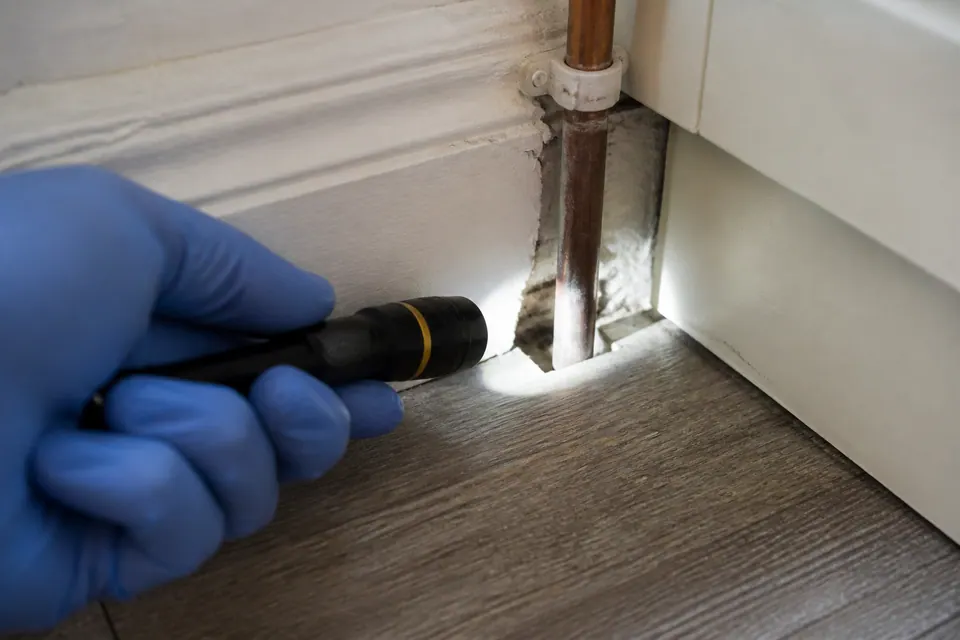
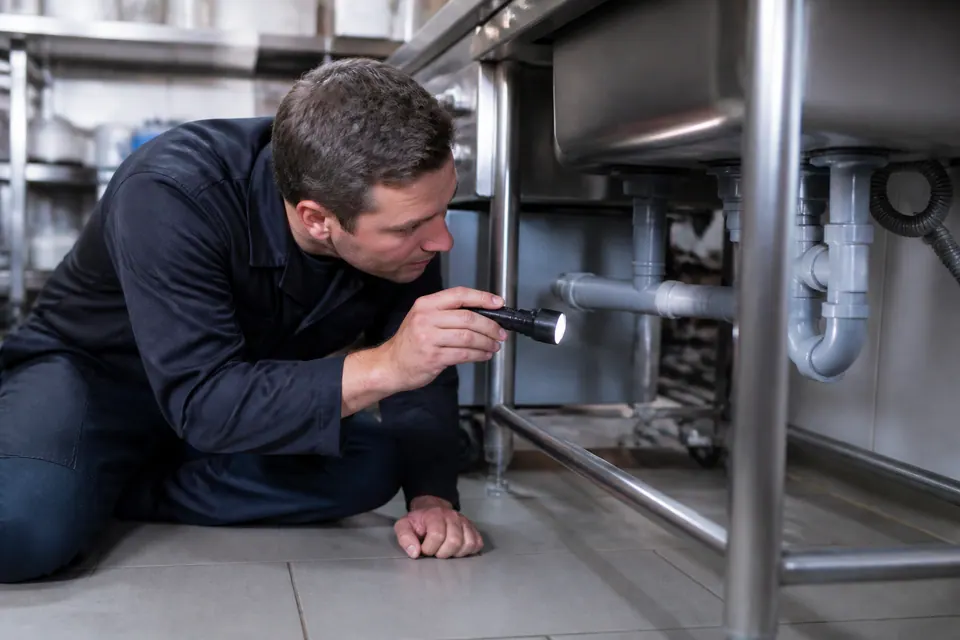
These illustrative scenes are not a Chiswick laundry-room case study or a clearance record.
MAKE THE ENQUIRY SPECIFIC
Give its known status. Ask how the proposed inspection and separate maintenance can be coordinated.
Describe it as inaccessible rather than moving equipment to satisfy a photograph request.
Mention that chronology so the place of discovery is not automatically treated as the origin.
Arrange the correct keys and explain any permission needed before agreeing attendance.
ADDRESS AND AVAILABILITY
Supply the postcode and explain whether the relevant room is reached from inside or through a back entrance.
Check appointment availability and key arrangements before preparing the utility space. The map is an area reference, not an Alesta premises marker.
Open Chiswick in Google Maps ↗13 / CLEAR EXPECTATIONS
A visible leak can be reported without claiming it explains every pest sign.
An inspection request does not automatically include moving connected machines.
Clarify separate responsibilities for follow-up and any recommended repair.
CHISWICK / QUESTIONS
Name the fitting and whether the issue has been confirmed or is only suspected. Provide the repair status if known.
No. Describe the gap and connected equipment, then ask what access is appropriate for the booking.
Tell the assessor where the items came from and when they arrived. That helps preserve the distinction between discovery and possible origin.
State that it is outside and give the position. It does not establish that the utility room is affected indoors.
Give the product and application location if available, even if it was used by another household member.
Explain the connection between rooms and report each finding individually. The scope should name which rooms are included.
Do not treat laundry history as a diagnosis. Physical evidence in the sleeping area is more relevant than a guess based on washed bedding.
A pest visit is not an appliance-repair contract. Discuss any separate trade requirement before relying on disconnection or repair.
Ask for the method-specific restrictions. The machine appearing usable does not override the aftercare instructions for the room.
Report that change clearly. New signs are assessed in context; a repaired fitting does not by itself prove that activity has ended.
15 / TAKE THE NEXT STEP
Call with the positions, known maintenance and access limitations. Confirm the proposed service before moving equipment or arranging a separate repair.
