
Dated finding
State when it was noticed and whether its age is known.
PEST CONTROL / ISLINGTON
A landlord-ready pest report.
Give everyone the same factual starting point.
An occupant and landlord can discuss a pest concern more clearly when they have the same dated observations. For an Islington enquiry, set out the rooms, access and approvals needed. Technical assessment should establish the concern and proposed work, not be treated as a decision about who is responsible for the problem.
ISLINGTON / PROPERTY CONTEXT
The report can be concise: observed sign, date, room and relevant access. Add the decisions needed to make the proposed assessment practical.
A tenant may be able to admit the assessor but not approve work to fixed fittings or common areas. Identify the person who can consider those proposals.
If payment or responsibility is disputed, do not turn the website’s service information into a ruling. Clarify the commissioning arrangement while keeping the findings accurate.
Ask who will receive the scope and any follow-on recommendations. Both parties can refer to the same record rather than different retellings of a conversation.
03 / OBSERVATION CHECKLIST
Use positions that can be located without a general allegation about the property.
Do not disturb suspect material or alter fittings to strengthen the account.
State when it was noticed and whether its age is known.
Identify the actual cabinet, bed or threshold involved.
Explain what cannot be examined without another person’s consent.
Distinguish documented treatment from an unconfirmed recollection.
Describe it without assigning liability or a source.
Add a separate dated entry instead of replacing the original account.
06 / SIGNS → LOCATION → NEXT STEP
| Pest problem | Signs to describe | Areas to mention | Next step |
|---|---|---|---|
| Mice | Damage at a food store | Named room and finding date | Request mouse assessment where appropriate. |
| Rats | Larger rodent observation | Direct sighting and access context | Keep drainage or building theories unconfirmed. |
| Bed bugs | Physical bed-area signs | Sleeping position and evidence | Seek identification without attributing origin. |
| Cockroaches | Recurring kitchen insects | Fitting, timing and earlier products | Provide a factual history for assessment. |
08 / THE CONTROL PLAN
The service conversation should identify practical decisions, not settle a dispute.
Accessible findings and known history can be considered independently of allegations about cause or responsibility.
The proposed method, areas and household instructions need clear approval, with structural or common-area additions separately addressed.
Monitoring and any follow-on maintenance should have an identified decision-maker so recommendations are not mistaken for automatically commissioned work.
09 / FROM FIRST CONTACT
Open the sequence to keep the evidence and approvals aligned.

Give room, position and date without turning an uncertain species into a fact.
Share reliable previous-work information and mark missing details.
Clarify who can accept the proposed scope and any owner-controlled work.
Arrange access and household steps without making unauthorised alterations.
Send new evidence through the agreed contact route while retaining the initial account.
Ask who decides about any recommended repair, proofing or additional attendance.
01 / START WITH THE EVIDENCE
Use the service descriptions to frame the enquiry, not to settle responsibility.
Food or material damage at a named position.
Mice controlA larger rodent observation or relevant physical evidence.
Rats controlPhysical signs around sleeping furniture.
Bed bug treatmentRecurring insects near kitchen equipment.
Cockroaches controlState what was found and where. Avoid replacing the observation with an assertion about the building’s condition or another occupant.
Describe the direct evidence and any relevant owner-controlled space. A suspected drainage issue needs separate confirmation.
Report physical bed-area evidence without treating irritation as identification or attributing an origin to a person.
Provide recurrence and known products. If prior work was arranged by the owner, ask for its details rather than assuming what was done.
07 / SCOPE BEFORE A QUOTE
The starting guides describe service pricing, not a decision about tenant or landlord liability. Agree who approves the proposed work and which tasks it includes.
from £120
See published service pricingfrom £150
See published service pricing| Service | Pricing basis | Price |
|---|---|---|
| Mice control | Mouse concern and reachable scope | Assessed quotation |
| Rat control | Rat programme and authorised areas | Quote after assessment |
| Proofing / repairs | Owner-controlled repairs or proofing | Separate approval and cost |
The guides checked on 27 August 2026 are starting amounts. Confirm Islington coverage, full inclusions and the approving contact; payment responsibility is not established by these figures.
05 / PROPERTY BRIEF
Identify which rooms can be admitted to and who approves the quoted work.
Flag any proposed alteration or repair as a separate authorisation decision.
Clarify who receives information and who has authority to accept a scope.
Name the responsible manager rather than assuming tenant consent extends there.
Keep the household’s evidence and method requirements in the brief regardless of who makes the call.
Discuss your homeCheck suitability separately; a residential landlord contact does not make business premises part of the service.
Check the premises requirements04 / AT A GLANCE
MAKE THE ENQUIRY SPECIFIC
Provide the authorising contact before additions are considered.
Ask for its actual date and scope if available rather than relying on a vague assurance.
Separate that proposal from the pest intervention and seek the appropriate permission.
Keep the observations factual and clarify the commissioning arrangement without treating an assessment as a liability ruling.
10 / PROBLEM → TREATMENT → CONTROL
The outcome still depends on assessment and subsequent evidence. Administrative agreement and technical review answer different questions.
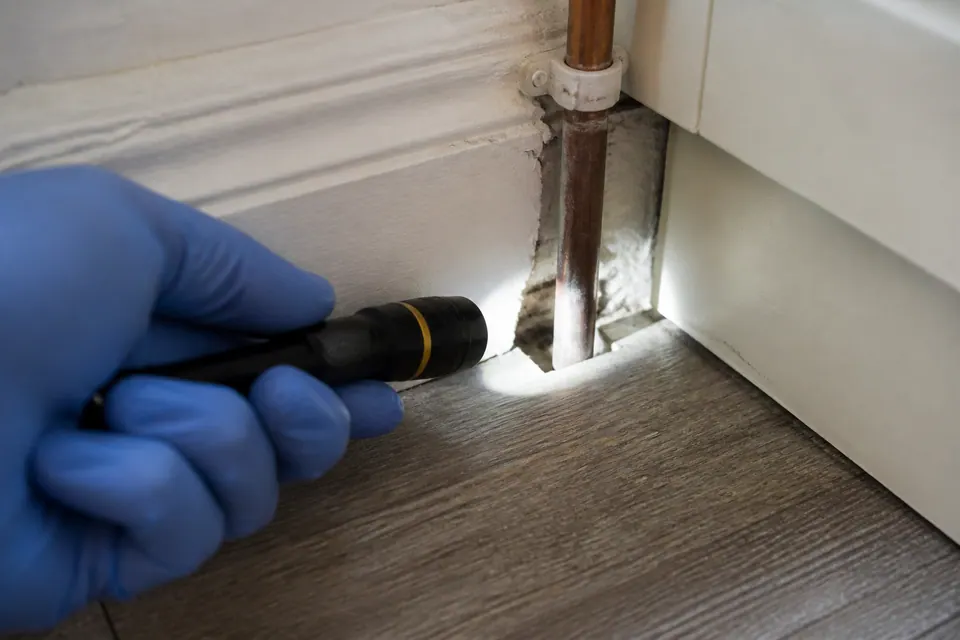

Generated inspection scenes are not an Islington tenancy-condition report or evidence of responsibility.
ADDRESS AND AVAILABILITY
Send the postcode with the person admitting the assessor and the contact receiving the proposed scope.
Check availability before coordinating tenant and owner schedules. The map is an area reference, not a local office or confirmed booking.
Open Islington in Google Maps ↗13 / CLEAR EXPECTATIONS
What was seen, where and when?
Who can authorise the proposed rooms and work?
Who will consider an action that is not already included?
ISLINGTON / QUESTIONS
Use the observed sign, room and discovery date. Keep the species or source uncertain where it has not been established.
Yes, an enquiry can begin with the occupant’s account, but identify who approves the proposed work and provides access.
No. Service pricing does not establish responsibility for paying it; clarify the commissioning arrangement separately.
Ask for known details of earlier work rather than assuming its method or extent.
Identify the person able to authorise alterations. Do not make the change merely to prepare for an assessment.
Agree the communication contact so the proposal and any recommendations reach the person who can decide.
Not by default. Common-area scope and access require the relevant authority.
Keep it attributed and separate from the tenant’s own findings. It does not automatically establish a shared source.
Clarify what the instruction or recommendation concerns and who approves it. A recommendation is not automatically commissioned work.
Add the dated room finding to the existing record and send it through the agreed review route. Avoid rewriting the original account.
15 / TAKE THE NEXT STEP
Call with a factual room report and the contacts for access and approval. Confirm the technical scope without assuming it settles responsibility or payment.
