
One dwelling in a block
Distinguish the flat’s rooms from corridors or service areas. The surrounding building is not automatically included because the address is shared.
PEST CONTROL / STEVENAGE
Scope-based pest enquiries.
Start with a clear account.
A useful Stevenage enquiry identifies the signs and affected spaces without assuming a fixed treatment package. Confirm coverage, then ask how evidence, access and possible follow-up would shape the proposal.
05 / PROPERTY BRIEF
Distinguish the flat’s rooms from corridors or service areas. The surrounding building is not automatically included because the address is shared.
Name the relevant cupboard, loft access or external structure. A house-wide label may conceal practical differences in access and evidence.
Identify who approves additions to the work. Recommendations in an inspection discussion should not be mistaken for authorised maintenance instructions.
Explain which occupants and permissions are involved. A programme covering multiple rooms needs a realistic plan for access and preparation.
Make household use and restrictions part of the discussion, so the chosen method is evaluated against the people using the spaces.
Discuss your homeRequest a separate suitability conversation. Residential guides do not establish commercial contracts, reporting requirements or service availability for business premises.
Check the premises requirements01 / START WITH THE EVIDENCE
The service name is only the beginning. A useful proposal explains which findings it addresses and what it leaves outside the agreement.
Damage in one cupboard, with other rooms not yet checked.
Mice controlA rodent concern involving household and exterior observations.
Rats controlSuspected signs around a particular bed or resting place.
Bed bug treatmentRepeated insects concentrated around kitchen equipment.
Cockroaches controlAsk whether the assessment covers only the reported cupboard or other accessible rooms. The answer should follow the evidence, not a standard whole-house assumption.
An outdoor sighting may change the questions to investigate. It does not automatically include every outbuilding, drain or neighbouring enclosure.
Confirm which beds and associated furniture are included in the assessment. A bedroom count alone may not describe the relevant resting areas.
Discuss accessible fittings, preparation and the proposed method. Cleaning, appliance repairs and pest treatment should not be combined under an unexplained price.
07 / SCOPE BEFORE A QUOTE
Use the published figures as starting references only. The relevant comparison is the agreed work, access and attendance behind the total.
from £120
See published service pricingfrom £150
See published service pricing| Service | Pricing basis | Price |
|---|---|---|
| Mice control | Activity, access and programme | Quote after assessment |
| Rat control | Internal / external routes and visits | Quote after assessment |
| Proofing / repairs | Surveyed openings and separate work | Quoted separately |
Mice, rats and general inspection are priced after assessment; repairs and proofing need separate agreement. Confirm the current total before booking. Source guides checked 27 August 2026.
STEVENAGE / PROPERTY CONTEXT
Two quotations with similar totals can describe different work. Compare their boundaries rather than assuming that the lower or higher figure refers to the same programme.
First establish whether Alesta can provide the requested residential service at the Stevenage address. A scope discussion does not itself confirm coverage or a booking.
Ask for the reported zones to be identified clearly. If concealed space cannot be inspected, the limitation should remain visible rather than being presented as checked.
Separate optional recommendations from agreed treatment. Repairs, proofing or further investigation can be relevant without already being commissioned as part of the first proposal.
08 / THE CONTROL PLAN
The process is easier to follow when assessment, intervention and subsequent recommendations remain distinguishable.
An assessment establishes what accessible signs support and where uncertainty remains. Its result may be a more specific question, not immediate treatment.
Discuss the proposed approach alongside household restrictions and preparation. A named service alone does not explain how the property will be handled.
Later activity informs review. Building recommendations can remain separate from the control programme even when both contribute to managing the problem.
09 / FROM FIRST CONTACT
Open the stages below to see the decisions that belong in a proposal. They are not a fixed timetable or a guarantee of one-visit resolution.

State the address, observations and affected areas. Avoid asking for a chemical or package before the concern has been considered.
Explain restrictions and unresolved permissions. Assessment cannot responsibly be described as complete where relevant areas remain unavailable.
Ask what the method, rooms and attendance cover. Query ambiguous terms rather than assuming they include everything you expect.
Make sure the responsible person accepts the actual scope. A useful recommendation is not automatically permission to carry out additional work.
Follow the supplied recording guidance and distinguish fresh evidence from the original marks. That comparison helps shape the review decision.
If repairs or proofing are discussed, clarify who would arrange them and how their sequence relates to the control work.
06 / SIGNS → LOCATION → NEXT STEP
| Pest problem | Signs to describe | Areas to mention | Next step |
|---|---|---|---|
| Mice | Food-storage damage with uncertain extent | The cupboard and any separately reported rooms | Clarify assessment extent before choosing a rodent programme |
| Rats | An external sighting alongside indoor sounds | Two evidence locations, not a proven connecting route | Ask which areas need investigation and permission |
| Bed bugs | Physical signs near a resting place | The bed and accessible surrounding furniture | Identify what the bedroom proposal actually covers |
| Cockroaches | Insects repeatedly appearing at kitchen fittings | Accessible equipment edges and nearby storage | Distinguish treatment from cleaning or appliance work |
03 / OBSERVATION CHECKLIST
Mention changes before accepting a proposal based on an earlier version of the household account.
Do not investigate concealed areas yourself to make a scope appear complete. Explain the limits of what is known.
Give its own description rather than adding it to a general room count. A different sign may raise a separate assessment question.
Identify fitted units or blocked areas that limit observation. The quote should not imply that hidden surfaces have already been examined.
Provide the name or packaging details where known and when it was used. Prior intervention can affect the next assessment.
Say whether it is a sighting, damage or a suspected route. It may require discussion without becoming an automatic extension of treatment.
Disclose a room returning to use or a new occupant. Preparation and practical restrictions need the current household picture.
Keep the service choice open if the signs remain ambiguous. An uncertain label is not a sound basis for selecting a method.
04 / AT A GLANCE
10 / PROBLEM → TREATMENT → CONTROL
A change in appearance is not the same as completion of a programme. Review should refer to the findings and objectives discussed for the property.
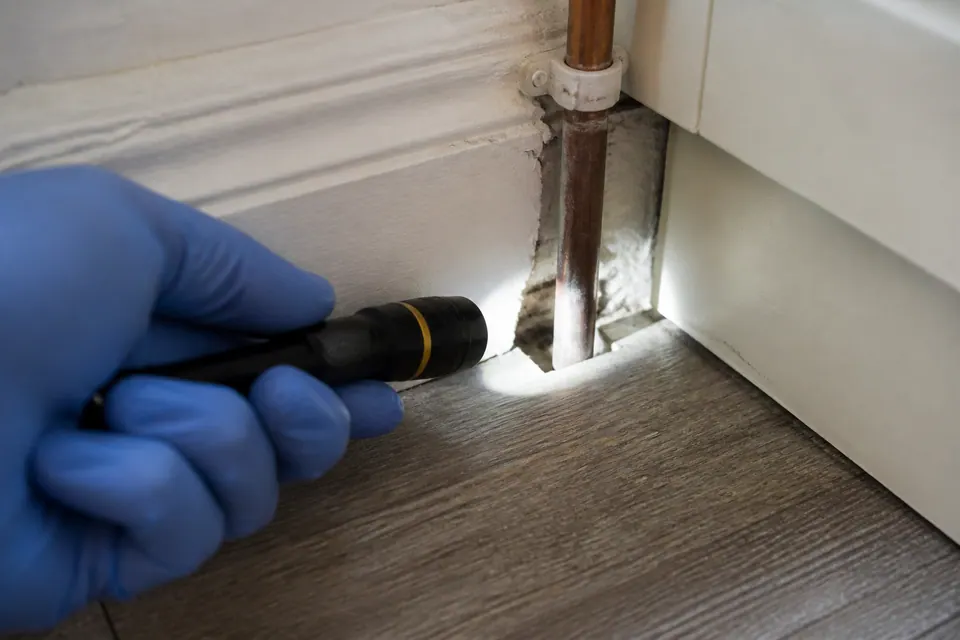

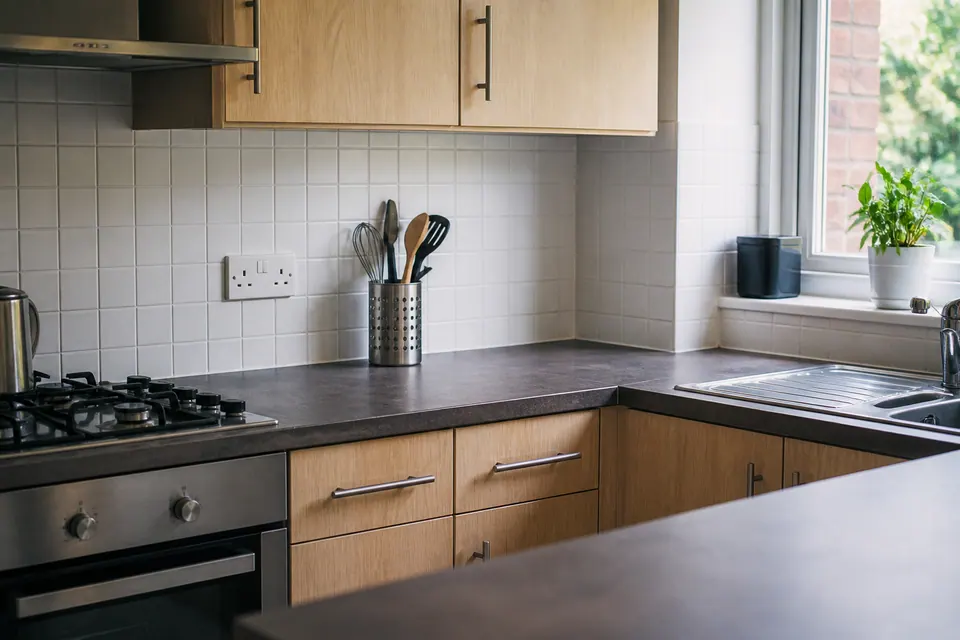
Illustrations describe the stages conceptually; they are not Stevenage job records or evidence that a particular programme achieved clearance.
MAKE THE ENQUIRY SPECIFIC
Ask whether the description includes the accessible cupboards and equipment edges you reported. Do not infer hidden-space work from the room name.
Clarify whether it means monitoring advice, a conditional review or included attendance. The word alone does not specify a number of visits.
Check whether it is priced and authorised or simply an action to consider. A treatment quote need not include building alteration.
Provide the separate evidence and ask whether the proposal needs revision. Expanding a room list can change both practical requirements and cost.
ADDRESS AND AVAILABILITY
Confirm the location can be considered, then describe the dwelling and the specific spaces raised in your enquiry.
Give the property entrance and any separately controlled area in plain terms. The area map does not define the limits of a treatment agreement.
Open Stevenage in Google Maps ↗13 / CLEAR EXPECTATIONS
You can explain which work is being commissioned without relying on a broad promise to solve every possible pest concern.
Areas not examined or tasks not included remain explicit, instead of disappearing from the discussion once a price is mentioned.
You know what evidence would prompt review and who needs to consider separate maintenance or a change in scope.
STEVENAGE / QUESTIONS
It provides a starting reference for a particular service, not a promise about the total for your property. Ask what your findings require.
That can be misleading. Different inspection boundaries, preparation and review arrangements may account for apparently similar or different prices.
Ask for the limitation to be explained. A room with concealed or blocked areas should not be presented as fully examined by assumption.
Do not assume separate cleaning is included. Discuss the selected method’s aftercare and any additional service as distinct items.
No automatic inclusion should be inferred. The relevant openings, proposed alterations and cost need their own clear agreement.
Ask what the customer should record, how it will be reviewed and whether further attendance forms part of the quoted arrangement.
The appropriate method may also change. An earlier tentative label should not lock the household into work unsupported by the assessment.
Only where that person has the relevant authority. Providing access and accepting a revised price are separate responsibilities.
Ask why the wider extent is proposed and what evidence supports it. Neither a narrow nor a broad programme should be selected purely from the label.
Coverage, scope, price and practical arrangements need direct agreement. A website guide or enquiry response alone does not settle all four.
15 / TAKE THE NEXT STEP
Describe the signs first, then ask what an assessment would include. Check the proposal’s boundaries before making commitments about rooms, preparation or extra work.
