
Same appliance edge
Note each recurrence at the named position rather than using an uncertain overall count.
PEST CONTROL / SHEPHERD’S BUSH
Repeated sightings near appliances.
A recurring sighting deserves a clearer account.
If insects keep appearing beside the fridge or cooker, another spray may leave the underlying question unanswered. For a Shepherd’s Bush enquiry, record the insect, its position and what has already been tried. Identification and safe access should guide the next step.
SHEPHERD’S BUSH / PROPERTY CONTEXT
The useful pattern is precise: which edge of which appliance, at what times and after which previous action. Broad statements about insects everywhere can hide that detail.
If a product was used, give its name where known, the position and approximate date. Say if another person applied it and you do not have the details.
Do not reach into connected equipment or spray concealed spaces simply to improve the report. Explain the inaccessible recess and ask how assessment can proceed safely.
A visible leak or warm fitting can be relevant context. Neither is a species identification or a confirmed explanation for the infestation.
03 / OBSERVATION CHECKLIST
A short event log can be clearer than another round of guesswork.
Avoid handling unknown insects or reaching behind powered appliances.
Note each recurrence at the named position rather than using an uncertain overall count.
Record a new position separately so the assessment can distinguish locations.
State what was applied and when, without assuming disappearance or recurrence proves its effect.
Describe an observed leak or damp area separately from the pest identification.
Keep chewing, noise or bedroom marks distinct from the insect sightings.
Explain the access restriction; an unseen gap should not be described as a confirmed harbourage.
06 / SIGNS → LOCATION → NEXT STEP
| Pest problem | Signs to describe | Areas to mention | Next step |
|---|---|---|---|
| Mice | Damaged food packaging | An identified storage unit | Request assessment of the rodent possibility. |
| Rats | A larger animal seen | Precise sighting point | Describe the observation independently of insects. |
| Bed bugs | Visible bed-area marks | Sleeping furniture and nearby belongings | Seek physical identification, not a symptom-based guess. |
| Cockroaches | Repeated kitchen insects | Same appliance edge or a new fitting | Provide an event and product history. |
08 / THE CONTROL PLAN
The next action should follow assessment, not repetition of an unsuccessful guess.
Accessible findings and earlier interventions help define the problem, while an unknown insect remains unidentified until sufficient evidence is available.
The chosen approach should suit the pest and household. Ask how equipment access and previous product use affect the plan.
Keep later observations precise so the review can consider whether the location or pattern has changed and whether another step is needed.
09 / FROM FIRST CONTACT
Open each stage before planning another intervention.

Name the fitting and record the event date or approximate time.
Give reliable product information and say where details are unknown.
Avoid choosing a named treatment solely because the insect appeared in a kitchen.
Prepare and use the room according to the selected method, not a previous product’s assumptions.
Distinguish sightings at the original edge from those near another fitting.
Use the new findings to clarify any further attendance or separate maintenance.
01 / START WITH THE EVIDENCE
A kitchen position alone does not identify a pest.
Food damage or small droppings in storage.
Mice controlA larger rodent sighting with a defined location.
Rats controlPhysical evidence beside resting furniture.
Bed bug treatmentRepeated insect sightings near equipment.
Cockroaches controlDo not fold chewed packaging into an insect report automatically. Explain its cupboard and discovery date as a separate observation.
Give the actual sighting location and whether it was inside. A kitchen insect cannot establish a rat route.
Report physical signs around the bed and relevant belongings separately. Skin symptoms alone do not identify bed bugs.
A safe photograph may help, alongside times, equipment and moisture. Do not handle unknown insects or assume every kitchen insect is a cockroach.
07 / SCOPE BEFORE A QUOTE
Recurring insects do not by themselves establish which treatment is needed. Confirm the service, reachable areas and proposed review before accepting a total.
from £120
See published service pricingfrom £150
See published service pricing| Service | Pricing basis | Price |
|---|---|---|
| Mice control | Mouse-related evidence | Assessment-led quotation |
| Rat control | Rat findings and programme | Quote for agreed scope |
| Proofing / repairs | Equipment access or repairs | Separate work arrangement |
The published starting guides were checked on 27 August 2026. Confirm address coverage and inclusions rather than treating a guide as unlimited repeat treatment.
05 / PROPERTY BRIEF
Identify fixed panels and recesses that cannot be reached without altering the installation.
Keep users’ observations attributed and disclose products applied by different occupants.
Explain restricted working space before assuming all equipment can be moved.
Name the person responsible for any separate disconnection or maintenance decision.
Discuss occupants and normal room use when preparation and restrictions are agreed.
Discuss your homeAsk Alesta to confirm suitability and requirements separately; residential service pages do not establish commercial provision.
Check the premises requirements04 / AT A GLANCE
MAKE THE ENQUIRY SPECIFIC
List what is known and where it was applied; missing details should be stated honestly.
Record the recurrence without assuming the source is visible or the previous treatment failed in a particular way.
Describe the limitation instead of attempting unsafe appliance movement.
Keep their observation attributed and include any safe photograph they already have.
10 / PROBLEM → TREATMENT → CONTROL
An insect not appearing during one check does not settle the result. The review should use the agreed observations rather than a freshly cleaned appliance front.
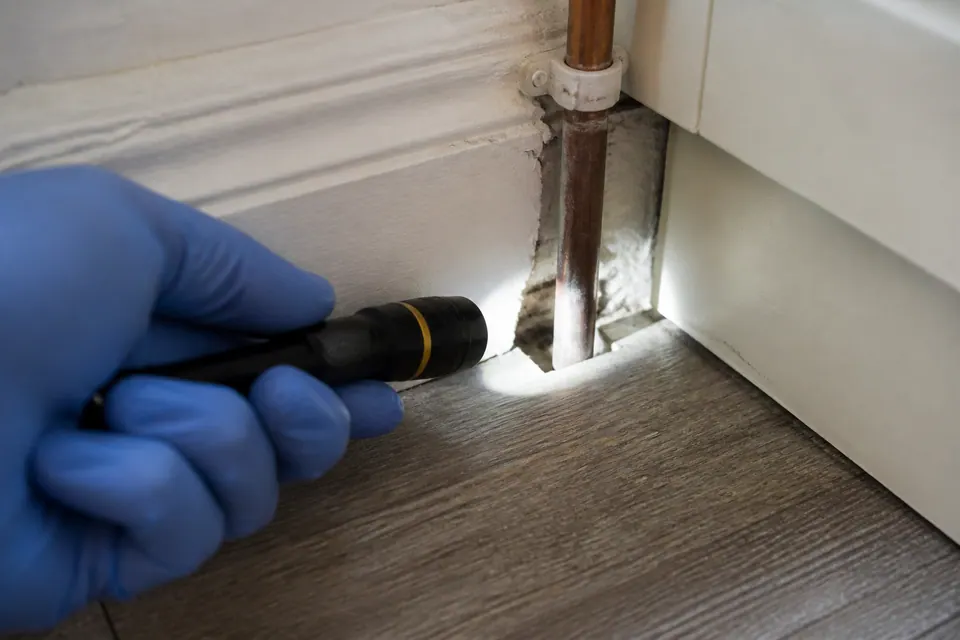

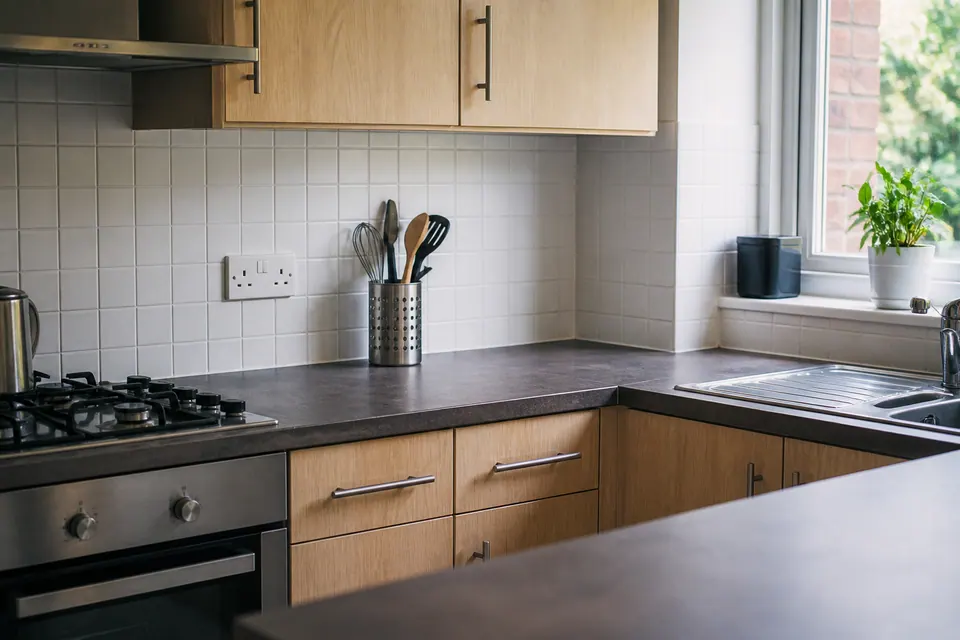
These are generated inspection scenes, not a Shepherd’s Bush customer treatment sequence.
ADDRESS AND AVAILABILITY
Give the postcode and explain any shared entrance or person needed to admit the assessor.
Confirm availability before clearing the room. The map gives area context and does not mark a local Alesta office.
Open Shepherd’s Bush in Google Maps ↗13 / CLEAR EXPECTATIONS
The presence of a kitchen appliance does not identify the insect.
Previous products and observed recurrence should be disclosed before another method is chosen.
Get preparation and aftercare linked to the actual booking and occupants.
SHEPHERD’S BUSH / QUESTIONS
Not by itself. The insect’s appearance and other evidence need assessment; the appliance location is context.
Provide the product name or packaging details if available, where it was used and approximately when.
Say that the details are unknown and whether another occupant might know. Do not invent a product history.
Include times if observed naturally, without approaching or disturbing insects to create a better record.
Keep the finding separate and explain its storage position. It may require assessment as a different concern.
Do not dismantle powered equipment or reach into unsafe gaps. Describe the restriction when arranging the assessment.
Record it, but do not treat the absence as proof of lasting control. Monitoring and review depend on the identified concern.
Disclose the shared use and each person’s relevant observations or products. Agree access and occupant instructions clearly.
A move to another location is a new detail to report, not automatic evidence of a particular spread pattern.
Ask for method-specific instructions on cleaning and room use. A general clean should not override directions concerning treated areas or devices.
15 / TAKE THE NEXT STEP
Call with the appliance positions and earlier intervention details. Confirm the assessment and availability before applying another assumed solution.
