
What was visible
State the feature you actually saw, leaving unclear detail open.
PEST CONTROL / LEWISHAM
A first report with uncertain identification.
You do not need a confident species name.
A brief glimpse, an unexplained mark or an insect you do not recognise can still be described usefully. For a Lewisham enquiry, say what was observed, where and when. Ask which service is appropriate without handling the insect or turning a guess into a diagnosis.
LEWISHAM / PROPERTY CONTEXT
The purpose of the enquiry is to establish an appropriate next step, not require the householder to diagnose the problem. A limited observation stated accurately is useful.
If colour, size or movement was unclear, say so. A confident description copied from an online image can misrepresent the actual finding.
Explain whether the observation was direct, recalled later or supplied by another person. These distinctions help preserve the strength of the information.
Check that the suspected concern falls within the available service before arranging treatment. Mice, rats, bed bugs and cockroaches are linked here; another species needs a suitability discussion.
03 / OBSERVATION CHECKLIST
Accuracy matters more than using technical terminology.
Do not handle unknown insects, approach animals or disturb suspect material.
State the feature you actually saw, leaving unclear detail open.
Name the room and surface rather than only the property.
Use the observed time or discovery date without guessing the age of a mark.
Distinguish one glimpse from repeated events you recorded.
Attribute a second-hand account rather than adopting it as your own.
Add prior products or other physical findings separately, not as a forced explanation.
06 / SIGNS → LOCATION → NEXT STEP
| Pest problem | Signs to describe | Areas to mention | Next step |
|---|---|---|---|
| Mice | Damage or possible droppings | Actual storage position | Ask whether assessment supports a mouse concern. |
| Rats | Brief larger-animal glimpse | Observed location and certainty | Avoid declaring a rat from impression alone. |
| Bed bugs | Visible bed-area mark | Sleeping position and physical detail | Do not identify from irritation alone. |
| Cockroaches | Unfamiliar kitchen insect | Fitting, recurrence and safe photo | Check suitability before selecting treatment. |
08 / THE CONTROL PLAN
Uncertainty can guide assessment without being hidden.
Accessible physical findings and the account can inform identification, while unknown details remain explicitly unresolved.
Treatment should follow the established concern and household, not an assumed match chosen online.
A later clear sighting or additional sign may help reassessment. Preserve the original uncertainty rather than rewriting it as certainty.
09 / FROM FIRST CONTACT
Expand the stages to prepare a clear first conversation.
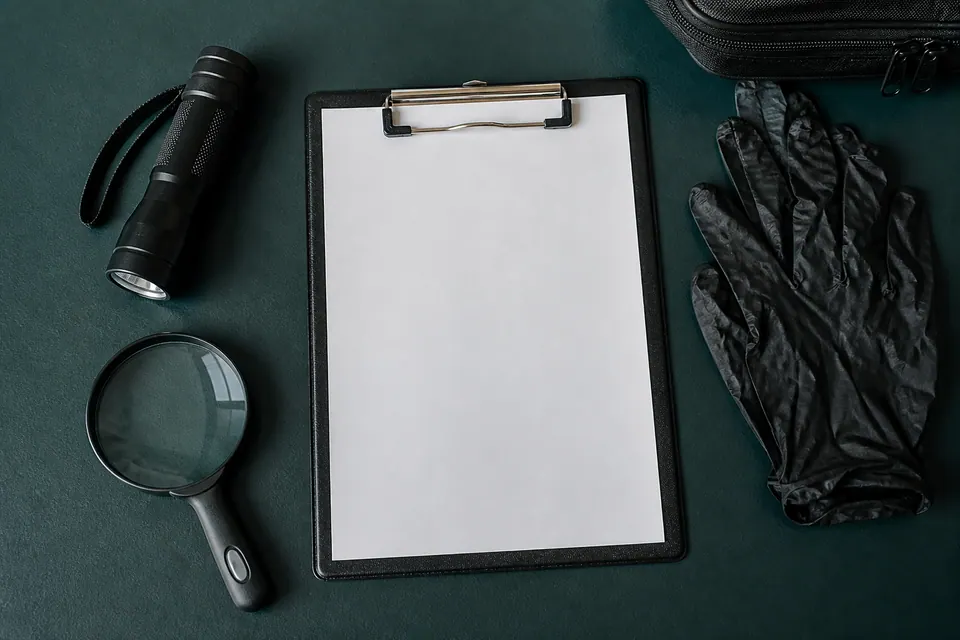
Use plain words rather than borrowing features from a possible species.
Give the room and surface, with timing or discovery date.
Use an image already obtainable without disturbing material or approaching an animal.
Ask which assessment is appropriate for the available evidence and service scope.
Preparation should reflect the proposed next step, not a guessed pest.
Report what has become clearer without changing unknown history into a definite account.
01 / START WITH THE EVIDENCE
These categories help the conversation; they are not a diagnosis from a short description.
Possible rodent signs in storage or accessible rooms.
Mice controlA larger animal sighting that needs clarification.
Rats controlPhysical signs near a sleeping position.
Bed bug treatmentRecurring household insects requiring identification.
Cockroaches controlDescribe the material or damage rather than insisting on mice. Several kinds of observation may need to be assessed together.
Say what was visible and how brief the sighting was. Do not infer species from an uncertain impression of size alone.
Give physical findings around the bed. Skin irritation or an online resemblance alone does not confirm the species.
Provide the position, recurrence and a safe existing image if available. Do not capture or handle it merely to make the enquiry more definite.
07 / SCOPE BEFORE A QUOTE
An uncertain finding should not be turned into a named treatment merely to use a starting price. Confirm the assessment and proposed scope first.
from £120
See published service pricingfrom £150
See published service pricing| Service | Pricing basis | Price |
|---|---|---|
| Mice control | Possible mouse concern | Quote following assessment |
| Rat control | Possible rat concern | Scope-based quotation |
| Proofing / repairs | Separate investigation or repair | Additional agreement if appropriate |
The guides checked on 27 August 2026 provide starting amounts, not a diagnosis. Confirm Lewisham availability and the appropriate service before relying on a treatment total.
05 / PROPERTY BRIEF
Name the fitting and any recurrence, not an assumed cockroach problem.
Describe physical signs separately from skin symptoms.
Identify the affected item and where it was kept.
State that it was outside and how much was actually seen.
Explain the household and accessible areas relevant to the proposed assessment.
Discuss your homeCheck suitability rather than assuming an unfamiliar animal or business premises fits the linked services.
Check the premises requirements04 / AT A GLANCE
MAKE THE ENQUIRY SPECIFIC
Say it was brief instead of filling in features you did not see.
Mention that it is only a resemblance, not the observation itself.
Keep their wording and uncertainty attributed.
Explain the limitation. A photograph should not be obtained by disturbing unknown material.
10 / PROBLEM → TREATMENT → CONTROL
An online match or a tidy room cannot establish identification or control. The actual findings and review process matter.
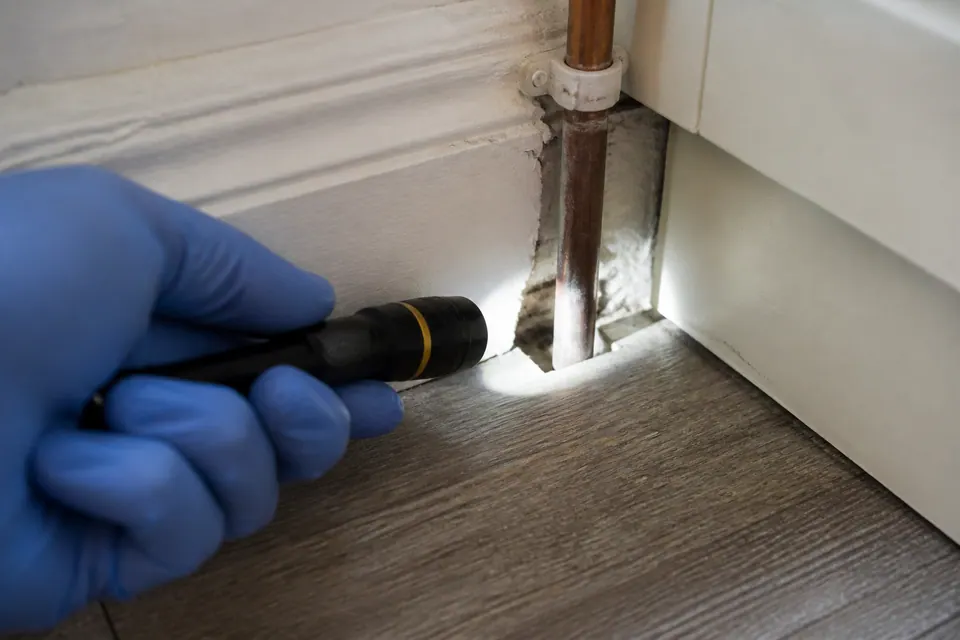
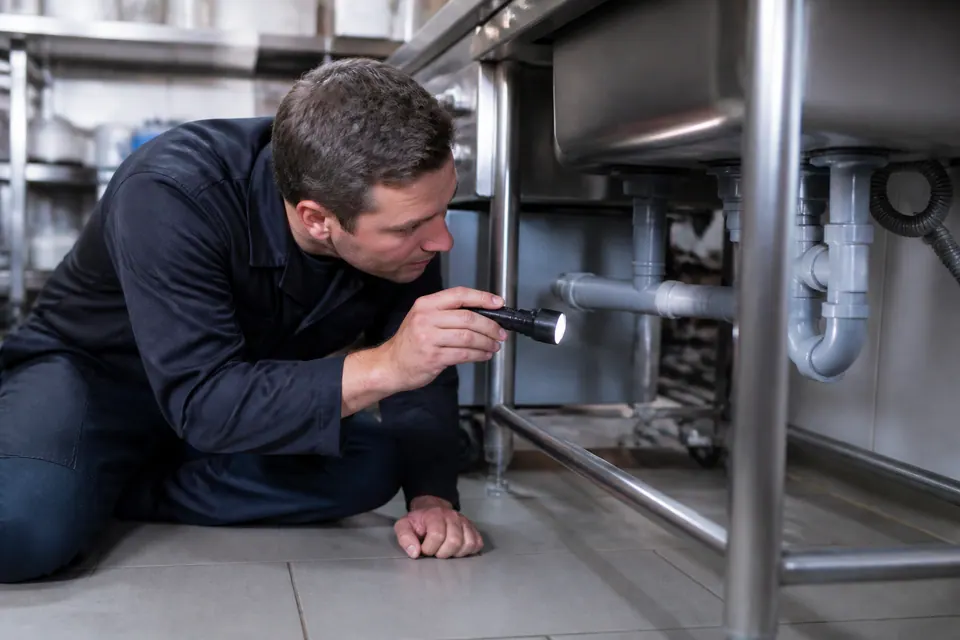
Generated scenes illustrate inspection, not the identification of a Lewisham householder’s unknown pest.
ADDRESS AND AVAILABILITY
Give the postcode and the exact position where the observation was made.
Check suitability and availability before assuming treatment is arranged. The map is a location reference rather than a marker for a confirmed service appointment.
Open Lewisham in Google Maps ↗13 / CLEAR EXPECTATIONS
State features actually seen, not a reconstructed species profile.
Keep direct evidence distinct from another person’s account.
Confirm the service fits before assuming any treatment is promised.
LEWISHAM / QUESTIONS
No. A plain description and location can begin the enquiry while suitability and assessment are discussed.
Say that the glimpse was brief and describe only the features you could see. Do not invent a size or movement pattern.
Not solely for the enquiry. Avoid handling unknown insects and use safe existing evidence where available.
It can explain your concern, but a resemblance is not a confirmed identification of what was found.
No. Provide any physical bed-area findings as well; a skin complaint alone does not identify the pest.
Keep the original uncertainty and say who observed it. A relayed account should not become more definite.
Ask whether Alesta can help before assuming that a linked treatment applies.
The method depends on the established concern. Obtain the relevant household preparation and re-entry instructions once a suitable proposal is made.
Describe the new event and its clarity without rewriting the first uncertain observation.
Provide the actual discovery position and any item movement. Where a mark was found is not always proof of where it originated.
15 / TAKE THE NEXT STEP
Call with the details you actually know. Ask about the appropriate assessment without needing to handle the finding or supply a confident species name.
