
Visible droppings or tracks
Droppings or tracks visible at a storage edge should have a clear room reference.
PEST CONTROL / ROMFORD
Clearing the room and controlling
a pest are different jobs.
Stored belongings can limit what an inspection reaches, but moving everything is not automatically the right preparation. Describe the obstruction and suspected material first so access, treatment and any separate clearance can be discussed safely.
ROMFORD / PROPERTY CONTEXT
First check the postcode is covered. Then identify which areas can be reached normally and which are obstructed by belongings or fixed items.
“The back wall is behind stacked boxes” is more useful than a general description of clutter. It gives the enquiry a concrete access question without claiming the entire room is affected.
Suspected contamination needs disclosure before any handling or removal is proposed. Do not move it through the home merely to make the appointment seem easier.
If separate clearance is necessary, its scope and timing need agreement. Neither disposal nor specialist cleaning should be inferred from a pest-treatment quote.
03 / OBSERVATION CHECKLIST
An incomplete but accurate account is better than unsafe searching behind belongings.
Do not handle suspected waste or drag contaminated items through occupied areas to investigate.
Droppings or tracks visible at a storage edge should have a clear room reference.
Scratching behind items is an audible report, not proof of a particular species.
Gnawed packets or damaged material should be described where found.
Spotting or shed material around a bed needs physical assessment; irritation alone does not confirm bed bugs.
Repeated insects beside an appliance need dates and any products previously used.
Outside activity or nesting material should be observed safely and checked for service suitability when unidentified.
06 / SIGNS → LOCATION → NEXT STEP
| Pest problem | Signs to describe | Areas to mention | Next step |
|---|---|---|---|
| Mice | Droppings near boxes | Visible edge of named storage | Report without handling suspect material |
| Rats | Possible larger-animal signs | Accessible indoor or exterior position | Discuss identification before clearance |
| Bed bugs | Spotting near resting furniture | The relevant bed or frame | Avoid transferring loose belongings speculatively |
| Cockroaches | Recurring appliance insects | Equipment edge and surrounding storage | Disclose access limits and earlier products |
08 / THE CONTROL PLAN
Preparation enables a defined service; it is not the outcome itself.
Accessible evidence is assessed and obstructions are recorded rather than silently treated as examined areas.
The chosen programme identifies its working zones and the preparation required for them.
Review considers activity, while any separate removal or building recommendation remains a distinct responsibility.
09 / FROM FIRST CONTACT
Use the first conversation to identify limitations, not to promise an empty room.
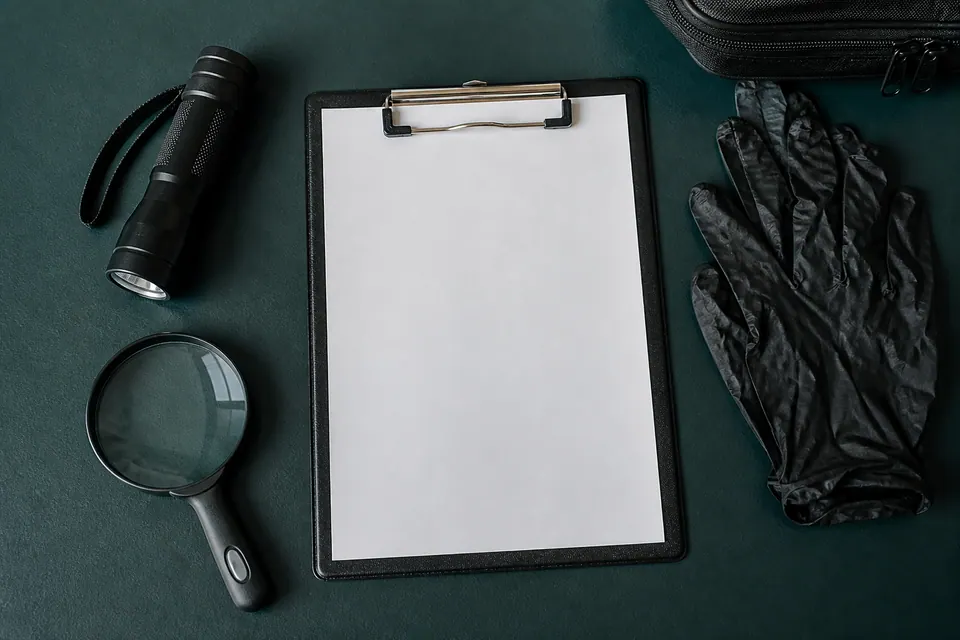
Supply the postcode, actual signs and the positions blocked by belongings.
Disclose suspected contamination and any previous treatments before handling is considered.
Agree the reachable assessment scope and clarify any separate preparation needed.
Follow the issued instructions rather than rearranging suspect contents on assumption.
Report fresh findings using consistent room references after the visit.
Arrange any separately recommended clearance, cleaning or repair through the responsible contact.
01 / START WITH THE EVIDENCE
A crowded room does not identify a pest. The relevant findings determine which service to discuss.
Droppings or damage near stored food.
Mice controlPossible larger-animal evidence in an accessible area.
Rats controlPhysical traces around resting furniture.
Bed bug treatmentRepeated insects beside kitchen equipment.
Cockroaches controlA mouse concern needs locations of actual signs, including any inaccessible storage edge, without handling suspected contamination.
For suspected rats, describe internal and exterior evidence separately. A clearance request is not a substitute for species assessment.
Bed bug assessment should use physical bedroom evidence where available. Do not transfer loose belongings between rooms simply to expose furniture.
Recurring kitchen insects need their own sighting history and earlier product details, regardless of how much equipment or storage surrounds the area.
07 / SCOPE BEFORE A QUOTE
A useful quote states what pest work is proposed and what must happen separately. Disposal, cleaning, furniture movement and repairs should not be hidden inside an assumed all-in service.
from £120
See published service pricingfrom £150
See published service pricing| Service | Pricing basis | Price |
|---|---|---|
| Mice control | Activity, access and programme | Quote after assessment |
| Rat control | Internal / external routes and visits | Quote after assessment |
| Proofing / repairs | Surveyed openings and separate work | Quoted separately |
Guides checked 27 August 2026. Confirm postcode coverage, the agreed preparation and any independently priced clearance or follow-on tasks.
05 / PROPERTY BRIEF
The available walkway and concealed room edges should be described accurately.
Permission and responsibility for moving furnishings may need discussion with the owner or agent.
Fixed fittings are an access limitation, not an automatic instruction to dismantle them.
A private appointment does not establish authority to inspect or clear shared storage.
The residential scope should distinguish reachable treatment zones from separately required preparation.
Discuss your homeCommercial stock, disposal and premises requirements need confirmation rather than inclusion under a domestic booking.
Check the premises requirements04 / AT A GLANCE
MAKE THE ENQUIRY SPECIFIC
Describe the affected edge before moving items; ask what access the intended work requires.
Disclose it without opening or moving it to demonstrate the concern.
Clarify who may authorise movement or separate work before preparing the visit.
Do not infer disposal or cleaning is included. Ask for an explicit division of tasks.
10 / PROBLEM → TREATMENT → CONTROL
Removing contents changes access and appearance. The pest-control result still needs the findings and review appropriate to the agreed programme.
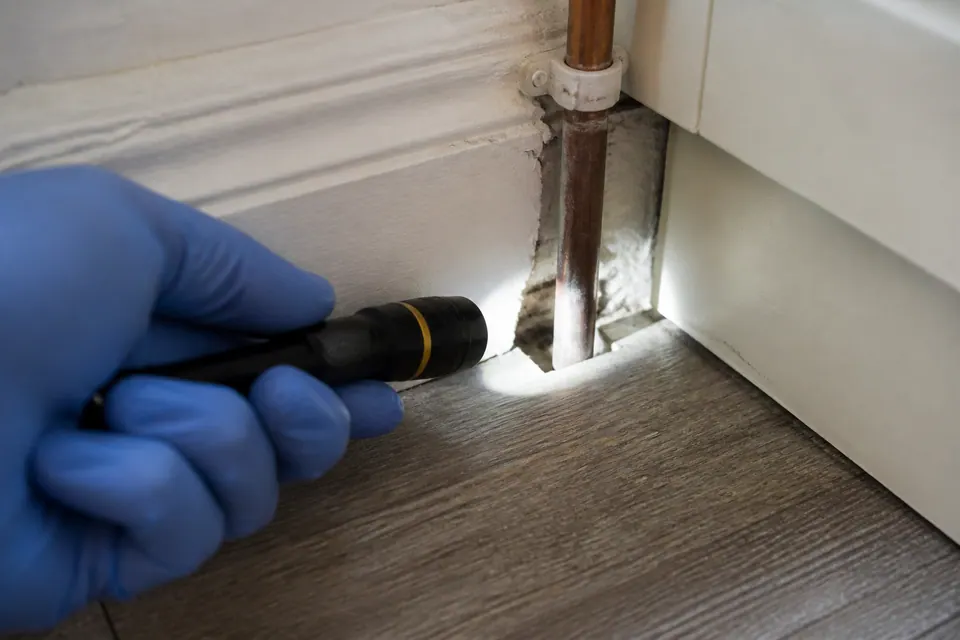
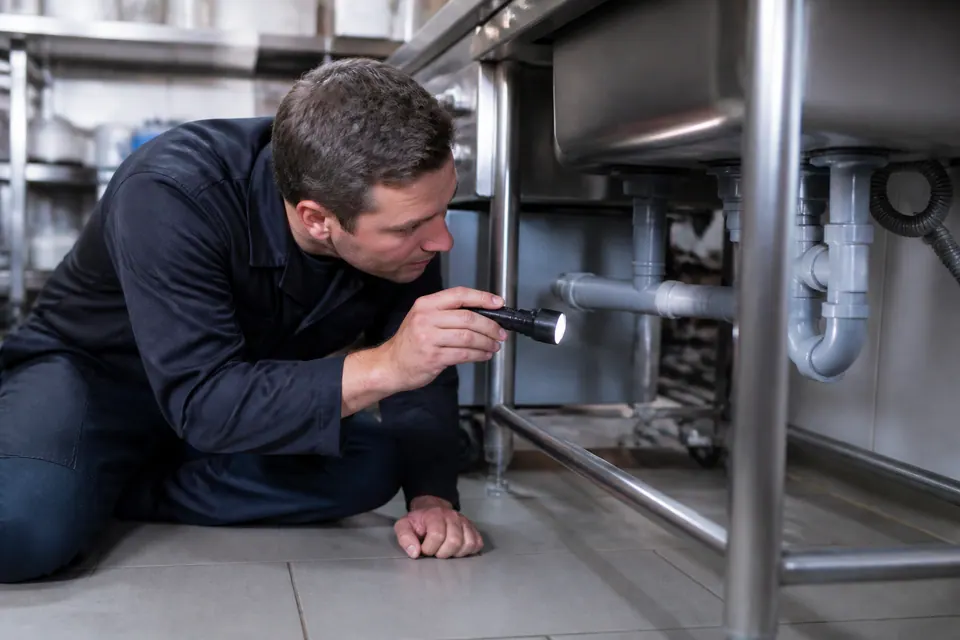
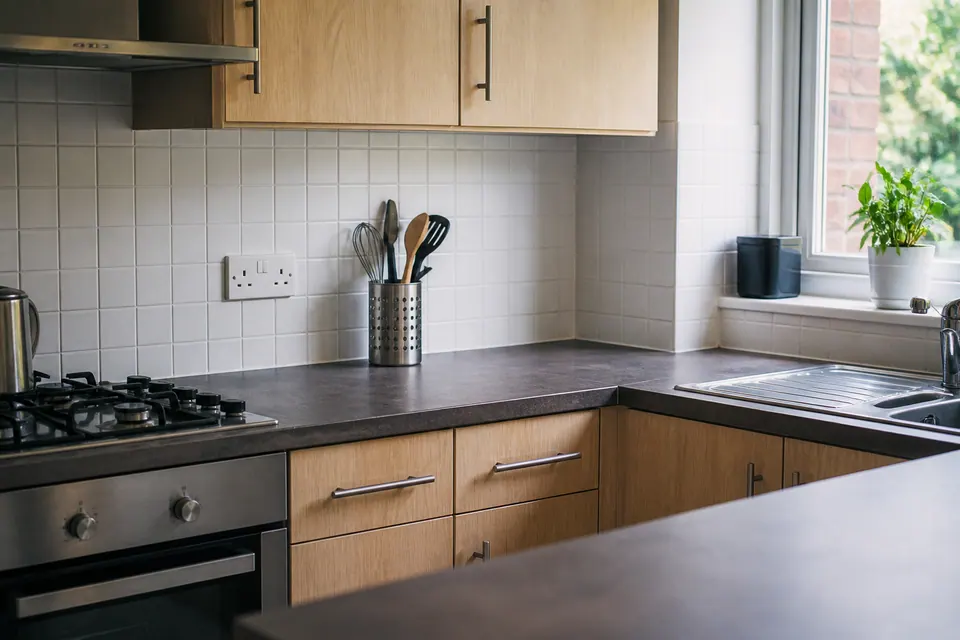
The illustrations are explanatory, not a Romford clearance job or a verified treatment outcome.
ADDRESS AND AVAILABILITY
Give the full postcode and a realistic description of entry to the affected room.
Confirm coverage and availability. A difficult-to-reach area should be disclosed before the appointment, not discovered as an unexpected requirement.
Open Romford in Google Maps ↗13 / CLEAR EXPECTATIONS
Blocked areas should not be described as fully examined.
A pest programme is selected from supported findings, not the amount of clutter.
Clearance and cleaning need explicit agreement if required.
ROMFORD / QUESTIONS
Do not undertake blanket unpacking on assumption. Describe the access problem and follow the preparation for the agreed work.
Do not assume disposal is included. Explain the material and ask what separate arrangements may be needed without handling it yourself.
No. The relevant signs require assessment regardless of how many items are stored.
State the obstruction clearly in the enquiry so the scope acknowledges what may remain inaccessible.
Avoid speculative transfer of potentially contaminated belongings. Obtain appropriate preparation advice first.
Not automatically. Pest intervention and cleaning are distinct tasks unless clearly agreed otherwise.
The responsible person can discuss it, but authority and the actual task should be explicit before attendance.
No. Pest identification, findings and treatment response still determine monitoring and further work.
Give available names and timing of products used, including anything applied behind stored items.
Compare the included pest work and separately required tasks, not merely the headline prices.
15 / TAKE THE NEXT STEP
Check coverage with the postcode and describe both the evidence and access limitation. Agree what preparation is appropriate and what work would remain separate.
