
Flats & apartments
Keep each flat’s findings separate.
PEST CONTROL / BRENTWOOD
Record the next observation
without rewriting the first one.
An uncertain initial mark may recur, remain unchanged or not be noticed again. Keep the dates and any changes to the area so the enquiry reflects what is known rather than a premature diagnosis or clearance claim.
05 / PROPERTY BRIEF
Keep each flat’s findings separate.
Name the floor where each event occurred.
The occupant’s direct account should reach the approving contact.
Communal observations need their own source and authority.
The residential brief should include relevant occupants and access.
Discuss your homeCommercial suitability is not established by a domestic enquiry.
Check the premises requirements01 / START WITH THE EVIDENCE
These services address supported pest concerns, not every unexplained mark.
Droppings or packet damage noticed again.
Mice controlPossible rodent signs at a defined location.
Rats controlPhysical traces around sleeping furniture.
Bed bug treatmentRepeated insects near equipment.
Cockroaches controlA mouse concern needs the location and whether the discovery is distinct from the earlier one.
Rat reports should distinguish direct evidence from an assumed recurrence, including exterior observations separately.
Physical bed signs are needed for assessment; repeating a symptom report cannot itself identify bed bugs.
For recurring kitchen insects, give the sighting dates and products used between them.
07 / SCOPE BEFORE A QUOTE
Repeated observations help describe the concern but do not determine a fixed programme by themselves. Confirm coverage and the assessed work.
from £120
See published service pricingfrom £150
See published service pricing| Service | Pricing basis | Price |
|---|---|---|
| Mice control | Activity, access and programme | Quote after assessment |
| Rat control | Internal / external routes and visits | Quote after assessment |
| Proofing / repairs | Surveyed openings and separate work | Quoted separately |
Guides checked 27 August 2026. Clarify inclusions, review and any further-visit costs before booking.
BRENTWOOD / PROPERTY CONTEXT
Confirm coverage with the postcode. Then give the first discovery and any later observations in order.
A day without another sighting is worth recording, but it does not establish that activity has ended.
Cleaning, moved belongings or products can change what is visible. Include those events between observations.
If a mark’s age is unknown, retain that uncertainty instead of describing it as fresh activity.
08 / THE CONTROL PLAN
The record supports decisions; it does not replace assessment.
Accessible findings are compared with dated observations and limitations.
The chosen method responds to the supported problem and agreed areas.
Later evidence informs review without treating silence as a guaranteed result.
09 / FROM FIRST CONTACT
Keep observations and interventions in sequence.

Provide the postcode and first finding.
Add later events with their own dates.
Disclose changes before scope and method are agreed.
Follow the supplied preparation and restrictions.
Report later signs accurately under review guidance.
Separate property recommendations from pest treatment.
06 / SIGNS → LOCATION → NEXT STEP
| Pest problem | Signs to describe | Areas to mention | Next step |
|---|---|---|---|
| Mice | Repeated cupboard signs | Same named storage | Distinguish new from unchanged |
| Rats | Possible rodent evidence | Precise internal or external area | Give dates without assuming recurrence |
| Bed bugs | Bed-frame traces | Specific sleeping room | Describe physical findings |
| Cockroaches | Repeated appliance insects | Named equipment | Include intervening products |
03 / OBSERVATION CHECKLIST
Date the observation, not an assumed origin.
Do not disturb suspected waste or unknown nests for comparison.
Droppings or tracks need their exact location.
Scratching needs time and position, not species certainty.
Damaged packets need the discovery date and storage reference.
Bed spotting or shed material differs from skin irritation.
Repeated insects need a room and appliance reference.
If an exterior observation occurs after the quiet interval, give it a new date and location. Keep an unknown animal or nest undisturbed while service suitability is checked.
04 / AT A GLANCE
10 / PROBLEM → TREATMENT → CONTROL
Review should consider the available history and relevant findings rather than appearances or one quiet day.
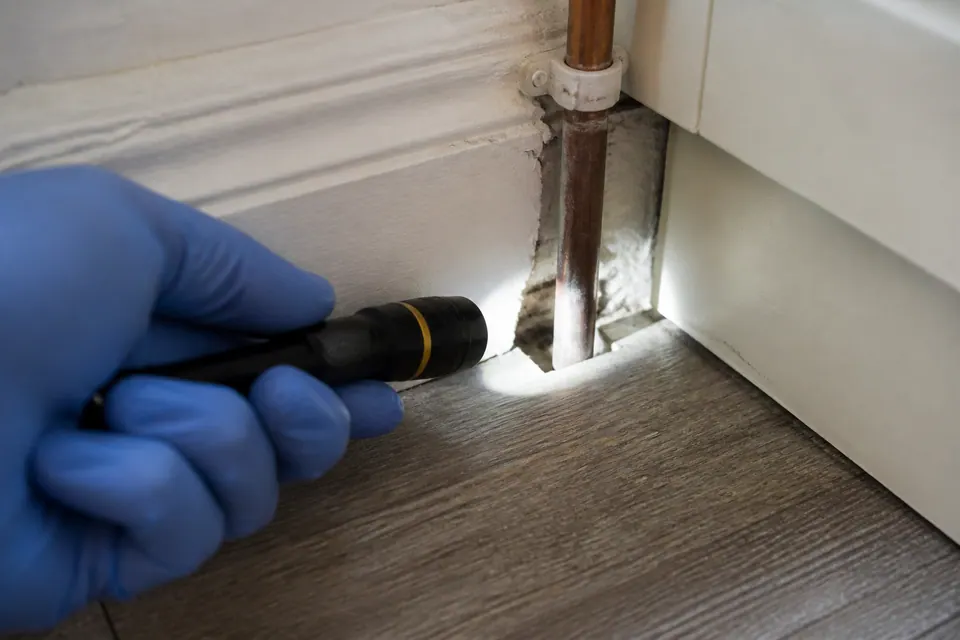

The illustrations do not document a Brentwood customer outcome.
MAKE THE ENQUIRY SPECIFIC
Clarify whether the same mark was photographed again.
Give the cleaning date and original observation context.
Mention any belongings moved since the concern began.
State when nothing further was noticed without claiming a confirmed result.
ADDRESS AND AVAILABILITY
Supply the full postcode with the observation record.
Coverage and appointment availability need confirmation; the map is an area reference.
Open Brentwood in Google Maps ↗13 / CLEAR EXPECTATIONS
A finding should retain its actual discovery date.
Unknown age should not become a claim of fresh activity.
The review route should explain how later information is reported.
BRENTWOOD / QUESTIONS
Not necessarily; state whether anything changed.
Yes, without treating it as confirmed clearance.
Do not assign an unsupported age.
No. Appearance and activity are different measures.
Yes, with dates where known.
Yes; accurately describe what remains unclear.
No. The new findings still require consideration.
Include names, timing and locations where available.
Give a separate location and date.
The agreed review and findings determine the next step.
15 / TAKE THE NEXT STEP
Check coverage and share the dated account, including uncertainty and intervening changes.
