
Droppings or tracks
Droppings or tracks need each exact location.
PEST CONTROL / WALTON-ON-THAMES
Record the sequence without
drawing an unsupported route.
When signs occur in several places, list their observation dates and locations. Mention rooms between them and belongings moved, but do not assume the pest travelled along the path that seems most obvious.
03 / OBSERVATION CHECKLIST
A clear sequence preserves differences as well as similarities.
Do not disturb suspect material or move items to test a route theory.
Droppings or tracks need each exact location.
Scratching needs its own timing and position.
Damaged packets retain their original storage reference.
Bed spotting or shed material differs from symptoms alone.
Repeated kitchen insects need dates and products for each area.
External or nesting activity needs safe observation and suitability checked if unidentified.
WALTON-ON-THAMES / PROPERTY CONTEXT
Check coverage using the postcode. Then list what was noticed first, next and most recently.
An observation date is not necessarily the date activity began. Keep that distinction where age is unknown.
Rooms between sightings may have no confirmed evidence. Describe them that way rather than filling a presumed route with imagined activity.
If belongings were moved, record the movement separately. It is relevant background, not proof of transfer.
04 / AT A GLANCE
08 / THE CONTROL PLAN
The dates provide context rather than proof of hidden movement.
Accessible findings are compared across the agreed locations.
The selected method and zones follow the supported assessment.
Later observations add to the record under review guidance.
10 / PROBLEM → TREATMENT → CONTROL
Review should consider actual evidence and the agreed programme rather than a plausible story about how activity moved.
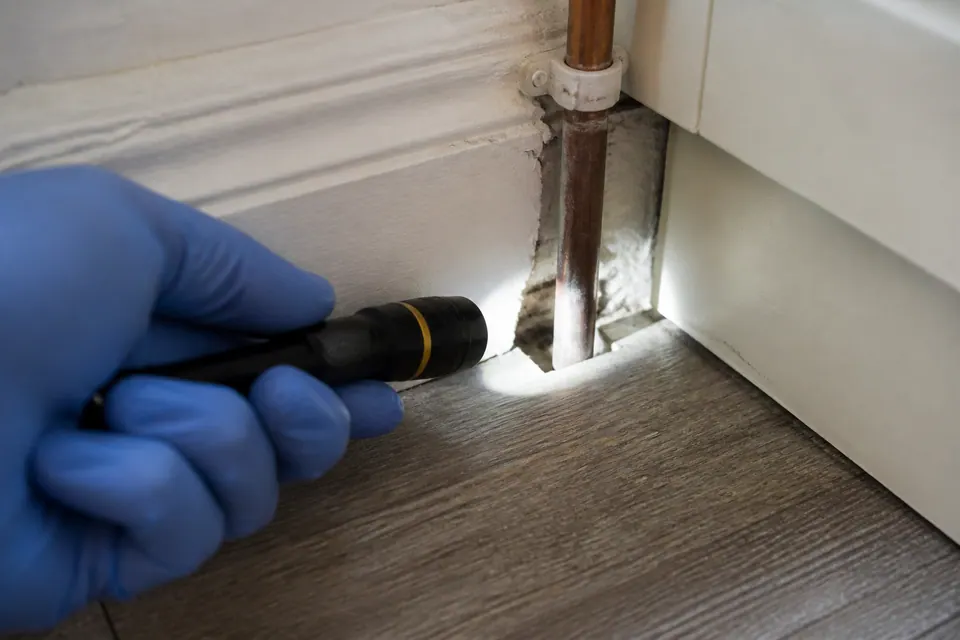

Illustrations do not document a Walton-on-Thames spread pattern or customer result.
07 / SCOPE BEFORE A QUOTE
A line between two sightings does not define the treatment area. Confirm the supported findings, included rooms and quoted programme.
from £120
See published service pricingfrom £150
See published service pricing| Service | Pricing basis | Price |
|---|---|---|
| Mice control | Activity, access and programme | Quote after assessment |
| Rat control | Internal / external routes and visits | Quote after assessment |
| Proofing / repairs | Surveyed openings and separate work | Quoted separately |
Guides checked 27 August 2026. Confirm coverage, total and review arrangements directly.
01 / START WITH THE EVIDENCE
Several locations do not prove one species or one route.
Droppings or packet damage in storage.
Mice controlPossible rodent observations in named areas.
Rats controlPhysical traces around sleeping furniture.
Bed bug treatmentRecurring kitchen insects.
Cockroaches controlMouse enquiries should keep each cupboard finding dated rather than inferring unseen movement between them.
Rat concerns need direct observations and separately located exterior reports.
Bed bug assessment needs physical evidence where available; different symptom reports alone do not map spread.
Recurring insects need individual appliance references and previous-product details for the relevant spaces.
05 / PROPERTY BRIEF
Keep the flat’s locations distinct from neighbouring reports.
Name floors as well as rooms.
Clarify access to separately occupied spaces.
Shared areas require responsible permission.
The residential scope should identify the areas with evidence.
Discuss your homeCommercial premises require suitability checked independently.
Check the premises requirements06 / SIGNS → LOCATION → NEXT STEP
| Pest problem | Signs to describe | Areas to mention | Next step |
|---|---|---|---|
| Mice | Dated cupboard signs | Each named storage area | Record observations independently |
| Rats | Possible rodent sightings | Specific indoor or exterior locations | Avoid an assumed route |
| Bed bugs | Physical bed traces | Each relevant sleeping room | Describe evidence separately |
| Cockroaches | Recurring appliance insects | Individual equipment references | Include dates and prior interventions |
MAKE THE ENQUIRY SPECIFIC
Avoid counting the same event twice.
Keep that absence of confirmed evidence explicit.
Record the movement without declaring spread.
State the age uncertainty.
09 / FROM FIRST CONTACT
Keep each location and date intact.

Provide postcode and first observation.
List subsequent distinct findings.
Disclose item movement and agree scope.
Follow preparation for the selected method.
Add later events without assuming their connection.
Arrange separate recommendations through the responsible contact.
13 / CLEAR EXPECTATIONS
Each sighting needs its own evidence.
Intervening spaces should not be assumed affected.
Movement history is context, not proof.
ADDRESS AND AVAILABILITY
Supply the full postcode and relevant room list.
Coverage and attendance require confirmation for the proposed scope.
Open Walton-on-Thames in Google Maps ↗WALTON-ON-THAMES / QUESTIONS
No. It records observation order only.
Yes, without claiming they have been fully assessed.
No. Record the movement separately.
Identify the duplicate rather than counting it twice.
Yes, retain uncertainty.
The assessed scope determines work.
The relationship needs consideration, not assumption.
Yes, with timing where available.
Give its room, date and actual evidence.
No universal result should be promised.
15 / TAKE THE NEXT STEP
Check coverage and share the locations, dates and movement history without assuming a route.
