
Mice
Suspected material damage in a ground-floor cupboard.
Mice controlPEST CONTROL / STOKE NEWINGTON
Ground-floor rooms and shared passages.
Start with a clear account.
A shared passage may affect access but is not automatically a pest route. Describe evidence inside the home and any outside observations separately, with clear permission for any shared-space assessment.
01 / START WITH THE EVIDENCE
Describe indoor signs and passage observations separately. Being close together does not prove a connecting route.
Suspected material damage in a ground-floor cupboard.
Mice controlAn animal or signs noticed in an outside passage.
Rats controlPhysical marks around a resting place inside the home.
Bed bug treatmentRepeated insects at a kitchen fitting near an external wall.
Cockroaches controlKeep the cupboard position and discovery date with the account. Do not assume an outside opening explains it.
Give the exact position and whether the sighting was direct. Shared access requires its own authority before assessment.
A passage observation does not diagnose an indoor bedroom concern. Physical evidence needs to be considered on its own terms.
Name the visible fitting and any separate outside observation. An adjoining wall does not establish that the same activity crosses it.
09 / FROM FIRST CONTACT
These steps organise evidence and permission, not a guaranteed route diagnosis or one-visit result.

Name the room and surface rather than the entire ground floor.
Identify who observed the passage activity, where and when.
State who controls gates or shared facilities and which permissions remain unresolved.
Clarify the residential scope and any separately authorised assessment before expecting wider work.
Do not substitute immediate gap closure or clearing for preparation appropriate to the method.
Keep later indoor and outside entries distinct so review can compare like with like.
08 / THE CONTROL PLAN
A careful ground-floor enquiry can consider external context without inventing a route between every nearby sign.
The private room and outside passage retain their own dates and observations. Any connection remains a question for assessment.
Shared facilities need the appropriate arrangements rather than an assumption from residential entry rights.
If door or boundary work is discussed, clarify its sequence and responsibility before treating it as commissioned pest work.
05 / PROPERTY BRIEF
Identify the private rooms available for assessment and keep their signs separately recorded.
Name the responsible contact before treating communal access as part of a resident’s booking.
Explain the restriction without promising entry that has not been arranged.
Describe the wall or doorway as layout context while leaving its role in the concern uncertain.
Disclose the occupants and pets relevant to the proposed method and room use.
Discuss your homeCheck suitability independently; residential work does not establish commercial treatment or documentation.
Check the premises requirementsSTOKE NEWINGTON / PROPERTY CONTEXT
A ground-floor room can open onto a shared passage without that passage being the source of a pest concern. Explain the layout without turning it into a conclusion.
Confirm the specific Stoke Newington address and service availability directly. A residential guide does not establish authority or coverage for every adjoining shared area.
Name the room containing the signs and describe outside observations independently. Include who saw them and when rather than merging all activity into one account.
Identify the person responsible for the passage if wider access is discussed. Permission to use a route for entry is not automatically permission to inspect or treat it.
07 / SCOPE BEFORE A QUOTE
A Stoke Newington proposal should make clear whether it concerns the dwelling, an authorised shared area or separate work.
from £120
See published service pricingfrom £150
See published service pricing| Service | Pricing basis | Price |
|---|---|---|
| Mice control | Activity, access and programme | Quote after assessment |
| Rat control | Internal / external routes and visits | Quote after assessment |
| Proofing / repairs | Surveyed openings and separate work | Quoted separately |
Confirm the actual service and inclusions directly. Published guides checked 27 August 2026; repairs and proofing are not automatic parts of residential treatment.
06 / SIGNS → LOCATION → NEXT STEP
| Pest problem | Signs to describe | Areas to mention | Next step |
|---|---|---|---|
| Mice | Damage inside household storage | Specific private cupboard | Discuss the indoor finding without assigning an external source |
| Rats | An animal seen in the passage | Exact outside position and date | Identify authorised access before any wider assessment |
| Bed bugs | Physical marks near sleeping furniture | The actual resting area | Do not connect the bedroom concern to the passage by proximity |
| Cockroaches | Insects at a ground-floor kitchen fitting | Visible indoor location and independent exterior notes | Describe each observation before proposing a route |
04 / AT A GLANCE
03 / OBSERVATION CHECKLIST
The account should show where evidence exists and where there is only a suspected connection.
Do not enter restricted adjoining areas or disturb outside material to investigate a route yourself.
Name the actual cupboard or surface instead of describing the whole ground floor as affected.
Specify the position and type of observation without assuming it represents an indoor infestation.
Separate visible defects from pest signs. A gap can be a maintenance question without being a confirmed entry point.
Describe the boundary and its responsible contact, not an assumed source beyond it.
Attribute the finding to its observer and location rather than presenting it as your own evidence.
Mention door work, clearing or altered access that may affect what is now visible or reachable.
10 / PROBLEM → TREATMENT → CONTROL
Tidiness or an altered doorway changes appearance. Review still needs the relevant findings and the scope actually assessed.
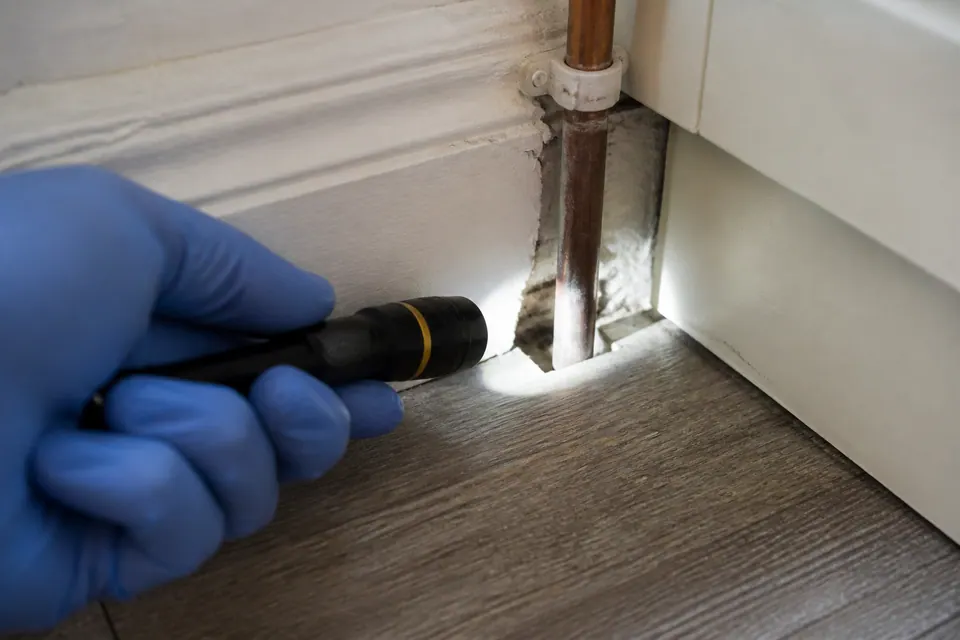
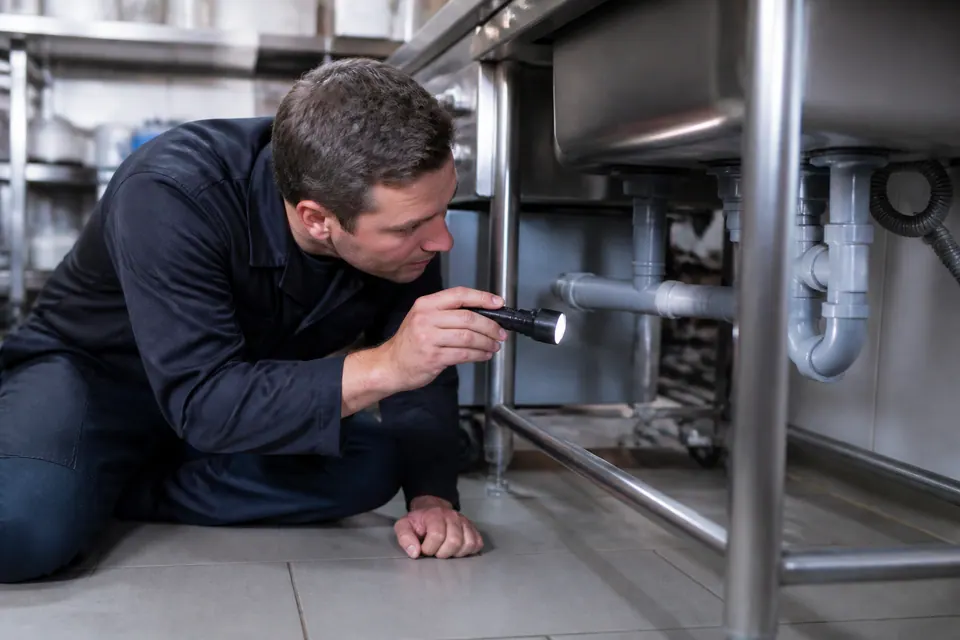
Illustrations do not document Stoke Newington passage conditions, customer jobs or confirmed treatment outcomes.
MAKE THE ENQUIRY SPECIFIC
Record the gap and any direct signs separately. Appearance alone does not establish its role.
Shared-use rights and authority for proposed work are different; identify the responsible contact.
Keep the room’s own evidence explicit, including when none has been observed.
Repairs and treatment have different purposes and arrangements. Their sequence should be discussed rather than assumed.
ADDRESS AND AVAILABILITY
Check the postcode and requested service, then explain which private entrance the passage reaches.
The map provides area context only. Permission for gates, boundaries and shared facilities needs direct clarification.
Open Stoke Newington in Google Maps ↗13 / CLEAR EXPECTATIONS
The account does not treat an adjoining outside observation as automatic proof of the same indoor problem.
The proposed work should match the spaces the responsible party can authorise.
Door repairs and proofing should be identified explicitly rather than hidden inside a general treatment promise.
STOKE NEWINGTON / QUESTIONS
Not automatically. State what has actually been observed inside the dwelling separately.
Yes, while keeping each observation attached to its location.
Use alone does not establish authority for inspection or treatment. Identify the responsible contact.
No. It is a visible feature whose relevance still needs consideration alongside evidence.
Discuss the concern first rather than deciding the proofing sequence on appearance.
Attribute the account and its location, rather than presenting it as your own direct finding.
No automatic inclusion should be assumed. The relevant areas and permissions need explicit discussion.
Not simply because they adjoin. Describe the bedroom’s physical evidence independently.
Tidiness is not evidence that pest activity has ended; review depends on the relevant findings.
Give its own date, position and observer, separate from any fresh signs inside.
15 / TAKE THE NEXT STEP
Bring the private-room evidence and outside observations as distinct accounts. Check the service and access before assuming a connecting route or wider programme.
