
Mice
Damaged material inside a private storage compartment.
Mice controlPEST CONTROL / BOW
Flat storage and service cupboards.
Start with a clear account.
A storage cupboard inside a flat and a building service cupboard may need different permissions. Identify which contains the evidence and which is merely nearby, so the scope remains clear.
01 / START WITH THE EVIDENCE
Name the actual space rather than treating all nearby cupboards as interchangeable.
Damaged material inside a private storage compartment.
Mice controlSounds perceived near a building-service enclosure.
Rats controlPhysical marks on bedding kept in household storage.
Bed bug treatmentInsects repeatedly seen beside a kitchen unit.
Cockroaches controlGive the shelf and item involved. A nearby utility cupboard is not automatically part of the same finding.
Describe the listening point without opening equipment or identifying an unseen animal.
Explain where the bedding was stored and any earlier movements. Irritation alone does not identify bed bugs.
Record the fitting and dates, with known products used. Proximity to services does not prove a connecting route.
BOW / PROPERTY CONTEXT
A cupboard inside or beside a flat can serve a different purpose from household storage. Explain what you know about its use without opening equipment to find out more.
Check the Bow postcode and requested service directly. Availability and an appropriate scope must be confirmed before access is arranged.
Identify where the evidence was actually found and which adjoining space is merely nearby. Keep a suspected connection qualified.
For a restricted enclosure, name the responsible contact or keyholder. A residential booking should not imply utility work or authority over building equipment.
03 / OBSERVATION CHECKLIST
The account should say what is known without treating a restricted door as an instruction to investigate.
Do not open utility equipment, remove covers or enter restricted service enclosures for a photograph.
Use the room and cupboard position rather than the general phrase “by the services”.
Name the material or item without disturbing suspected contamination.
Describe household storage or known building use accurately; qualify uncertainty.
State that it has not been examined instead of assuming it contains the source.
Report only what is safely visible, not treating a pipe or fitting as a proven route.
Identify who controls access and what permission has not yet been arranged.
04 / AT A GLANCE
05 / PROPERTY BRIEF
Name the item and shelf with the direct evidence.
Explain fixed fittings or equipment that limit visibility.
Identify responsibility and access limits without assuming a residential inspection includes equipment work.
Clarify who uses it and who can authorise any proposed assessment.
Disclose the relevant occupants and practical restrictions before agreeing a method.
Discuss your homeRequest a separate suitability check rather than applying domestic service information automatically.
Check the premises requirements06 / SIGNS → LOCATION → NEXT STEP
| Pest problem | Signs to describe | Areas to mention | Next step |
|---|---|---|---|
| Mice | Damaged household material | Specific private compartment | Discuss the actual finding rather than a nearby service theory |
| Rats | Sound beside a restricted enclosure | Listening position outside the equipment | Ask about appropriate assessment without opening covers |
| Bed bugs | Marks on stored bedding | Household storage and any relevant earlier room | Seek preparation advice before transfers |
| Cockroaches | Insects at a kitchen edge | Named fitting and safely visible position | Provide sighting dates and product history |
07 / SCOPE BEFORE A QUOTE
The Bow proposal should identify the spaces and tasks under consideration, especially where restricted services are nearby.
from £120
See published service pricingfrom £150
See published service pricing| Service | Pricing basis | Price |
|---|---|---|
| Mice control | Activity, access and programme | Quote after assessment |
| Rat control | Internal / external routes and visits | Quote after assessment |
| Proofing / repairs | Surveyed openings and separate work | Quoted separately |
Confirm suitability and inclusions directly. Guides checked 27 August 2026; repairs, equipment work and additional access arrangements are not automatic inclusions.
08 / THE CONTROL PLAN
The enquiry can acknowledge service-space context without treating equipment as something the household should open.
Private storage findings retain their exact position and known history.
Unexamined enclosures remain limitations until suitable access and scope are considered.
Any additional technical requirement needs explicit discussion rather than being absorbed into a pest booking.
09 / FROM FIRST CONTACT
These steps clarify responsibility; they do not promise work inside every service enclosure.

Use a room and fixed position to avoid confusing adjacent doors.
Qualify uncertainty rather than opening equipment to investigate its function.
Keep those spaces separate from the evidence actually observed.
Clarify permission and suitable scope before wider access is expected.
Do not substitute cover removal or technical interference for supplied instructions.
Retain cupboard references and dates so review can distinguish fresh evidence.
10 / PROBLEM → TREATMENT → CONTROL
Visibility, appropriate access and technical scope are different questions. Review must remain tied to the areas actually considered.
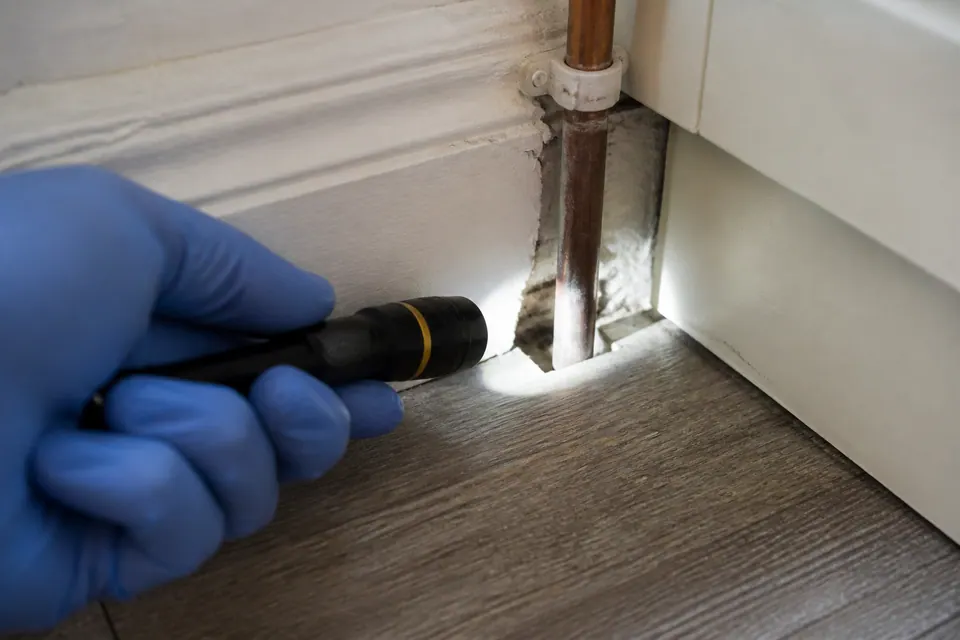
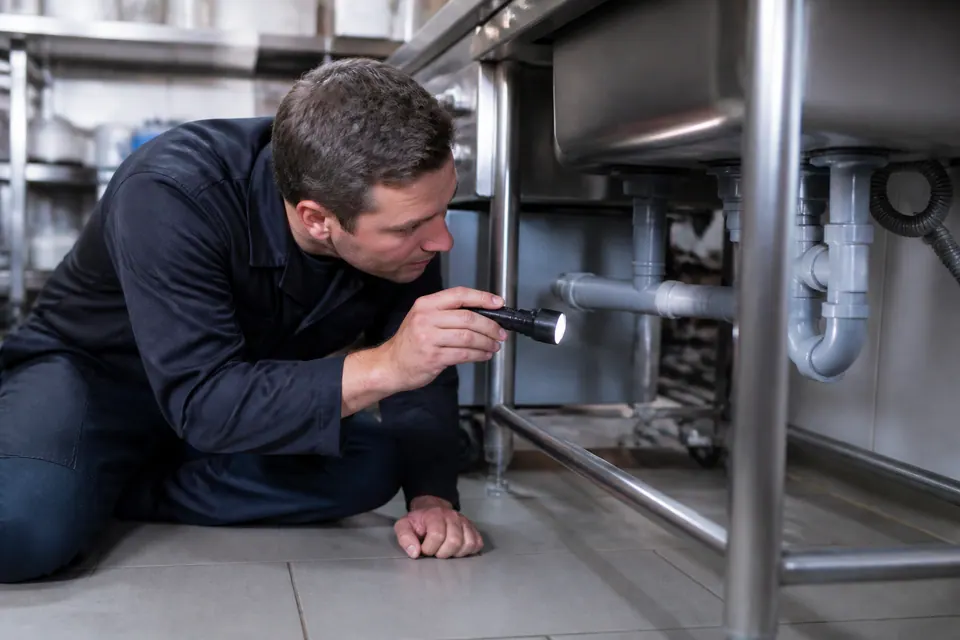
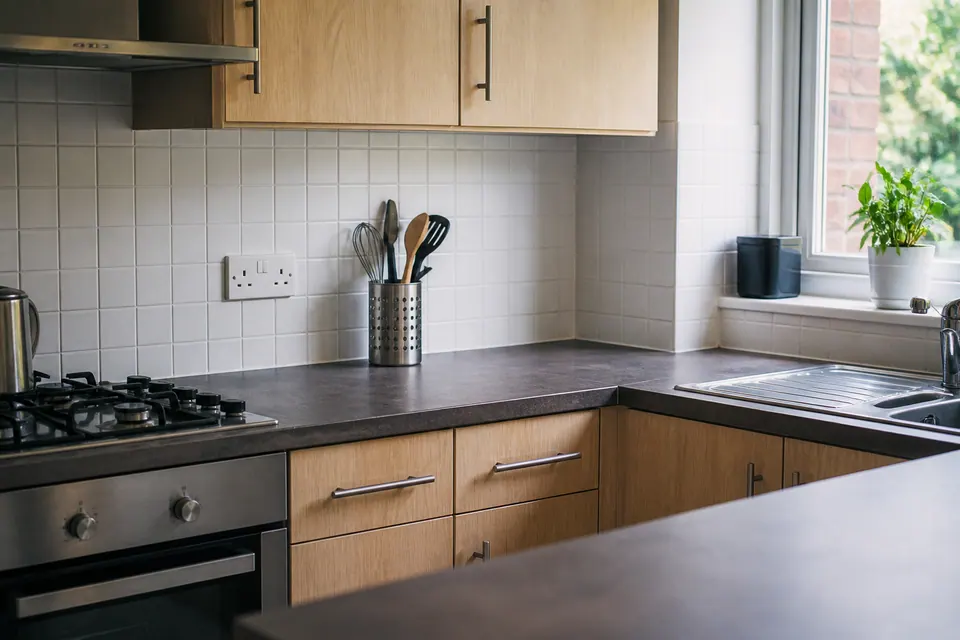
Illustrations do not document Bow utility spaces or establish customer treatment results.
MAKE THE ENQUIRY SPECIFIC
Keep the private finding explicit instead of transferring it to a nearby enclosure.
State that limit rather than presenting an assumed hidden source.
Access authority does not automatically establish permission or suitability for technical work.
Describe the feature without claiming it is a confirmed entry route.
ADDRESS AND AVAILABILITY
Check the postcode and requested service, then distinguish the private space from nearby restricted facilities.
The map supplies area context only, not access authority or suitability for utility work.
Open Bow in Google Maps ↗13 / CLEAR EXPECTATIONS
The account distinguishes the affected storage from other nearby cupboards.
A closed enclosure should not become a confirmed source through repetition of a guess.
Equipment intervention belongs in a separate appropriate discussion if relevant.
BOW / QUESTIONS
Describe the known use and leave uncertainty explicit rather than merging different spaces.
Do not remove utility covers or interfere with equipment for the enquiry.
Not automatically. Proximity is context, not proof of a route or source.
Identify the responsible building contact or authorised keyholder where known.
No. Technical suitability and the proposed task still require clarification.
Give the household compartment and relevant item history without moving it unnecessarily.
Only an explicit agreed scope can answer that; proximity does not create inclusion.
State the uncertainty rather than opening it to investigate.
No. Explain that it is nearby and unexamined if that is the actual position.
Keep each finding’s cupboard position and date rather than a general report about services.
15 / TAKE THE NEXT STEP
Identify the private finding and any nearby restricted space separately, then discuss suitable access and scope.
