
Mice
Damage noticed among items left in storage.
Mice controlPEST CONTROL / BLACKHEATH
An unused room with newly discovered signs.
Start with a clear account.
Finding evidence in a little-used room does not reveal when it first appeared. Describe the room’s recent use and any repeat observations before assuming the problem is new or confined to that space.
01 / START WITH THE EVIDENCE
Describe the finding and the room’s history without assigning an age that is not known.
Damage noticed among items left in storage.
Mice controlMovement heard after the room returns to use.
Rats controlPhysical traces around a bed or nearby furniture.
Bed bug treatmentAn insect seen after a period without regular room checks.
Cockroaches controlState when the item was last seen undamaged if known, but keep an uncertain interval explicit.
Record the sound’s actual timing and position; room disuse does not identify the animal.
Explain recent sleeping use and any furniture moves. Irritation alone is not proof of bed bugs.
Describe the insect and separate any repeat sightings. One discovery does not establish how long it has been present.
09 / FROM FIRST CONTACT
This sequence organises uncertainty rather than promising a fixed treatment or number of visits.

State what is known about recent occupancy without inventing inspection dates.
Name the surface or item and when the sign was noticed.
Explain clearing or furniture movement before the finding became visible.
Disclose intended room use and practical restrictions before the method is agreed.
Do not transfer stored items unnecessarily or substitute a guessed product.
Add dates and positions for independent findings after the initial discovery.
08 / THE CONTROL PLAN
The room’s history gives context without proving either a recent or long-standing infestation.
Record what became visible and what is unknown about its age.
The accessible signs and household arrangements shape the next step, not the room’s label alone.
Later evidence should be dated independently so review can distinguish change from repeated viewing.
05 / PROPERTY BRIEF
Describe actual recent sleeping use instead of relying only on the room’s label.
Mention what blocked visibility and any items moved before discovery.
Keep observations before and after vacancy separate where known.
Disclose the intended use so preparation can be discussed realistically.
Explain relevant people and animals before an approach is agreed.
Discuss your homeRequest suitability clarification rather than applying residential provision to every use.
Check the premises requirementsBLACKHEATH / PROPERTY CONTEXT
A spare room can go some time without close observation. Finding a mark today does not establish that it appeared today or that the concern is confined to that space.
Confirm the Blackheath postcode and requested service directly before planning attendance. Room history supports assessment but does not confirm coverage.
Explain when the room was last used regularly, what was moved before discovery and whether it has been occupied since. Qualify dates you cannot reliably recall.
Keep later observations separate from the initial marks. A fresh finding after the room returns to use may be more informative than repeated photographs of unchanged evidence.
07 / SCOPE BEFORE A QUOTE
The Blackheath proposal needs the findings and current arrangements, not an assumed fixed package for an unused bedroom.
from £120
See published service pricingfrom £150
See published service pricing| Service | Pricing basis | Price |
|---|---|---|
| Mice control | Activity, access and programme | Quote after assessment |
| Rat control | Internal / external routes and visits | Quote after assessment |
| Proofing / repairs | Surveyed openings and separate work | Quoted separately |
Confirm inclusions directly. Guides checked 27 August 2026; inspection, rodent work and separate repairs are not priced by these two targeted guides.
06 / SIGNS → LOCATION → NEXT STEP
| Pest problem | Signs to describe | Areas to mention | Next step |
|---|---|---|---|
| Mice | Material damage found on reopening | Actual stored item and visible position | Keep age uncertain unless supported |
| Rats | Sound heard after return to use | Listening location and occurrence date | Describe without inferring a species from vacancy |
| Bed bugs | Physical marks near an unused bed | Resting furniture and recent-use history | Seek assessment rather than dating from appearance |
| Cockroaches | An insect found during clearing | Exact sighting and later independent reports | Distinguish one discovery from repeated activity |
04 / AT A GLANCE
03 / OBSERVATION CHECKLIST
The account can acknowledge a gap in observation instead of filling it with a guessed start date.
Do not disturb suspect material or move items through the home merely to determine how old a finding is.
Describe the room’s actual pattern of use rather than assuming it was inspected because someone entered briefly.
State only what was genuinely noticed, not a retrospective claim that every surface was clear.
Record when the evidence became visible. That date need not be the date it formed.
Explain any clearing or rearrangement that exposed a previously hidden area.
Mention current occupants and use relevant to a proposed method.
Give fresh activity its own date and position so recurrence is not inferred from unchanged marks.
10 / PROBLEM → TREATMENT → CONTROL
Returning a room to ordinary use changes its appearance, not necessarily the underlying concern. Review needs the evidence that follows.
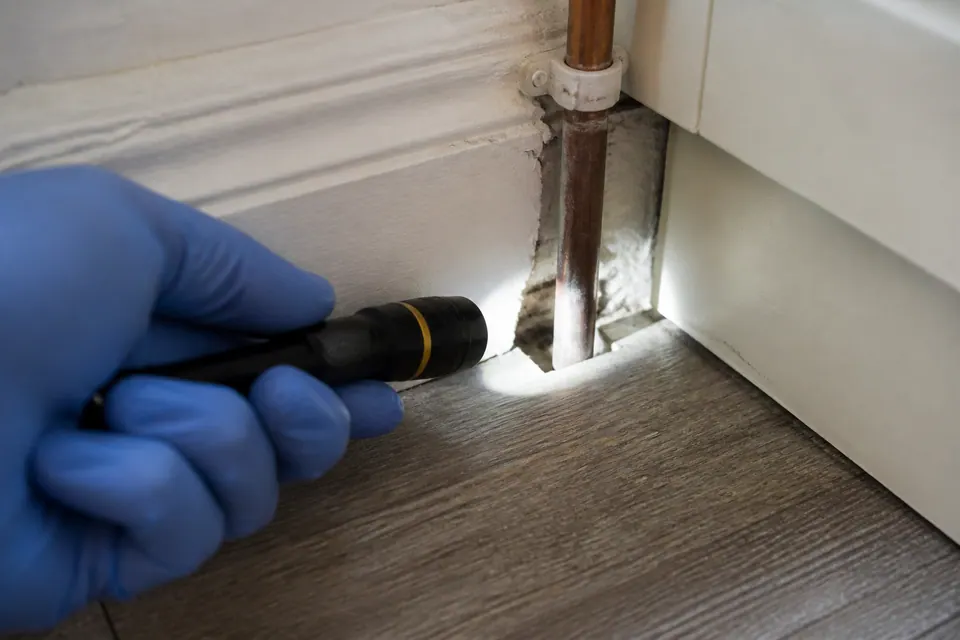

Illustrations do not document Blackheath room histories or demonstrate customer treatment outcomes.
MAKE THE ENQUIRY SPECIFIC
The discovery date is not necessarily the formation date.
An observation gap does not prove a long duration either; leave it unknown.
Other areas should be described by their own findings, not assumed clear or affected.
Appearance alone does not establish progress or explain the original cause.
ADDRESS AND AVAILABILITY
Check the postcode and relevant service, then explain the specific room and discovery.
The map provides location context, not a conclusion about the age or extent of the concern.
Open Blackheath in Google Maps ↗13 / CLEAR EXPECTATIONS
The proposal should not rely on a guessed start date where the room was not regularly observed.
A finding in one space does not by itself establish the condition of every other room.
Review should consider actual subsequent evidence rather than tidiness.
BLACKHEATH / QUESTIONS
No. Record the discovery while leaving the earlier age unknown where necessary.
Give an approximate period if that is all you know, clearly labelled as an estimate.
Explain what use occurred; brief entry does not mean every surface was checked.
Appearance alone is not a reliable start date. Keep the history factual.
Yes, especially where it exposed a hidden surface or changed the current layout.
Only describe what is known. Other rooms need their own evidence rather than an assumption.
Disclose that plan before preparation and the proposed method are discussed.
Not if they show unchanged material; distinguish new observations from new photographs.
Obtain appropriate guidance before transferring items through the home.
Give its own date and position, retaining the original discovery record for comparison.
15 / TAKE THE NEXT STEP
Provide the discovery, recent-use history and current plans without assigning an unsupported age to the finding.
