
Reporting tenant
Identify who directly observed the evidence rather than who forwarded the message.
PEST CONTROL / SOUTHFIELDS
Shared rentals and separate room access.
Start with a clear account.
An enquiry from one tenant does not automatically provide access to every bedroom. Explain which occupants are involved and coordinate permissions before a whole-house scope is discussed.
SOUTHFIELDS / PROPERTY CONTEXT
A tenant can raise a concern without being able to offer access to all private rooms. Explain which areas are available and which arrangements remain unresolved.
Check the Southfields postcode and requested service directly before expecting attendance. A whole-house proposal needs more than one person’s broad description.
Ask other occupants for their own findings rather than assuming their rooms share the problem. Keep evidence and room-access questions distinct.
Identify who can approve the proposed work and how preparation will reach relevant occupants. Do not promise access merely because a room is nearby or usually unlocked.
03 / OBSERVATION CHECKLIST
The enquiry should show what is known and what remains to be arranged, rather than presenting the property as one unrestricted area.
Do not enter another resident’s room or disturb their belongings to strengthen the report.
Identify who directly observed the evidence rather than who forwarded the message.
Name the room and relevant item without describing other bedrooms as affected.
Keep shared kitchen or hallway signs under their own location.
Retain each resident’s date and certainty instead of combining guesses.
State unresolved access plainly before the proposal assumes it.
Collect relevant actions from the people who used products in shared or private areas.
06 / SIGNS → LOCATION → NEXT STEP
| Pest problem | Signs to describe | Areas to mention | Next step |
|---|---|---|---|
| Mice | Storage damage reported by one tenant | Their actual cupboard and date | Keep other bedrooms outside assumptions |
| Rats | Animal report in shared accommodation | Specific common room and observer | Preserve identification uncertainty |
| Bed bugs | Physical bedroom marks | Named private resting area | Discuss appropriate permission and assessment |
| Cockroaches | Repeated kitchen insects | Shared fitting and independent sighting dates | Collect prior products and coordinate relevant preparation |
08 / THE CONTROL PLAN
A shared-rental plan works only if the information and arrangements are accurate rather than assumed from the address.
Each resident’s evidence retains its room and date.
Unavailable spaces and approval questions need clarification before whole-house work is expected.
Relevant occupants should understand the chosen approach and receive the actual preparation and aftercare.
09 / FROM FIRST CONTACT
These steps do not guarantee a whole-house service or one-visit result where evidence and access remain unresolved.

Name the room and surface actually involved.
Ask what others saw rather than assuming their bedrooms are affected.
Keep common-area evidence distinct from private-room findings.
State which arrangements are agreed and which are still outstanding.
Do not replace method-specific guidance with separate household interpretations.
Retain observer, room and date when review information is combined.
01 / START WITH THE EVIDENCE
Keep the actual room and observer attached to the finding before discussing how wide the household scope might be.
Damage in storage used by one occupant.
Mice controlA sighting or sound reported in common accommodation.
Rats controlVisible marks around a particular resident’s bed.
Bed bug treatmentRepeated insects at a shared fitting.
Cockroaches controlName the compartment and its user rather than extending the finding to every private room.
Retain direct observations and uncertainty; a shared address does not identify an unseen pest.
Describe physical signs from the relevant room. Another tenant’s suspicion does not establish the condition of every bedroom.
Collect independent sightings and prior products from the kitchen users without double-counting one event.
07 / SCOPE BEFORE A QUOTE
A Southfields proposal should identify rooms and authority rather than imply that one tenant’s enquiry covers all occupants automatically.
from £120
See published service pricingfrom £150
See published service pricing| Service | Pricing basis | Price |
|---|---|---|
| Mice control | Activity, access and programme | Quote after assessment |
| Rat control | Internal / external routes and visits | Quote after assessment |
| Proofing / repairs | Surveyed openings and separate work | Quoted separately |
Confirm scope, preparation and inclusions directly. Guides checked 27 August 2026; unavailable rooms and separate tasks are not automatic parts of a targeted price.
05 / PROPERTY BRIEF
Describe the actual evidence and access available there.
Obtain clear arrangements before including it, rather than assuming a housemate can provide entry.
Collect relevant observations and preparation responsibilities from the people using it.
Keep the limitation explicit instead of presenting a complete house assessment.
Identify the person coordinating instructions without losing other occupants’ information.
Discuss your homeCheck suitability directly; domestic guidance does not establish a different commercial service.
Check the premises requirements04 / AT A GLANCE
MAKE THE ENQUIRY SPECIFIC
Clarify the actual arrangements instead of promising another resident’s space.
Keep private-room evidence independent rather than inferred.
Availability and permission should be explicitly arranged, not guessed.
Ensure relevant occupants receive the applicable confirmed guidance.
10 / PROBLEM → TREATMENT → CONTROL
Any review should stay within the evidence and areas actually considered rather than a whole-house conclusion unsupported by access.
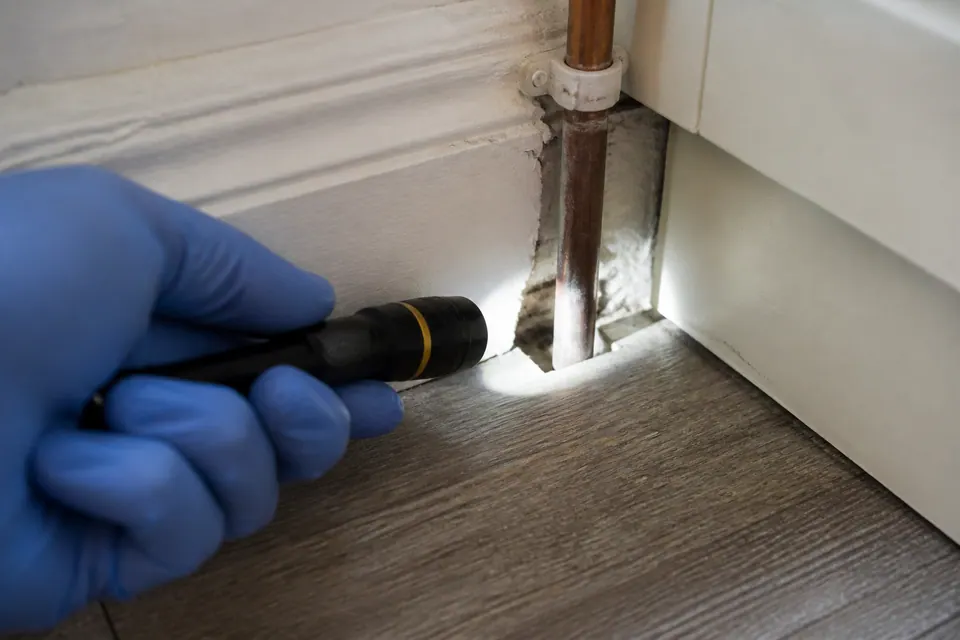

Illustrations are not Southfields tenancy records or proof of customer treatment outcomes.
ADDRESS AND AVAILABILITY
Check the postcode and service, then distinguish available rooms, shared spaces and unresolved access.
The map cannot establish private-room arrangements or a whole-house scope.
Open Southfields in Google Maps ↗13 / CLEAR EXPECTATIONS
A finding in one bedroom should not be silently extended to the others.
The proposal should reflect actual permissions and practical availability.
Relevant occupants need the method-specific information affecting their room use.
SOUTHFIELDS / QUESTIONS
Yes, with the actual evidence and unresolved household arrangements made clear.
No automatic room arrangement follows from one person making contact.
Their direct observations are useful when kept separately located and dated.
No. Each private room needs its own evidence rather than an assumption.
State the limit before expecting a complete house assessment.
Do not assume it; clarify the relevant arrangement explicitly.
A nominated contact can help, while ensuring each affected occupant receives the applicable guidance.
Yes, from all relevant users rather than only the reporting tenant.
The included rooms and tasks must be agreed rather than inferred from the address.
Retain each room, observer and date so the account remains traceable.
15 / TAKE THE NEXT STEP
Bring the original finding and independent housemate reports, then clarify which spaces can be included before agreeing a household scope.
