
Mice
Gnawed material or suspected traces beside storage.
Mice controlPEST CONTROL / WORCESTER PARK
Utility access and household preparation.
Explain what can be reached safely.
A utility area may contain fixed connections and limited working space. Describe those constraints alongside the pest evidence so the preparation plan does not rely on unsafe appliance movement.
01 / START WITH THE EVIDENCE
Equipment can hide part of a room, but an inaccessible recess is not automatically the source of the concern.
Gnawed material or suspected traces beside storage.
Mice controlA direct sighting or larger traces requiring assessment.
Rats controlSpotting or insects associated with resting furniture.
Bed bug treatmentRepeated insects near a sink or appliance gap.
Cockroaches controlName the accessible edge where the finding appears. A technician needs the observation as well as a description of the appliance blocking the view.
Report noise separately from any animal actually seen. Restricted access does not justify choosing a rodent method without suitable evidence.
If the concern involves bedding or furniture, describe that setting independently. A utility-room location does not establish a bed bug problem.
Include the exact equipment and any known leak. Water and heat are context for inspection, not a diagnosis of the insect.
09 / FROM FIRST CONTACT
An appointment should be planned around the room as it is, not an assumption that every fitting can be moved.

Give the location and date before describing a suspected hidden source.
Identify the equipment, fixed connections and available route into the room.
Ask which areas can be assessed and what remains inaccessible under the proposal.
Prepare only as instructed and disclose any product used near the equipment.
Keep new sightings or noises separate from the original report and follow the review guidance.
If access or maintenance needs a specialist, clarify who arranges it and how it relates to further pest work.
08 / THE CONTROL PLAN
Restricted access is information to discuss, not a reason to invent certainty about a concealed space.
The assessment considers what can be viewed safely and which questions remain unanswered. A limitation should stay visible in the scope.
The selected intervention must fit the identified problem and household arrangements. Ask whether an obstruction prevents any part of the proposed work.
Later observations help determine progress. If another trade is recommended, clarify its role separately from the pest-control programme.
05 / PROPERTY BRIEF
Identify fixed panels and connections, including any area that can only be opened by another trade.
Explain why it obstructs the view without assuming it can safely be dragged aside.
Describe the available opening and visible findings. Reaching farther into a concealed area is not necessary for the first report.
Check which person can approve access and whether it is part of the private dwelling’s scope.
Disclose people and animals who use the room and any practical limits on temporary restrictions.
Discuss your homeCheck suitability separately if the equipment serves business premises. Residential work does not confirm commercial treatment or documentation.
Check the premises requirementsWORCESTER PARK / PROPERTY CONTEXT
A utility room can look straightforward until its fixed connections and narrow working route are considered. Describe those features when making the enquiry.
Say whether the obstructing item is freestanding, integrated or secured in place. Do not assume that an appliance that once moved easily can now be disconnected safely.
Visible evidence can be described from the ordinary room position. There is no need to open electrical equipment, remove a service panel or reach into an unknown recess for a photograph.
Once postcode coverage is confirmed, discuss the inspection limits and any separate access work. Plumbing, electrical alterations and joinery should not be silently included in a pest booking.
07 / SCOPE BEFORE A QUOTE
A treatment figure should not be read as an appliance-removal or repair quotation. The accessible evidence and agreed work determine the pest proposal.
from £120
See published service pricingfrom £150
See published service pricing| Service | Pricing basis | Price |
|---|---|---|
| Mice control | Activity, access and programme | Quote after assessment |
| Rat control | Internal / external routes and visits | Quote after assessment |
| Proofing / repairs | Surveyed openings and separate work | Quoted separately |
Guides checked 27 August 2026. Confirm current pricing and address coverage. Any specialist access, disconnection or remedial work needs its own clear agreement.
06 / SIGNS → LOCATION → NEXT STEP
| Pest problem | Signs to describe | Areas to mention | Next step |
|---|---|---|---|
| Mice | Possible traces at the base of a cupboard | Accessible floor edge beside fixed equipment | Describe the visible evidence and the obstruction |
| Rats | Direct animal sighting or repeated concealed sound | Specific room position, with uncertainty retained | Request assessment without assigning a species from sound |
| Bed bugs | Physical spotting on sleeping furniture | A separately identified bedroom or stored item | Explain the evidence independently of the utility concern |
| Cockroaches | Insects repeatedly beside one appliance | Named fitting and any known moisture condition | Disclose product use and whether the recess is accessible |
04 / AT A GLANCE
03 / OBSERVATION CHECKLIST
Keep the account factual even when the suspected area cannot be viewed completely.
Do not disconnect appliances or disturb suspected contamination to investigate further.
Give the position relative to the unit or wall. Mention whether the edge was already cleaned or painted.
Identify the material and storage location. Damage is a finding to assess, not proof of a particular pest.
Record its timing and direction. Noise can be difficult to locate through cabinets and walls.
Note the equipment it appeared beside and whether sightings repeat at that position. Include any products applied there.
Report a leak as a separate maintenance fact. Its presence does not establish what insect or animal is involved.
Keep adjacent kitchen or bedroom observations in their own entries rather than assuming a concealed connection.
10 / PROBLEM → TREATMENT → CONTROL
Moving a unit may expose another surface, but a view behind equipment does not alone establish that activity has ended.
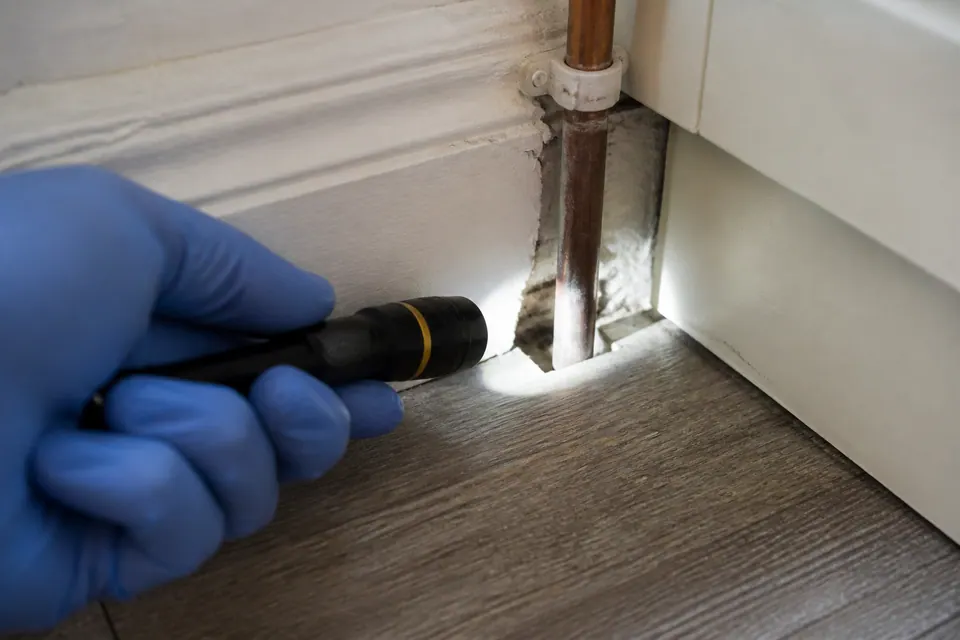
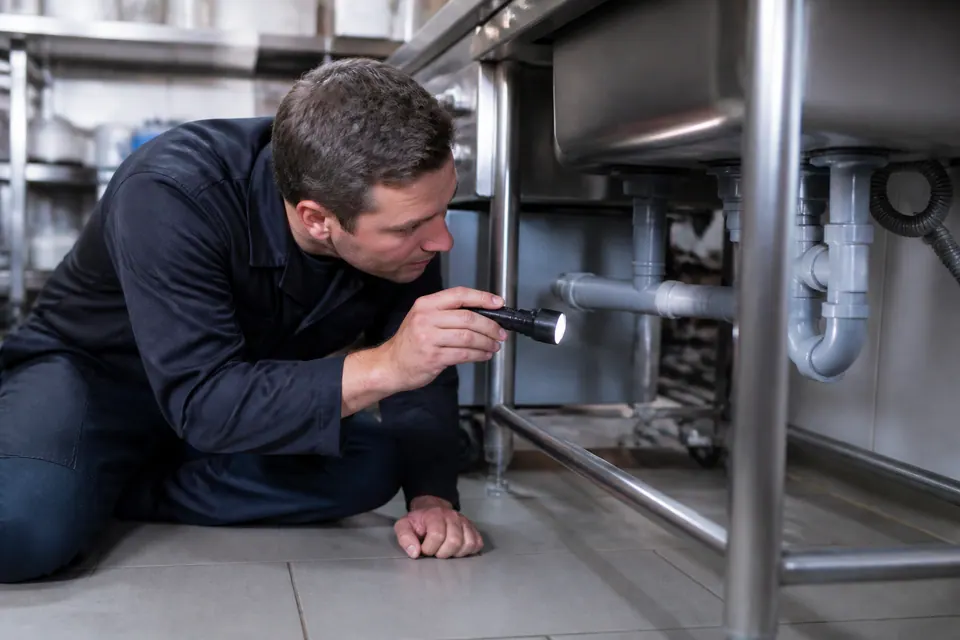
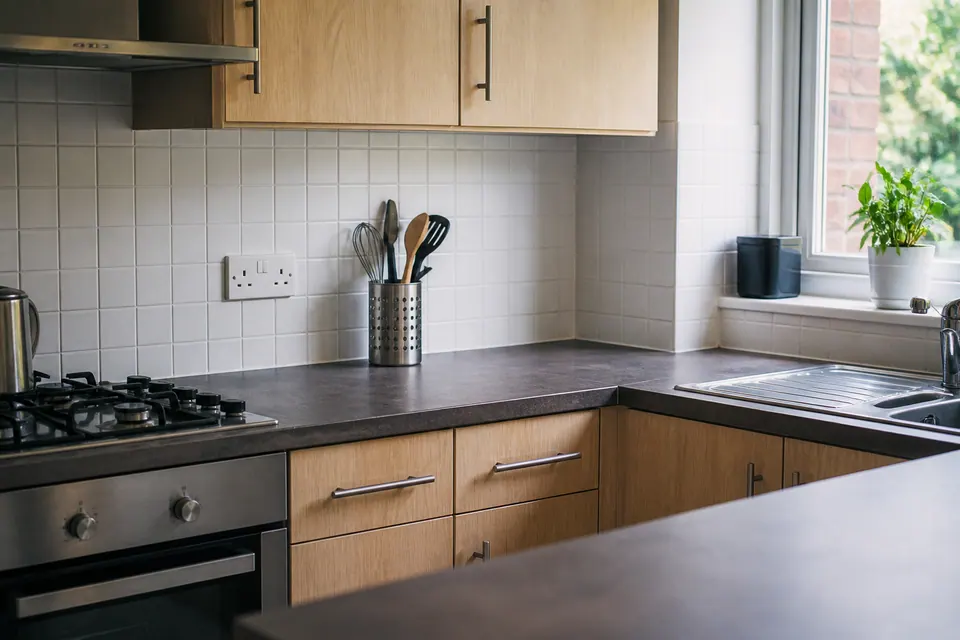
The illustrated stages do not document an appliance inspection or treatment outcome at a Worcester Park address.
MAKE THE ENQUIRY SPECIFIC
Describe the connections without disconnecting them. A freestanding label does not establish safe movement in the current installation.
Identify the responsible contact. A private appointment does not automatically authorise opening controlled service equipment.
Tell the assessor what is scheduled and what evidence was observed. Maintenance history and pest identification remain separate matters.
Mention the route and household constraints before accepting preparation arrangements that may not be practical.
ADDRESS AND AVAILABILITY
Give the postcode and explain where the utility space sits within the home.
Confirm coverage before coordinating keyholders or other trades. Include any entrance restriction that affects access to the agreed room.
Open Worcester Park in Google Maps ↗13 / CLEAR EXPECTATIONS
A pest enquiry does not authorise appliance disconnection or removal of fitted panels.
An inaccessible recess remains an uncertainty until appropriate assessment supports a conclusion.
Recommendations involving another trade should be distinguished from treatment and its follow-up.
WORCESTER PARK / QUESTIONS
Do not assume it is safe or required. Describe the finding and the access restriction, then obtain preparation instructions.
Report what is visible without reaching into a hazardous or contaminated space. A limited view should remain a limited observation.
No. Report the leak as maintenance information alongside the physical signs, without treating one as proof of the other.
Not automatically. Explain the equipment and ask whether separate specialist work is needed.
Keep the species uncertain unless there is reliable identification. Timing and direction are more useful than a confident guess.
Explain the available opening and obstructions. The proposed assessment should acknowledge any resulting limits.
Describe the planned repair and ask how the sequence should be coordinated. Neither appointment is assumed to include the other service.
State that it is fitted in place and identify the visible signs. Do not remove its panels simply to improve a photograph.
Structural opening and repairs need separate agreement. A pest-control quote should identify its actual inclusions.
Give the date of the move and what was uncovered. Newly visible evidence is not necessarily newly created activity.
15 / TAKE THE NEXT STEP
Explain what you can see and what prevents a closer view. Check coverage, then agree the appropriate next step without assuming equipment needs to be dismantled.
