
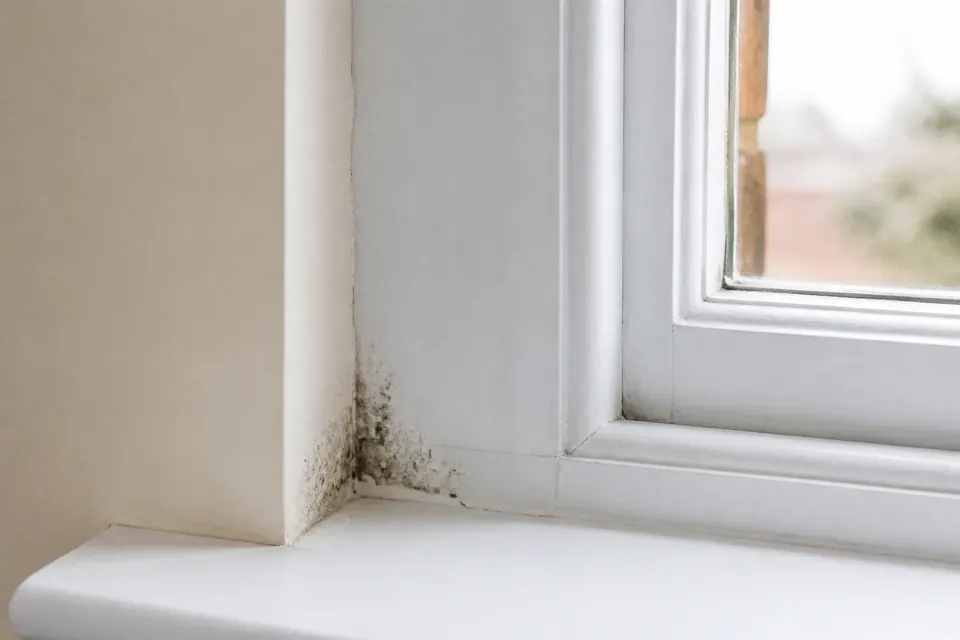
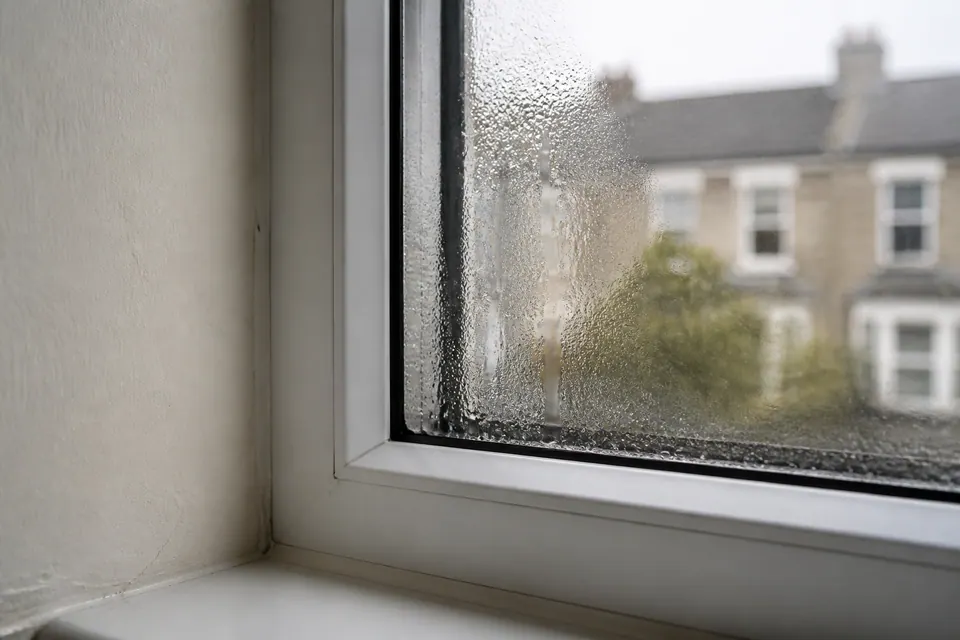
The window surround
Separate frame material from painted reveal or board. A modern opening does not establish the cause of nearby marks or include frame repair in treatment.
STRATFORD / APARTMENT MATERIALS
A newer-looking room still needs a clear condition assessment.
Do not let the appearance or age of a Stratford apartment stand in for a description of the marked surface. Show the actual paint, board or other known finish and explain any previous work. Practical entry matters too, but neither a modern interior nor easy lift access establishes what treatment is appropriate.
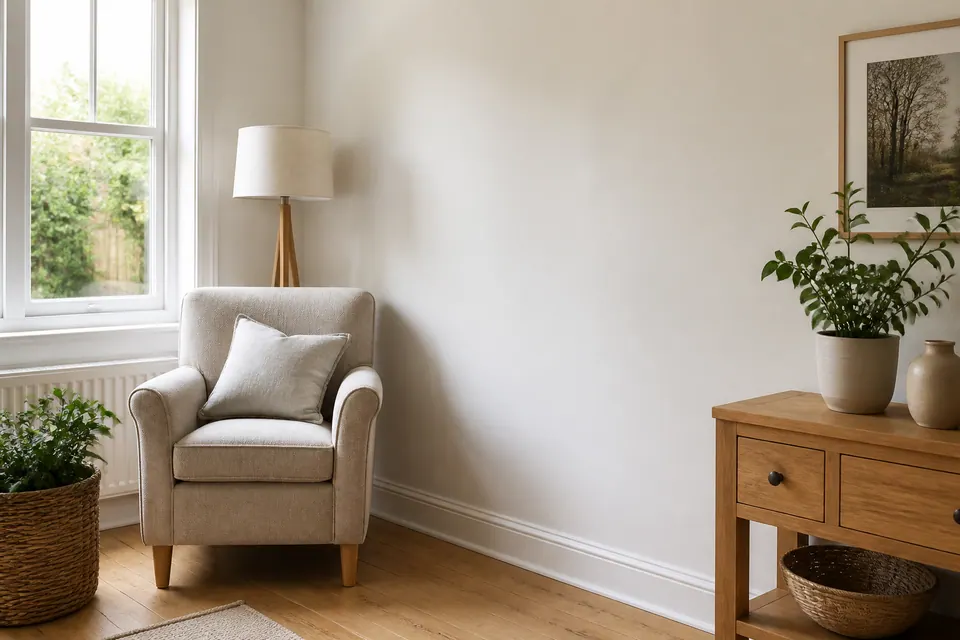
Finish · condition · confirmed access
01 / SEPARATE THE QUESTIONS
Assessment needs the current material and actual history, not an assumption about how a newer home should behave.
| Observation | Possible context | What to clarify |
|---|---|---|
| Marked painted reveal | Moisture near the opening | The finish and water actually observed |
| Bathroom ceiling spotting | Repeated wetting and drying conditions | Current coating stability and ordinary use |
| A wall changed after a repair | Residual damage or continuing moisture | What the confirmed repair addressed |
| Growth returning on a smooth finish | A persistent condition despite appearance | Previous treatment and material information |
Ventilation, plumbing, glazing and other system repairs require separate agreement where relevant. A mould-removal scope should not imply those systems are sound merely because the apartment is modern.
A smooth coating does not reveal every condition behind it.
| Assessment point | Mould | Damp / moisture |
|---|---|---|
| What is described? | Fungal growth on the affected exposed material | Excess moisture relevant to that surface |
| Useful detail | Present extent, coating and any damage | Known water events and observed wetness |
| Why distinguish them? | Removal does not certify hidden material condition | Persistent moisture may need another investigation |
| Next decision | Suitability for accessible treatment | Any separate repair or system-related enquiry |
02 / LOCATE THE ISSUE
Use the room selector to locate the material. The building description is background, not a substitute for current evidence.
Separate frame material from painted reveal or board. A modern opening does not establish the cause of nearby marks or include frame repair in treatment.
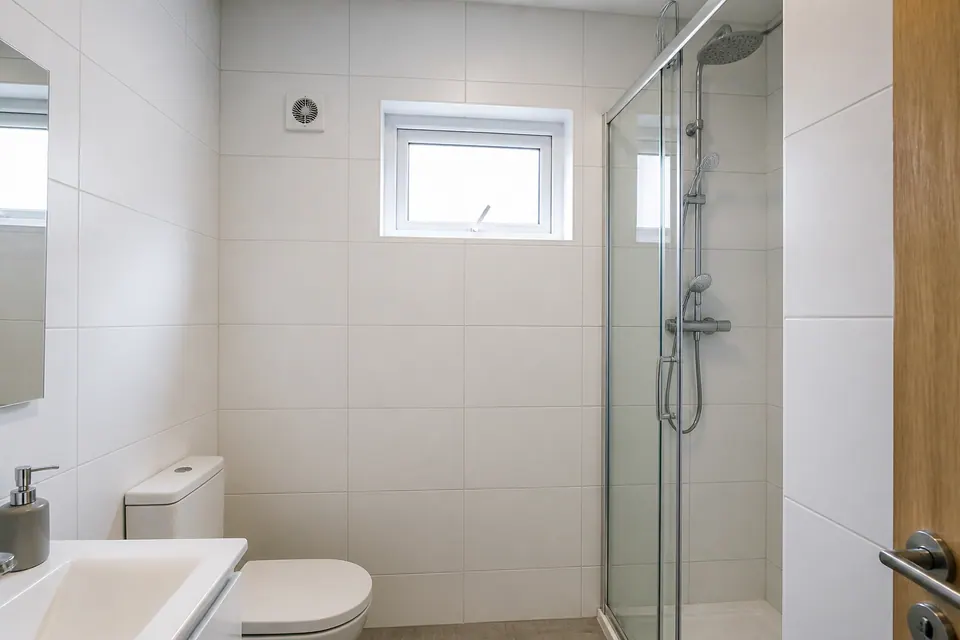
Identify paint, joints and sealant separately. An attractive bathroom finish may still be unstable or unsuitable for a particular method.
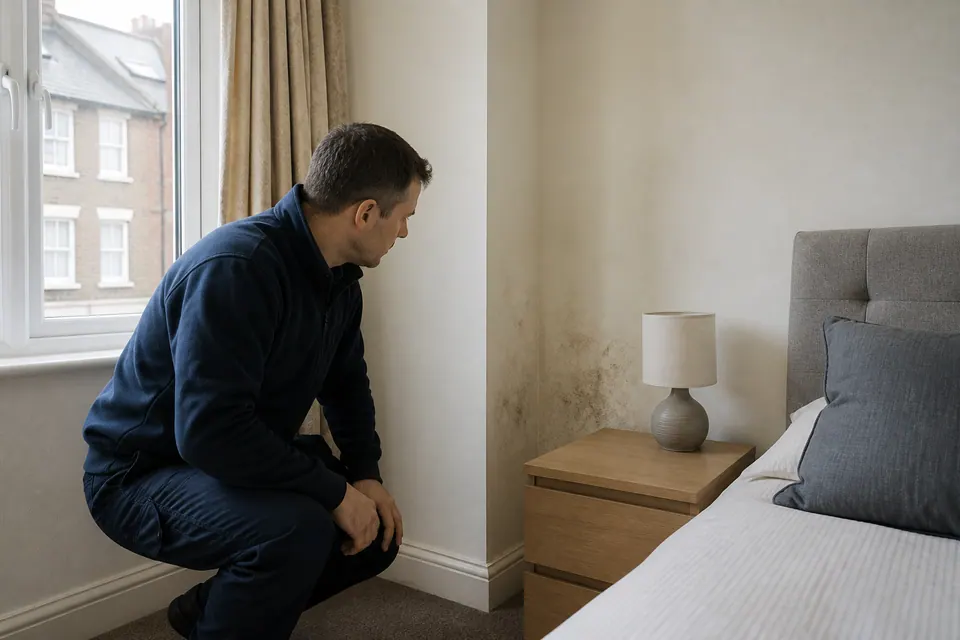
Show the coating and nearby furniture. The room should be assessed as it is now rather than from an original marketing image or floor plan.
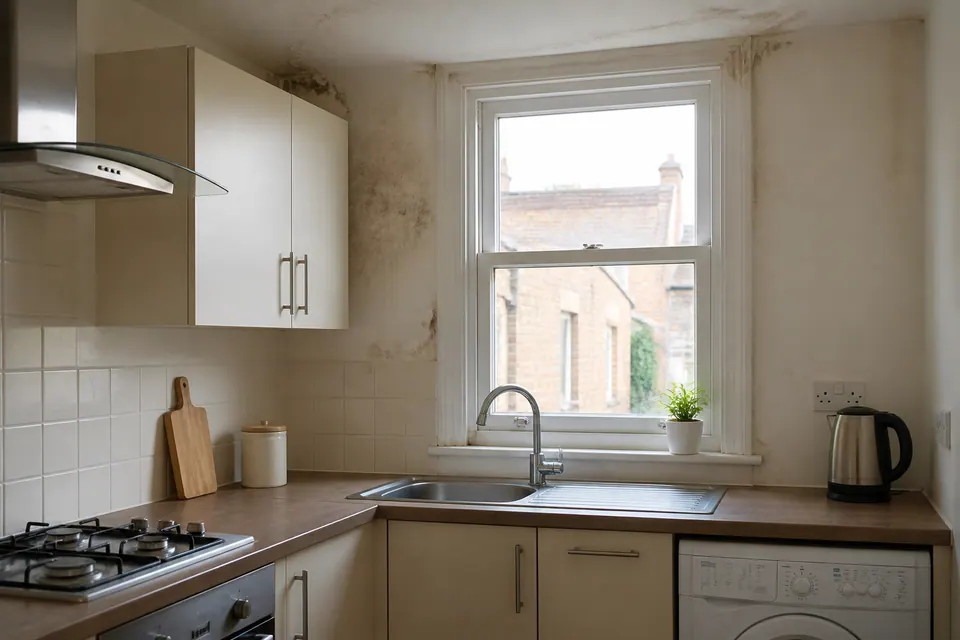
Locate the accessible finish and any known water event. Fixed cabinetry may restrict reach even where the room looks uncluttered.
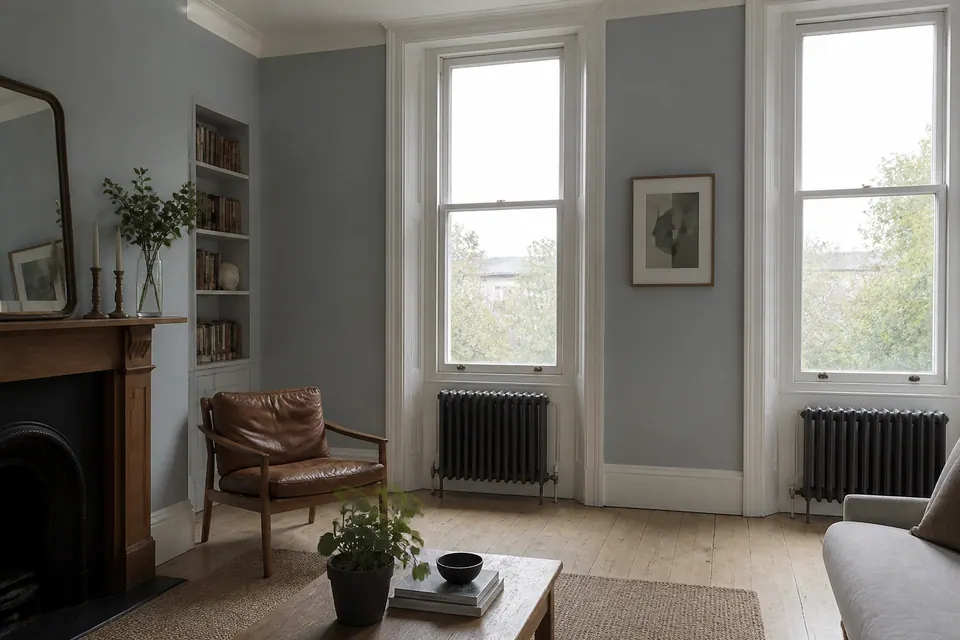
Include one wider view to identify the elevation. Do not infer board or plaster composition solely from the smooth appearance.
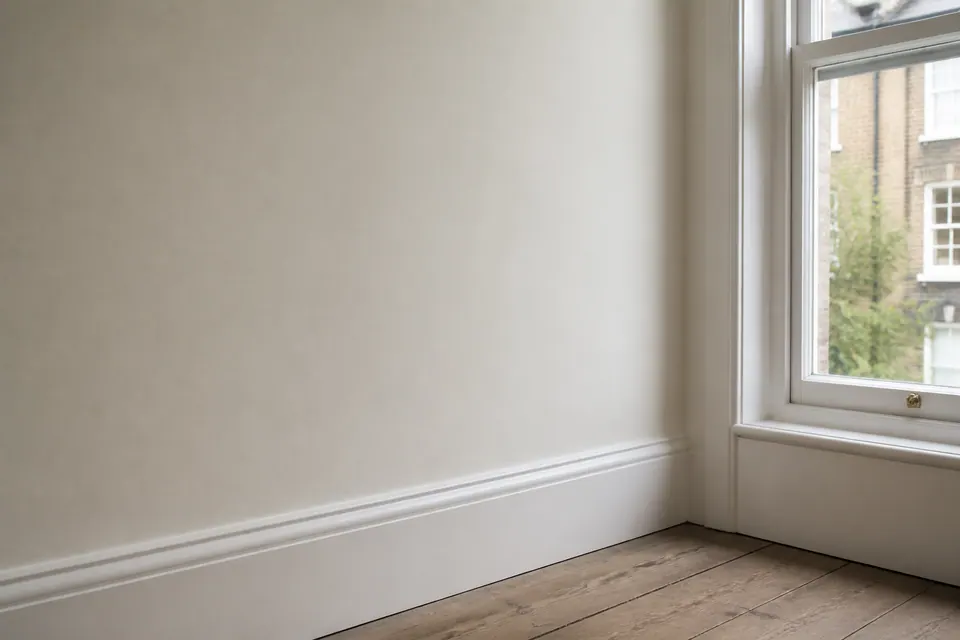
Describe visible bubbles, cracking or softness without pressing the material. Damage may require another scope beyond suitable growth treatment.
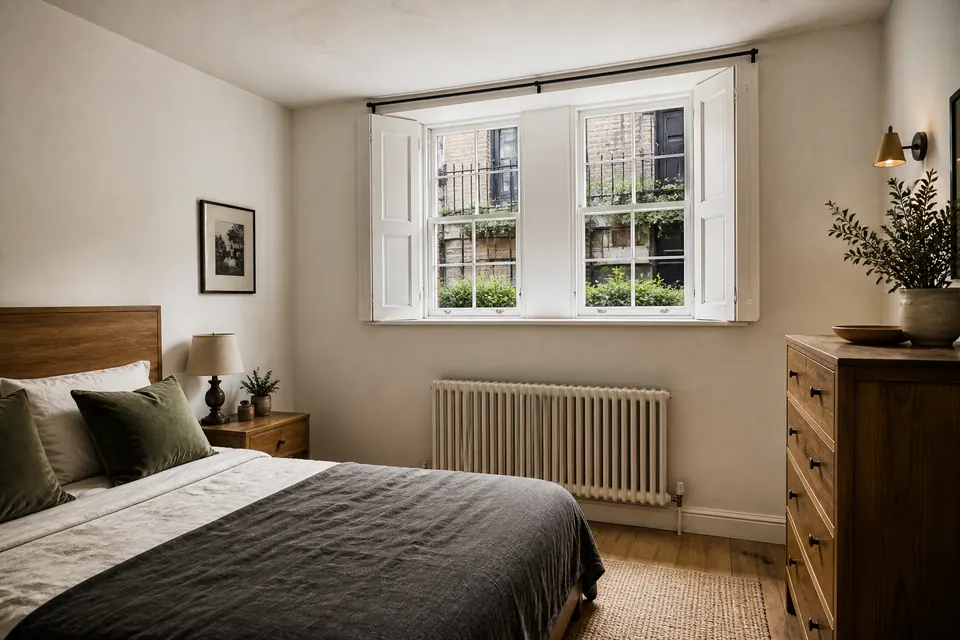
State what is concealed and what can be seen. A clean-looking cabinet front does not establish the wall condition behind it.
Neither modern appearance nor property age proves suitability, cause or the absence of concealed damage.
Stratford / APARTMENT ACCESS DETAILS
Modern appearance is not a material specification.
If you know the finish type, include it; if not, say so and provide clear images. Explain whether the mark sits on a painted wall, frame surround or another surface, and note any visible damage. Describe lift, entrance and in-room access separately. The enquiry should not assume that a newer building cannot have moisture questions or that shared systems are included in an interior treatment visit.
04 / A CONTROLLED APPROACH
Identify current material, extent and visible damage. Acknowledge uncertain substrate information instead of relying on the building label.
Arrange entry and in-room preparation around actual fixed fittings and use. Do not equate an available lift with full working access.
Carry out the agreed method on named accessible finishes. Hidden or damaged conditions may require a separate decision.
Clarify staining, damage and any further investigation or repair questions without certifying building systems.
An interior treatment is not an assurance about every concealed apartment component.
Record the patch and adjoining intact coating.
Treat suitable accessible surfaces as named.
Identify repair or system enquiries outside the work.
These stages are illustrative rather than customer evidence. Persistent moisture may allow renewed growth.
05 / QUOTATION, NOT GUESSWORK
For Stratford enquiries, provide present photographs and identify the finish where known. Small suitable accessible areas may be quoted from images; multiple or returning patches require assessment, and complex damp or damaged materials can need specialist quotation.
Read the main service approach ↗| Reported condition | Quotation route | Relevant evidence |
|---|---|---|
| A small suitable accessible finish | Photographs may support quotation | Current material and affected dimensions |
| Recurring or multiple areas | Assessment of the proposed scope | History attached to the correct room |
| Damaged material or complex moisture | Specialist quotation where needed | Confirmed repairs and present deterioration |
Confirm the named surfaces and exclusions. A modern-building description does not make the quote an all-systems or reinstatement service.
06 / WHEN IT COMES BACK
Use the previous scope and current photographs rather than assuming the age of the apartment rules out a moisture concern. Identify the same surface and interval.
Report known intervening repairs and actual water observations. Recurrence does not by itself establish a fault in a shared ventilation or plumbing system.
Keep any known specification alongside present images, noting later decoration or alterations that may change what is exposed.
Stratford / ACCESS & PEOPLE
Share relevant material information if available, but distinguish it from the current condition and any later alterations.
Say what is unknown. A photograph may show coating damage without establishing what lies behind the surface.
Describe lift or entry requirements and fixed objects inside the room. Both can matter to the proposed visit.
Provide current evidence and arrange the relevant booking permissions. Do not diagnose a building fault or assign responsibility from appearance.
Supply actual previous repair and decorating information. A completion or refurbishment date is not a full history of the affected material.
Keep interior treatment distinct from enquiries involving shared systems or building management. Agree any separate repair scope explicitly.
08 / ROOM-BY-ROOM CONTEXT
Keep paint, sealant and damaged boards distinct. Similar appearance does not establish identical treatment suitability.
Show the current coating and furnishings rather than relying on an original room specification.
Identify fixed units and confirmed water history. An accessible-looking room can still conceal the affected finish.
Use a wider view and state material uncertainty honestly. Smoothness does not identify the substrate.
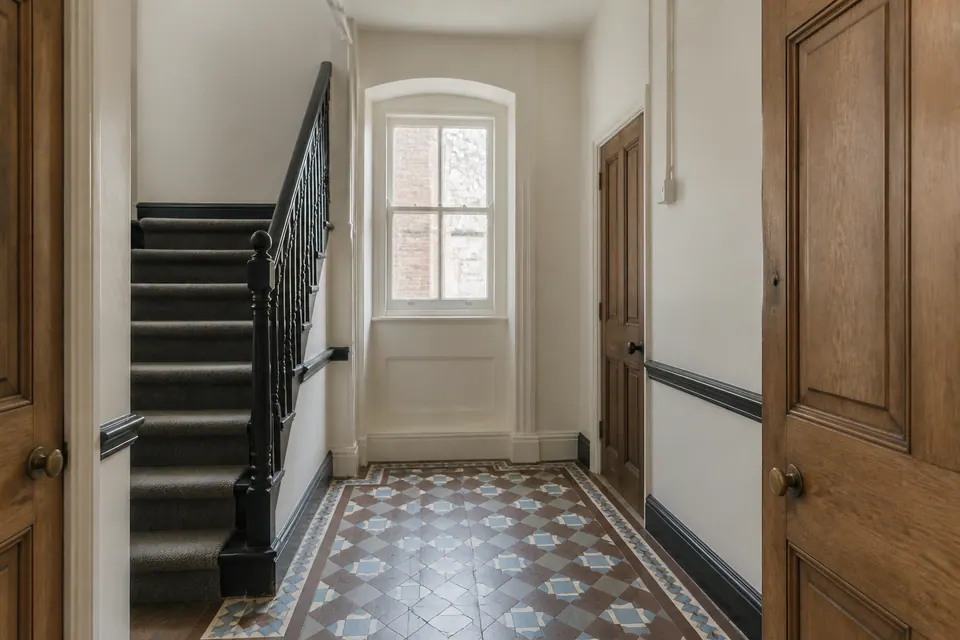
Distinguish common parts from the apartment interior. Entry arrangements do not include treatment there automatically.
Report level and actual condition without a damp assumption. Building age does not settle the question.
09 / DIRECT ANSWERS
No. The affected material, extent and access determine the discussion. Small suitable areas may use photo quotations, while recurrence or damage can require assessment.
Decoration is separate from growth treatment and moisture assessment. It should not be used to hide the current condition before review.
No. Report the actual observations and known work. The surface appearance alone does not diagnose a shared system.
It is practical information, but material and preparation still matter. Reaching the apartment does not establish access to the whole affected finish.
Explain the room layout and use, then obtain instructions for the agreed method. No universal occupancy or return promise follows from building type.
Report that condition without probing it. Material replacement may be separate from removal of growth on suitable finishes.
Only named suitable surfaces are included. Identify frames and reveals separately and do not assume glazing repair.
No such certification should be inferred. Any system assessment or repair needs its own agreed scope.
Stratford / PLAN THE APPOINTMENT
Send the Stratford postcode with relevant entry requirements and the affected-room details. Confirm availability once practical access and material condition are understood.
Identify any separately controlled component or repair contact without assuming the interior appointment includes their work.
Load the area map.
Stratford / BEFORE BOOKING
Current evidence is more useful than assumptions about modern construction.
Provide reliable information if you have it; otherwise state the uncertainty and send clear photographs rather than guessing.
No. Present material condition and history still need assessment.
A visible patch does not establish system performance. Any separate system assessment must be expressly arranged.
Describe it without pressing or scraping. Damage may alter suitability and require another scope.
Not automatically. Keep interior treatment and separately controlled repairs distinct.
Explain building entry and lift requirements as relevant, plus obstacles beside the actual surface.
No. Follow guidance for the agreed method and circumstances, not the expected attendance length.
Recurrence, damage or material uncertainty can make it different from a straightforward suitable accessible area.
Retain the surface scope, current images and known repair details. Do not infer a building-wide fault from recurrence alone.
ASSESS THE SURFACE, NOT THE BUILDING LABEL
Send the postcode, clear photographs and any reliable material or repair information. Explain entry and in-room access so the next step can be agreed.
Apartment illustrations do not show a documented customer treatment or building-system assessment.
