
Do I need to get closer for a photograph?
No unsafe reach is needed for the initial enquiry. Use a normal accessible viewpoint and explain the position and any obstruction in words.
Harrow / UPPER BEDROOM WALLS
A wider view can be more useful than an unsafe close-up.
If marks are high on a bedroom wall, show the corner and surroundings from a normal standing position. Explain the visible finish and timing in your Harrow enquiry rather than climbing or assuming what lies above caused the patch.
Position · timing · practical approach
01 / DIRECT ANSWERS
No unsafe reach is needed for the initial enquiry. Use a normal accessible viewpoint and explain the position and any obstruction in words.
Access can affect the proposed work, but height alone does not determine a price. The affected extent, material and practical approach need to be understood.
Small suitable accessible areas may be considered that way. Recurrence, several positions, damage or more complex concerns can require assessment or a specialist quotation.
Not automatically. Supply known water or repair information without assigning a cause from the location of the mark.
Painting is not a substitute for mould treatment. The coating and any continuing moisture or damage need clarification before redecoration.
Continuing moisture may be relevant, but the position does not settle the explanation. Report dates and changes rather than assuming the earlier treatment or a particular component failed.
Ask once the suitable work and access are discussed. Preparation and return instructions depend on the proposed method and room use, not a standard corner-patch timetable.
Do not assume reinstatement is included. Describe the deterioration so suitable treatment can be separated from a decorative or material-repair requirement.
02 / SEPARATE THE QUESTIONS
Upper-wall marks can raise different moisture questions. Record known events and observations rather than choosing a repair simply from the height of the patch.
| Visible pattern | Information to share | What needs assessment |
|---|---|---|
| Spots along a ceiling junction | The faces involved and timing | Material condition and moisture context |
| A mark above a window | Water actually observed nearby | Whether the opening is relevant to the concern |
| Staining after known work above | Confirmed work and incident dates | The present condition of the affected finish |
| A recurring upper corner | Comparable dated views | Continuing conditions rather than an assumed cause |
Work above the room, opening construction and reinstating damaged material are separate requirements. Mention relevant history without adding those tasks to an assumed mould-removal scope.
The two descriptions remain distinct even when they concern the same corner.
| Question | Mould | Damp |
|---|---|---|
| What is described | Growth on an affected finish | An excessive-moisture condition |
| What can be recorded | The visible outline and coating | Known water events or current wetness |
| Why both matter | Removal does not repair a concealed contributor | Continuing moisture can allow growth to recur |
| What to clarify next | Suitable accessible treatment | Any further investigation or separate repair |
03 / ROOM-BY-ROOM CONTEXT
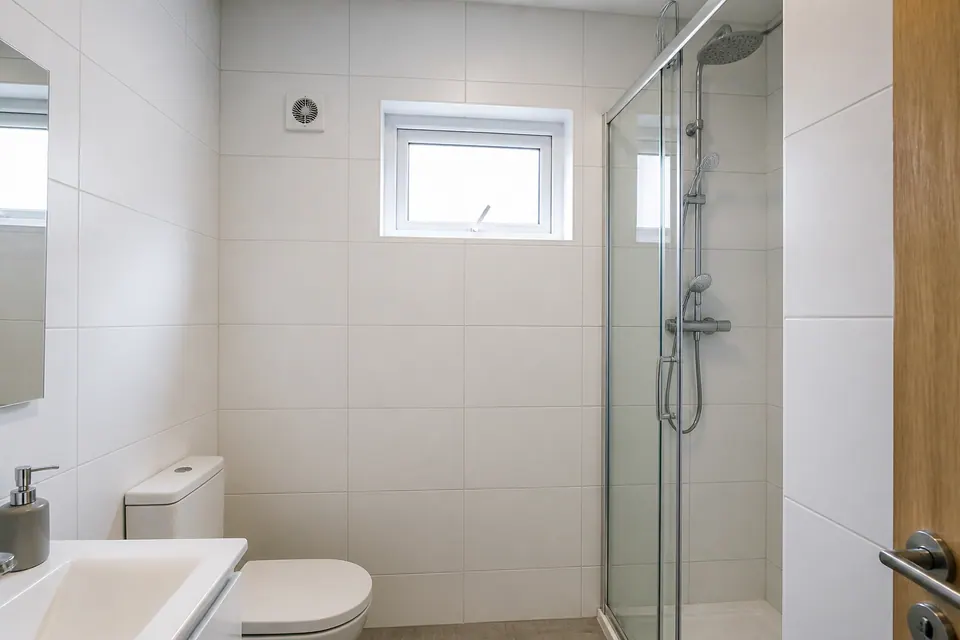
Describe the coating above the fittings from an accessible position, with wet-use history where known.
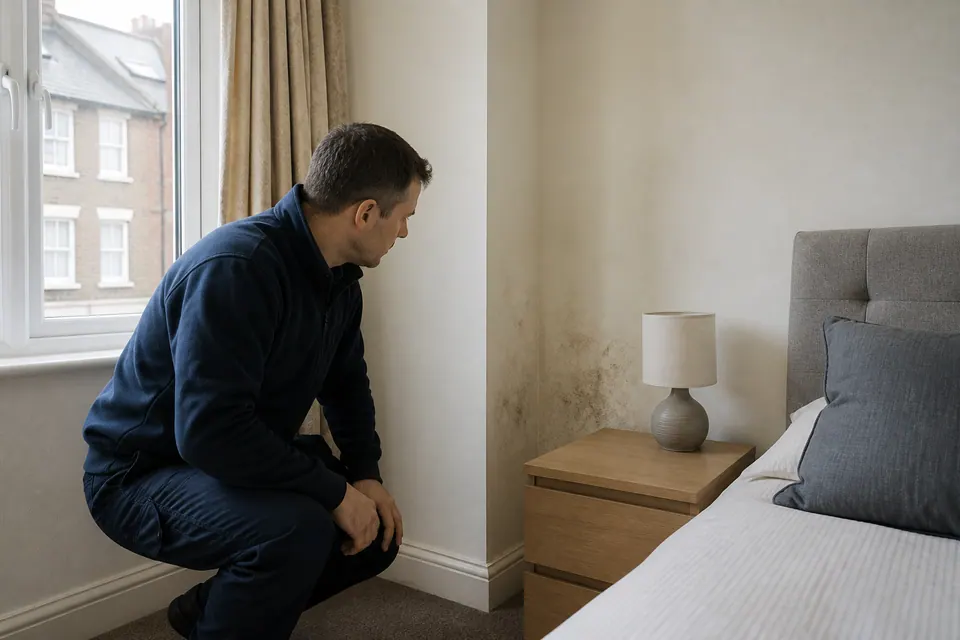
Include the ceiling line, window and furnishings so both condition and approach are understood.
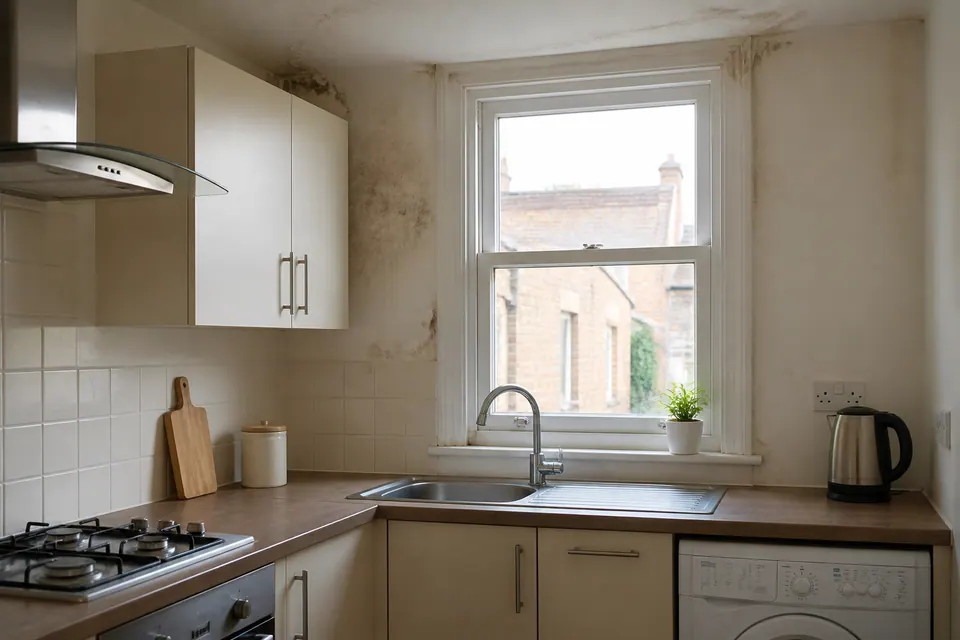
Identify the upper wall face and any fixed units beneath it rather than assuming unrestricted access.
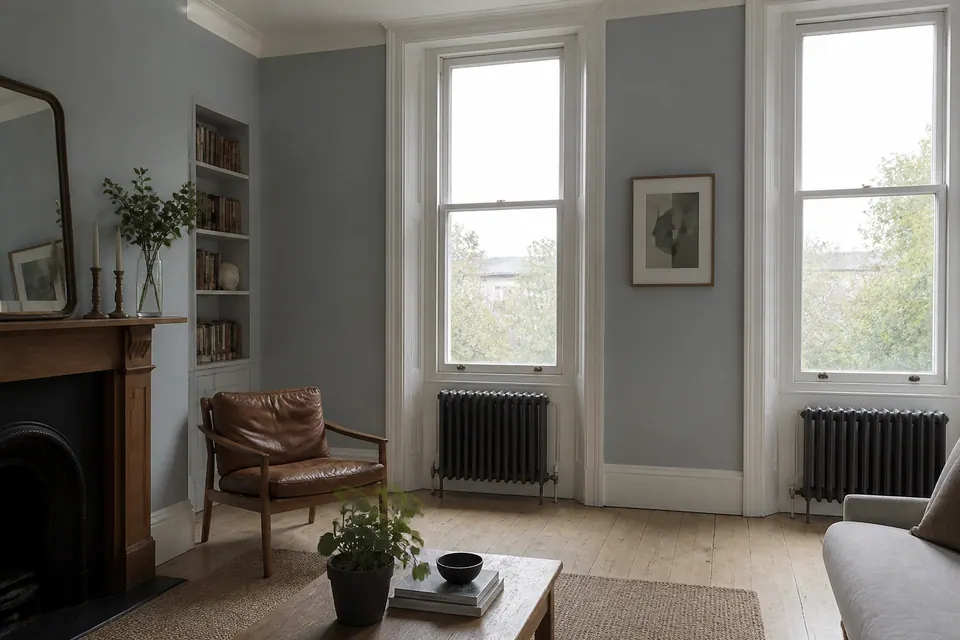
Mention delicate decoration and tall furniture near the corner.
Clarify the exact high section and who can authorise access to it.
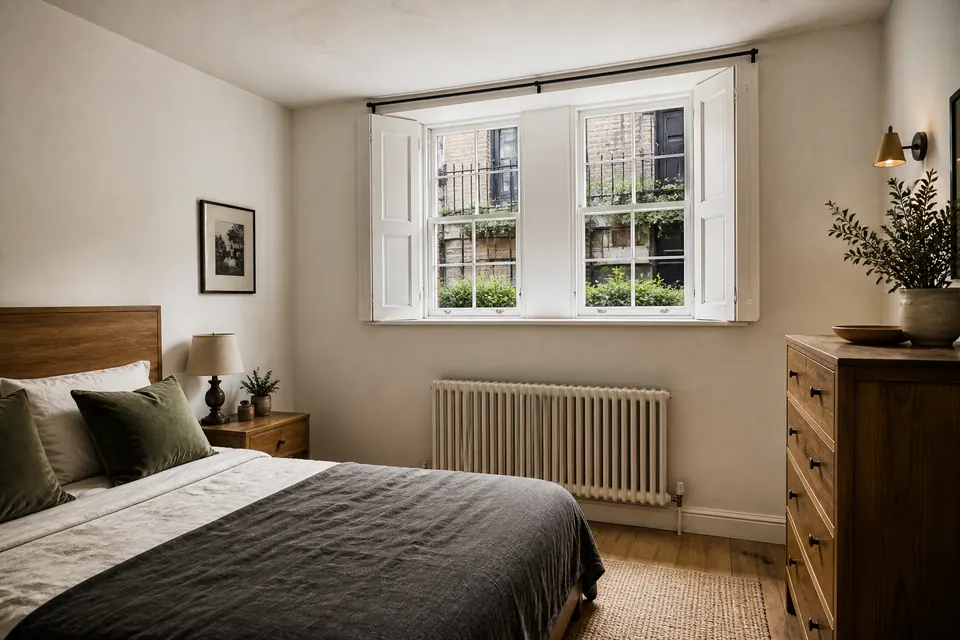
Give actual water history without treating the room’s level or the mark’s height as a diagnosis.
Harrow / THE PROPERTY BRIEF
The initial enquiry does not require you to reach the mark.
Take an ordinary wider view of the Harrow room showing the upper wall, nearby opening and furnishings. Add what is known about earlier appearances or repairs. A top corner should not automatically be described as a roof leak, condensation problem or hidden defect merely because of its location.
05 / QUOTATION, NOT GUESSWORK
Provide the visible affected dimensions from an accessible position where possible, and explain the room layout. A quotation should not assume unrestricted working space beneath a high mark.
Review the assessment and pricing basis ↗| Current concern | How it is considered | Useful access detail |
|---|---|---|
| Small suitable exposed patch | Photographic quotation may be possible | Position and available approach |
| Several or returning marked areas | Assessment to define the work | Separate views and previous history |
| Damaged material or complex damp | Specialist quotation required | Visible deterioration and unknown conditions |
Confirm the included finish and any limitations before arranging other work. A treatment quote should not be read as agreement to repair a ceiling or investigate everything above it.
Harrow / ACCESS & PEOPLE
The resident can describe when the pattern was noticed and how the room is used. Practical sleeping arrangements need discussion before booking.
Share confirmed incidents or repairs where known. The existence of a room or roof above does not establish its involvement.
Show the obstruction and explain whether it is fixed or heavy. Moving it should be agreed rather than assumed as part of a photograph request.
Provide the current position and timing. Confirm the booking arrangements without treating this page as legal advice about the cause or responsibility.
Keep known work tied to its actual location and date. Avoid describing a limited repair as confirmation of the entire ceiling condition.
Ask about suitable treatment and remaining decorative limitations. A desired clean-looking corner should not conceal a separate material or moisture question.
07 / LOCATE THE ISSUE
A high position needs context as well as detail. Explain the adjoining ceiling, window and furnishings while leaving concealed construction and the cause open for assessment.
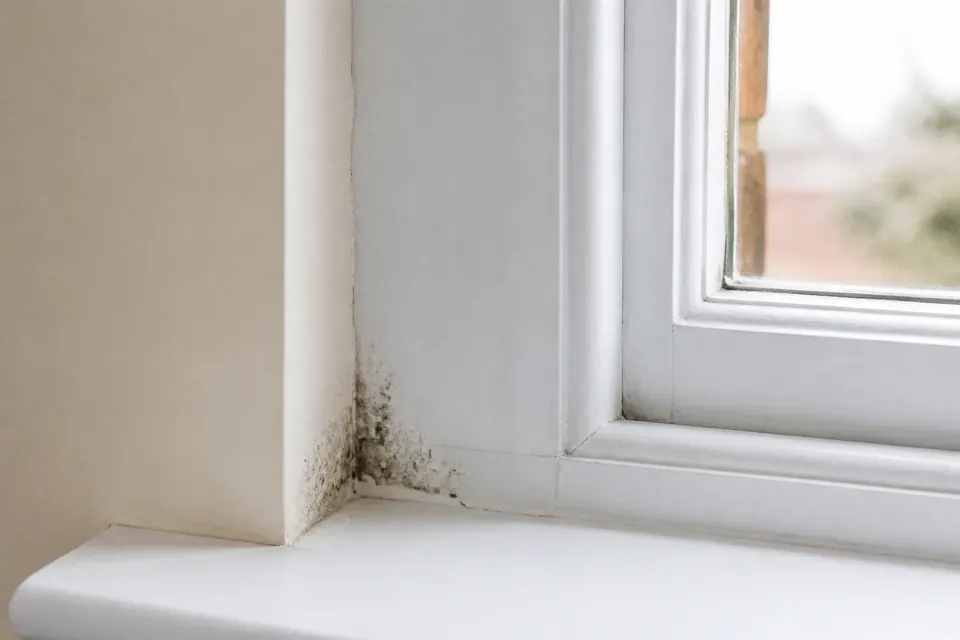
Show the reveal and the line where it meets the ceiling. Report any water noticed nearby without deciding from the position alone that the frame is leaking.
Photograph from an accessible position and identify the painted area or other finish. Do not climb above a bath to improve the image.
Include the corner and enough of the wall to show orientation. Describe the pattern’s timing and whether paint has visibly changed.
Explain the cabinet obstruction beneath the mark. A clear camera view can still leave a difficult working approach that needs discussion.
Show the surrounding decoration and any tall furniture. Mention a delicate finish without touching or scraping it for identification.
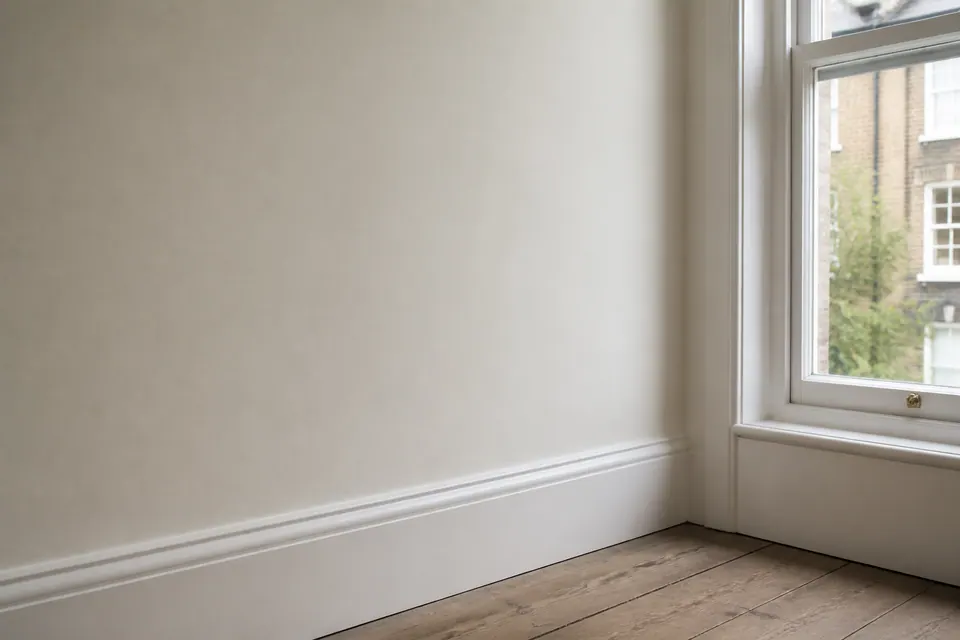
Identify which face carries the spots and whether the pattern crosses the junction. Do not assume the ceiling and wall have the same material condition.
Describe the visible gap and fixed unit below it. The hidden continuation remains unknown, even if the exposed patch reaches the furniture edge.
Height does not establish severity or a particular defect. A stain or spot still needs assessment in its material and moisture context.
08 / A CONTROLLED APPROACH
Locate the upper patch and distinguish visible facts from assumptions about the area above. Clarify the suitable material and history.
Discuss furnishings, preparation and the practical access required. Do not attempt to create access or disturb the finish solely for the enquiry.
Carry out the agreed accessible surface work. Deteriorated coatings or concealed concerns should remain separate decisions where relevant.
Clarify remaining staining, repair needs and applicable return instructions, together with any moisture questions that need further attention.
The stages describe the proposed treatment, not proof that concealed construction has been inspected.
Show the position from an accessible viewpoint.
Treat the assessed suitable finish.
Record later changes without disturbing the area.
This schematic is not customer before-and-after evidence or a promise that an upper-wall patch cannot return.
09 / WHEN IT COMES BACK
Keep the ceiling junction and window or other reference point visible in later photographs. A closer crop can make the same outline appear larger, so explain differences in the view.
Include actual dates and any confirmed work above or beside the room. Continued moisture may contribute to recurrence, but neither height nor colour identifies the cause on its own.
Describe new spots, wetness or coating changes from a normal position. Do not scrape the old mark to create a cleaner comparison boundary.
Harrow / PLAN THE APPOINTMENT
Send the Harrow postcode and a wider bedroom view. Confirm availability and describe the approach to the marked position before arranging the room around an assumed appointment.
Identify who can supply any confirmed repair information if the person meeting the team does not hold it.
Load the area map.
Harrow / BEFORE BOOKING
Give the position, material and history without taking unnecessary steps to reach it.
No. Use a normal accessible viewpoint and describe the detail that cannot be seen clearly. The initial enquiry does not require you to reach the mark.
Yes, a wider view can show orientation and nearby fittings. Identify the marked part in your message so the context is not mistaken for the full affected area.
No. Provide any confirmed incident history, but the position alone does not establish a particular source or repair requirement.
Give a clearly approximate description and explain the limitation. Do not climb or disturb material to obtain a more exact figure for the first enquiry.
Describe its position and ask about preparation and handling. Do not assume heavy-furniture movement is included or required before the scope is discussed.
Include it if known, together with when spots were noticed again. The timeline is useful context, not proof of why the marks returned.
Mention the deterioration and show it without scraping. Suitable treatment and reinstatement of unstable material may be different tasks.
Ask for the applicable return instructions in advance. Do not rely on a generic same-day promise based on the patch looking small.
Do not assume a roof inspection or repair is included. Keep any concern above the room separate from the agreed accessible surface-treatment scope.
Harrow / AN ACCESSIBLE FIRST VIEW
Send the wider photograph, timing and known history. Clarify suitability and the practical approach before planning treatment or redecoration.
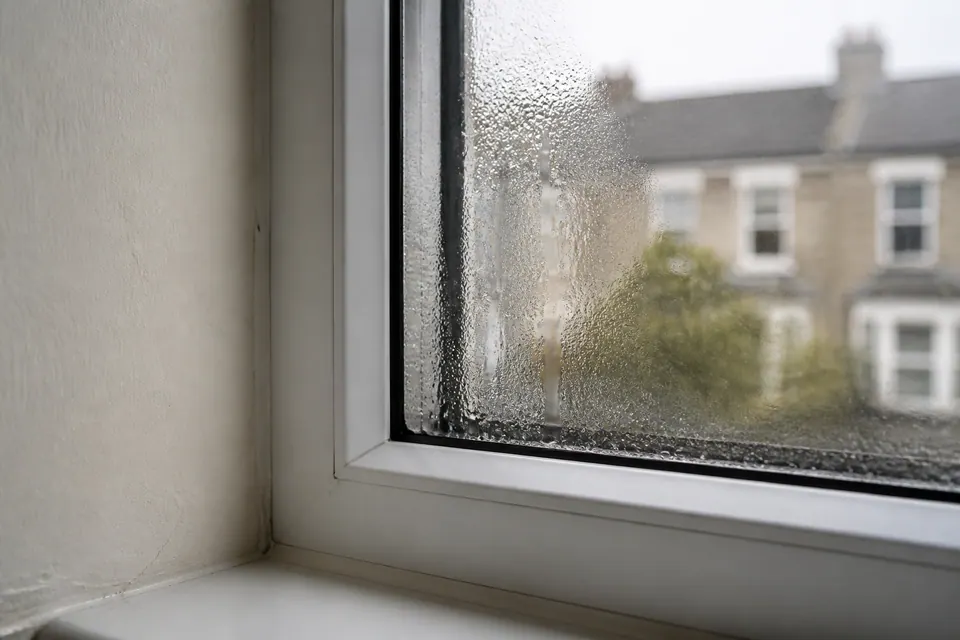
The interiors illustrate property contexts and do not show a verified customer upper-wall treatment result.
