
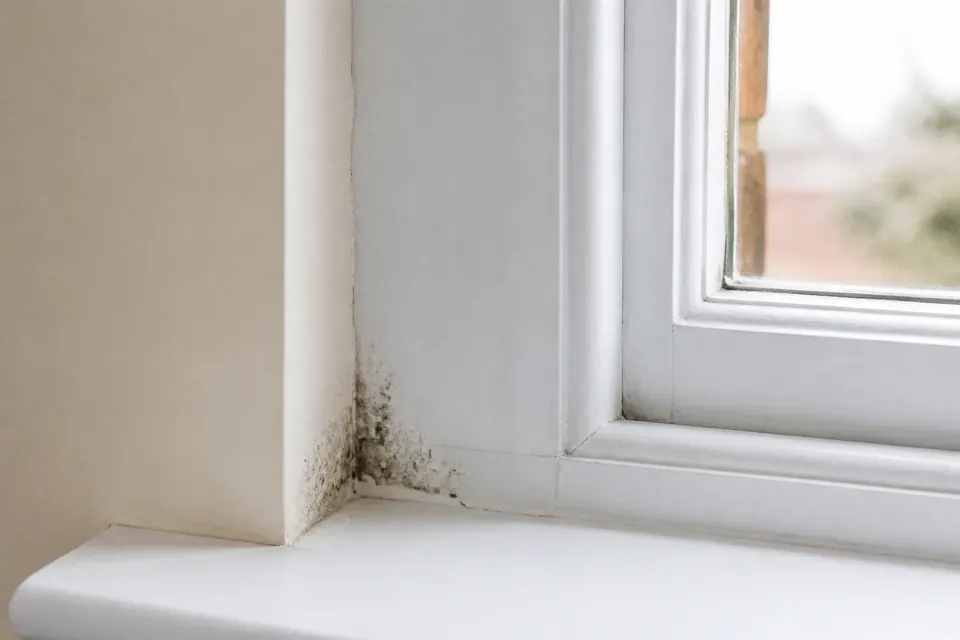
At the window reveal
Include the sill, reveal and adjacent wall in one view. A line of spotting at the frame should not automatically be measured as the entire surrounding elevation.
Barnet / THE EDGE OF THE AFFECTED AREA
Show the boundary, not just the darkest spot.
A close-up can make a small patch look like an entire wall problem. For Barnet, include the surrounding intact finish and the window position so the enquiry shows both the visible extent and the material being considered.
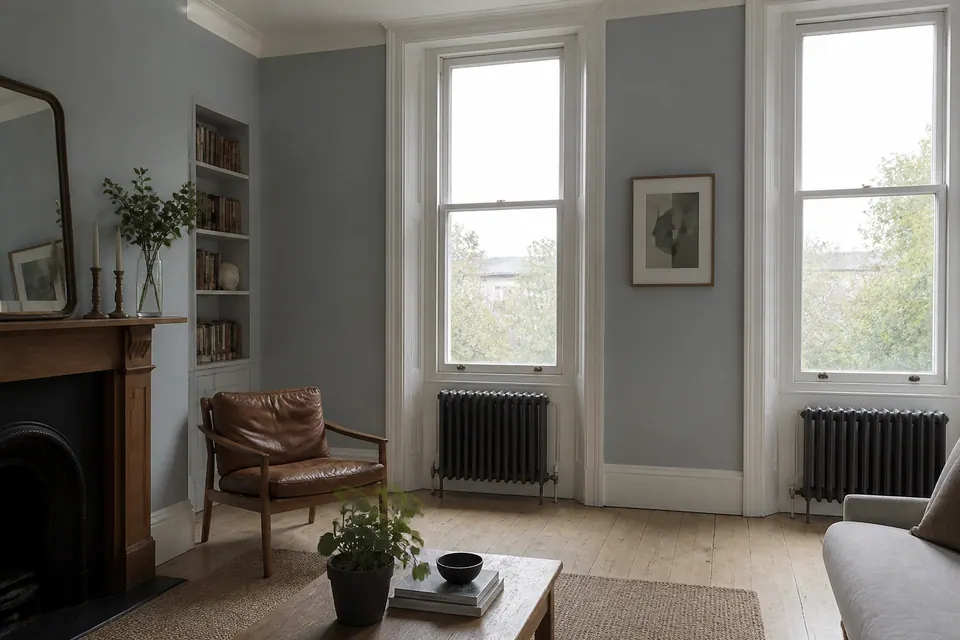
Outline · finish · change over time
01 / LOCATE THE ISSUE
The position of the boundary helps describe the work. Select the setting and show where the visible change ends without touching the material.
Include the sill, reveal and adjacent wall in one view. A line of spotting at the frame should not automatically be measured as the entire surrounding elevation.
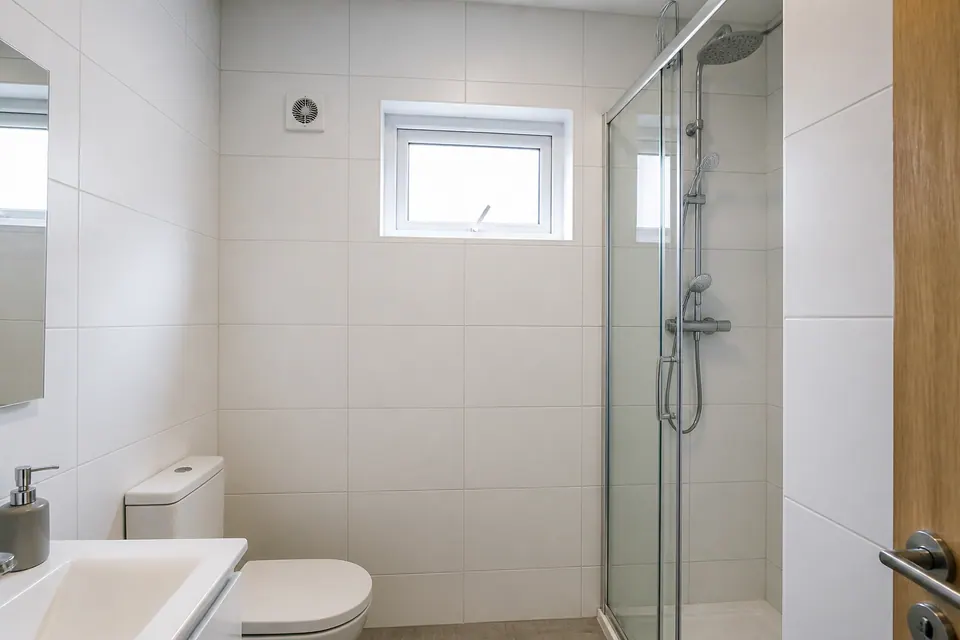
Show the transition between marked and apparently intact paint. State whether either part is peeling; colour alone does not establish the condition underneath.
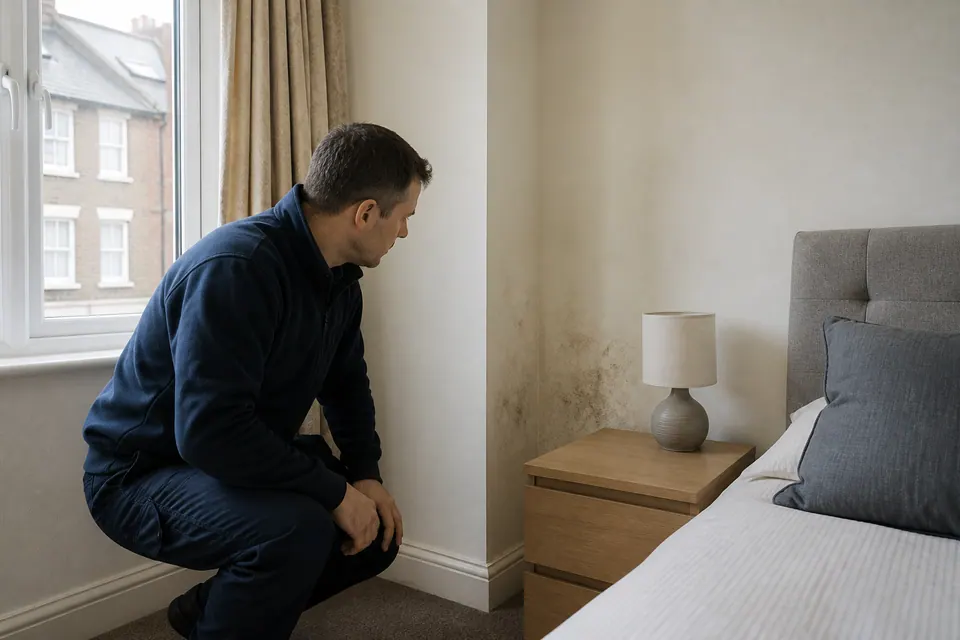
Include the wall beyond the patch and any furniture obscuring its edge. Do not shift affected contents just to make the outline easier to photograph.
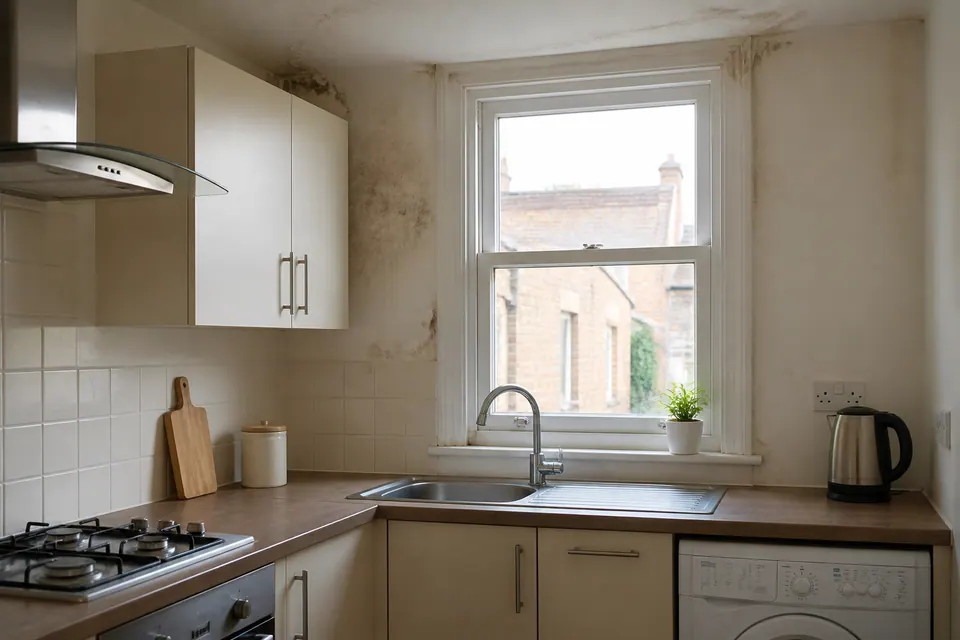
Explain whether the boundary stops at a cabinet, tile or change of paint. A concealed continuation remains unknown until suitable access is considered.
A wide image can show decorative changes that a close-up misses. Describe wallpaper, paint or trim separately if the patch crosses between them.
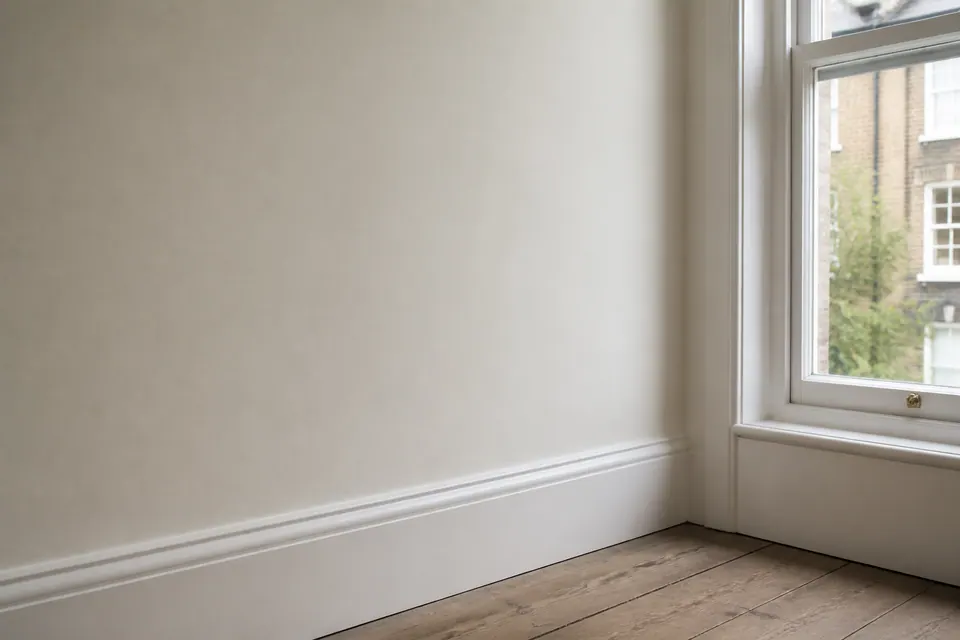
Identify which face is visibly affected and whether loose material is present. Avoid testing the surface to discover how far damage extends.
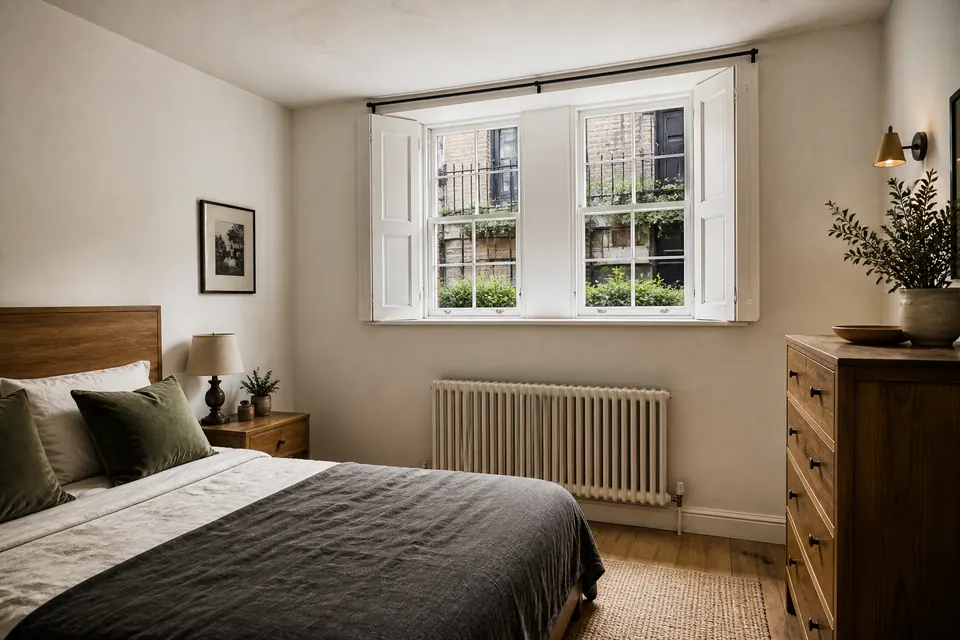
State where storage prevents a complete view. An estimated hidden area should not be presented as measured growth or included without assessment.
An outline is evidence of extent, not proof of a particular moisture source. Describe changes without declaring every discoloured portion to be mould.
Barnet / THE PROPERTY BRIEF
The comparison area makes the enquiry clearer.
In a Barnet room, keep the window or another fixed feature in the wider photograph so the surface can be located again. If the finish has recently been decorated, explain which portion changed. A quotation should address suitable affected material rather than assume the whole wall needs the same treatment or cosmetic restoration.
03 / SEPARATE THE QUESTIONS
A wall can show growth, old staining and material damage in overlapping but different areas.
| What is visible | Relevant context | What needs clarifying |
|---|---|---|
| Spotting confined to the reveal | Water observed on the window | Which adjacent materials are affected? |
| A larger discoloured outline | Earlier decoration or water damage | Is this old staining, current growth or another change? |
| Paint lifting beyond the dark patch | The surrounding finish is deteriorating | Is surface treatment suitable there? |
| The same outline appears again | Prior treatment is known | What moisture history remains unresolved? |
Plaster replacement, leak investigation and redecoration require their own agreed scope. They should not be assumed merely because a photograph includes the adjoining wall.
Keep separate descriptions even when their boundaries overlap.
| Question | Mould | Damp |
|---|---|---|
| What is being recorded? | The apparent growth on the finish | Moisture within or reaching a material |
| Which outline matters? | The area visible in the current photograph | The observed wet area or known water path |
| Why can they differ? | Growth can remain visible after conditions change | Moisture may extend beyond a visible patch |
| What should be agreed? | Suitable surfaces and the treatment boundary | Any investigation needed outside that boundary |
04 / DIRECT ANSWERS
Describe the affected width and height, with a wider photograph. Floor area does not establish how much wall material is involved.
No such result should be assumed. The affected material and moisture context need attention before a separate decorative finish is considered.
Not by itself. Record when expansion was noticed and any confirmed water event; assessment is needed to consider the explanation.
It supports the enquiry but may not show material condition or clearance. Ask for timing once the proposed scope is understood.
Ask about preparation for the selected work. A visually unmarked portion does not by itself establish where belongings can remain.
Include that condition in the enquiry. Damaged finish can require work other than removal of suitable surface growth.
Show the separate materials and visible extent. The accepted scope, not the general label window surround, determines what is included.
No. Surface boundaries do not define the moisture source, and repairs or further investigation need separate agreement.
05 / QUOTATION, NOT GUESSWORK
Send a Barnet room-wide image alongside the detail view. Include approximate affected dimensions and explain where the material changes, so the price discussion does not confuse a visible patch with an entire wall’s restoration.
View the mould-removal quotation basis ↗| Observed area | Quotation approach | Useful comparison |
|---|---|---|
| Small reachable patch | Photographs may establish an initial quote | Include the edge and nearby clearance |
| Spreading or recurring marks | Assessment informs the treatment proposal | Supply the earlier outline if documented |
| Deteriorating or uncertain finish | A specialist quotation may be needed | Show damage without peeling material back |
Confirm the included finish and realistic outcome. Treating growth should not be mistaken for restoring every discoloured or damaged part of the surrounding wall.
06 / A CONTROLLED APPROACH
Compare the close view with the wider wall image. Identify the finish and any unviewed edge before discussing suitability.
Agree clearance around the marked portion without assuming that the rest of the wall needs work. Ask before moving affected belongings.
Apply the agreed approach to the accepted accessible finish. Newly discovered deterioration may require a separate decision.
Distinguish removed growth from staining and damaged paint. Record any repair or decorative question that remains outside the work.
The sequence separates treatment from the cosmetic appearance of adjoining material.
Show the patch beside a fixed room feature.
Keep the accepted finish and access limits clear.
Identify staining or damage without promising a uniform wall.
These are illustrative stages rather than customer results. A clean-looking finish does not prove the moisture source has been resolved.
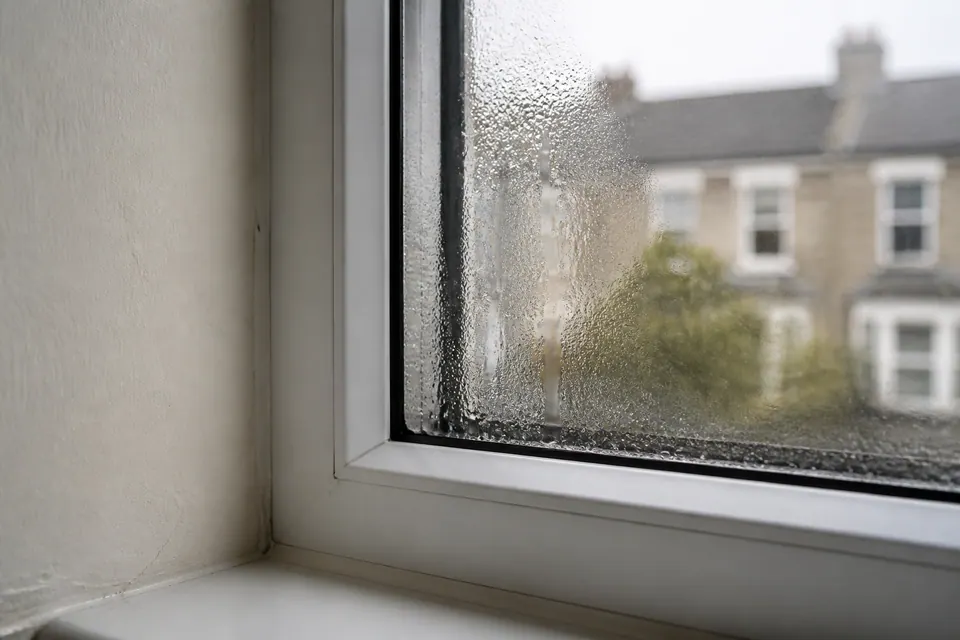
07 / WHEN IT COMES BACK
Compare the new image with the earlier boundary using a recognisable fixed feature. Note whether spotting has returned within the same area or appeared beside it.
A change in outline deserves assessment, not an automatic conclusion that more of the wall needs the previous method. Material condition and continuing moisture may alter the appropriate scope.
It provides context that a close photograph of the darkest point cannot. Record dates without scraping or marking the affected surface.
08 / ROOM-BY-ROOM CONTEXT
Show where spotting stops and peeling begins. Those boundaries can describe different conditions rather than one uniform removal task.
Include enough of the elevation to locate the patch. Note where furniture prevents a complete view of the edge.
Distinguish painted wall, tile and cabinet edges. A mark crossing them may involve more than one treatment-suitability decision.
Identify wallpaper or decorative trim around the affected area. Avoid promising an unchanged cosmetic finish before assessment.
Use a doorway or corner as a location reference. Confirm whether the finish is private or part of a shared building area.
Explain any known water history and the visible material condition. A low position does not determine why the boundary appeared.
Barnet / ACCESS & PEOPLE
Describe whether the adjoining paint is intact or lifting. That comparison helps explain the condition without testing the material yourself.
Identify coverings and decorative edges. Removal of growth should not be presented as a promise to preserve or restore a deteriorated covering.
Say where a wardrobe or fitted unit blocks the outline. Unknown extent should remain a stated limitation in the enquiry.
Provide the wide view and current close-up to the booking contact. Confirm the permissions for work without treating these photographs as legal findings.
Explain which parts were repaired or redecorated and when, if known. That helps separate historic appearance from a recent surface change.
Ask about the assessed material before planning a whole-wall repaint. Treatment, repair and decoration can be distinct tasks with different requirements.
Barnet / PLAN THE APPOINTMENT
Provide the Barnet postcode and photographs that identify the actual room and affected outline. Confirm appointment availability and access before preparing the area.
The location map is a planning aid; it cannot establish the size or cause of the visible wall problem.
Load the area view for the address discussion.
Barnet / BEFORE BOOKING
Describe the visible finish accurately without extending the claim to material that cannot be seen.
It gives context for the finish and the edge of the change. It does not mean that the comparison area is automatically part of the treatment.
Do not mark or disturb the surface for the enquiry. Existing photographs with a fixed room feature can provide a useful comparison.
Give approximate length and width of the visible strip, then show the surrounding reveal so its position and material are clear.
It can have more than one explanation. Describe its age and changes without assuming that appearance alone confirms current growth.
Identify the change in covering and its condition. Ask what is suitable rather than assuming the same method and cosmetic outcome across both finishes.
No. Photograph the condition as visible and mention the loose edge. Material assessment should precede any separately agreed removal or repair.
No such conclusion follows from the outline alone. Share known water history and any current observations for assessment.
Ask for the specific suitable area and exclusions to be recorded. Access and material condition may affect how that scope is defined.
A matching decorative appearance is not guaranteed by growth removal. Residual staining and redecoration should be discussed separately.
SHOW THE COMPLETE PICTURE
Send the close view, surrounding wall and approximate dimensions. Explain any material change so the next step reflects the actual finish rather than a whole-room assumption.
The images illustrate residential settings, not evidence of completed customer work.
