
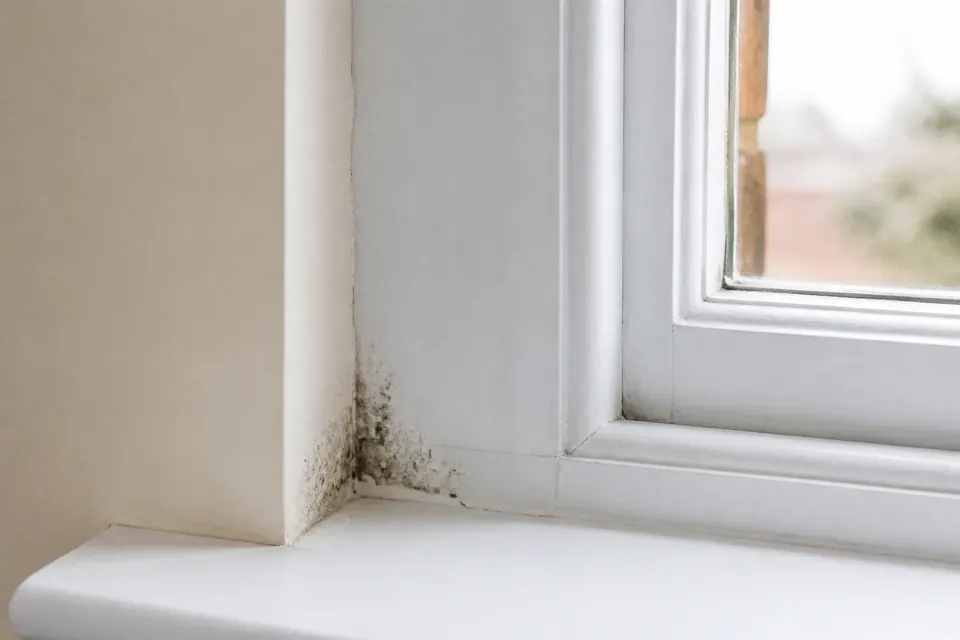
Window-surround information
If frame work or a window assessment exists, identify what it actually covered. Add current views of the reveal rather than treating an older conclusion as its present condition.
Guildford / EXISTING INFORMATION
An existing report is useful context, not an automatic work order.
If you already hold repair information or an assessment, identify the parts relevant to the current mark. Confirm Guildford postcode availability and distinguish suitable surface treatment from recommendations for another investigation or trade.
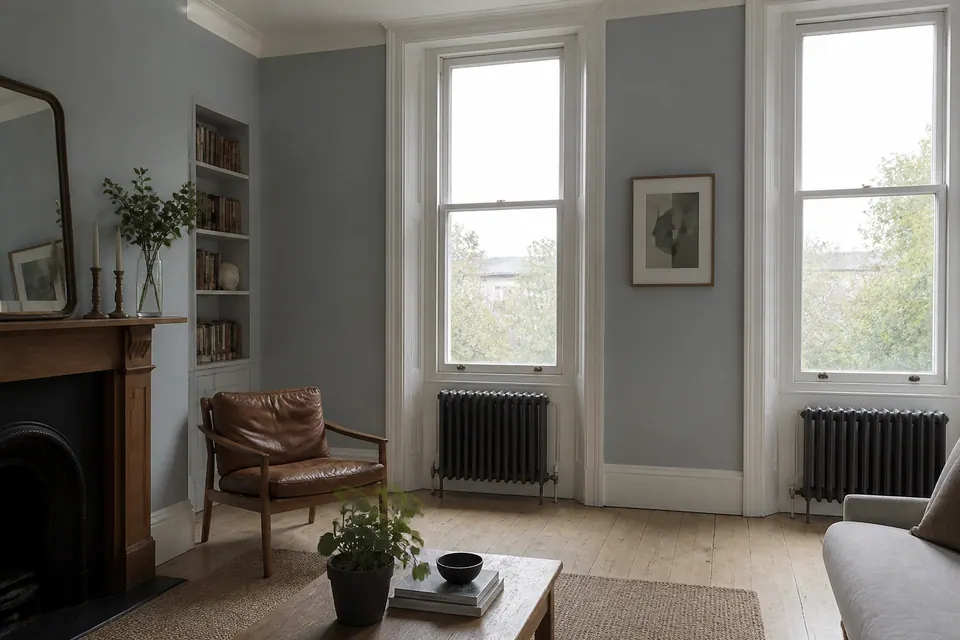
Current condition · existing information · next decision
01 / SEPARATE THE QUESTIONS
Existing information may help explain the enquiry, but its date, area and scope matter. Do not extend a limited observation beyond what it actually describes.
| Current concern | Relevant history | Clarification needed |
|---|---|---|
| A patch beside a previously repaired fitting | Confirmed work and date | What remains visible or wet now? |
| A returning bathroom mark | Earlier recommendations, if any | Which recommendations were actually carried out? |
| A damaged coating beneath an old stain | Material or decorating history | What is suitable for treatment today? |
| Marks in another room | Whether that room was assessed before | What new information is needed? |
A document may mention several possible tasks. Clarify which concern relates to accessible mould removal and which requires another service rather than assuming the whole recommendation list belongs in one quotation.
An earlier record should not blur the difference between treating a finish and resolving a moisture contributor.
| Question | Mould | Damp |
|---|---|---|
| What is described | Growth affecting an assessed surface | An excess-moisture condition |
| What history may contribute | Earlier appearance or treatment information | Known incidents, observations or repairs |
| Why both remain relevant | Removal does not perform every recommended repair | Continuing moisture can affect recurrence |
| What needs agreement | The suitable current treatment area | Any separate assessment or remedial task |
02 / LOCATE THE ISSUE
Use the closest setting and identify which document or repair detail, if any, concerns it. A report about one area should not be applied automatically to every mark in the property.
If frame work or a window assessment exists, identify what it actually covered. Add current views of the reveal rather than treating an older conclusion as its present condition.
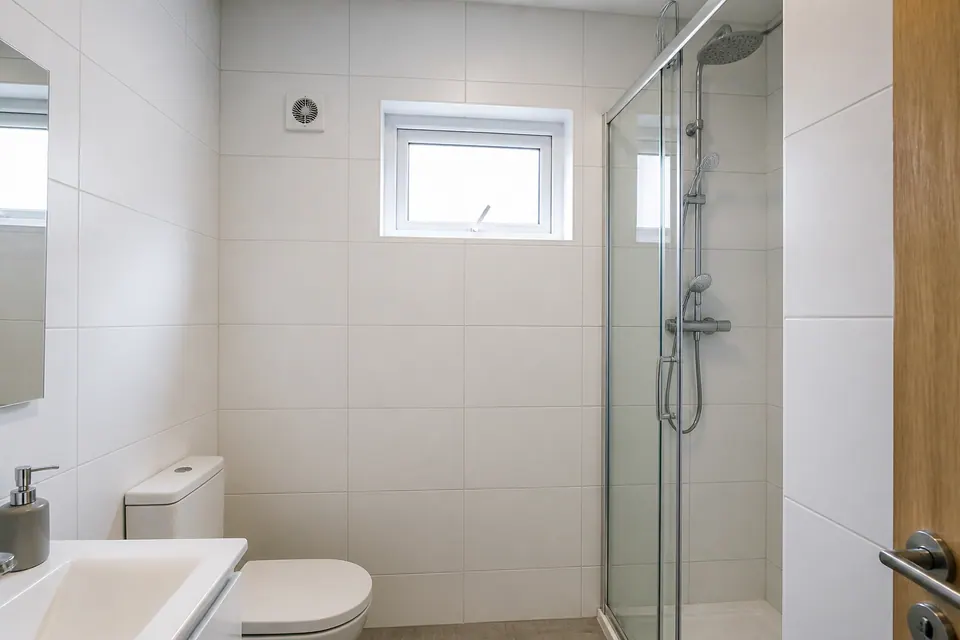
Separate a recommendation about ventilation from a completed repair. Describe today’s affected coating and any known recurrence in its own terms.
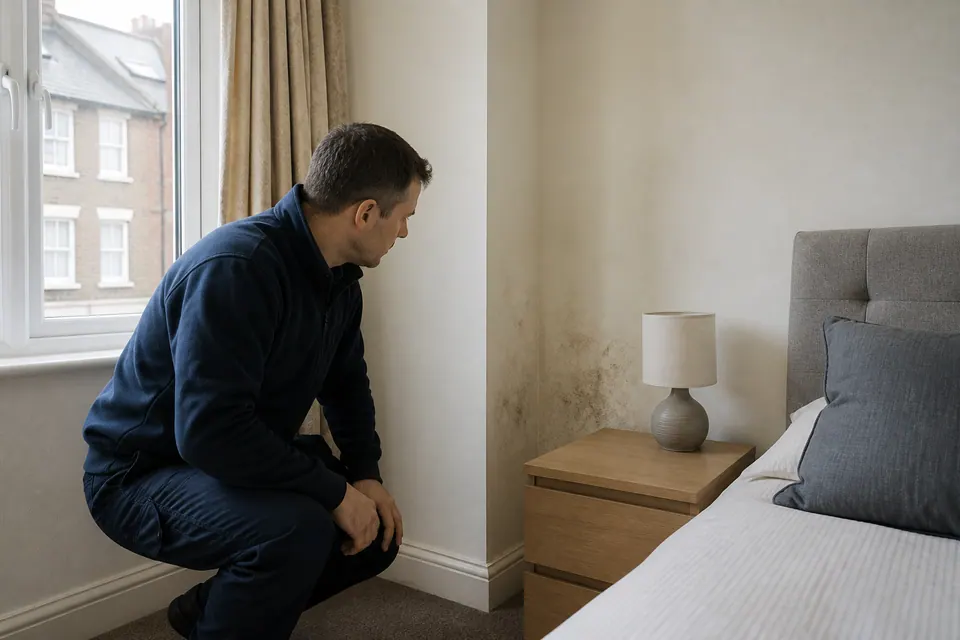
Match the records to the correct bedroom and wall. Similar room names can otherwise attach the wrong history to a new photograph.
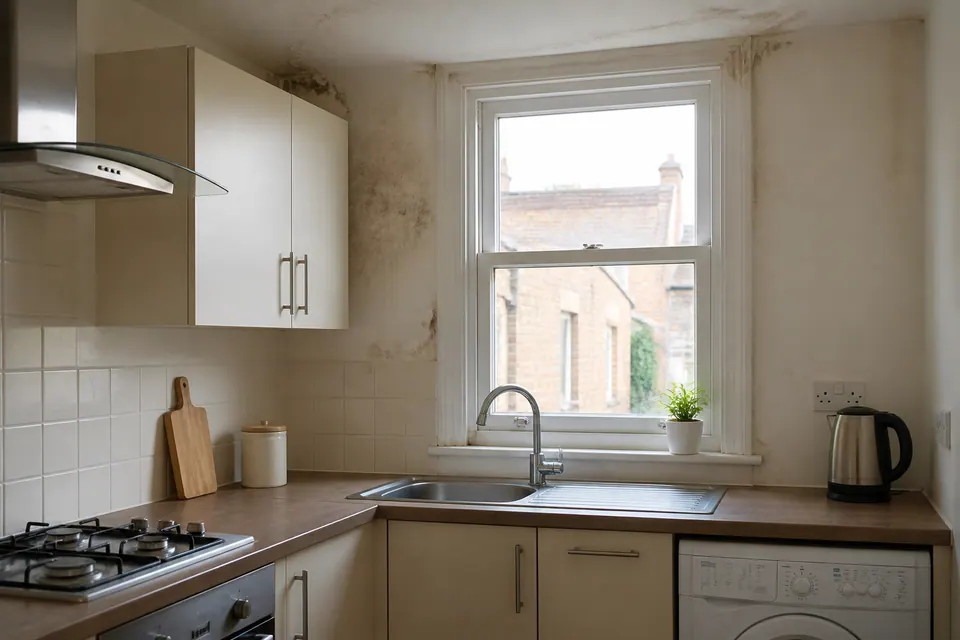
Distinguish confirmed plumbing work from suggestions about other fittings. Show the current accessible finish instead of using a repair description as the treatment dimensions.
Include relevant decorating or material history where known. A proposed reinstatement task is not necessarily part of the current mould-removal request.
Identify whether an existing assessment concerned the exposed finish or another layer. Do not imply that concealed construction has been inspected if that is not established.
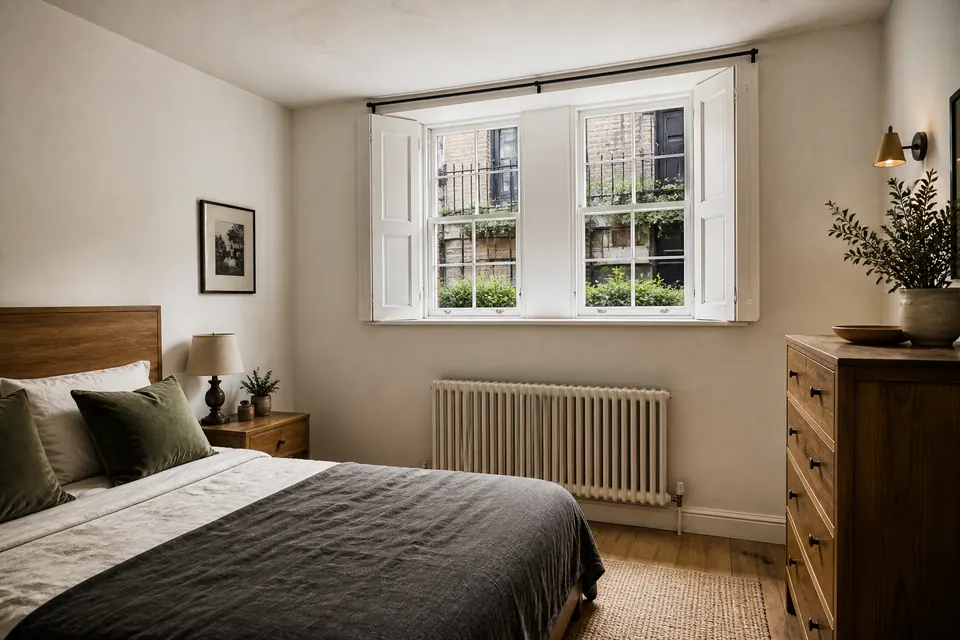
Explain the actual access available now. An earlier view taken before furniture or panels were fitted may not describe the present working position.
You can enquire without an existing survey. Where documents are available, use them to clarify history rather than manufacture certainty about the present condition.
Guildford / THE PROPERTY BRIEF
The current surface still needs a clearly defined request.
Check availability for the Guildford postcode and provide recent photographs. If a report or repair record exists, explain which position it concerns and whether its proposed work was completed. Keep the request for suitable mould treatment distinct from any separate recommendation still awaiting a decision.
04 / A CONTROLLED APPROACH
Match the available records to the marked position and current finish. Keep their dates and limitations clear.
Clarify suitable treatment, preparation and any unresolved question that needs another assessment before work can proceed.
Carry out the proposed work on suitable accessible surfaces. Other recommendations remain separate unless expressly clarified.
Distinguish treated growth, residual marks and questions outside the visit. Ask what information would support any further enquiry.
The stages do not imply that a surface visit completes an entire property report.
Show the current finish and position.
Work to the suitable agreed scope.
Identify separate or unresolved tasks.
The diagram is illustrative, not a customer survey record or proof that all recommendations have been completed.
05 / QUOTATION, NOT GUESSWORK
An old report may describe a broader issue than the accessible finish now being considered. Ask for a quotation that identifies today’s suitable area, its limitations and any separately required work.
Read the main assessment and quotation basis ↗| Present condition | How it may be considered | Useful supporting history |
|---|---|---|
| Small suitable accessible area | Photographs may support a quotation | Current boundary and relevant earlier events |
| Several or recurring concerns | Assessment to establish the work | What was previously done at each position |
| Complex damp or damaged material | Specialist quotation required | Recommendations and unresolved limitations |
Confirm the postcode, total and included work before booking. A surface quotation should not silently become agreement to execute every recommendation in a separate document.
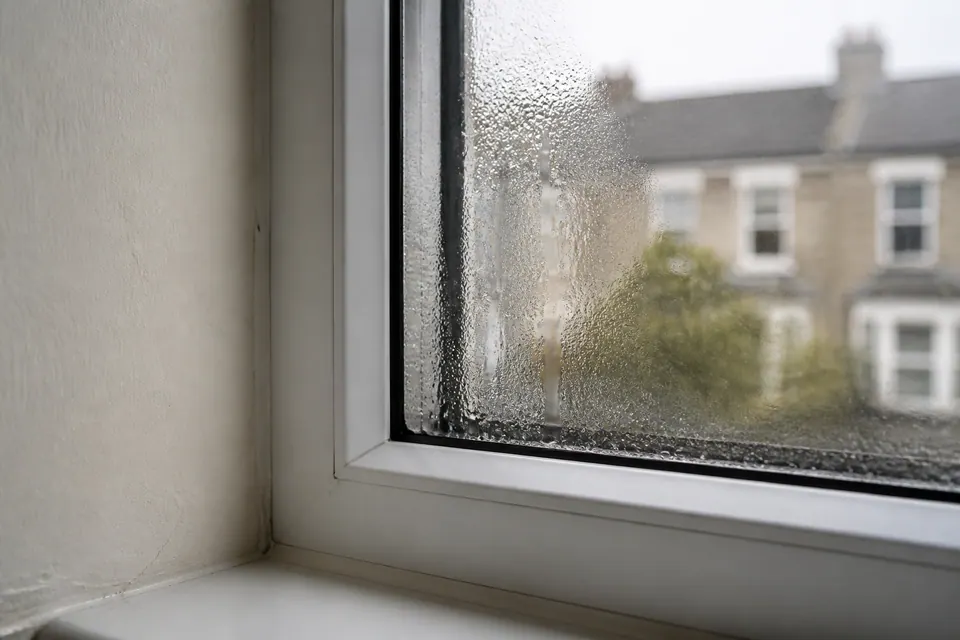
06 / WHEN IT COMES BACK
A useful recurrence history distinguishes a recommendation from a completed action. If a proposed repair was never carried out, do not describe the later patch as returning after that repair.
Keep the dates, current position and actual observations identifiable. Continuing moisture may be relevant, but an earlier report does not automatically explain every later mark or another room’s condition.
Where information is missing, say so. A shorter confirmed history is more useful than a detailed sequence assembled from uncertain recollections.
Guildford / ACCESS & PEOPLE
The current occupant may know the latest change but not the full maintenance record. Identify their observations as current evidence.
Existing documents may describe work undertaken before the present occupancy. Keep their actual dates and locations clear.
Distinguish each confirmed task and remaining recommendation. A shared project does not make every trade’s work part of the mould-treatment scope.
Send recent views and practical access information. Confirm the booking arrangements without inferring legal responsibility from a report summary.
Provide the relevant information without losing the distinction between proposed and completed work. Pass preparation guidance to the person providing entry.
Ask which present finish can be considered and which remaining questions need another service. Do not equate a convenient combined timetable with a combined scope.
08 / ROOM-BY-ROOM CONTEXT
Identify which ventilation or water information concerns the current marked finish.
Keep similarly named rooms distinct when sharing older photographs or reports.
Separate confirmed plumbing work from untested suggestions about fittings.
Include relevant coating or decoration history without assuming present suitability.
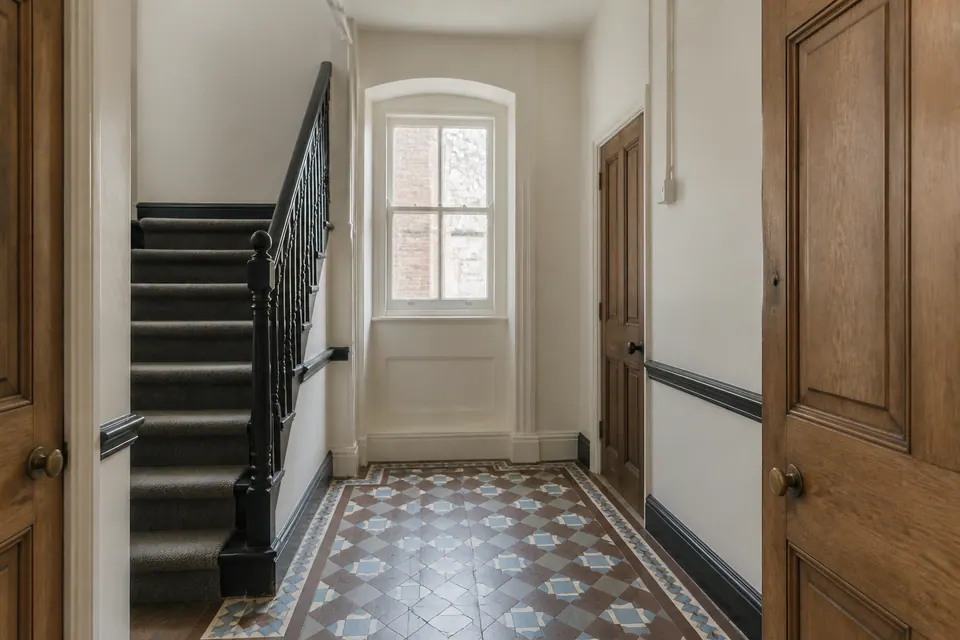
Clarify whether the records and proposed work concern a common area or the dwelling.
Give the actual information available rather than inferring a structural diagnosis from its level.
09 / DIRECT ANSWERS
An existing survey is not assumed. Send the visible condition and known history; ask what assessment is needed for the proposed scope.
Relevant information can help, but identify its date and area. Pair it with current photographs and distinguish recommendations from completed work.
Do not assume that. Accessible mould treatment and other investigation, repairs or reinstatement require separate clarification.
Small suitable accessible areas may be quoted from photographs. Multiple, recurring or complex concerns can require assessment or a specialist quotation based on the current condition.
Do not infer that from an incomplete description. Painting is not a substitute for mould treatment, and present suitability or remaining damage may need consideration.
State what was actually carried out and when, then describe the new observation. The recurrence alone does not establish which recommendation or component is responsible.
Not on their own. Current access, material and proposed treatment still matter, along with applicable preparation and return guidance.
Confirm the complete postcode before arranging a visit. This page and any existing report do not establish travel coverage or a reserved slot.
Guildford / PLAN THE APPOINTMENT
Confirm service availability for the full Guildford postcode. Send current views and only the relevant history before arranging a visit or coordinating another specialist around an assumed attendance date.
Identify who can clarify whether recommendations were carried out if the booking contact does not hold that information.
Load the area map.
Guildford / BEFORE BOOKING
Keep current evidence, recommendations and completed tasks distinguishable.
Yes, provide the current visible condition and known history. Ask what further assessment is appropriate rather than obtaining or inventing information simply to fill a gap.
Identify the relevant area and findings with their date and context. Do not turn a short extract into a wider conclusion than the document supports.
No. State which work is confirmed as carried out and which remains proposed or uncertain.
Not reliably if the condition or access has changed. Include a current view and use the older image as history.
Do not assume an additional investigation is included. Clarify the proposed service and any separate requirement before agreement.
Treat it as a separate observation. A report about one position should not automatically be applied to another finish or location.
No. A surface visit is not validation of every separate recommendation or confirmation that all contributing conditions are resolved.
After postcode availability and the proposed next step are confirmed. Existing documents do not reserve a slot.
Clarify the current finish, remaining marks and appropriate sequence first. Older information may not establish readiness for a new decorative covering.
Guildford / CLARIFY THE CURRENT REQUEST
Send the postcode, present photographs and confirmed work information. Separate the treatment enquiry from recommendations requiring another decision.
The illustrations show property contexts, not customer survey findings or evidence that repair recommendations were completed.
