
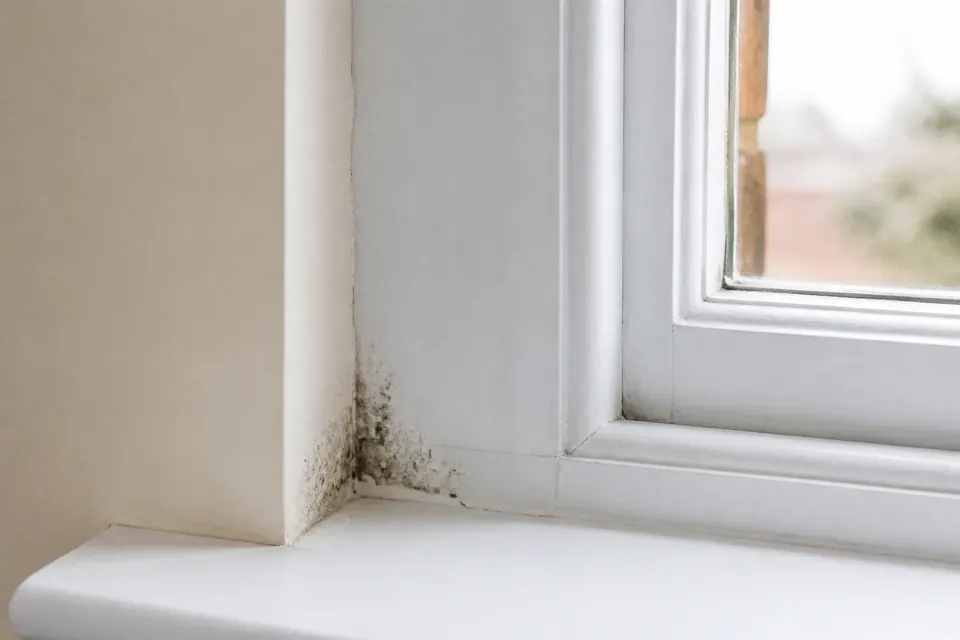
A reveal beside bedroom furniture
Show the window, bed or bedside unit together. Describe the coating and observed moisture separately, keeping any frame repair or furnishing issue outside an assumed wall-removal task.
Bow / PROPERTY CONDITION
Describe the wall beside the bed without disturbing it.
A Bow bedroom enquiry should identify the affected finish and the bed’s position together. Explain what can be seen, the clearance available and any separate concern about furnishings. Agree movement and room-use instructions before assuming the bed can stay in place or be returned immediately after treatment.
Wall finish · bed position · return instructions
01 / LOCATE THE ISSUE
Use the setting selector to locate the concern, then keep the wall and furnishings separately described. A mark close to a sleeping area does not establish a scope for every nearby item.
Show the window, bed or bedside unit together. Describe the coating and observed moisture separately, keeping any frame repair or furnishing issue outside an assumed wall-removal task.
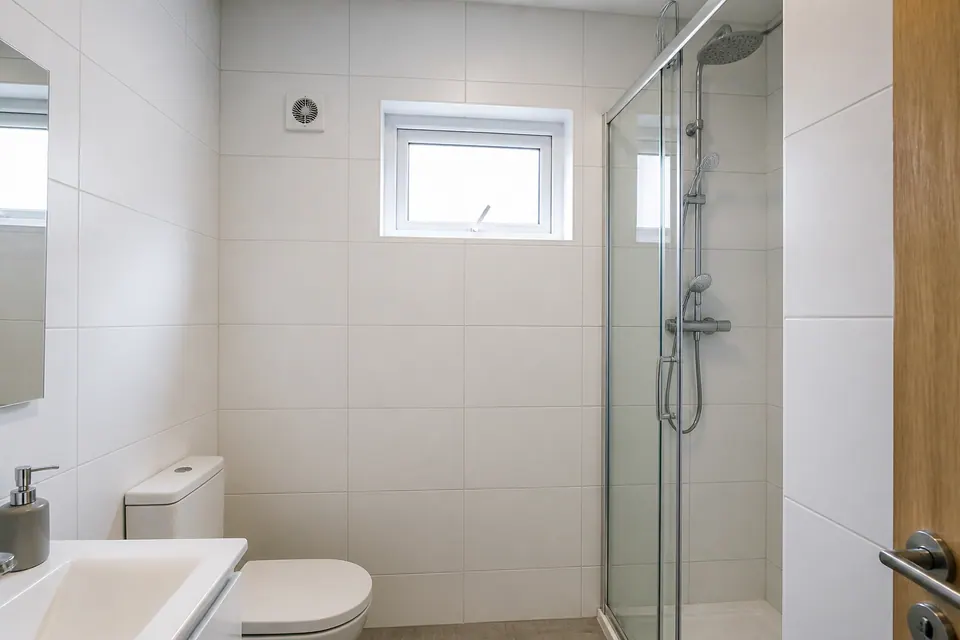
If bathroom marks are also present, give them their own finish and history. Do not merge them with the bedroom concern simply because both rooms are used by the same person.
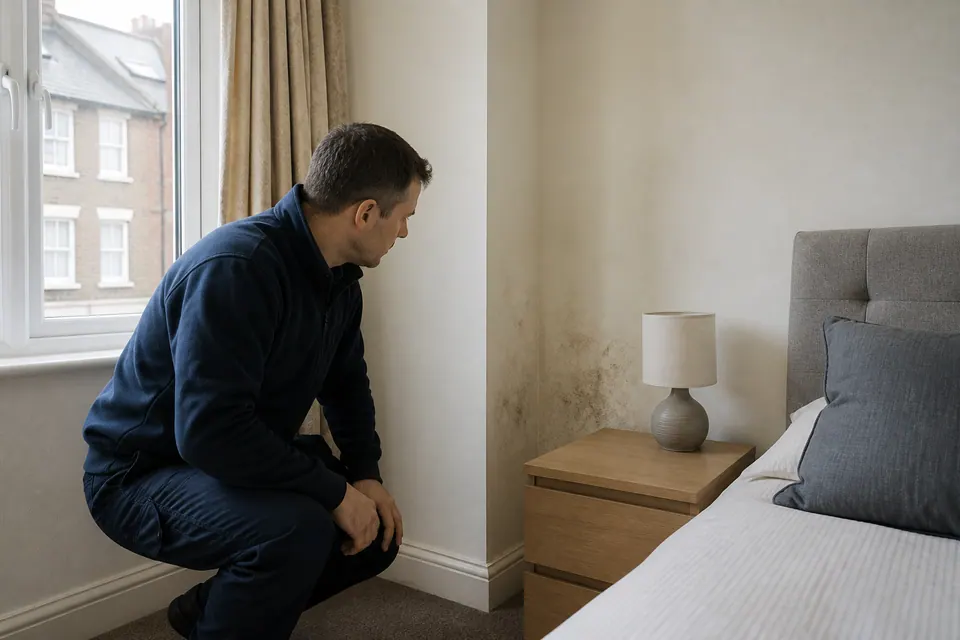
Photograph the available view without pushing the bed into affected material. Explain where the visible edge disappears and ask about movement before trying to expose the whole wall.
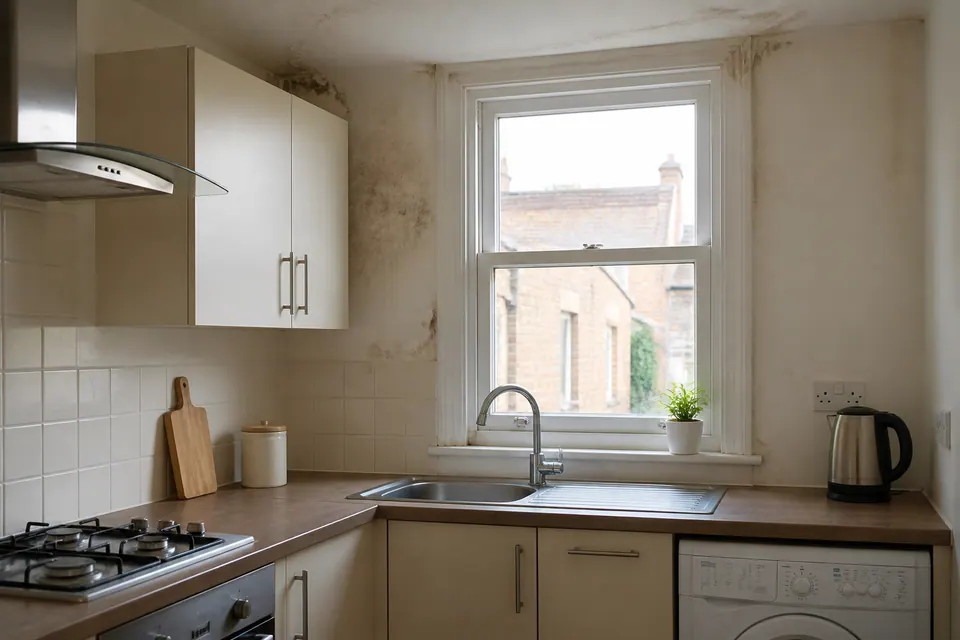
Keep its material and known water history separate from the bedroom evidence. A sleeping-area enquiry should not automatically become a whole-home treatment request.
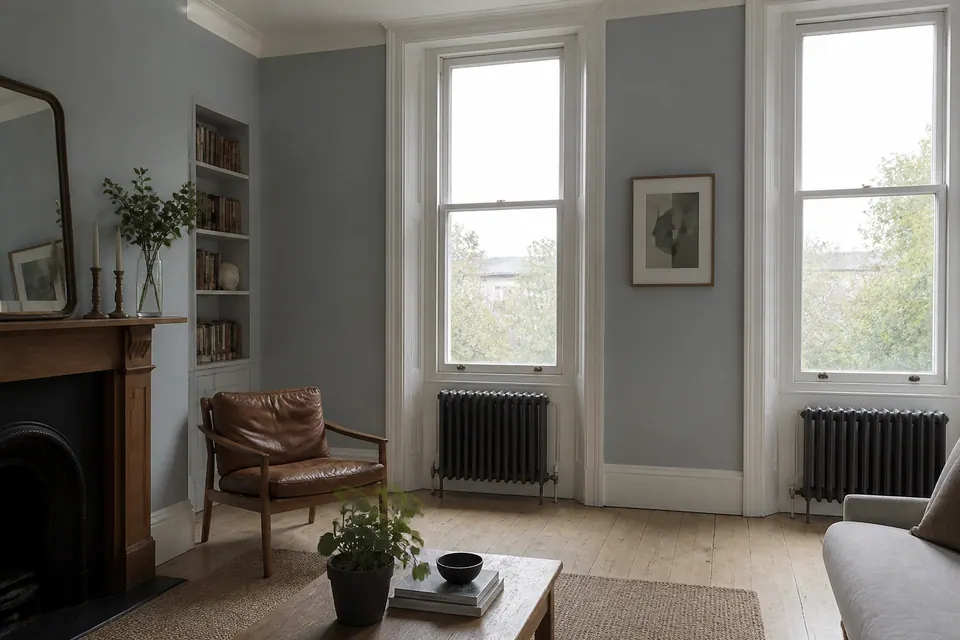
Explain the room’s actual use and current layout. If furniture serves more than one function, preparation and return instructions should reflect that rather than a standard empty-room assumption.
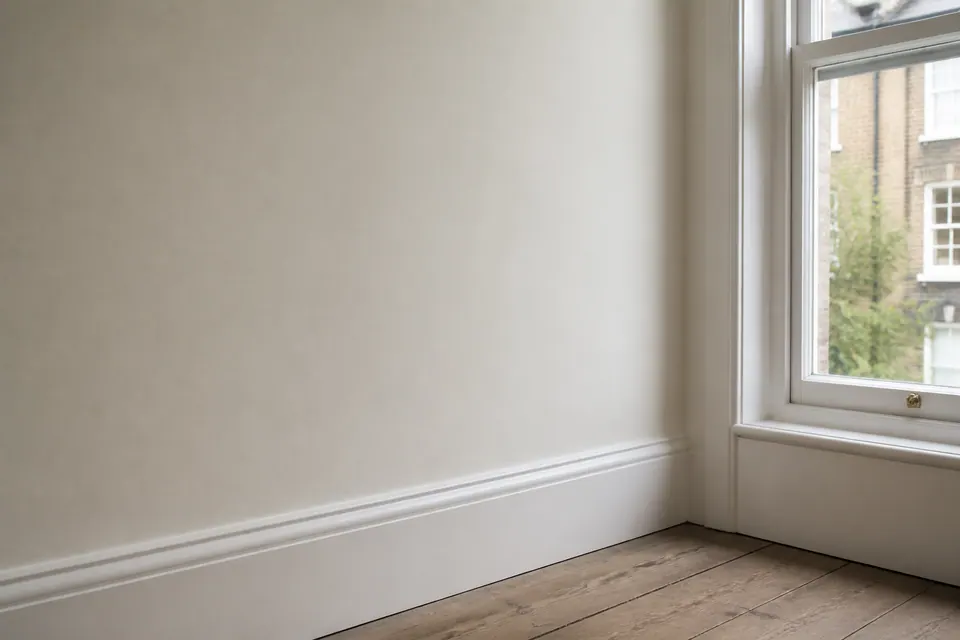
Describe paint, paper or exposed material where visible and mention existing damage without peeling it. Furnishings can obscure a boundary without proving the condition behind them.
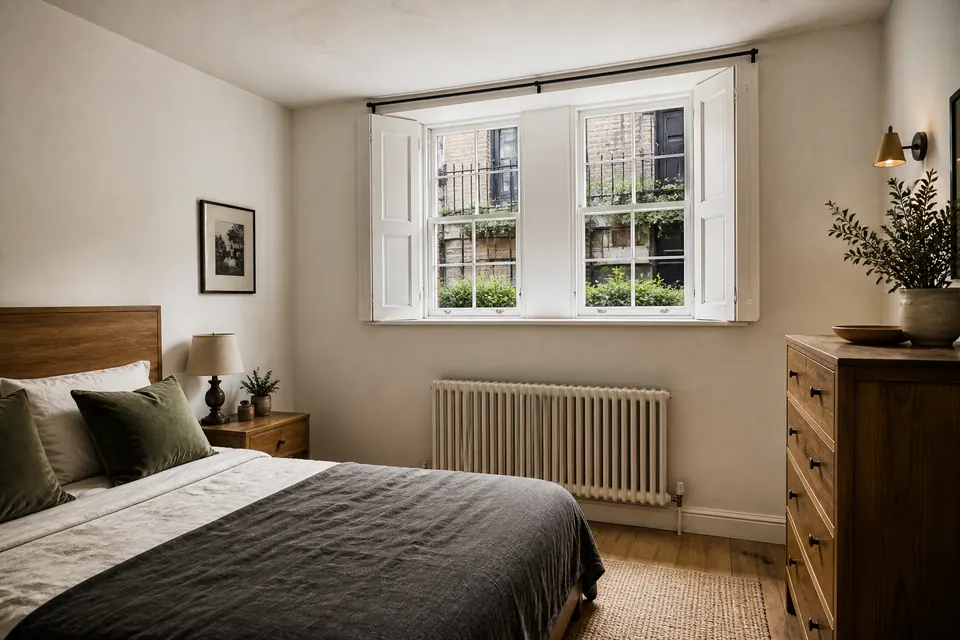
Identify any contents concern separately and do not move affected items simply to clear the view. Handling possessions is not automatically included in treatment of the wall.
Keep the enquiry about what can be seen and what needs clarification. Proximity to a bed does not identify a moisture source or establish that fabrics belong in the same treatment.
Bow / THE PROPERTY BRIEF
Ask about the arrangement before moving the bed.
Include the bed’s position, available clearance and the visible wall finish. Explain whether anyone can carry out an agreed rearrangement and ask for the applicable return instructions before making sleeping arrangements around the appointment. Keep concerns about bedding or upholstery separate from the wall scope.
03 / SEPARATE THE QUESTIONS
Describe the layout and finish without assuming a diagnosis from furniture position. The wall, any contents concern and the moisture question should remain distinct.
| Visible issue | Possible contributing factor | What may need checking |
|---|---|---|
| A reveal mark beside the bed | Moisture near the window may be relevant | Separate frame observations from the furniture arrangement |
| Bathroom marks reported at the same time | Repeated wetness may contribute there | Keep that room’s finish and history independently labelled |
| A wall patch behind the bedhead | Past or current moisture may matter | Provide visible evidence without assuming hidden extent or a cause |
| A return after the bed was repositioned | An ongoing contributor may remain | Review the sequence without treating movement as moisture repair |
Leak work, ventilation changes, material replacement and investigation have separate scopes where relevant. A wall-treatment proposal should not imply that those tasks or fabric concerns are resolved.
Mould describes fungal growth, while damp describes excess moisture. Neither term should automatically be applied to every nearby fabric or hidden surface because the wall is marked.
| Question | Mould | Damp |
|---|---|---|
| The condition described | Growth on the identified wall finish | Excess moisture affecting material or surroundings |
| Useful evidence | The visible outline beside the bed | Observed wetness and reliable water history |
| A possible relationship | Growth can recur where moisture persists | Moisture may remain relevant after furniture moves |
| The next decision | What suitable wall work can be agreed? | Does a contributor or contents concern need separate assessment? |
04 / DIRECT ANSWERS
Yes, ask for the suitable surface boundary to be explicit. Keep any furnishing or fabric concern separate rather than assuming it is covered.
Do not use a cosmetic layer to replace review of the current finish and moisture context. Ask about preparation before changing the evidence.
Movement can change reach, but it does not establish that a moisture contributor has been corrected. Keep that question open for assessment.
Agree responsibility before the visit. Do not rely on an assumed last-minute move by the occupant or technician.
Follow the applicable instructions for the agreed method and circumstances. Appearance or the technician leaving is not an automatic return cue.
No. Additional rooms and finishes need explicit description and agreement; the person using them does not define the scope.
Describe its material and access as part of the enquiry. Do not assume it is included simply because it appears beside the wall mark.
Not by implication. Contents and fabrics need their own appropriate discussion and should not be represented as part of an unagreed wall scope.
05 / QUOTATION, NOT GUESSWORK
The proposed price should identify the suitable finish, visible extent and preparation around the bed. Photographs may support a defined accessible area, while obstruction, recurrence or damaged material can require assessment. Keep furnishings and handling separately described.
See the main mould-removal service ↗| Scope | Quotation basis | Question to agree independently |
|---|---|---|
| Suitable wall with confirmed reach | Photographs may support pricing | Identify the visible boundary and current arrangement |
| A partly concealed or returning patch | Assessment may be needed | Keep the hidden extent unconfirmed and describe prior work |
| Damaged material or separate contents concern | Another specialist scope may be required | Do not imply upholstery, bedding or replacement is included |
Confirm the total and exclusions. Moving furniture, treating bedding or restoring upholstery should not be inferred from a quotation for suitable wall treatment.
06 / A CONTROLLED APPROACH
Review the visible finish, history and limits of the view. Identify any separate furnishing concern without absorbing it into the wall-treatment scope.
Agree any movement and preparation before attendance, with the room user informed. Do not assume the bed can remain in place or be moved without an explicit arrangement.
Carry out suitable treatment within the confirmed wall boundary. Bedding, upholstery or hidden material should not be represented as treated where not appropriately agreed.
Explain the result and applicable return guidance to the person using the sleeping space. Keep remaining stain, material damage or moisture questions separately identified.
The illustrated stages are not a promise about immediate sleeping use or a demonstration of fabric treatment.
Record the wall and bed position together.
Follow the agreed preparation and surface boundary.
Clarify instructions before the bed returns to use.
These stages are illustrative, not customer bedroom-treatment evidence. A wall result does not certify nearby fabrics or guarantee that a moisture contributor is resolved.
07 / WHEN IT COMES BACK
Record the visible outline and any earlier wall work, keeping separate notes about furniture movement or fabric concerns. A changed bed position can alter the view without establishing when a concealed area became affected.
Continuing moisture may contribute to another appearance, but the bed’s proximity does not prove the cause. Surface work and changing furniture position should not be presented as a guarantee against recurrence.
Retain earlier images where available and describe what was actually seen. Do not move the bed merely to reproduce a photograph or assume hidden material followed the same timeline.
08 / ROOM-BY-ROOM CONTEXT
If a bathroom is also involved, describe its finish separately. The bedroom booking should not imply another room has been assessed or included.
For the bedroom, show the bedhead position and actual clearance. Agree movement and return guidance before making assumptions about normal sleeping use.
Any kitchen concern needs its own material and water history. Do not merge it into a general household diagnosis based on the sleeping-area mark.
A living room used for sleeping should have that use explained. Preparation and instructions need to reflect the actual function and furniture.
A shared route should not be assumed available for temporary bed or belongings storage. Permissions and practical access require separate consideration.
For a lower-ground sleeping room, supply floor level and reliable water history alongside the bed-side layout. The use of the room does not settle material suitability.
Bow / ACCESS & PEOPLE
They should know the preparation and return arrangements before the visit. A booking made by someone else should not leave the room user to infer what happens afterwards.
Identify who could move the bed if advised and whether that is practical. Do not assume the occupant or technician will perform an unagreed rearrangement on arrival.
Keep permission for the wall distinct from handling property belonging to someone else. Furnishings and the visible finish may require different decisions.
Tenants can provide available views and clarify permissions without moving heavy or affected items to prove the concern. The enquiry does not establish legal responsibility.
Landlords should make sure the occupant receives the agreed instructions and can explain the bed-side arrangement. A general property booking should not replace that communication.
Homeowners should ask which work is proposed for the finish and which concern about furnishings remains outside it. A wall treatment is not an automatic assessment of bedding or upholstery.
Bow / PLAN THE APPOINTMENT
Send the postcode, current photograph and the person who can arrange access. Explain the sleeping-space constraints before confirming the visit so the relevant instructions can be discussed in advance.
Identify who can carry out any agreed movement and who needs the return guidance.
View the Bow area map.
Bow / BEFORE BOOKING
Keep the visible finish, movement arrangement and sleeping-space instructions clear before the appointment.
Ask about preparation first and show the available view. Do not move heavy or affected items simply to make the image more complete.
Keep the visible measurement separate from a suspected concealed extent. Explain where the view stops rather than treating the whole area as confirmed.
Do not assume so. A concern about fabrics should be raised separately from treatment of the wall finish.
State that limitation before booking. The practical arrangement needs agreement rather than an assumed move into another obstructed space.
The person using the sleeping area needs the applicable guidance, even when someone else arranged the service.
No. Position is context, not a diagnosis. Provide reliable observations and history without assigning a cause from proximity alone.
Ask for guidance applicable to the present treatment and room circumstances. Another service’s routine should not replace that advice.
Report it and keep it distinct from the wall scope. Do not assume the existing quotation automatically covers additional materials or belongings.
The applicable return guidance, any untreated wall limit and any unresolved contents or moisture question. A completed wall visit is not a blanket certification of the sleeping area.
A PROPERTY-SPECIFIC NEXT STEP
Send the Bow postcode, the visible finish and the bed’s position. Ask about preparation, any separate furnishings concern and the relevant return instructions before booking around them.
The room illustrations are not customer bedding-treatment records or evidence about the condition of a particular sleeping space.
