
Describe the initial workload
The first visit should reflect the condition actually found in the home. If maintenance has lapsed, discuss the starting priorities and possible extra time before settling into a recurring list.
Crouch End / Hand over rooms without emptying the whole home
A lived-in morning can still have an agreed sequence.
If everyone is home during the visit, decide which room becomes available first and which follows. A sensible handover lets the domestic brief reflect daily life without leaving the cleaner to negotiate each doorway.
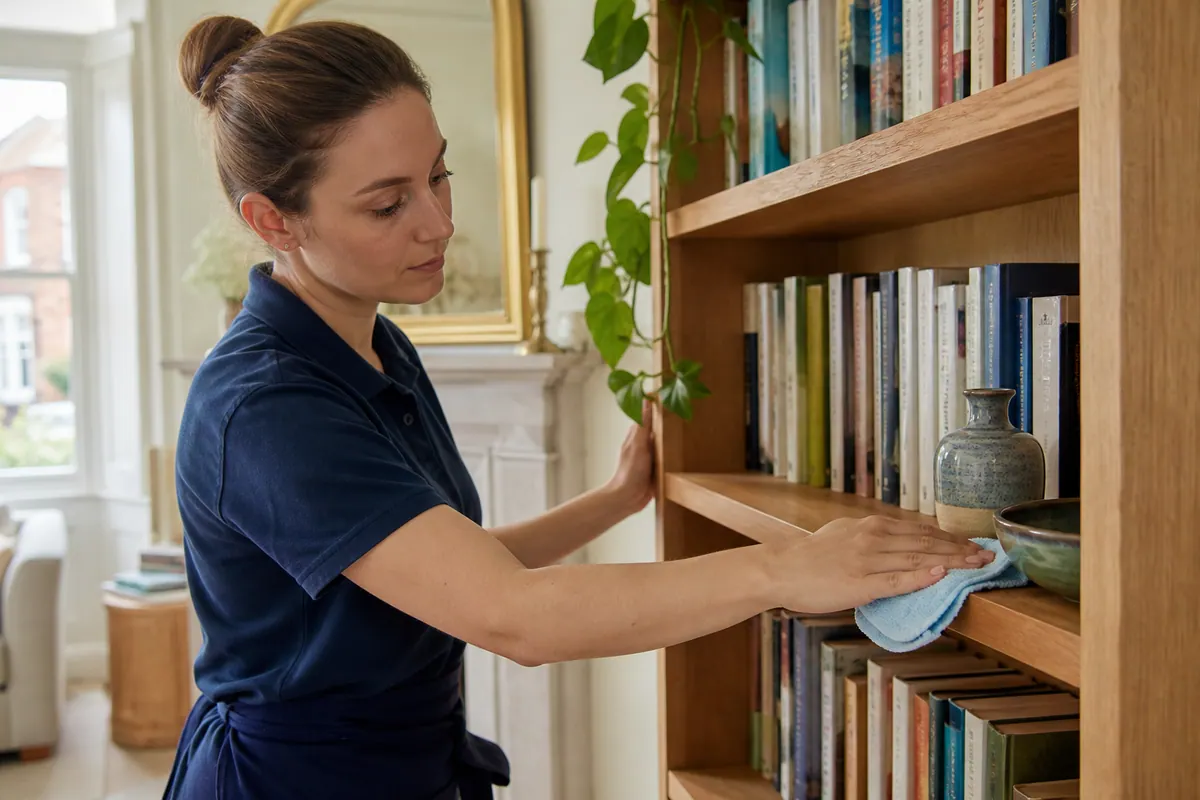
Kitchen · Bathroom
Living areas · Bedrooms
Crouch End / a household scenario
A lived-in morning can still have an agreed sequence.
You do not need to describe the household as absent if it will be there. Tell us which rooms are occupied and where a practical starting point may be available.
For Crouch End, include that room sequence with your enquiry. The team can discuss the arrangement, while appointment timing remains dependent on the confirmed schedule.
A room should be prepared when it is released. Moving personal belongings from one unready space to another can simply transfer the obstacle rather than make the cleaning route workable.
After a visit, note whether the handover suited the household. A small change to preparation can improve the recurring plan without adding tasks or assuming a longer booking.
Choose the gap deliberately
Some rooms are used constantly and others only occasionally. Tell the team about that difference when considering weekly or fortnightly care, with availability and duration still to be agreed.
| Planning point | Weekly | Fortnightly |
|---|---|---|
| Best suited for | Regular activity across the main household rooms | A home whose needs can be discussed over a longer gap |
| Core focus | Repeat the confirmed maintenance priorities | Reassess priorities against the tasks waiting |
| Priority planning | Keep the weekly list within its agreed time | Balance the longer interval with realistic priorities |
| Visit scope | Confirm scope before the visit | Confirm scope before the visit |
The first visit should reflect the condition actually found in the home. If maintenance has lapsed, discuss the starting priorities and possible extra time before settling into a recurring list.
Afterwards, a consistent core helps explain what each appointment is for. An expanded list or a busier household requires communication rather than silently changing the original agreement.
Room choices, clear scope
The tabs show the household work to discuss, not a fixed package for every property. Explain condition and access so a room label translates into an achievable cleaning brief.
Kitchen
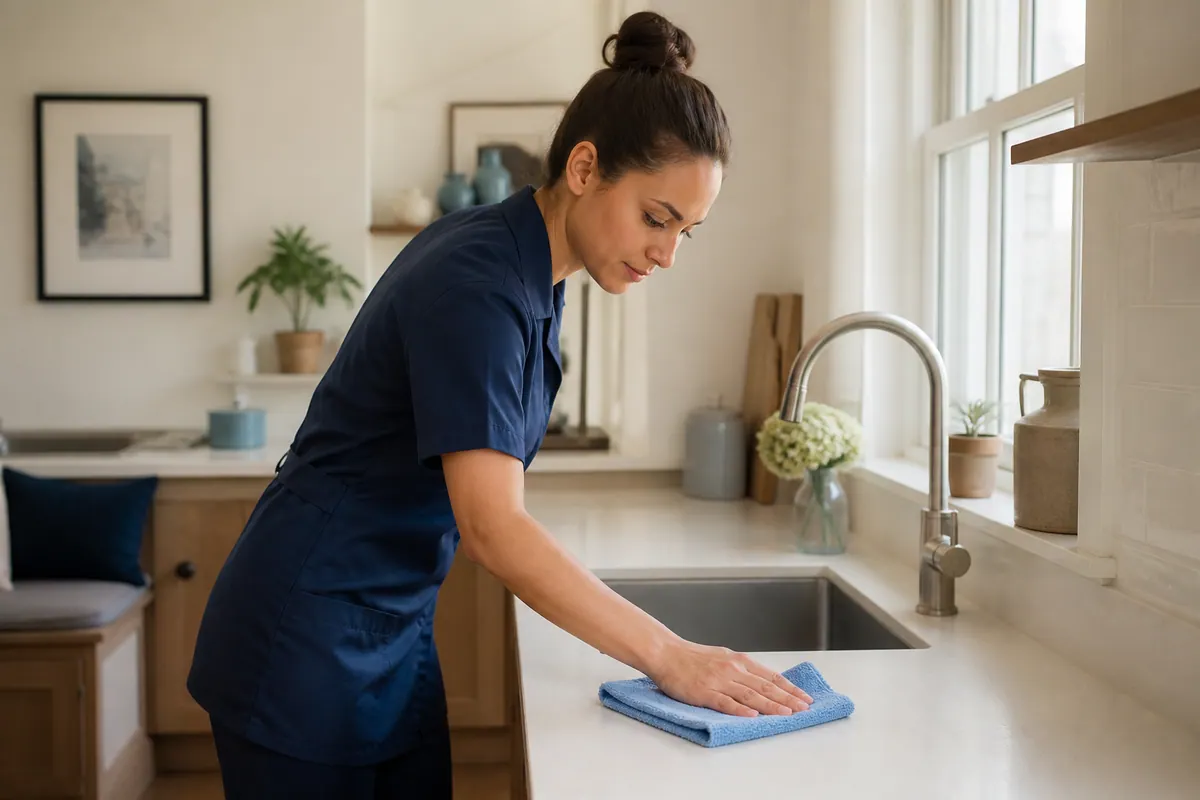
Kitchen tasks can include the accessible sink and worktops, splashbacks, exterior cupboard faces and agreed appliance outsides. Confirm specific areas instead of assuming all contents and interiors are included.
Clear the worktop first. An oven requiring internal attention belongs in a separate service discussion.
Bathroom
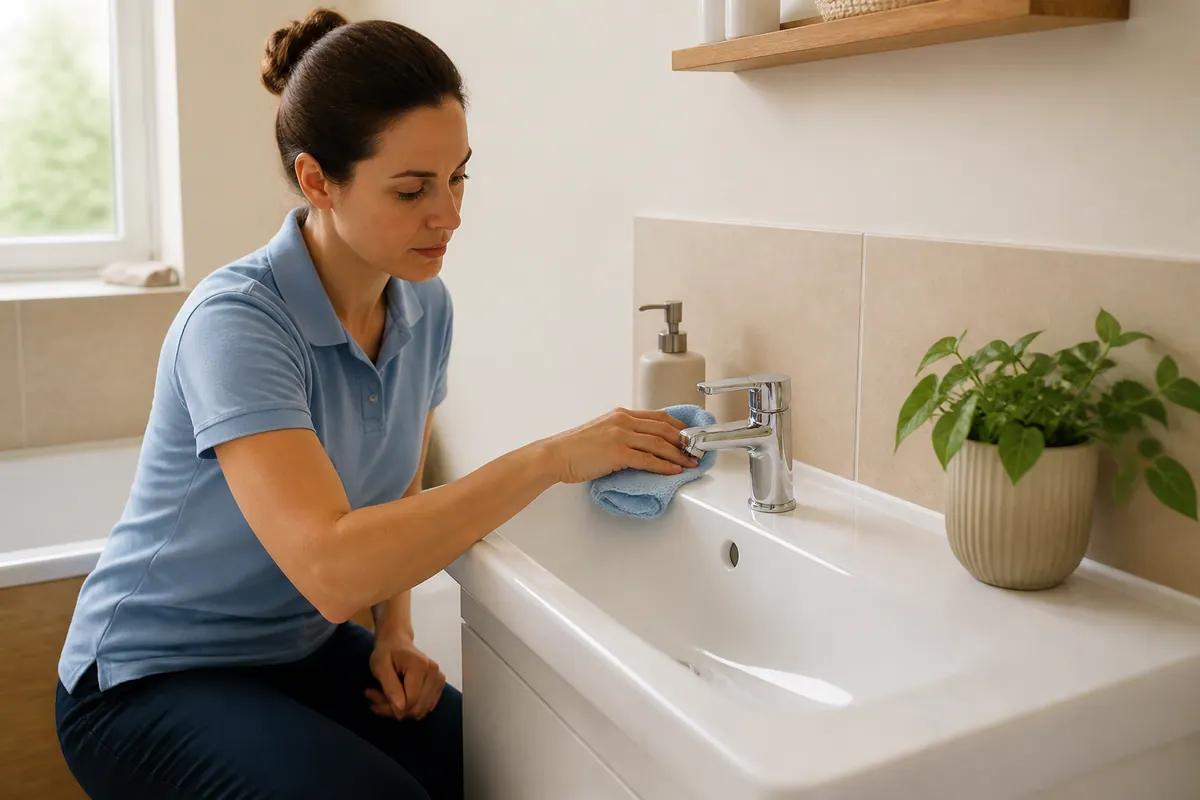
Bathroom upkeep concerns the agreed sanitaryware, shower, taps, mirrors and reachable tiling. Different finishes within that list can call for different products.
Tell the team about sensitive materials or damaged fittings before cleaning is attempted.
Living areas
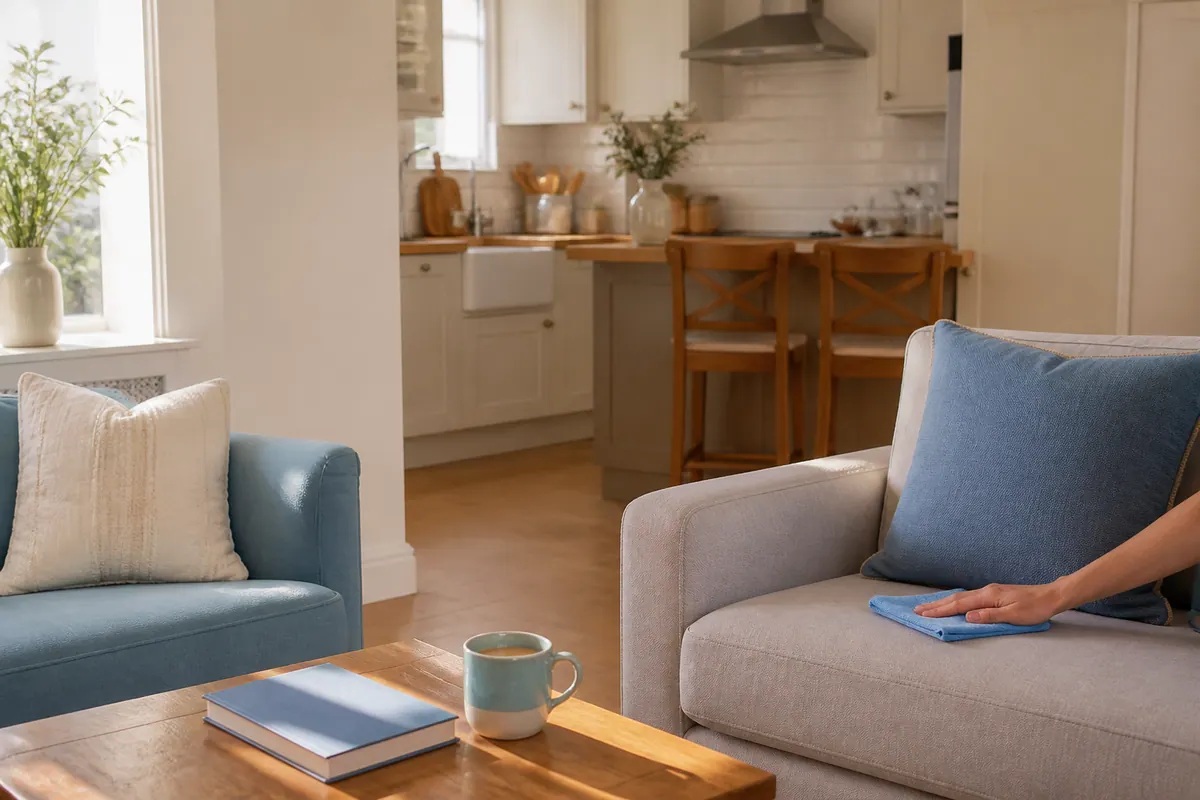
Dust reachable furniture before attention moves to the agreed living-room floors. Vacuuming and suitable floor cleaning belong within a prepared, accessible space.
Keep fragile objects and papers safely elsewhere; identify any furniture or belongings that should not be moved.
Bedrooms
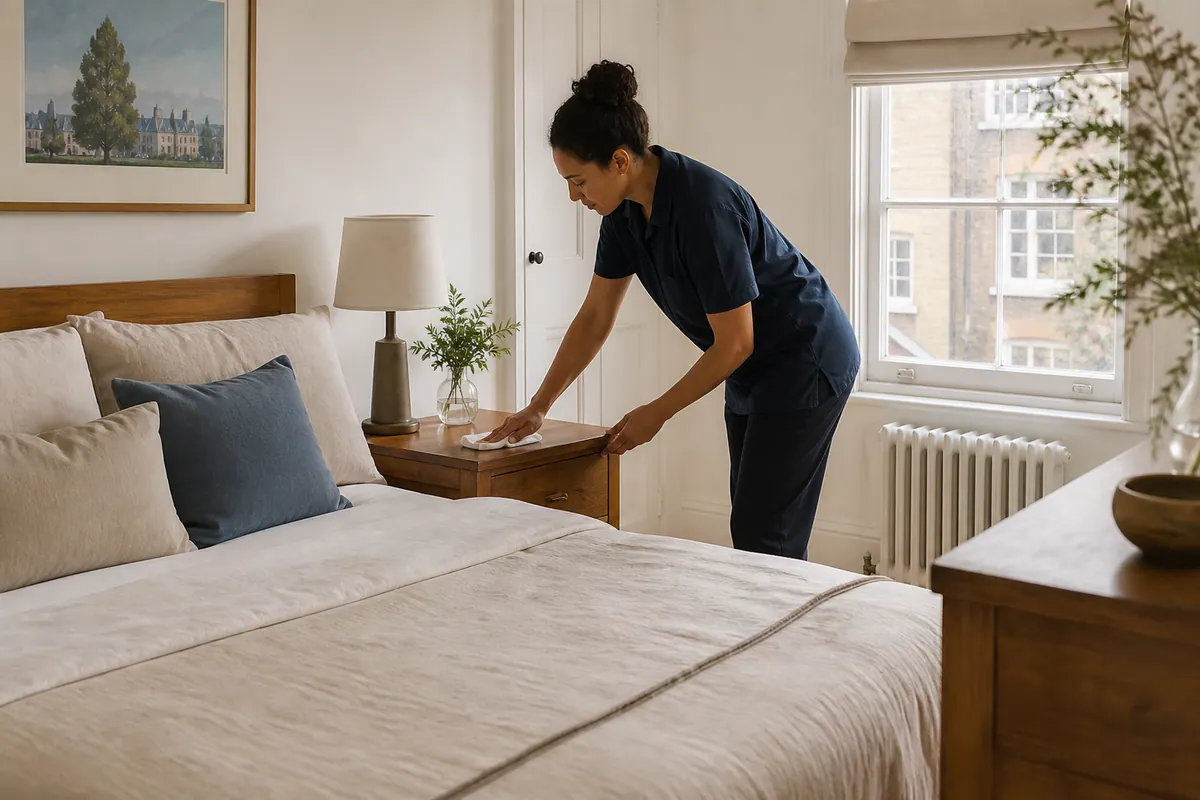
Specify included bedrooms and the accessible furniture and floor areas in each. Routine care does not authorise sorting belongings or opening personal storage.
Keep medication protected and identify private or unused bedrooms that are not part of the visit.
A clear beginning and handover
Describe condition and room use, not simply the property size, and mention pets or home-working needs.
Choose the essential task list and discuss an appropriate interval, subject to the available schedule.
Agree access and supplies along with instructions for any delicate or damaged surface.
Attention follows the confirmed priorities through the rooms that are included and ready.
Review any unresolved task for extra time, specialist scope or repair instead of silently adding it to the next visit.
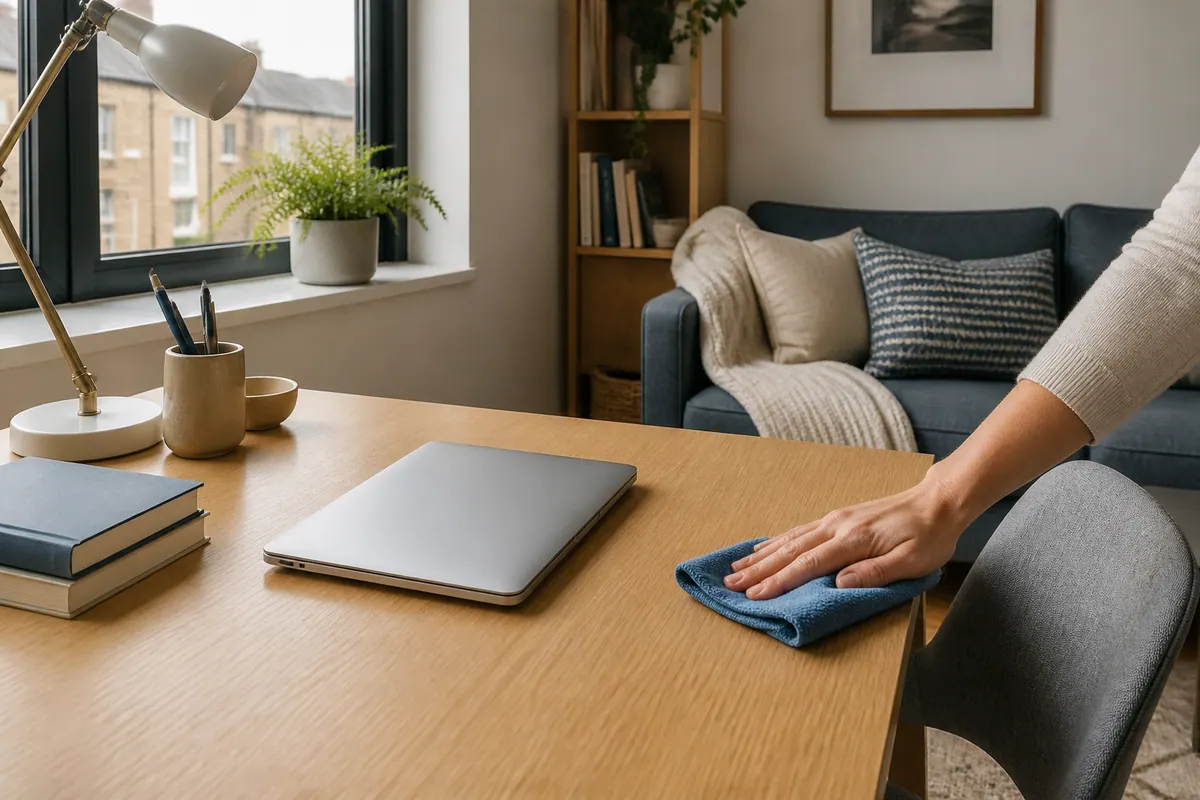
Preparation that matches the room list.
A consistent approach to the agreed tasks.
A useful maintenance plan for everyday living.
These home-care images are examples, not photographs documenting a customer visit.
Crouch End / enquiry area
For Crouch End, send the postcode and describe the included rooms, condition and entry plan. The team confirms the available arrangement for that address; the map is an area reference, not a booking guarantee.
For the wider service scope, see Domestic Cleaning, or ask the team about your address.
Location reference
Use the map as a reference when explaining the approach to your home.
Open map in a new tabStart with the home you use
Select a property type, preferred interval and priority to see a simple outline. Treat it as a discussion aid rather than a quotation or confirmed appointment.
Decisions before detail
A useful brief tells the cleaner which tasks are the reason for the visit. It also identifies the smaller details that can wait if their inclusion has not been confirmed.
Choose additions deliberately and discuss the available time. A selected internal glass area or switch is not permission to extend the task to every similar surface.
Occupation changes the brief
The room list becomes more useful when it includes who will be home and what must remain undisturbed. These are prompts rather than standard service bundles.
When the visit falls during work hours, agree an actual access method. Then explain the kitchen, bathroom and living areas used outside those hours.
Households with children should prepare personal items before cleaning. A clear worktop or floor route is more useful than an instruction to tidy everything.
Explain pet arrangements directly, including closed doors and areas to avoid. That information belongs alongside the order of rooms.
If the home is also an office, specify the occupied area and handover time. The cleaner should not be expected to move equipment or interrupt a meeting.
A tenant’s regular upkeep list should stay separate from check-out cleaning. Make clear whose approval is needed for any extra task.
For a property managed on someone else’s behalf, designate the person who confirms scope. Avoid sending contradictory updates through multiple contacts.
Material information matters
Share existing care guidance and identify known damage. Stone, wood and coated surfaces can respond differently to moisture or products, even when they are in the same room.
Name the stone if known and provide any manufacturer’s care guidance.
Timber needs its finish identified before a method or moisture level is assumed.
Point out lacquered furniture so its coating is considered during dusting and cleaning.
Agree the stainless-steel exterior area; internal appliance work is a different scope.
Show flaking paint or damaged fittings before work, not as a cleaning expectation afterwards.
Beyond the household list
Some requests change the equipment, access or process involved. Raise those separately, including heavy lifting, high-level work and restoring damaged or worn materials.
Vacuuming can form part of domestic upkeep; extraction requires another agreed service.
Cleaning an oven’s outside is not a substitute for arranging its internal cleaning.
A mould problem should not be folded into the ordinary bathroom or wall list.
Outdoor-facing glass needs a separate access and cleaning scope.
Building-work dust and residue require a different brief from lived-in household maintenance.
Where condition calls for intensive work, discuss a one-off arrangement before planning ongoing upkeep.
Before you choose a visit
Agree the visit behind the rate
Use these published starting figures to begin the enquiry. The final domestic arrangement still needs a confirmed minimum visit, included supplies and realistic task list.
| Service | Price | Main factors |
|---|---|---|
| Regular domestic cleaning | From £20/hour | Property scale, frequency, minimum time and agreed supply/access arrangement |
| First / one-off domestic visit | From £90 | Initial workload, included rooms and selected starting tasks |
| Specialist / intensive scope | Quoted separately | Intensive condition or service-specific equipment and access needs |
A larger property or different starting condition can change the time required. Frequency, supplies, entry and parking also matter, while specialist requests need separate consideration rather than an implied inclusion.
Make the priority visible
Move an item to show what matters most for the proposed clean. The demonstration is not linked to a reservation, and the amount of work still needs to fit the time agreed.
The small instructions that matter
Agree key collection and return with the team rather than leaving sensitive details in a public message.
Confirm any concierge handover and who can permit access to the apartment.
Settle the alarm instructions for the beginning and end of the visit privately.
Tell the cleaner which spaces pets will occupy and which boundaries need care.
Explain calls or a private desk and discuss the sequence around the occupied area.
Share the parking or loading information you know before timing is agreed.
Make room exclusions and untouched belongings part of the actual brief.
Useful preparation combines ready rooms with suitable products and confirmed access. A broad request for everything to be cleaned cannot replace those practical decisions.
The booking conversation
Agree a first ready room and a sensible point for releasing the next. Explain the household’s actual use rather than assuming everyone must leave, while confirming whether the proposed sequence suits the appointment.
It may simply move the access problem. Put personal items in their intended safe place so each included area is ready when handed over, or clearly identify the room that will remain outside scope.
It is the regular starting rate. The confirmed arrangement also needs minimum visit, frequency, supplies and property/access details, so it should not be multiplied into an assumed total without discussing the scope.
Think about room activity over each interval rather than treating either as a fixed package. A longer gap can change the priorities waiting, while available time and scheduling still need confirmation.
Mention the request before arrival wherever possible. A new detail or room may change the workload, so its effect on the core list and time should be agreed rather than assumed.
A first or one-off domestic visit starts from £90, while regular care has an hourly starting rate. The initial condition may call for more time and a different agreed list from later maintenance.
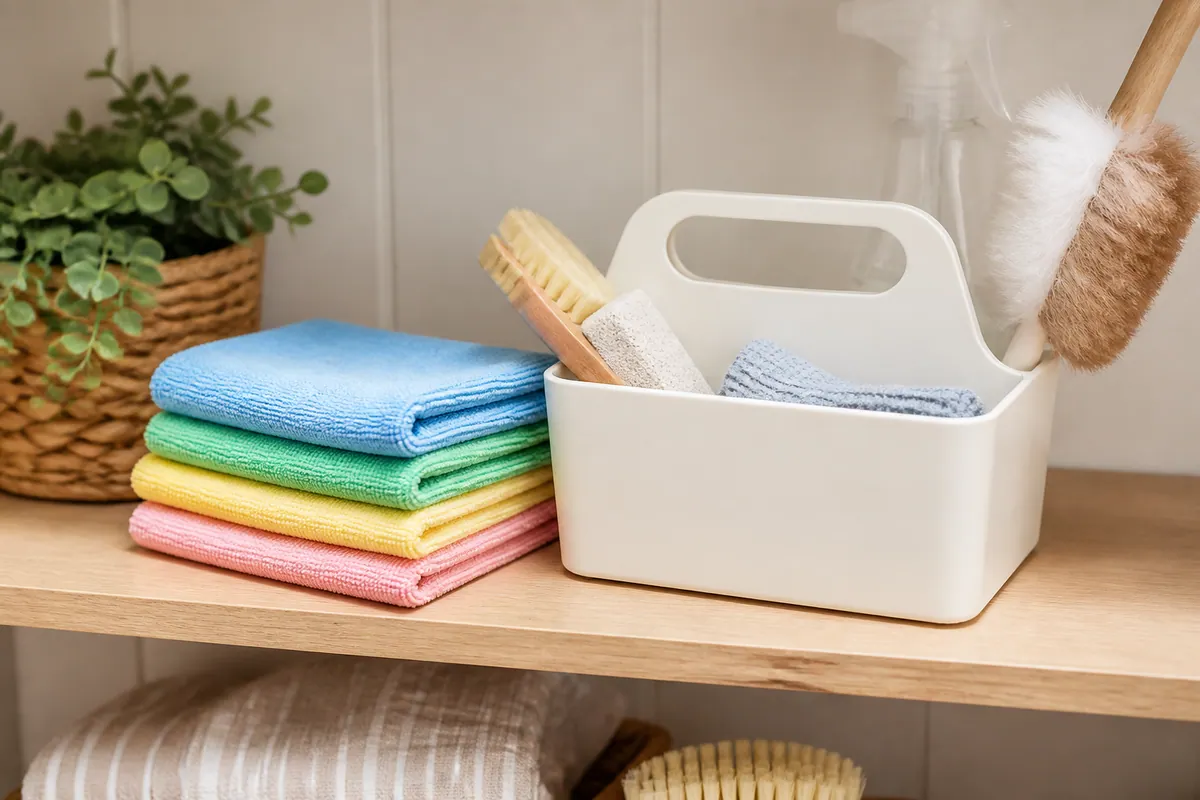
The method should suit the material. Share known instructions and damage for timber, stone, lacquer, steel or painted areas, and confirm the supply arrangement before the appointment.
Name the occupied room and any period that needs quiet. Agree a practical starting area or release point so the cleaner does not have to negotiate access room by room on arrival.
No. Work such as extraction, oven internals, mould treatment or exterior windows needs its own scope. Available time does not by itself change the service that was agreed.
Contact Alesta with the postcode, rooms, preferred interval and arrival arrangements. The planning controls here help organise an enquiry but do not reserve a cleaner or confirm a slot.
Crouch End / the next conversation
Tell us about the rooms in your Crouch End home, their condition and the routine you want to arrange. Plan a room-by-room handover: share your preferred frequency and access details directly with the team.
