
Homeowners
Your next-use priorities help frame the brief, but the visit still needs a defined list of renovation-related tasks.
Holland Park · Connect every room on the refurbished floor
Connect every room on the refurbished floor.
Agree a route for furnishing that follows the completed clean.
A whole-floor project creates a continuous cleaning route rather than several isolated room cleans. For your Holland Park enquiry, describe the refurbished floor and connecting passage. Include a material list where different rooms received different floor products.
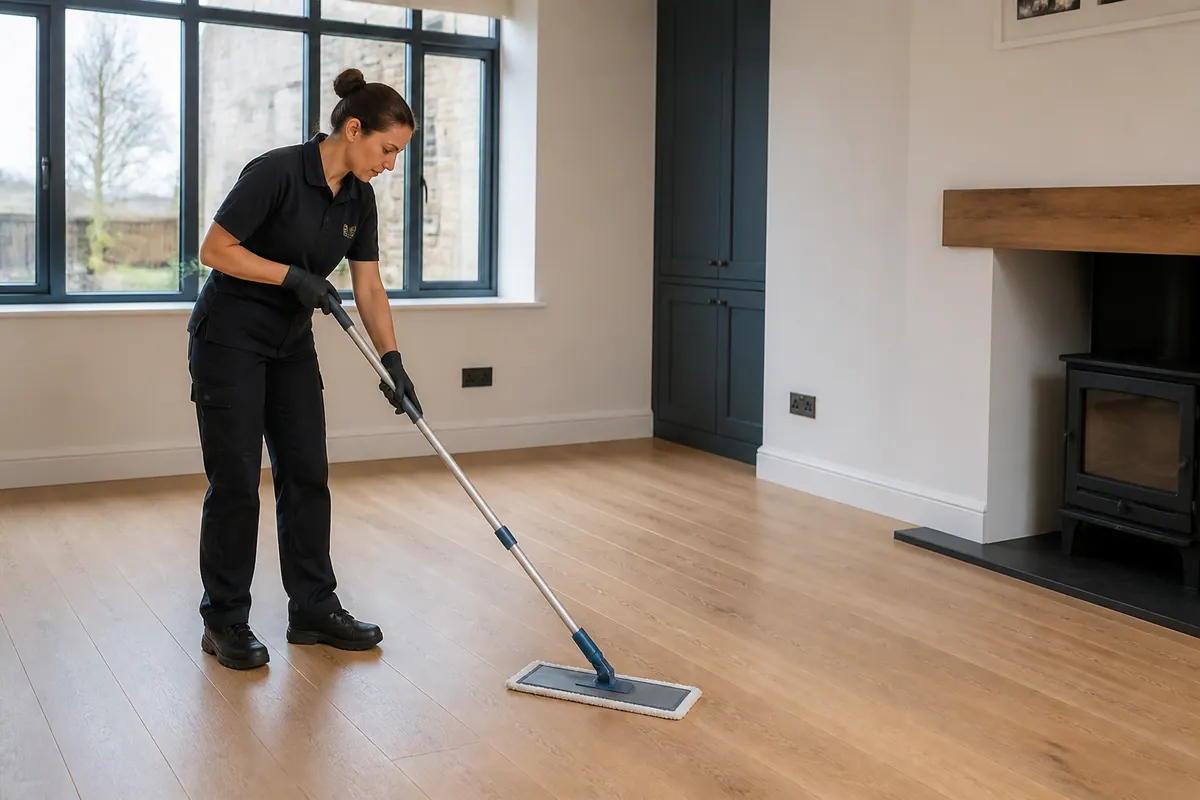
Illustrative renovation scene; no customer job or measured result is represented.
Who is planning the handover?
Your next-use priorities help frame the brief, but the visit still needs a defined list of renovation-related tasks.
Pass on access instructions and the renovation brief, with any additional property-management requirements clearly labelled.
Contractor enquiries need the site details and outstanding-work list so Alesta can confirm whether the arrangements are suitable.
Holland Park / the specific room brief
A whole-floor project creates a continuous cleaning route rather than several isolated room cleans.
This Holland Park planning example centres on whole-floor refurbishment. A whole-floor project creates a continuous cleaning route rather than several isolated room cleans. The useful inspection route follows the refurbished floor and connecting passage, with attention to timber boards and skirting junctions.
Include a material list where different rooms received different floor products. Keep any care notes for new timber boards available when discussing the visible marks.
Confirm that spare boards and packaging have left the route. Agree a route for furnishing that follows the completed clean.
Room-by-room brief
Distinguish cupboard exteriors from contents and interiors; describe additional requirements before the scope is settled.
Record the bathroom’s new materials and any curing instructions alongside the proposed fixture and floor tasks.
Make the accessible bedroom detail explicit, particularly where renovation deposits reached a room that was otherwise protected.
List doors, ledges and suitable floors, with internal glass or unusual materials explicitly identified.
A scoped quote
From £29/ hour
Discuss the actual brief against the published starting rate. Standard cleaning equipment and materials are included.
Accessible detail, dust and condition influence time. Window tasks, waste collection and specialist treatment are separate considerations.
| Project | Pricing basis | What to describe |
|---|---|---|
| Smaller refurbishment | From £29/hour; scope confirmed | Finish readiness and access to details |
| Kitchen or bathroom work | From £29/hour; scope confirmed | Installed surfaces and any fitting marks |
| Whole-property renovation | Quote after the room scope is reviewed | Condition across the complete room list |
| Commercial refurbishment enquiry | Confirm suitability before pricing | Site requirements and the enquiry contact |
Based on Alesta’s published after builders cleaning rate. Building waste removal is quoted separately.
From renovation to room use
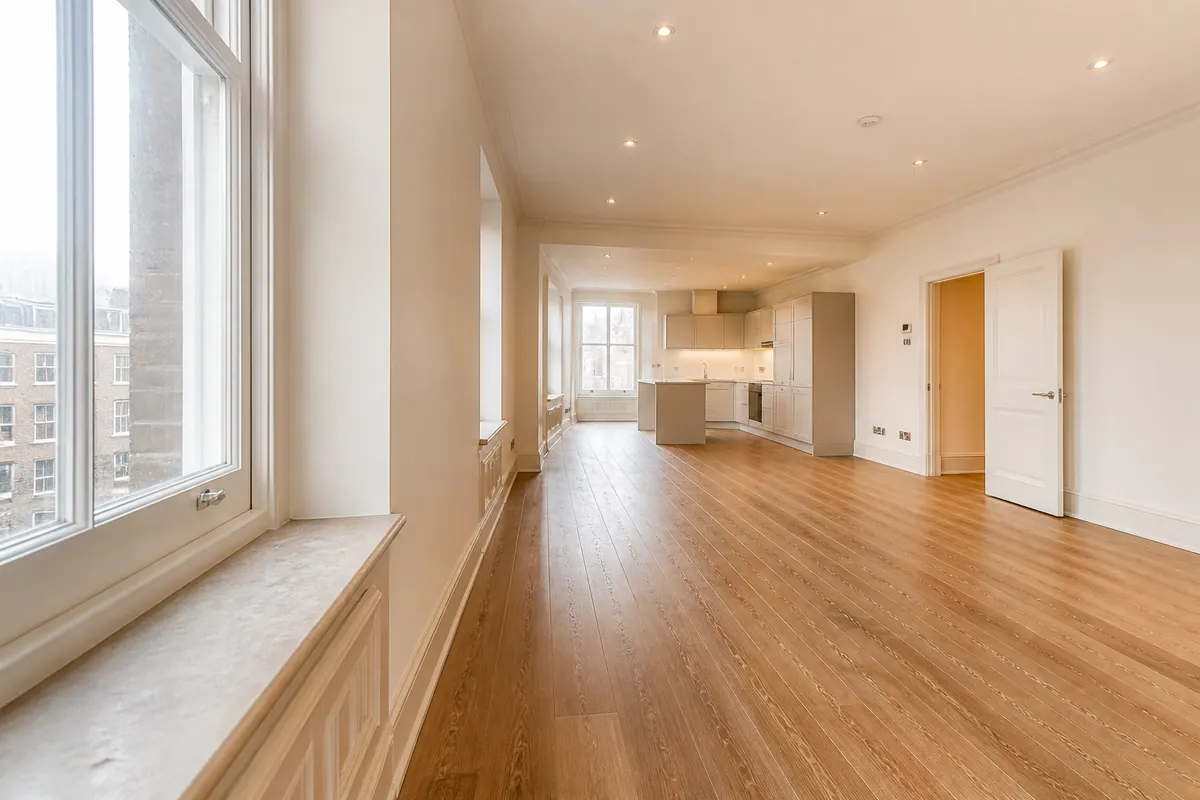
Check which rooms are genuinely available.
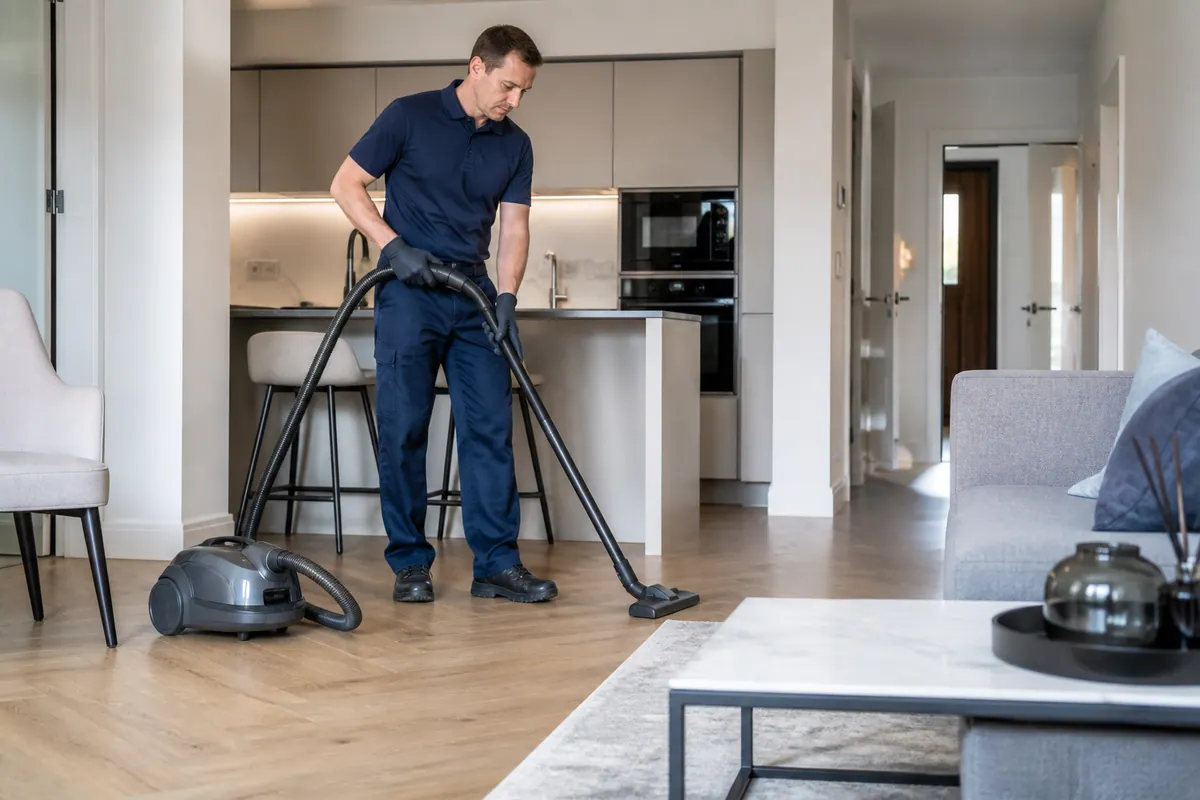
Carry out the planned finishing detail.
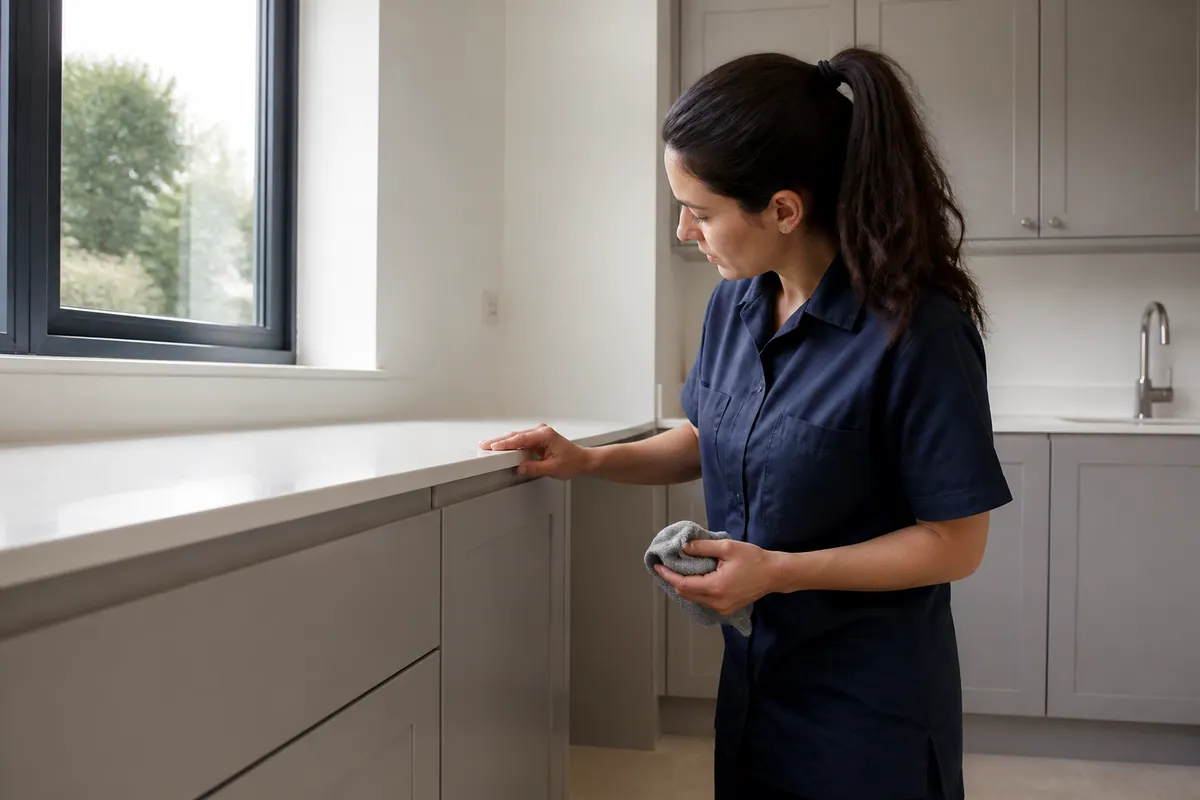
Compare completed detail with the agreed priorities.

Arrange the next stage around the reviewed areas.
Different interiors illustrate the process rather than a guaranteed transformation.
Start with the work
Choose the relevant work type, then provide its actual condition when enquiring; the interactive options are planning prompts only.
Start with a room-by-room walk-through. Dust in adjoining spaces matters even where those rooms received no new fittings.
Beyond the work zone
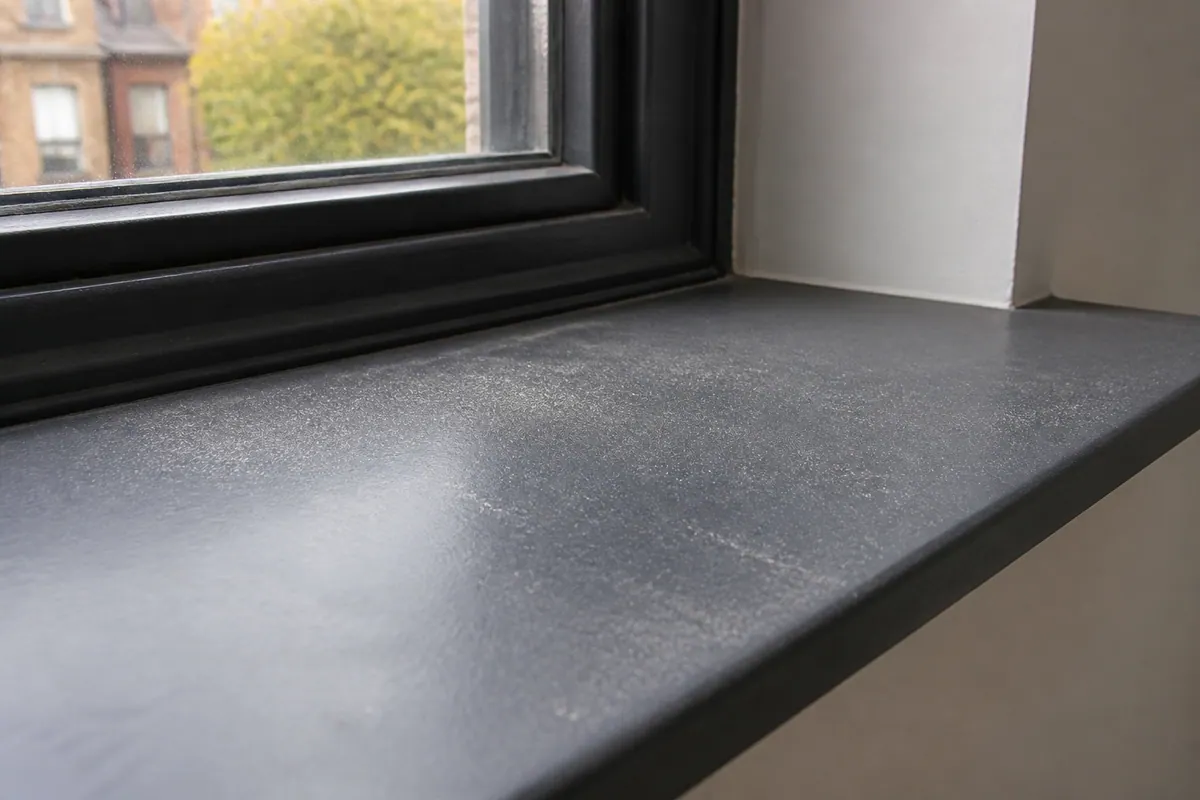
Check where the last tools were carried out.
A narrow approach can connect several spaces. Describe visible dust there even if the contractor worked behind one closed door.
Identify the affected surfaces for Alesta. Appropriate vacuuming, microfibre materials and products are selected around their condition and material.
If more dusty work is planned, discuss a different order before fixing the appointment.
The dust route
Use the illustration to organise questions, not as an inclusive service checklist.
Dust on the outside of storage needs a clearer description than “clean the cupboards”.
Room edges often need a deliberate check after the larger surfaces look clear.
Point out visible deposits on the fixtures, rather than adding an undefined deep-clean request.
The exit route may need attention even where no building work occurred.
Different issues / different scope
| Post-build issue | Example | How it is approached |
|---|---|---|
| Fine dust | Deposits on reachable ledges and external faces | Identify the material before selecting suitable cleaning. |
| Loose cleaning remnants | Ordinary loose residue associated with cleaning | Confirm inclusion instead of assuming site clearance. |
| Adhesive or labels | Transfer left on a cabinet coating | Installer information may be needed before treatment is agreed. |
| Paint, plaster or cement spots | A mark needing material identification | A difficult spot may remain if removal is unsuitable. |
| Protective film | A covered face on a new component | Do not remove by assumption; agree the responsibility. |
Two separate jobs
Focus the cleaning request on fittings, edges and floors that are available for the visit.
Construction offcuts or large packaging can block the work route; ask about collection before treating the room as accessible.
Discuss building waste disposal ↗Different project briefs
Note deposits beyond the renovated room before calling the property ready for occupation.
A kitchen brief should separate ordinary dust from bonded installation marks.
The bathroom can be installed yet still waiting for a product’s drying period.
A larger renovation benefits from material notes for each affected space.
Specify the renovation effects before adding any separate letting requirements.
Set out commercial requirements for discussion, including access and work still outstanding.
A useful distinction
Builder stage
Cleaning stage
Protect the new finish
Illustrative surface review.
Manufacturer guidance matters more than a finish looking dry.
Describe existing scratches or discolouration before the visit. A finishing clean addresses agreed residue; it does not refinish an installed surface.
Ask the decorator when the coating can be cleaned, not only when it feels dry.
Name the actual material; a stone-effect surface is not necessarily stone.
Tell the team about coated taps, polished trim and existing fitting marks.
At a glance
Build your brief
Start with five practical details about the property.
Entering details here only organises your brief. Contact Alesta separately to discuss suitability and a quote.
Further assessment may be needed for difficult deposits, unusual materials or extras. The planner cannot settle those questions or the final price.
Discuss the brief: 020 3608 3976Glass after renovation
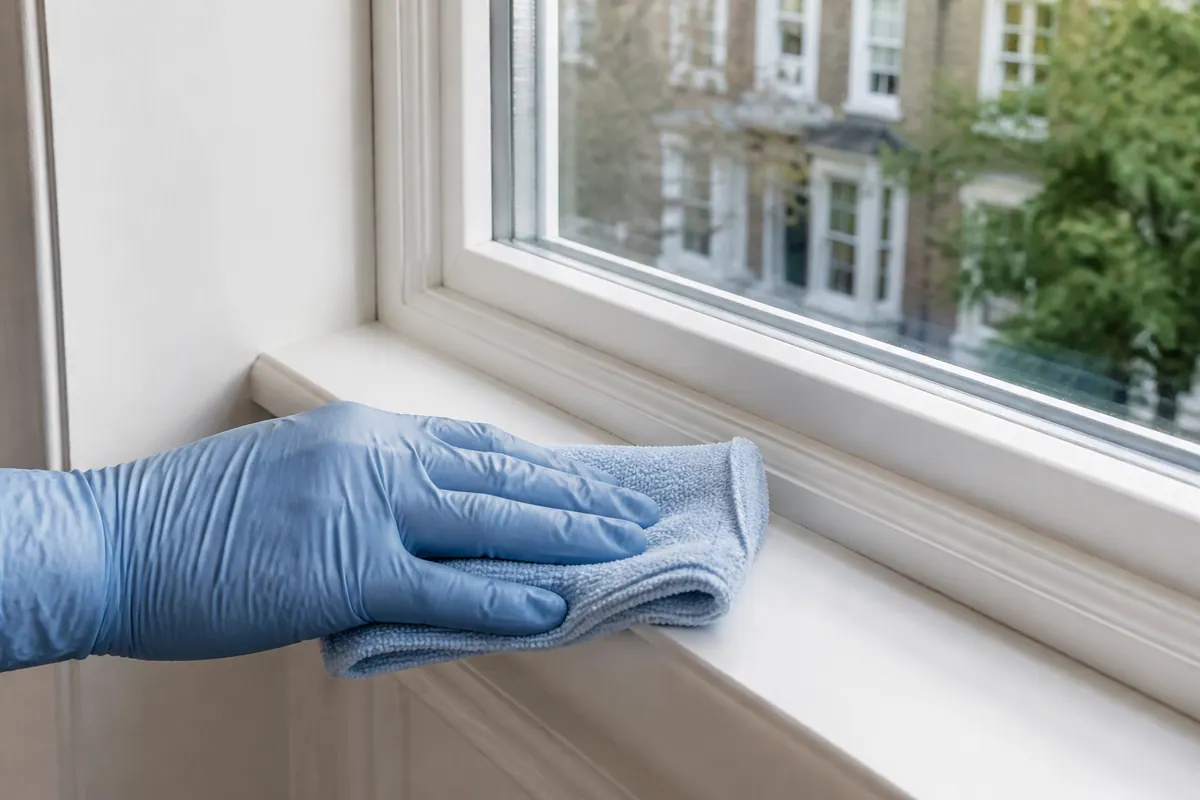
Frame detail and exterior glass may be different tasks. Give enough access information for each requested element.
Bonded marks are not equivalent to surface dust. Safe treatment must be considered rather than promised.
Plan separate window cleaning ↗Service-area planning
Use the map to locate the Holland Park service area, not an Alesta branch. Provide the actual address when asking about access and appointment availability.
For another nearby area, contact Alesta through the main after builders service to confirm coverage and availability.
Before the appointment
Describe the last activity in the space and the surfaces it affected. This avoids asking for a package unrelated to the condition on arrival. A whole-floor project creates a continuous cleaning route rather than several isolated room cleans.
Describe the route inside as well as the street address. Narrow circulation or stored materials may affect what is practical even where the rooms themselves are clear. Confirm that spare boards and packaging have left the route.
Cleaning does not repair damaged finishes. Distinguish scratches or installation defects from loose deposits when describing the refurbished floor. Supplier care notes help identify suitable cleaning, but they do not turn it into a repair service.
A protected room may have exposed details that need attention. Explain what you can see rather than assuming either complete exclusion or a whole-home clean. Here, inspect the refurbished floor and connecting passage.
Use £29 per hour as the starting reference, not a guaranteed project total. Surface condition and practical access help determine the time; cleaning materials and equipment are included.
Work release is a practical question. Identify which spaces are free of tools, ready for cleaning and no longer awaiting dust-producing tasks.
The hourly cleaning guide does not absorb waste collection. Identify what needs taking away and arrange the relevant scope before it blocks surface access.
A separate request lets Alesta address limitations honestly. This is particularly important for bonded marks on newly installed glass.
Do not infer a completion time from the starting rate. The condition and released areas need to be understood before arranging the visit. Agree a route for furnishing that follows the completed clean.
Not every fitting mark is a cleaning task. If removal risks the coating, explain the limitation and consider the appropriate separate advice.
Your project / the final clean
Send the affected room list and explain surface care, access and the intended next use. Alesta can then discuss the actual finishing work.
