
Leaves
Wet leaves can settle into layers and slow water moving towards an outlet.
Rainwater routes · access · clear scope
A channel can look partly open while wet leaves and fine sediment are already slowing the route towards its outlet. Our Epping gutter cleaning service removes routine debris from the accessible rooflines confirmed for the job. Reachable outlet openings may be covered when agreed; damaged sections, hidden downpipe obstructions, underground drainage and separate access arrangements are not part of that basic scope.

Structured service guide
| Area | Can be included | Requires another scope |
|---|---|---|
| Agreed accessible channel | Leaves, moss and silt removal | Repair or replacement |
| Reachable outlet entrance | Loose covering debris | Internal pipe blockage |
| Drain below ground | Nothing within routine work | Drain testing or clearance |
Structured service guide
| Symptom | Cleaning response | Possible follow-up |
|---|---|---|
| Debris above the rim | Clear the included channel | Check condition if damage appears |
| Leak from a connection | Remove nearby build-up | Repair the fitting |
| Slow flow with an open outlet | No further channel clearing | Assess downpipe or drain |
Structured service guide
| Question | Effect |
|---|---|
| How many sections are requested? | Sets the extent of work |
| Are roof heights mixed? | Changes reach considerations |
| What surrounds each elevation? | May limit inclusion |
| Is debris light or compacted? | Affects the clearing effort |
Structured service guide
| If you notice | Consider |
|---|---|
| Leaves after a windy spell | Checking corners and outlets |
| Only one side repeatedly fills | Focusing on that elevation's pattern |
| Water from a clear joint | A separate repair enquiry |
| Poor discharge after clearing | Assessment below the outlet |
Common causes
Small twigs and leaves can create a catch point for moss and grit. As the mixture becomes wet, finer particles settle between larger pieces and reduce the channel's usable depth. Clearing included sections frees that space, while concealed parts of the rainwater route remain untested.
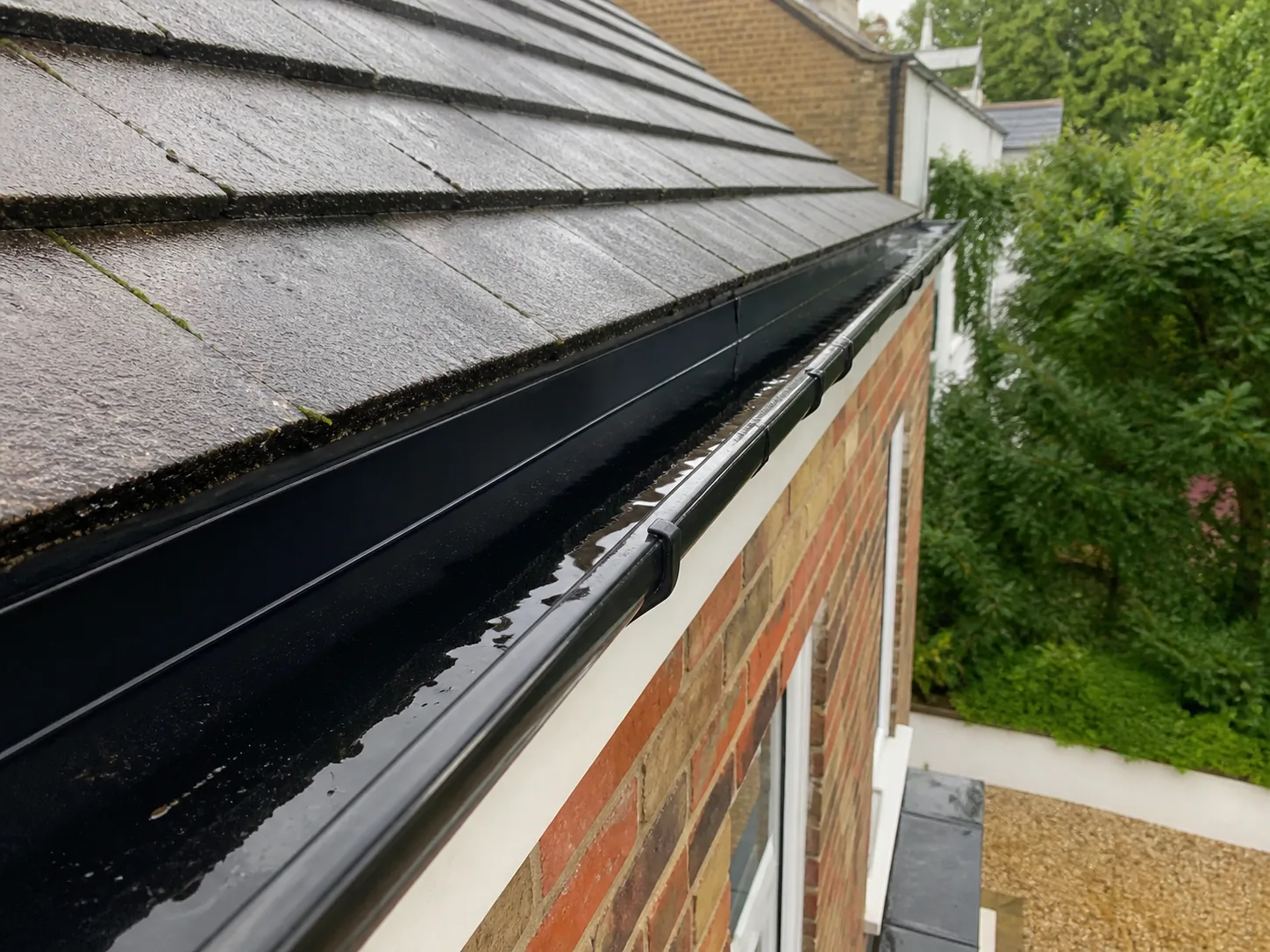
Wet leaves can settle into layers and slow water moving towards an outlet.
Loose roof moss can collect in the channel and hold other material in place.
Small twigs can bridge narrow points and trap lighter debris behind them.
Loose surface material may wash down from the roof during wet weather.
Older material can become dense and reduce the channel available for runoff.
Fine deposits can gather beneath larger debris and close to an outlet.
Local property context
Properties in Epping may present several combinations of roof height, garden space and adjoining structures. Some addresses could have open access to the front but a rear channel set beyond an extension or enclosed side route. Others may include a garage, porch or outbuilding with a separate outlet. These are possibilities to check, not assumptions about the area. An enquiry is most useful when it identifies the exact runs, changes in ground level and obstacles around them. Each section can then be included or excluded on its own merits.
Debris does not always spread evenly. Wind may carry light leaves towards one corner, while loosened moss and grit settle closer to an outlet. Water overflowing at that point can indicate accumulation, although a displaced connection or deeper restriction may create the same symptom. The cleaning scope is limited to loose, routine material within agreed accessible channels and reachable openings. It cannot correct a channel slope, reconnect a pipe or establish what is happening underground. Separating those issues avoids offering cleaning as a cure for an unconfirmed fault.
A run is included only when its surroundings allow it to be reached under the agreement. Slopes, steps, walls, lower roofs, close planting and separate buildings may change the assessment. Explain restricted gates and any reliance on shared land before the visit is arranged.
| Property situation | Access or gutter consideration |
|---|---|
| Detached houses with several sides | Access and debris levels can vary around the same building, so name each requested elevation. |
| Terraced properties | Rear routes and the boundary of connected channels should be understood before work is agreed. |
| Homes with garden outbuildings | A separate structure is not included unless its gutters are specifically requested. |
| Addresses with mature planting | Leaves may settle selectively according to shelter, wind direction and roof shape. |
Seasonal context
Leaf fall may create a sudden layer, while moss fragments and fine sediment can accumulate gradually across the year. After windy or wet periods, check the parts that have filled before. The useful trigger is the channel's condition, not a fixed date for every household.
Nearby trees, roof moss, gutter shape and exposure can all affect how quickly material accumulates. A visible symptom is more useful than applying one fixed timetable to every address.
Quick answers
Loose material covering a reachable outlet mouth can be removed when included in the agreement. That does not guarantee clearance of a restriction inside the downpipe or its connection below ground.
No. The visit covers only roofline sections that are named, accessible and agreed. Garages, porches, extensions and upper runs should be listed rather than assumed to form one whole-house scope.
Leaves, loose moss, seeds, small twigs and settled silt are common routine contents. Unusual waste, fixed objects or suspected building material should be mentioned because they may change the task.
It may remove material that is causing water to back up, but it cannot renew a failed seal or secure a loose union. Continued dripping is a repair concern.
Ground level affects the practical height and space around a gutter. A section that appears similar to another from the roof may require a different access decision when viewed from below.
Use the speed of new accumulation, nearby planting, visible moss and earlier water behaviour as guides. Different elevations at one home may justify checks at different times.
A clear service sequence
Epping service area
Nearby gutter-cleaning pages
Before booking
The normal scope removes leaves, loose moss, silt and comparable debris from agreed channels that are accessible. A reachable outlet opening may be included when specified. Deep pipework, drains, component repairs and unconfirmed elevations sit outside that arrangement.
Wind, shelter, roof shape, outlet position and nearby planting can move material unevenly. A rear corner might retain damp leaves while an exposed front remains relatively open. Base the enquiry on what each run contains rather than expecting matching conditions all around.
It can help if debris has raised the water level, but roof-edge details, poor alignment or damage may also direct water behind the channel. Clearing accessible material is not a repair, so persistent tracking needs a separate assessment.
Yes, provided it is identified and its roofline is accessible under the agreement. A garage may have a different level, approach and outlet from the house. Mention whether it is attached or separate when describing the work required.
Growth usually indicates retained damp material, but it does not reveal the condition beneath. Routine cleaning can remove the accessible plant and its loose growing medium. Any cracked, distorted or leaking section found nearby remains a different issue.
No. The agreed work may uncover the mouth of an outlet where it can be reached, but the pipe below is concealed. Slow discharge after that point should be described and assessed under a separate downpipe or drainage scope.
A ground-level image may show roof heights, additions and narrow approaches, so it is useful for initial discussion. It may hide changes in ground or space around a corner. Final inclusion still depends on the actual access arrangement.
Not automatically. On attached or divided buildings, ownership and permission should be settled for the precise sections requested. A physical connection does not authorise access to another area, and an agreed clean should stay within clear boundaries.
The cause may lie in the outlet, lower pipe, channel fall, capacity or a damaged fitting rather than visible surface debris. If the accessible run is already clear, repeated cleaning is unlikely to resolve an issue elsewhere in the system.
No. Loose pieces already resting inside an agreed accessible channel are routine debris and may be cleared. Removing growth from roof tiles or treating the roof surface is a distinct task and should never be inferred from the gutter request.
Discuss the actual roofline
Price is shaped by the number and length of requested runs, their levels, surrounding space and the weight or density of build-up. An apparently short section can be affected by difficult positioning. Repair work and investigation below the outlet need their own quotation.
