
Leaves
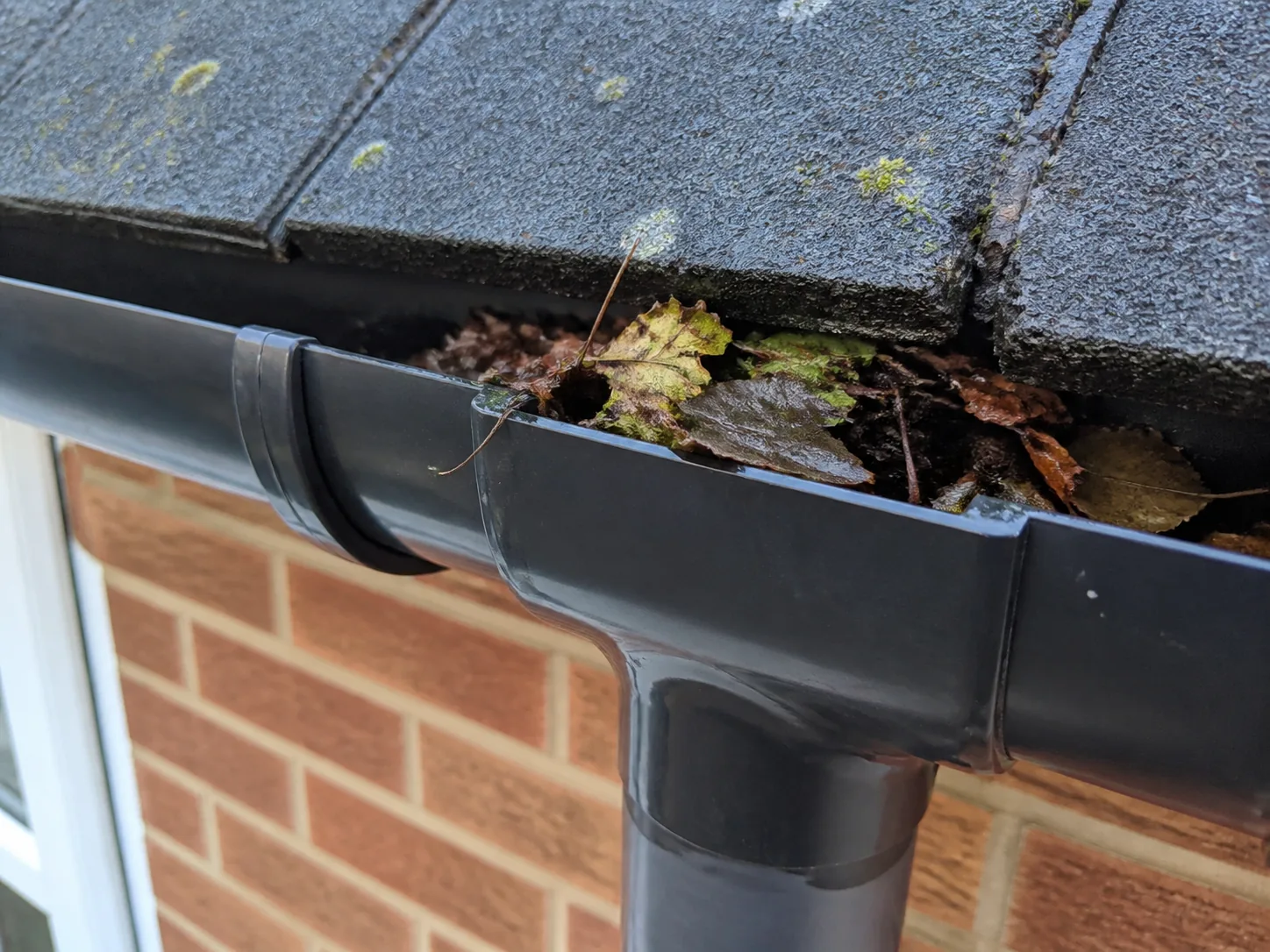
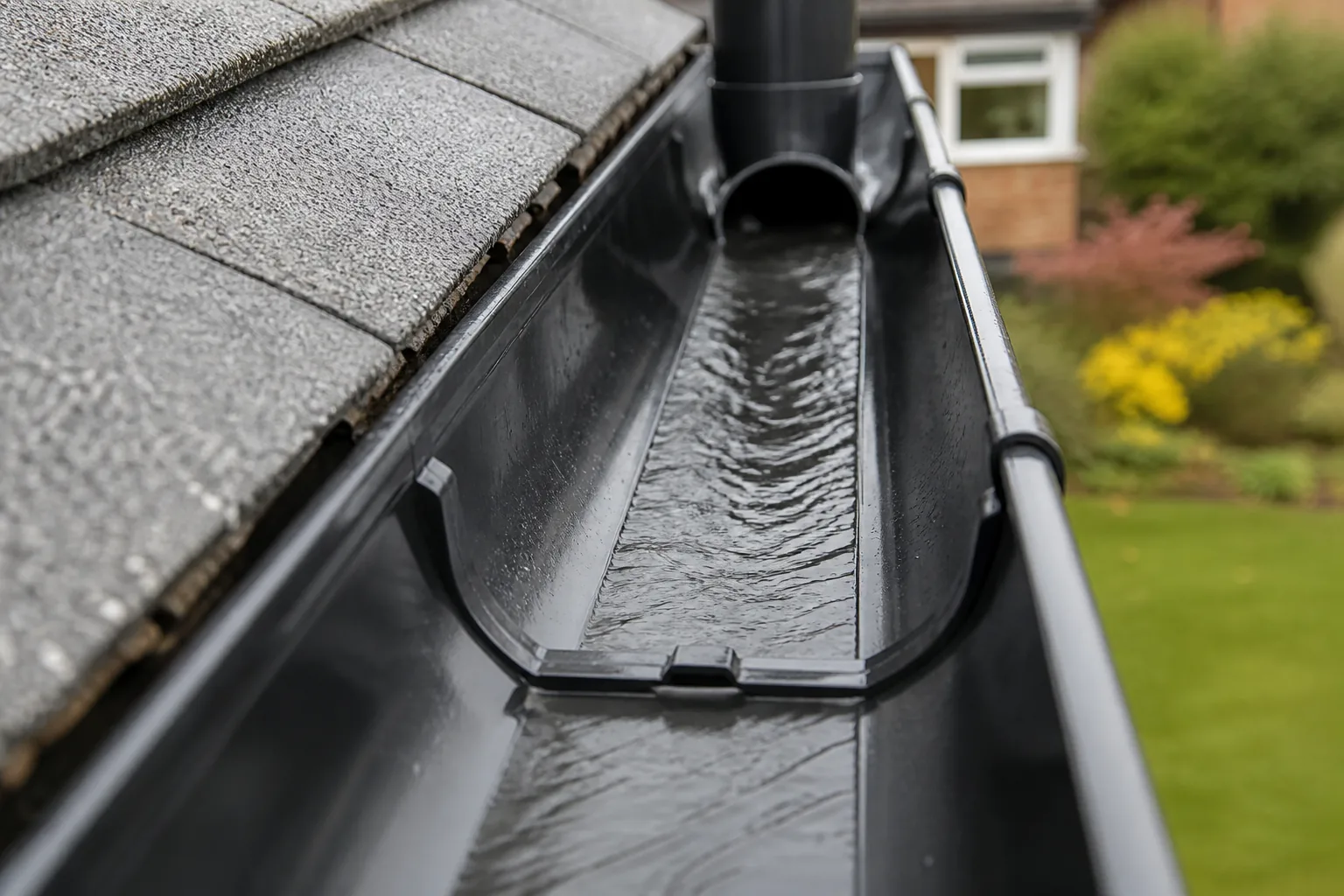
Wet leaves can settle into layers and slow water moving towards an outlet.
Rainwater routes · access · clear scope
A concise property description can prevent uncertainty when gutter cleaning is arranged. At a Lewisham address, identify the affected sides, roof levels, access routes and any outlet concern before booking. The routine service covers leaves, moss, silt and similar debris in accessible agreed channels. Repairs, concealed downpipe blockages, underground drainage and specialist access need separate assessment.
Seasonal context
A fixed annual date is not right for every property. Leaf fall, wind-blown fragments, moss and fine deposits can accumulate at different rates around one building. Visible contents, recent overflow and known catch points offer useful prompts for checking the relevant runs.
Nearby trees, roof moss, gutter shape and exposure can all affect how quickly material accumulates. A visible symptom is more useful than applying one fixed timetable to every address.
Common causes
Routine build-up often combines coarse and fine material. Leaves or small twigs may form the first catch point, then moss and sediment fill the gaps. Clearing accessible deposits from the selected run helps reopen the channel without making claims about hidden drainage.
Wet leaves can settle into layers and slow water moving towards an outlet.
Loose roof moss can collect in the channel and hold other material in place.
Small twigs can bridge narrow points and trap lighter debris behind them.
Loose surface material may wash down from the roof during wet weather.
Older material can become dense and reduce the channel available for runoff.
Fine deposits can gather beneath larger debris and close to an outlet.
Local property context
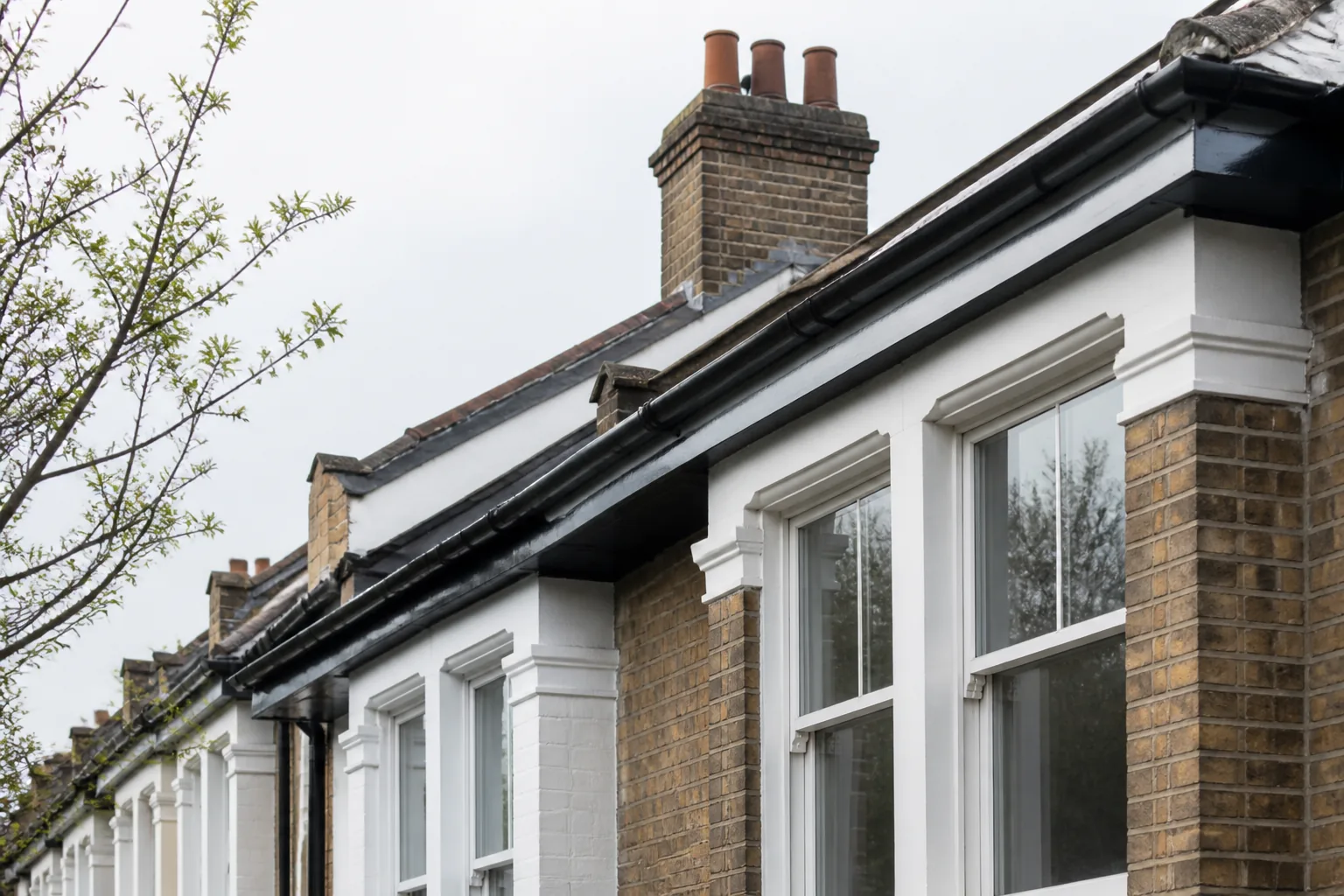
Properties in Lewisham may present very different combinations of front, rear, side and lower roof channels. A house could have a small canopy or extension, while a divided building may require another person to approve exterior work. These are possibilities rather than assumptions about the area. Start with the channel that shows overflow or visible build-up, then add any other runs you want considered. State their level and what sits beneath them. This keeps the enquiry specific enough to assess without overlooking a separate lower gutter or inaccessible elevation.
Practical preparation also matters. Confirm that gates can open, shared routes are authorised and areas immediately below the requested channels are available. Mention fixed features, narrow passages, changes in ground or stored items that may limit the approach. If tenants, landlords or managing parties are involved, settle responsibility before the visit. Cleaning can then proceed only on accessible agreed sections, with reachable outlets included where specified. A damaged fitting or poor flow farther down the system should be reported, but remains a distinct task rather than an assumed extra.
Access is based on the requested elevation, not just the building type. A front run may be open while the rear is beyond an addition or shared passage. Provide the route details and permissions early; inaccessible sections remain outside the routine visit.
| Property situation | Access or gutter consideration |
|---|---|
| Terraced home | Rear access and the boundary of any continuous channel should be understood before inclusion. |
| House with a lower extension | List both the extension gutter and any upper run affected by its position. |
| Rented or managed property | Confirm who authorises exterior work and who will provide entry to controlled areas. |
| Home with a separate outbuilding | Name its channels independently; they are not automatically part of the house request. |
A clear service sequence
Structured service guide
| Requested item | Within routine scope | Outside it |
|---|---|---|
| Accessible named gutter run | Clear ordinary loose contents | Treat an omitted elevation |
| Reachable outlet opening | Remove local debris when agreed | Clear the full downpipe |
| Crack, loose bracket or failed joint | Note the separate concern | Complete a repair as part of cleaning |
| Ground-level drainage | No channel-cleaning action | Investigate below-ground flow |
Structured service guide
| Condition | Suitable cleaning role | Separate requirement |
|---|---|---|
| Leaves and silt in an open run | Remove accessible accumulation | None if no fault remains |
| Water backing up at the outlet | Clear loose material at the reachable mouth | Assess a deeper restriction if needed |
| Channel has a visible split | Clear debris only if suitable | Repair or replace the component |
| Run stays full while visibly clear | No repeated clearance | Review fall, fitting and pipe flow |
Structured service guide
| Detail to provide | What it establishes |
|---|---|
| Named front, rear, side or lower runs | The intended extent |
| Roof levels and structures beneath | Where access differs |
| Gate, boundary and shared-route information | Whether entry can be arranged |
| Visible debris or water behaviour | The likely channel concern |
| Separate garage or outbuilding | An additional independent scope |
Structured service guide
| If present | Prepare or confirm | Scope effect |
|---|---|---|
| A locked side gate | Arrange entry for the agreed time | Rear work depends on that route |
| A lower extension | Identify its channel and the upper edge | Assess both runs independently |
| A shared passage | Obtain permission and confirm availability | Include only with authorised access |
| A separate shed or garage | State which sides need attention | Add it explicitly or leave it out |
Quick answers
Name the affected sides and levels, describe visible symptoms, and mention additions, gates, boundaries or shared areas. Also identify any porch, garage or outbuilding that needs separate consideration.
No. You can request selected runs where debris or overflow has appeared. The agreement should say exactly which channels and reachable outlets are included, leaving the others outside the visit.
Ensure agreed gates can be opened, permission is in place and relevant access areas are available. Tell the service about narrow passages, additions or fixed obstacles before the booking.
Only when it has been identified and included. A garage or outbuilding has its own channel length, outlet and approach, even if it stands close to the main property.
Report the visible condition before cleaning is arranged. Loose material can only be cleared if suitable and agreed; sealing or replacing the damaged section is separate repair work.
Safe ground-level images can show the requested elevations, levels, access routes and visible symptoms. They help explain the enquiry but do not guarantee that every pictured channel will be reachable.
Lewisham service area
Nearby gutter-cleaning pages
Before booking
Routine work removes leaves, loose moss, silt and similar debris from the accessible gutter channels agreed. Reachable outlet openings may be included where confirmed. Repairs, concealed pipe clearance, underground drainage and specialist access arrangements are assessed separately.
Yes. A front run can be booked on its own when it is the named concern and can be accessed within the agreement. Rear, side, porch, garage and upper channels do not follow automatically from that request.
They may have different lengths, outlets, debris and access from the main eaves. A porch or extension gutter can also discharge into another run. Listing each one prevents uncertainty about what the proposed visit covers.
The dependent channel may have to remain outside the completed work. A locked gate, missing permission or obstructed route cannot be ignored. The section can be reconsidered later under a suitable, separately agreed access arrangement.
It can remove loose debris at a reachable outlet mouth when that is included in the agreement. The work does not extend automatically into the concealed downpipe or its below-ground connection, both of which require separate consideration.
The channel could have damaged parts, incorrect fall or limited capacity, or the downpipe may be restricted below the visible opening. Continued symptoms need a fresh assessment aimed at the remaining cause rather than repeated debris removal.
That depends on the tenancy and management arrangements. The tenant, landlord or agent should establish who is responsible and authorised to commission exterior work, particularly where communal areas or shared roof edges are involved in the request.
No. Routine clearance concerns material inside the agreed accessible channels and any specified reachable outlet openings. Washing outside surfaces, treating roofs or cleaning fascia and soffits are different tasks unless separately described and agreed before the visit.
Use previous accumulation, nearby growth, roof condition and rainwater behaviour as guides. Check problem runs when visible debris returns or overflow appears. Different elevations can require attention at different times, so a universal interval is unsuitable.
The requested runs, channel lengths, levels, access restrictions, expected contents and agreed outlet attention all matter. A separate outbuilding adds its own scope. Repairs, deeper pipe work, drainage and special access remain distinct items for another assessment.
Discuss the actual roofline
A quotation draws on included gutter length, number of roof levels, access at each side, debris condition and specified outlet openings. Adding garages, porches or separate structures changes the scope. Repair, pipe and drainage concerns are considered under their own arrangements.
