
Leaves
Wet leaves can settle into layers and slow water moving towards an outlet.
Rainwater routes · access · clear scope
The apparent height of a gutter can change around a property when ground levels, lower roofs or additions differ from one side to another. For a Muswell Hill address, each requested elevation is reviewed on its own. Routine debris is cleared from accessible agreed channels, while hidden pipe restrictions, repairs, underground drainage and separate access arrangements remain outside that scope.
Common causes
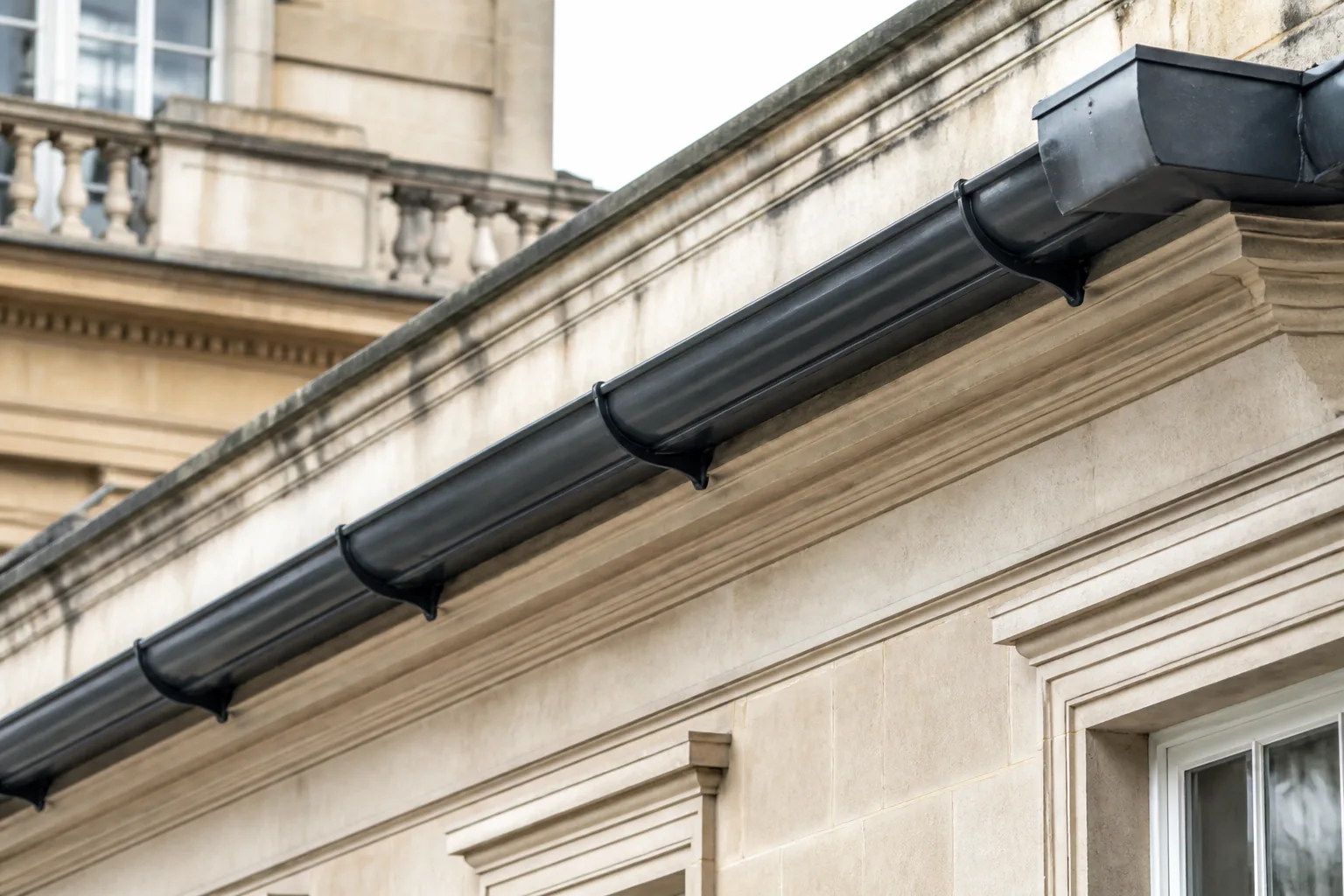
Debris does not need to fill an entire run before water is affected. A compacted area beside an outlet or in a low point may narrow the available route. Cleaning removes reachable routine material from agreed channels, while the cause of persistent pooling may need separate assessment.
Wet leaves can settle into layers and slow water moving towards an outlet.
Loose roof moss can collect in the channel and hold other material in place.
Small twigs can bridge narrow points and trap lighter debris behind them.
Loose surface material may wash down from the roof during wet weather.
Older material can become dense and reduce the channel available for runoff.
Fine deposits can gather beneath larger debris and close to an outlet.
Local property context
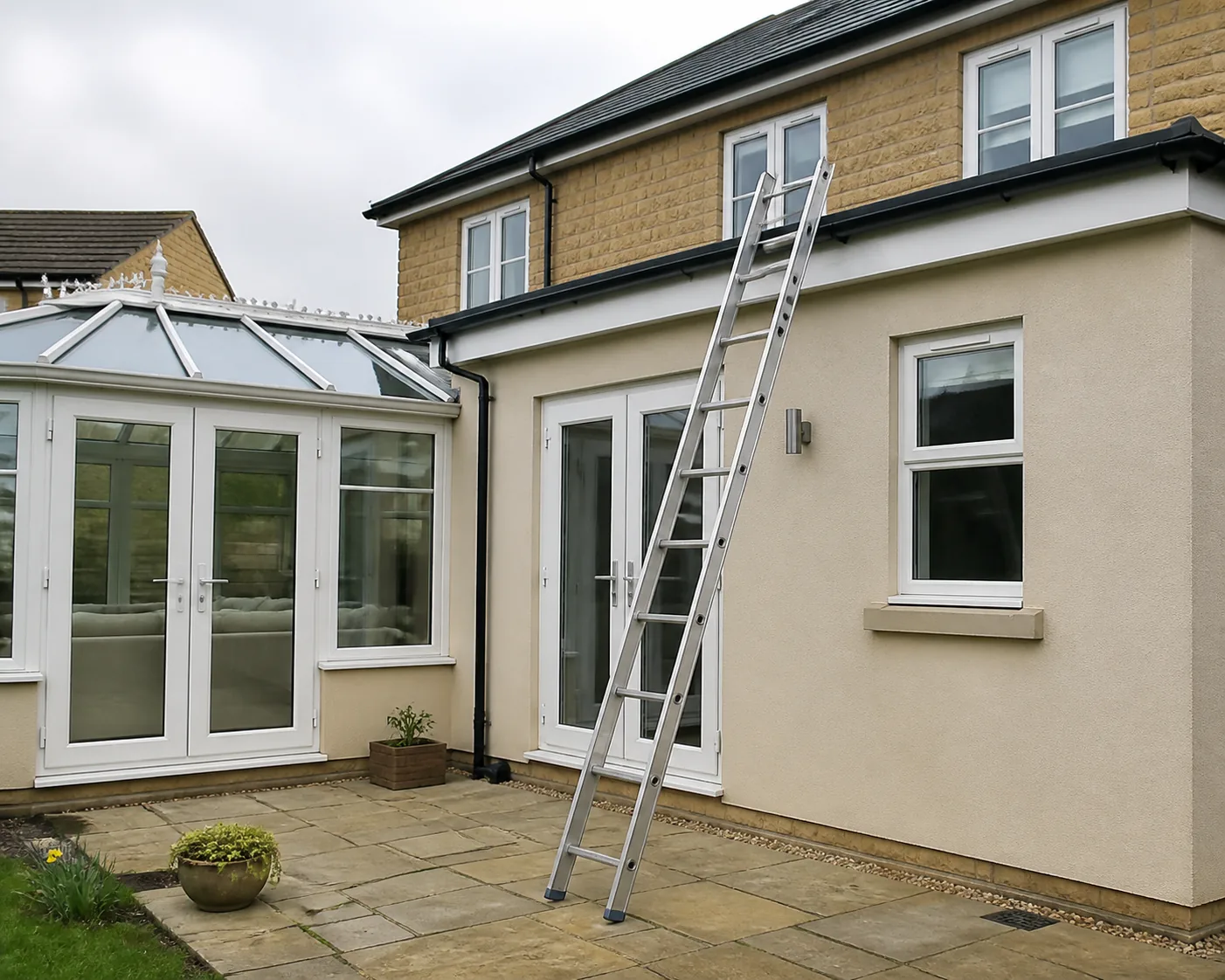
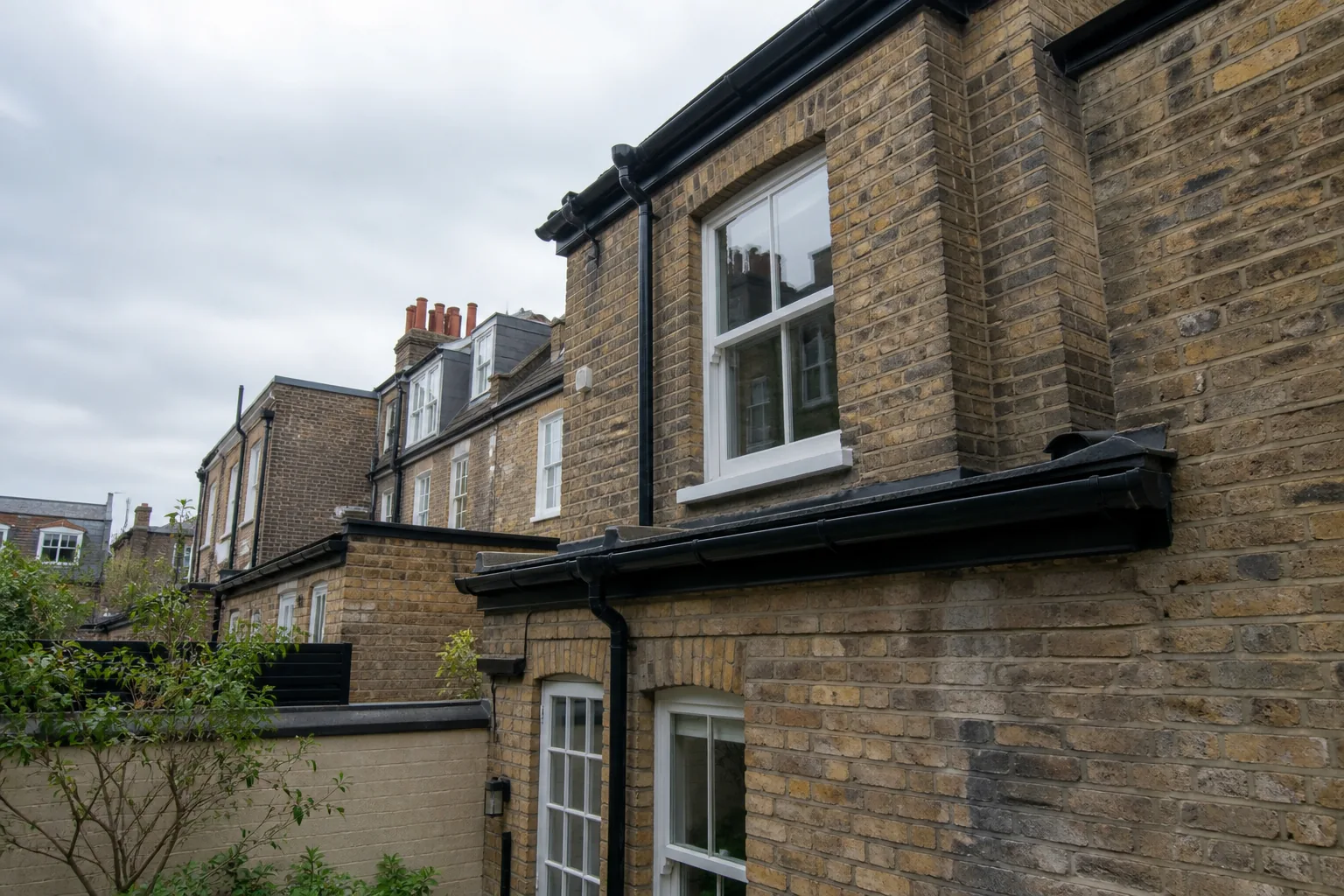
At a Muswell Hill home, a channel that appears modest from the front may be at a different effective height from a rear or side area if the ground falls, steps intervene or a lower structure projects beneath it. Those features are property-specific and should be described rather than guessed from the storey count. Note the affected elevation, what stands directly below, how the area is entered and whether the surface changes level. This gives a clearer basis for deciding which runs are accessible and which need another access discussion.
The water behaviour still needs to be separated from the access question. Leaves, loose moss and silt may restrict an agreed channel, while a reachable outlet can be attended to if included. Overflow can also arise around a damaged union, a poorly aligned section or a blockage concealed inside the downpipe. Clearing routine build-up does not resolve those faults. By naming the symptom and the precise roof edge together, the proposed visit can focus on suitable cleaning without implying that every cause or every level has already been covered.
Describe the ground and structures below every channel requested. Steps, slopes, retaining edges, narrow passages, planting, garages and additions may change the approach even where the roofline looks continuous. The access decision is made for the actual section, not from a general view of the house.
| Property situation | Access or gutter consideration |
|---|---|
| House with a sloping rear garden | The effective gutter height and available standing area may change across the same rear elevation. |
| Home with stepped side access | Changes in level, path width and gates should be described before side or rear runs are confirmed. |
| Property with an addition below the eaves | Its projection, roof material and position may alter access to the original upper channel. |
| Building with upper and lower gutters | Each level needs its own scope, outlet identification and reachability decision. |
Structured service guide
| Rainwater route | Included action | Boundary |
|---|---|---|
| Accessible channel section | Remove routine loose debris | Only named elevations and levels |
| Reachable outlet mouth | Clear gathered material when agreed | No work assumed inside the pipe |
| Damaged component | Keep separate from debris removal | Repair assessment required |
| Underground drainage | Outside gutter cleaning | Requires a different service scope |
Structured service guide
| What is observed | Possible cleaning task | Possible separate task |
|---|---|---|
| Moss and silt at a corner | Clear loose channel material | None indicated by debris alone |
| Drip below a union | Remove build-up causing backed-up water | Repair the connection if defective |
| Standing water after clearance | Confirm the reachable channel is free | Assess fall, outlet or concealed pipe |
| Run pulling away | Cleaning only if considered suitable | Inspect supports and arrange repair |
Structured service guide
| Property detail | What to describe | Relevance |
|---|---|---|
| Changing ground level | Slopes, drops and stepped areas | Changes effective height and usable space |
| Lower structures | Position and projection beneath the eaves | May alter access to upper runs |
| Channel arrangement | Separate levels, lengths and outlets | Defines the included cleaning work |
| Visible condition | Debris, overflow or apparent damage | Separates cleaning from other assessment |
Structured service guide
| Conditional setting | Question for the address | Planning consequence |
|---|---|---|
| If a garden falls away | How far below the eaves is usable ground? | Review the rear run independently |
| If steps cross a side route | Are width and levels consistent throughout? | Assess access beyond the steps |
| If a lower roof projects outward | What lies between the ground and upper channel? | Keep upper and lower runs separate |
| If terrain varies along one wall | Does reachability change across the elevation? | Define only the workable sections |
A clear service sequence
Seasonal context
Wind, leaf fall and gradual moss or silt movement can affect elevations differently. A sheltered corner may retain material while a more exposed run stays clearer, or the pattern may reverse. Visible accumulation, earlier overflow and property changes are better timing cues than one universal seasonal rule.
Nearby trees, roof moss, gutter shape and exposure can all affect how quickly material accumulates. A visible symptom is more useful than applying one fixed timetable to every address.
Quick answers
A gutter can sit farther above the usable ground on one elevation than another, even on the same building. That difference can change reachability and must be considered before inclusion.
Yes. Explain where the ground rises or falls beneath the relevant roof edge, together with steps, planting and boundaries. These details help make the access review specific to the requested run.
Accessible agreed channels can be cleared of leaves, loose moss, silt, small twigs and similar deposits. Reachable outlet openings are dealt with only if they have been included beforehand.
No. Silt can reduce space, but channel alignment, supports, outlet flow and rainfall can also affect pooling. Cleaning addresses loose accumulation, not the structural fall or concealed pipe condition.
Yes. They may have different debris, outlets and access conditions, so the agreement can include one, both or selected sections. Each should be named clearly in the proposed scope.
Its size, projection, surface and position need review before the upper gutter is included. Another access arrangement may require separate assessment; the run should not be promised from a photograph alone.
Muswell Hill service area
Nearby gutter-cleaning pages
Before booking
Routine work covers leaves, loose moss, silt and ordinary debris in the accessible channel sections agreed for the address. Reachable outlet openings can be included when specified. Repairs, hidden downpipe restrictions, underground drainage and separately considered access are not automatically included.
The roof level may be similar while the usable ground, approach and structures below differ. A clear front area does not establish that a stepped or enclosed rear can be reached, so each elevation needs its own decision.
That depends on the lower roof’s material, size, angle and position, as well as other possible approaches. It cannot be confirmed simply because the channel is visible. The upper run needs an address-specific access assessment before inclusion.
No. Leaves, moss or silt can cause local backing-up, and an outlet restriction may affect the same area. Alignment is another possibility. Cleaning can remove accessible debris, but correcting the channel fall would be separate repair work.
Explain where they begin, their relationship to the affected roof edge and whether gates, walls or planting narrow the route. Ground-level photographs can assist. The aim is to understand the approach without assuming a particular access method.
Loose material around that opening can be removed when outlet attention is included in the agreement. This does not clear or test the concealed downpipe below. Any continuing restriction farther along the route requires separate assessment.
No. Removing accumulated weight may be useful if cleaning is suitable, but a sag involves alignment, brackets or the supporting surface. Those components require a repair assessment, and their condition may affect whether cleaning should proceed first.
Their level, usable space below, approach, outlet arrangement and amount of debris may differ. A straightforward lower edge and a run beyond steps or above an addition do not present the same scope, even if their lengths match.
Use visible condition, earlier accumulation and recent overflow as guides. Nearby growth, roof moss and exposure can influence the interval, but each elevation may behave differently. A fresh symptom can justify checking sooner than a routine date.
Describe the affected sides, roof levels, changes in ground height, additions, gates, visible debris and water behaviour. Identify any outlet concern without diagnosing it. Those details help separate routine channel cleaning from repair or concealed-route questions.
Discuss the actual roofline
Cost reflects the number and length of included channels, their effective height, the route to each side, surfaces and structures beneath them, expected debris and agreed outlet attention. A section needing another access arrangement, fault repair or concealed pipe investigation is considered under a separate proposal.
