
Leaves
Wet leaves can settle into layers and slow water moving towards an outlet.
Rainwater routes · access · clear scope
A simple roofline description makes a gutter-cleaning enquiry far more precise. For an Orpington home, name the front, rear, side and lower runs that need consideration, including any detached building. Routine work removes leaves, moss, silt and everyday loose material from agreed accessible channels. Reachable outlets may be included, while repair, concealed pipework, below-ground drainage and specialist access remain separate.
Common causes
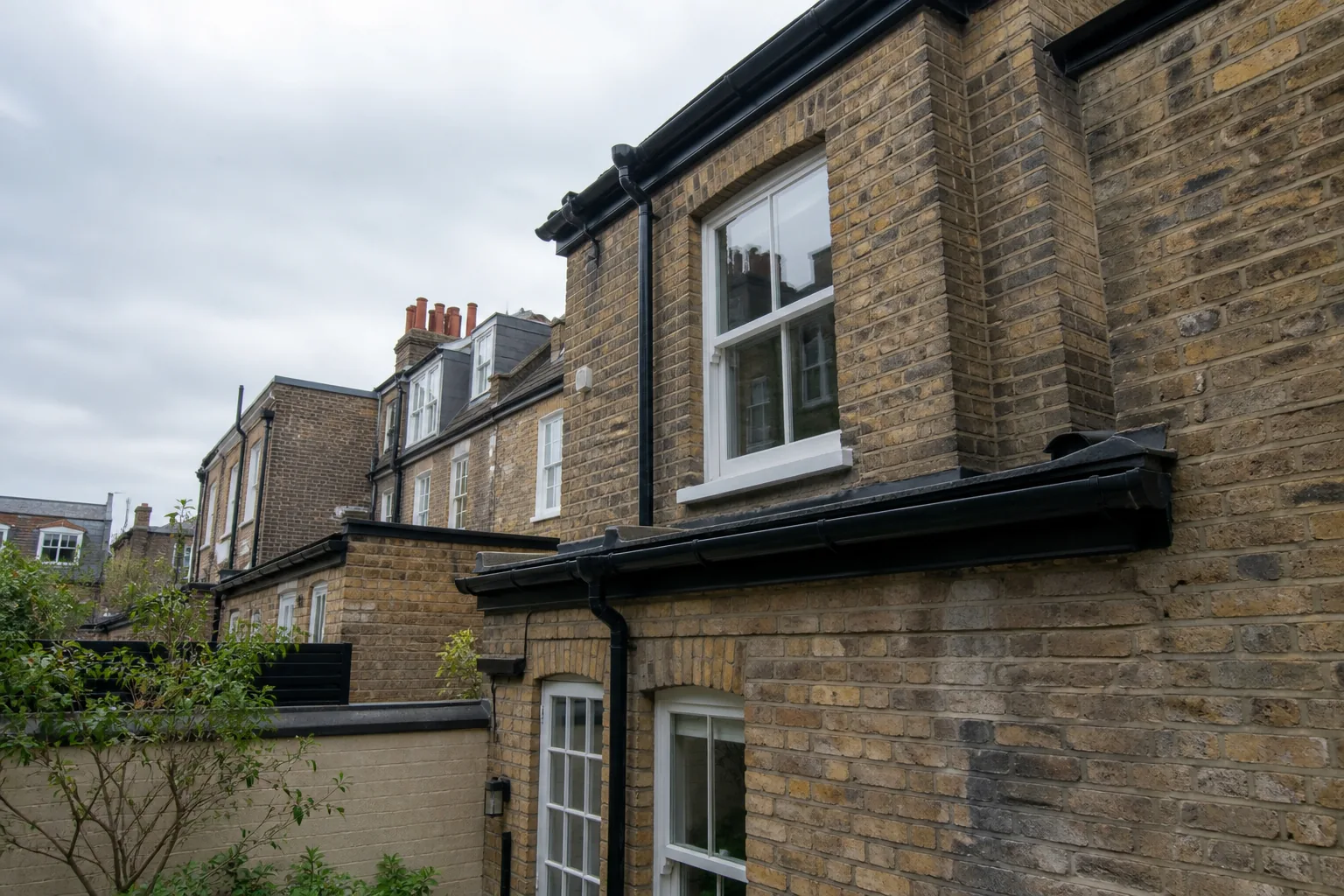
Coarse leaves and twigs can form a catch point, then trap moss particles and silt washed from the roof. The mixture may spread along a run or sit mainly near one outlet. The cleaning task concerns loose deposits in the accessible portions specifically selected.
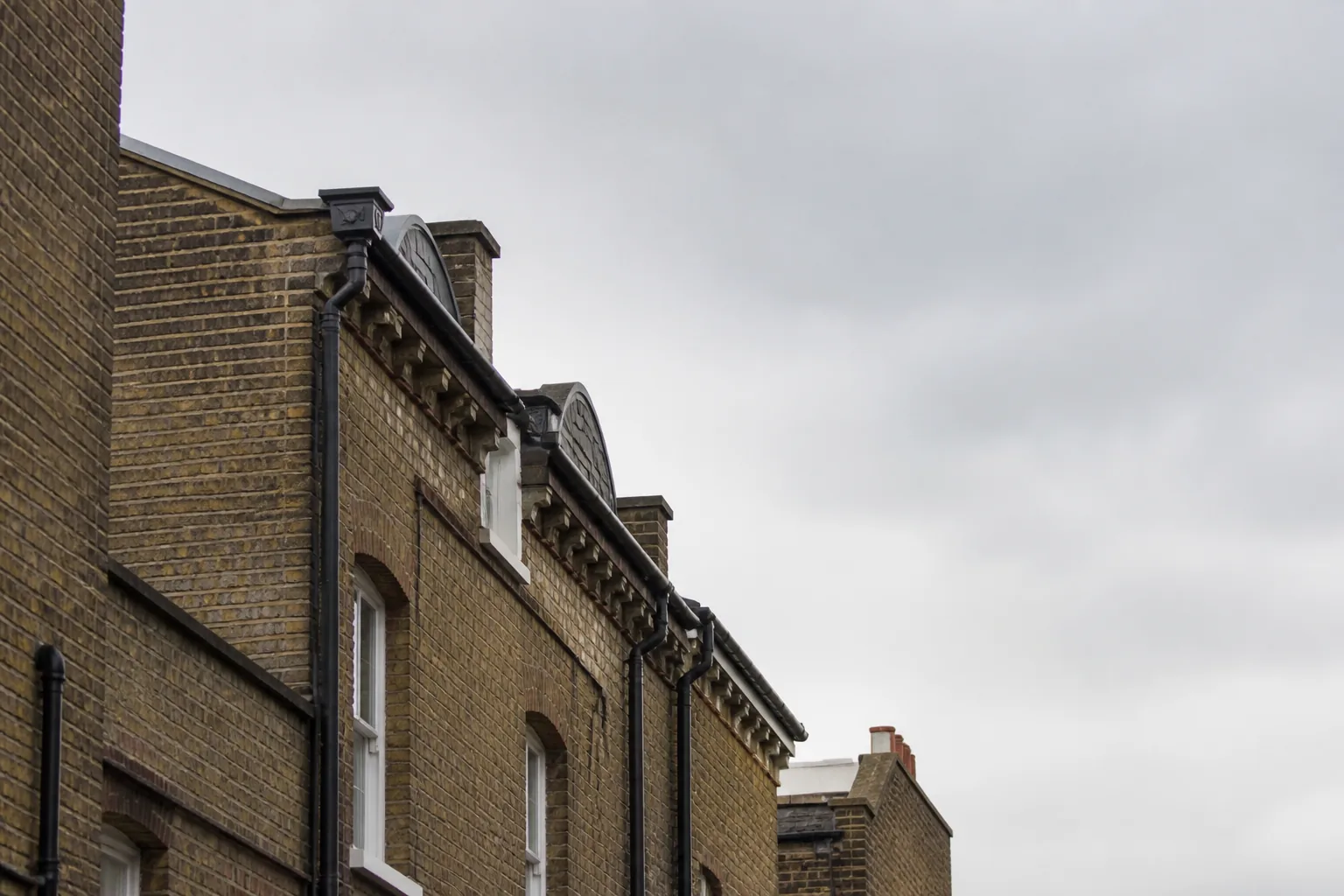
Wet leaves can settle into layers and slow water moving towards an outlet.
Loose roof moss can collect in the channel and hold other material in place.
Small twigs can bridge narrow points and trap lighter debris behind them.
Loose surface material may wash down from the roof during wet weather.
Older material can become dense and reduce the channel available for runoff.
Fine deposits can gather beneath larger debris and close to an outlet.
Local property context
An Orpington address may combine main eaves with a porch, bay, garage, canopy or later extension. None of these features should be presumed, but each can create another channel and outlet. Describe the property from the front and work around it by elevation, noting upper and lower runs separately. State which sections show debris or overflow and which additional sections you want cleaned. This verbal map avoids uncertainty about whether a small lower edge or outbuilding belongs within the request, and gives a sensible starting point for an access review.
Next, explain the route to each chosen side. A wide front area does not establish the conditions at the rear, where a gate, narrow path, planted bed or roof addition may change the approach. Shared land or rented accommodation can also require permission from another responsible party. Make those arrangements in advance and keep the intended areas available where practical. Work remains limited to the agreed channels that prove accessible. If a section requires a different access plan, or its problem involves damaged parts rather than debris, it should be considered on a separate basis.
Reachability cannot be inferred from storey count alone. The ground beneath an elevation, projecting roofs, conservatories, fences and the available route all matter. Provide safe ground-level photographs if useful, but leave the final access decision to an assessment of the actual property.
| Property situation | Access or gutter consideration |
|---|---|
| Detached house | Four elevations may offer different access and debris conditions, so requested sides should be named. |
| Bungalow or property with lower eaves | Lower height does not remove the need to assess ground conditions, obstacles and channel reachability. |
| Home with a porch or canopy | Its short gutter can have a separate outlet and must be added explicitly if cleaning is wanted. |
| Property with an outbuilding | The outbuilding is a distinct scope with its own sides, channel length and access route. |
Structured service guide
| Roof edge | Routine task | Scope note |
|---|---|---|
| Named main eaves run | Remove accessible loose contents | Specify front, rear or side |
| Porch, bay or extension gutter | Clear when individually included | Do not infer from the house request |
| Garage or outbuilding channel | Treat as a separate selected run | Identify building and sides |
| Reachable outlet mouth | Remove loose debris when agreed | Deeper pipework is excluded |
Structured service guide
| Reported condition | Cleaning role | Different work |
|---|---|---|
| Loose organic material fills the channel | Remove the accessible accumulation | None indicated by contents alone |
| Outlet opening is covered | Clear reachable loose material | Investigate persistent restriction below |
| Bracket moves or channel sags | Remove debris only if appropriate | Secure and realign components |
| Section is split or holed | Cleaning does not restore it | Repair or replacement |
Structured service guide
| Information | Effect on planning |
|---|---|
| Sides and approximate channel lengths | Defines total extent |
| Different roof levels | Separates access decisions |
| Porches, garages and extensions | Adds independent sections |
| Ground, routes and fixed obstacles | Shows constraints at each elevation |
| Visible type and amount of debris | Indicates likely clearance effort |
Structured service guide
| If present | Describe | Decision supported |
|---|---|---|
| A detached garage | Building position and required sides | Whether it joins the visit scope |
| An extension below original eaves | Both lower and upper channels | Whether each run is reachable |
| A shared side route | Permission and availability | Whether that elevation can proceed |
| A covered gutter | Cover type and visible condition | Whether routine handling is suitable |
A clear service sequence
Seasonal context
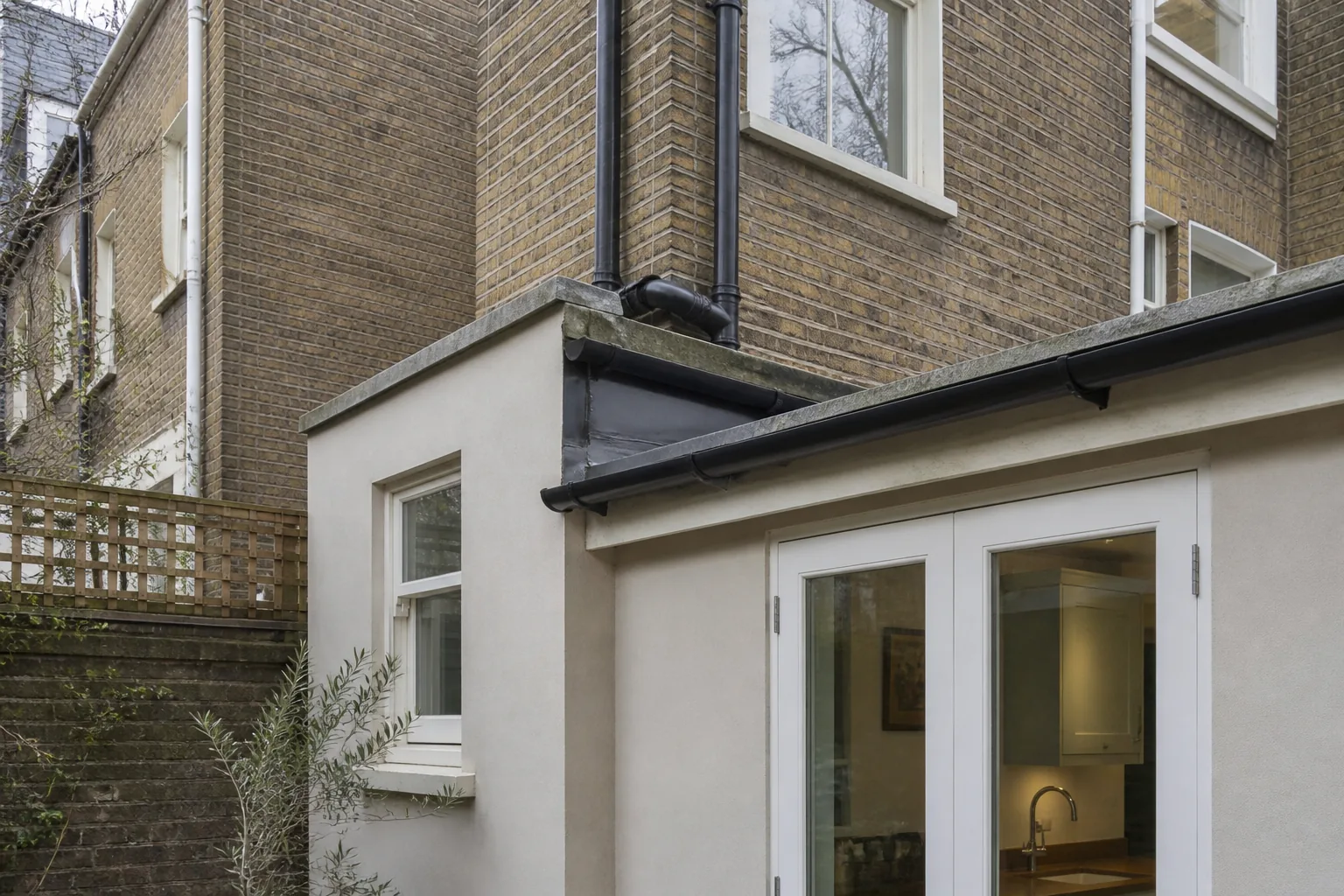
Collection rates vary across a roof. One channel may receive autumn leaves while another mainly gathers moss or fine sediment after wet weather. Use the home's previous pattern, safely visible material and overflow reports to decide when a particular run needs attention rather than treating every side alike.
Nearby trees, roof moss, gutter shape and exposure can all affect how quickly material accumulates. A visible symptom is more useful than applying one fixed timetable to every address.
Quick answers
Use the building side and level, such as upper rear or lower front. Add identifying features like a porch or garage so each requested run can be distinguished clearly.
No. Only the accessible runs confirmed in the agreed scope are included. Unlisted sides, lower channels and separate structures should not be assumed to form part of the booking.
Yes, when its required roof edges are described and accepted within the scope. Its channel length, outlet, debris and approach are assessed separately from those of the house.
Ground-level images may clarify roof levels, structures below, routes and visible water marks. They support the enquiry, but they cannot establish access to every part or reveal concealed pipe conditions.
No. Routine cleaning can remove nearby debris when suitable, but securing or replacing a bracket is repair work. Mention visible movement or sagging before the proposed visit.
Yes, if it is reachable and specifically agreed. This means removing loose material around the opening, not investigating or clearing the concealed downpipe or drainage connection.
Orpington service area
Nearby gutter-cleaning pages
Before booking
The service clears leaves, loose moss, silt and routine wind-blown material from accessible gutter runs agreed beforehand. Reachable outlet mouths may also be named. Repairs, blockages within concealed downpipes, underground drainage and separately assessed access are not included.
A porch, bay or extension channel can use another outlet, collect different material and require its own approach. Its size does not make it an automatic part of the main eaves work, so naming it prevents misunderstanding.
Yes. Selective cleaning is possible when the intended runs are described clearly and can be accessed. State whether outlets on those sections are also requested. All remaining elevations stay outside the agreement unless later added.
Explain the width, gate arrangements and fixed restrictions before booking, and secure any required permission. If a workable approach is unavailable, the dependent rear channel cannot be assumed within the routine visit and may need separate consideration.
No. Eaves height is only one factor. Sloping or soft ground, planted borders, projecting features, stored items and boundaries can all affect the usable space. The actual conditions beneath each requested run still need review.
Describe it rather than assuming routine removal. Ordinary organic debris and silt fit the usual cleaning scope, but fixed objects, displaced roof materials, animal activity or hazardous contents can require a different decision before work proceeds.
Only if loose build-up is causing water to back up and cross the rear edge. A fixing, roof-edge or alignment issue can produce the same observation. Continued escape after clearance points towards a separate inspection or repair.
Responsibility for the relevant exterior section and permission to enter controlled areas should be confirmed before the date. The occupier, owner or managing party may need to coordinate, depending on the particular arrangement at that address.
Base the decision on how quickly visible material returns, which sides receive nearby growth and whether earlier problem points overflow during rain. Different channels can follow different cycles, so a single fixed interval is rarely informative.
Each named run contributes its length, level, expected contents and access conditions. Requested outlet mouths and separate buildings add further defined work. Repairs, internal pipe problems, underground drainage and another access arrangement remain outside the routine calculation.
Discuss the actual roofline
Quoted work reflects the combined length and number of named runs, differing levels, access at each elevation, expected material and any agreed reachable outlets. A porch or outbuilding adds its own task. Fault repairs, pipe clearance and drainage work do not belong in the routine price.
