
Leaves
Wet leaves can settle into layers and slow water moving towards an outlet.
Rainwater routes · access · clear scope
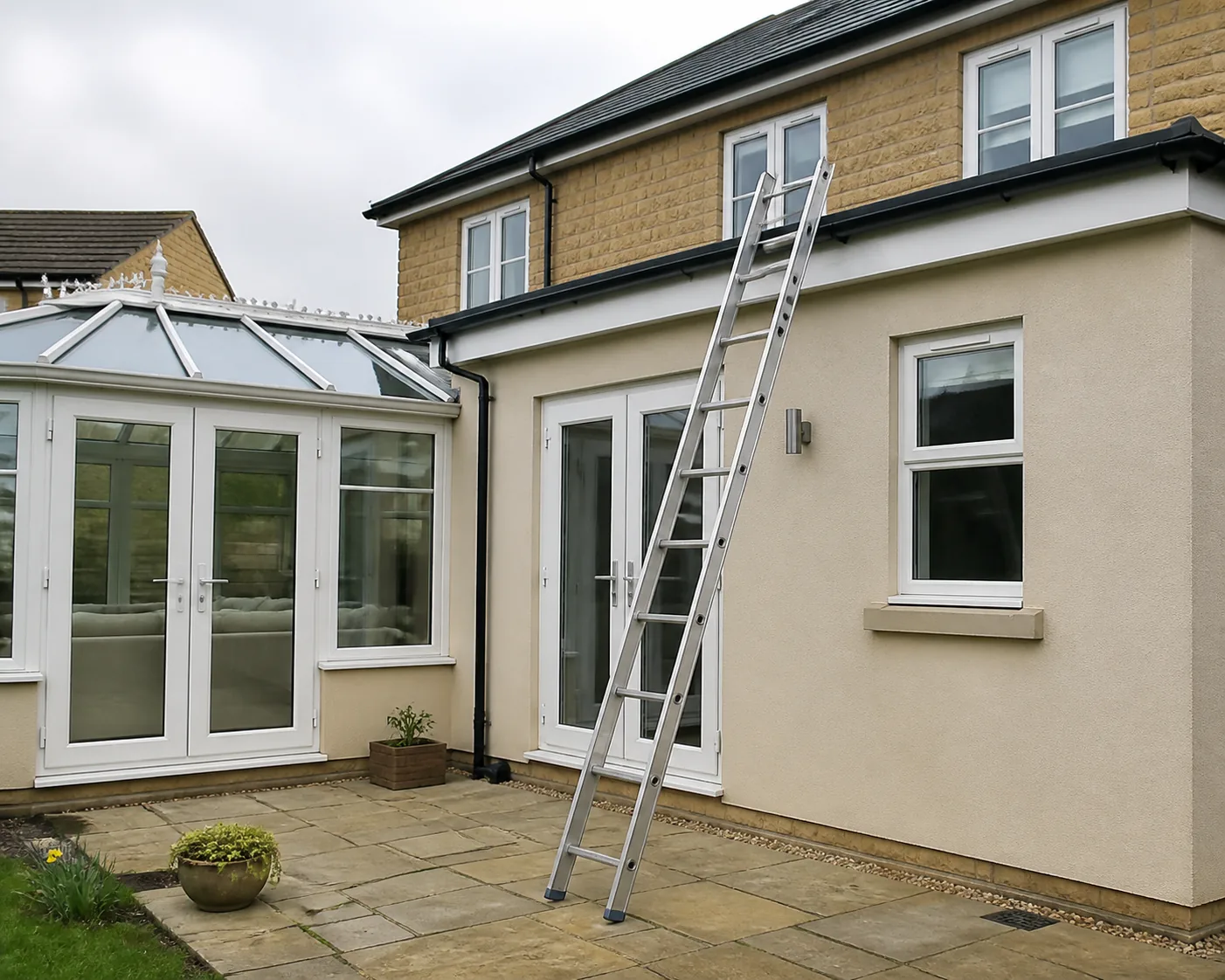
Not every side of a home gathers debris at the same rate. A Pinner gutter-cleaning enquiry can focus on the runs that show build-up, overflow or a known maintenance need. We clear routine leaves, moss and silt from accessible agreed channels and can include reachable outlet mouths when stated. Damage, concealed downpipes, underground drainage and specialist access require separate assessment.
Seasonal context
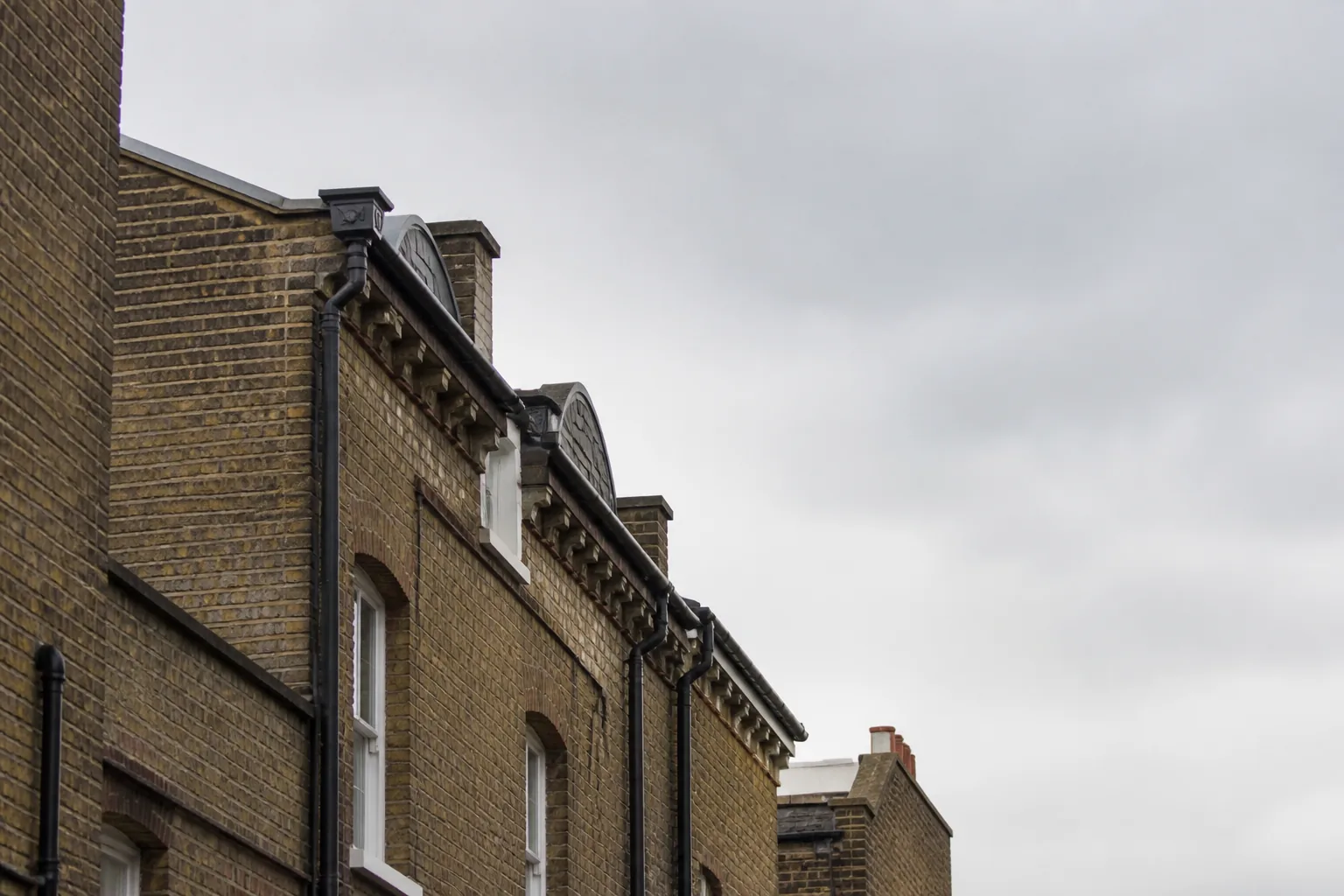
Autumn leaves are only one source of build-up. Loose moss can arrive at other times, and silt may remain after larger material has gone. A run sheltered from wind may retain damp deposits while another fills suddenly. Review each elevation after relevant weather and when familiar symptoms return.
Nearby trees, roof moss, gutter shape and exposure can all affect how quickly material accumulates. A visible symptom is more useful than applying one fixed timetable to every address.
Common causes
Leaves can gather in one sheltered corner while fine silt settles along a quieter length elsewhere. Loose moss and twigs may hold these layers in place. Because deposits are often uneven, the relevant accessible run should be inspected and cleared without assuming every other elevation has the same need.
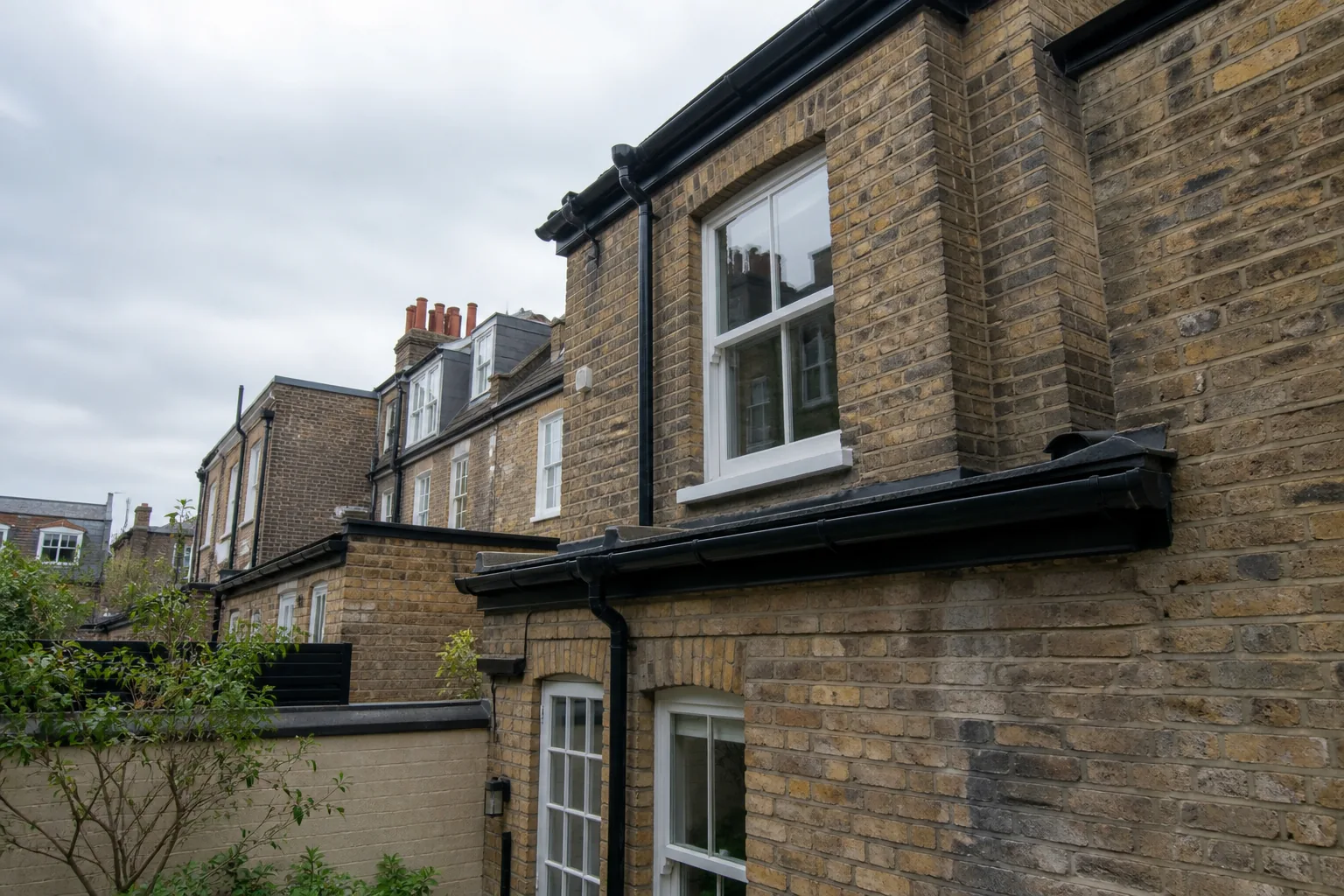
Wet leaves can settle into layers and slow water moving towards an outlet.
Loose roof moss can collect in the channel and hold other material in place.
Small twigs can bridge narrow points and trap lighter debris behind them.
Loose surface material may wash down from the roof during wet weather.
Older material can become dense and reduce the channel available for runoff.
Fine deposits can gather beneath larger debris and close to an outlet.
Local property context
At a Pinner address, one roof edge may face nearby growth or catch wind-blown material while another remains comparatively open. A porch, side return, garage or later addition may also create short channels with their own outlets, if those features are present. The useful approach is to look at actual condition and recurring symptoms rather than assume a full perimeter task. Name the sides where debris is visible or water has escaped, then consider any other accessible runs on their individual maintenance history.
Selective cleaning still needs clear boundaries. The quote should identify the elevations and levels included, along with any reachable outlet openings to be attended to. Routine leaves, loose moss and silt can be removed from those accessible channels. Work does not automatically continue into a downpipe, across a roof surface or below ground. Nor does it mend a cracked union or displaced run. Keeping the list precise makes it easier to add or omit a section for a stated reason rather than through guesswork.
Selecting a channel does not establish that it is accessible. Its level, the width below, nearby structures, surface condition, gates and boundaries all influence inclusion. Each chosen elevation is checked against the address, while any additional access requirement is considered separately and agreed before work proceeds.
| Property situation | Access or gutter consideration |
|---|---|
| Semi-detached home with an exposed side | The side run may gather different material from the front or rear, but its actual condition and access should decide whether it is selected. |
| House with a porch roof | A short porch gutter can have a separate outlet and should not be grouped automatically with the channel above. |
| Property with mature planting nearby | If growth is present close to one elevation, that run may need review at a different time from less exposed sides. |
| Home with restricted rear entry | A locked gate, shared way or route through the building must be discussed before rear channels are added to the scope. |
A clear service sequence
Structured service guide
| Requested element | Routine action | Limit of that action |
|---|---|---|
| Chosen accessible run | Clear leaves, moss, silt and fragments | No repair of shape or supports |
| Specified reachable outlet mouth | Remove loose material at the entrance | No full-pipe clearance implied |
| Roof above the channel | No general surface work | Roof treatment remains separate |
| Drainage beyond the downpipe | Not included | Requires another suitable enquiry |
Structured service guide
| What is noticed | Cleaning response | Repair response |
|---|---|---|
| Debris projects over an edge | Clear the accessible loose material | Review damage if exposed |
| Water drips from a union | Relieve nearby build-up if present | Assess the connection if leakage persists |
| A pool remains after clearance | No further loose debris action | Consider fall or support position |
| Gutter has pulled from fascia | Clean only if separately suitable | Inspect fixing and adjoining components |
Structured service guide
| Factor | What to share | Why it changes the task |
|---|---|---|
| Selected sides | Front, rear, side or lower edge | Sets the total channel extent |
| Different levels | Which sections sit above additions | Changes access considerations |
| Outlet requests | Which mouths need attention | Defines agreed endpoint work |
| Routes around the home | Gates, shared ways and boundaries | Can affect inclusion |
Structured service guide
| If this condition applies | Question to ask | Conditional choice |
|---|---|---|
| Visible deposits appear elsewhere | Is that channel accessible and distinct? | Add it as a named run |
| A porch has its own outlet | Has the short edge also filled? | Include it separately if needed |
| Nearby growth affects one side | Does the opposite side show similar build-up? | Judge each elevation on condition |
| Rear access is uncertain | Can a suitable route be confirmed? | Include only after access is settled |
Quick answers
No. The service can cover only the accessible runs selected for a clear reason. Other sides may be reviewed separately if their condition or maintenance history suggests a need.
Yes, when its channel and outlet are accessible and named in the agreement. It should be treated as its own section rather than assumed part of the main roof edge.
It includes ordinary loose leaves, moss, silt, small twigs and similar fragments lying in the agreed channels. Fixed materials or anything requiring another service are considered separately.
A reachable outlet mouth can be cleared when agreed, but weak discharge may come from farther inside the pipe or below ground. Those sections need a different assessment.
It can help locate where water escaped previously, but the mark may be old or caused by a leaking fitting. Combine it with current rain behaviour and visible condition.
Consider its visible deposits, previous overflow, nearby growth and exposure. A side without current symptoms may still merit discussion, but it does not have to be added automatically.
Pinner service area
Nearby gutter-cleaning pages
Before booking
The normal scope covers routine debris inside the accessible gutter channels chosen and agreed for the address. Reachable outlet openings may be specified too. Repairs, concealed downpipe restrictions, underground drainage and specialist access arrangements are considered separately.
Yes. A quote can name those elevations alone when they are accessible and relevant. The rear does not need to be added without a maintenance reason. If it is excluded because of access, that boundary should also be clear.
Roof condition, exposure, nearby growth and dampness can vary between elevations, so loose material may enter one channel more often. That does not establish a fixed pattern for every address. Visible accumulation and prior experience provide the useful guide.
Fine silt may not be obvious from below, but the cause could instead be poor channel fall, a covered outlet, deeper restriction or failed fitting. Cleaning tackles accessible deposits. A continuing symptom needs a separate look at other causes.
Only after the guard type, condition and ability to reach the channel beneath have been considered. Its treatment should be agreed explicitly. A guard does not prove that the route is clear or that ordinary access is possible.
The accessible channel around it may be cleared if suitable, which can reduce water backing up. Cleaning will not renew the union seal or correct a displaced fitting. Any continuing leak is a repair concern.
No. Loose moss already resting within an accessible agreed gutter can be removed as routine debris. General roof scraping, treatment or work on attached growth is a different task and is not included by implication.
The available space and ownership of any required approach need to be understood first. Access from neighbouring land cannot be presumed. The affected run may be included, omitted or assessed under another arrangement depending on the actual conditions.
Its reachability must be assessed before it is promised in the work. The surrounding channel may have a different access answer. If the outlet cannot be included, that exclusion should be stated instead of assuming the whole route is covered.
Name each elevation and roof level, explain the visible symptom or maintenance reason, and mention outlets and access conditions. Safe ground-level photographs can show how porches, additions, gates or boundaries relate to the requested channels.
Discuss the actual roofline
Cost is based on the chosen accessible runs rather than a blanket property label. Their length, level, number of agreed outlets and surrounding space all contribute. Provide wide exterior views where possible. Repairs, concealed pipe clearance, underground drainage and separately required access arrangements are assessed outside the routine cleaning price.
