
Do I need to know what caused the overflow?
No. Describe its position, timing and any visible debris or damage. Those observations are enough to begin separating a likely channel-clearance need from a pipe, drainage or repair concern.
Rainwater routes · access · clear scope
A clear booking explains what is happening, where it is happening and which roof edges can be included. For an Uxbridge property, agreed accessible channels are cleared of routine leaves, moss and silt, with reachable outlet openings added where specified. Repairs, concealed downpipe restrictions, underground drainage and specialist access are considered separately rather than bundled into cleaning.
Visible clues
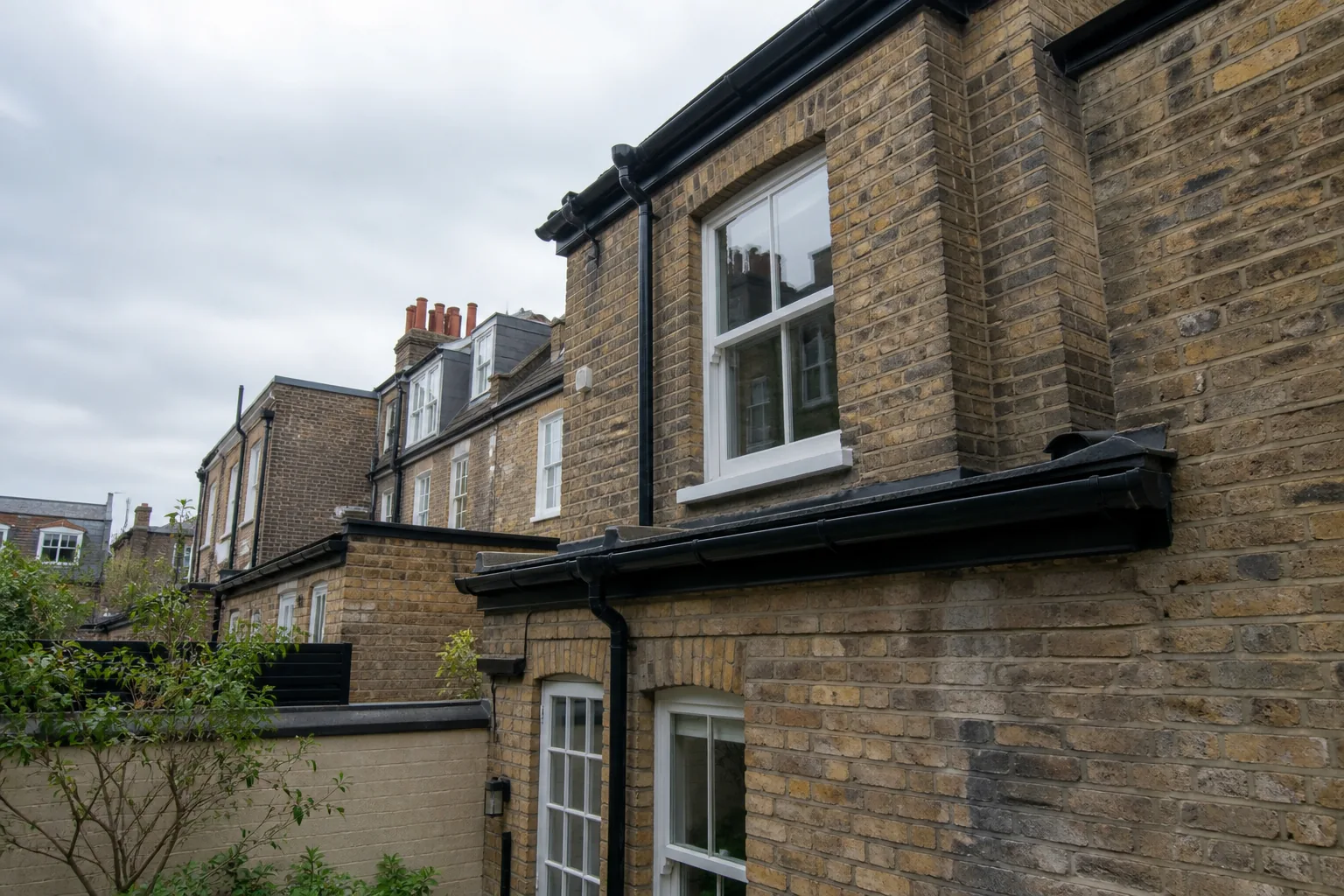
Useful observations include the precise spill point, staining below a run, growth visible from the ground and whether a downpipe appears to discharge during rain. Note any obvious separation or sag as well. These details direct the enquiry, although inspection is still needed to distinguish debris from a fault.
Local property context
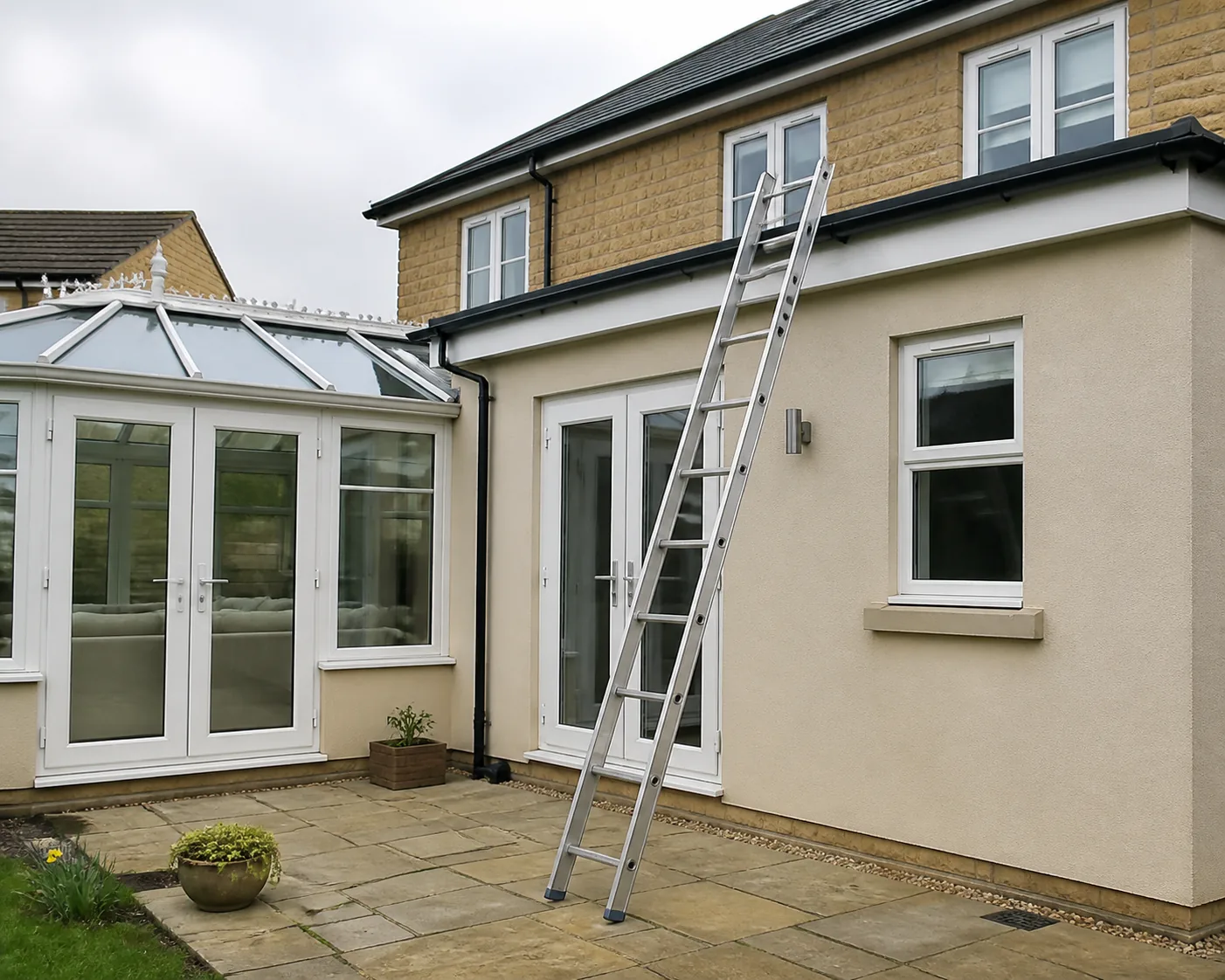
An Uxbridge homeowner does not need to diagnose the rainwater system before asking for help. It is enough to describe whether water spills at the front, rear or side, whether the concern is on an upper or lower run, and what can be seen safely from the ground. Some properties may have additions, garages, narrow approaches or several short roof edges; others may not. Mentioning only the features that actually apply gives a sound basis for deciding which channels can be assessed as accessible and included.
The booking should also draw a firm line between clearance and fault work. Leaves, moss, silt and routine loose debris can be removed from accessible agreed gutters, while reachable outlet openings may be included by agreement. A split channel, loose bracket, failed joint or poor fall is a repair concern. A blockage farther inside a downpipe, or a problem after the pipe enters the ground, needs a different assessment. Clear boundaries help set sensible expectations if the visible symptom has several possible causes.
Photographs can show a roof level but may not reveal every restriction below it. Gates, boundaries, rear structures, sloping ground and fragile surfaces can affect inclusion. Access is therefore confirmed against the actual property and named elevations. Any specialist provision is assessed and agreed apart from routine cleaning.
| Property situation | Access or gutter consideration |
|---|---|
| Terraced home with rear access | The route may pass through the building, a shared passage or another arrangement; availability and working access should be confirmed rather than presumed. |
| Detached property with several elevations | Open space on one side does not establish access everywhere, so each requested edge needs its own surroundings checked. |
| House with a converted roof shape | Altered lines may create shorter channels or transitions, but their exact presence and reachability depend on the individual building. |
| Home with a conservatory or rear structure | The structure can sit beneath an upper run and change its approach; the materials and projection must be considered before inclusion. |
Structured service guide
| Item | Can be agreed within cleaning | Requires another assessment |
|---|---|---|
| Accessible gutter channels | Leaves, moss, silt and routine loose debris | Damaged shape, fall, joints or fixings |
| Reachable outlet openings | Surface material where specifically included | Restriction deeper inside a pipe |
| Roof surface | No general roof work | Fixed growth or roof treatment |
| Underground drainage | Not included | Below-ground flow concerns |
Structured service guide
| Observed issue | Debris possibility | Fault possibility |
|---|---|---|
| Overflow at the outer lip | The channel has reduced open space | Its alignment creates a low section |
| Leak beside a connection | Material backs water towards the joint | The joint is open or damaged |
| Little water leaves the pipe | The outlet mouth is covered | A concealed or underground route is restricted |
| Dark mark below the eaves | Previous overflow carried dirty water | Water is tracking behind a fitting |
Structured service guide
| Booking detail | What it establishes | Why it matters |
|---|---|---|
| Named elevation | The roof edge connected to the symptom | Keeps the task focused |
| Roof level | Whether the run is upper, lower or mixed | Supports access planning |
| Surrounding features | Structures, routes and boundaries below | May change inclusion |
| Visible condition | Debris, overflow or suspected damage | Separates cleaning from other work |
Structured service guide
| If the address includes | Information needed | Conditional outcome |
|---|---|---|
| A shared rear passage | Is the route available and authorised? | Confirm access before including rear runs |
| A structure below the eaves | What are its material and projection? | Review the upper edge separately |
| Several short channels | Which one shows the symptom? | List each selected run clearly |
| A tight side boundary | Is workable space available at that elevation? | Include, omit or assess another arrangement |
Seasonal context
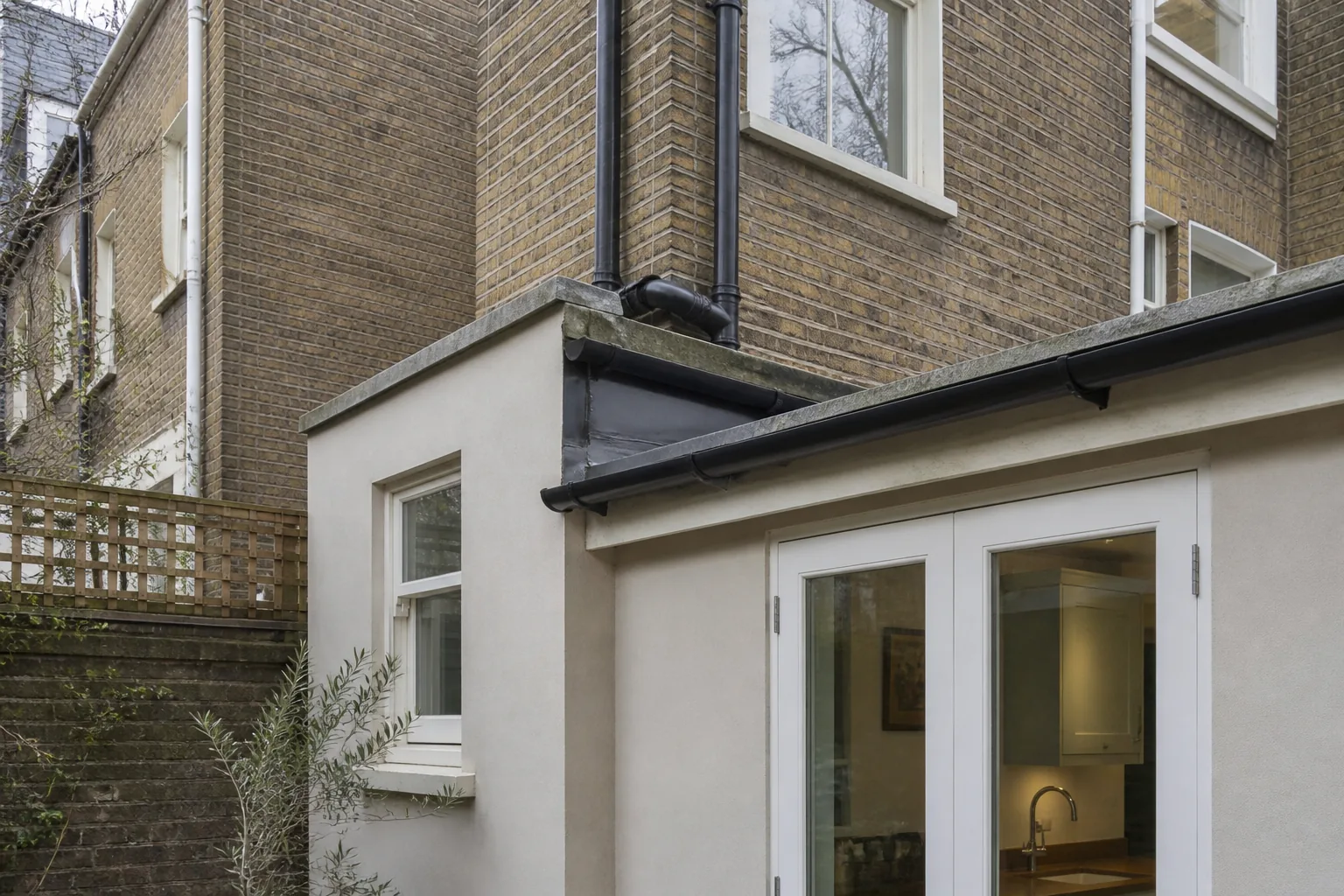
Debris does not arrive on a reliable timetable. Wind can fill an exposed edge quickly, while sheltered damp areas may retain moss and fine deposits. Review recurring problem points and visible condition, particularly after periods that move nearby material, instead of assuming a yearly date will suit every elevation.
Nearby trees, roof moss, gutter shape and exposure can all affect how quickly material accumulates. A visible symptom is more useful than applying one fixed timetable to every address.
A clear service sequence
Quick answers
No. Describe its position, timing and any visible debris or damage. Those observations are enough to begin separating a likely channel-clearance need from a pipe, drainage or repair concern.
It should identify the included elevations and levels, accessible channel clearance and any reachable outlet opening. Exclusions such as repairs, concealed pipework and below-ground drainage should remain clear.
No. Only the accessible runs selected and agreed form the cleaning scope. Other elevations may be unrelated to the concern or have different access conditions requiring another decision.
Repair is not part of routine debris clearance. Cracks, loose brackets, failed seals and displaced channels need their own assessment, even when cleaning the surrounding accessible run is also suitable.
Mention gates, narrow passages, additions, shared routes, boundaries and anything directly below the eaves. Safe ground-level photographs of whole elevations can help show how those features relate.
Only loose moss already in an accessible agreed gutter is part of routine clearance. Work on the roof surface or fixed growth is a different task and is not implied.
Uxbridge service area
Nearby gutter-cleaning pages
Before booking
The agreed service removes leaves, loose moss, silt and ordinary fragments from accessible gutter channels. Reachable outlet openings can be added where specified. It does not include repairs, deep downpipe work, underground drainage or specialist access unless separately assessed and arranged.
Name the elevation and roof level, then say whether water crosses the edge, escapes near a joint or gathers around an outlet. Mention when it occurs and provide safe ground-level images if possible. There is no need to diagnose it yourself.
Yes, provided those are the agreed accessible runs relevant to the request. A limited scope can be clearer than automatically adding rear or side gutters. Their condition and access can be considered separately if there is a reason to include them.
Explain the route when enquiring, including any limits on movement and the area below the gutter. Access arrangements need to be suitable for the proposed work. If they are not, the rear elevation may require another plan or be excluded.
Not reliably. Debris removal may reduce backing up, but a crack remains a physical defect and can continue leaking. The damaged fitting needs separate repair assessment, and its condition may also influence whether nearby cleaning is suitable.
Only after the structure and surrounding access have been assessed. Its projection, material and position can affect the upper run. No standard answer applies from the property description alone, so that elevation must be agreed specifically.
Once an agreed reachable mouth is free, continuing poor flow can suggest a deeper restriction or a problem farther along the drainage route. Those concealed areas fall outside routine channel cleaning and need a suitable separate assessment.
Loose organic growth and associated debris within an accessible agreed channel can be cleared. Its presence does not establish the condition of the downpipe or roof. Fixed growth elsewhere and any damage require different consideration.
Images may not show height accurately, hidden boundaries, surface condition or the complete route beneath a run. They are useful for planning, but accessibility depends on the actual address and can only be confirmed against those conditions.
There is no single interval for every home. Nearby growth, exposure, roof condition and previous accumulation all affect timing. Watching known trouble spots and responding to visible build-up or repeated spillover provides a more property-specific guide.
Discuss the actual roofline
The cost reflects the gutters actually requested and accessible: their number, approximate length, level, outlet work and surrounding conditions. Accurate descriptions can reduce uncertainty before a visit. Any repair, deeper pipe clearance, below-ground drainage work or specialist access falls outside the routine figure unless separately assessed and agreed.
