
Radiator Cold at the Bottom: Sludge, Air or a Bigger Heating Problem?
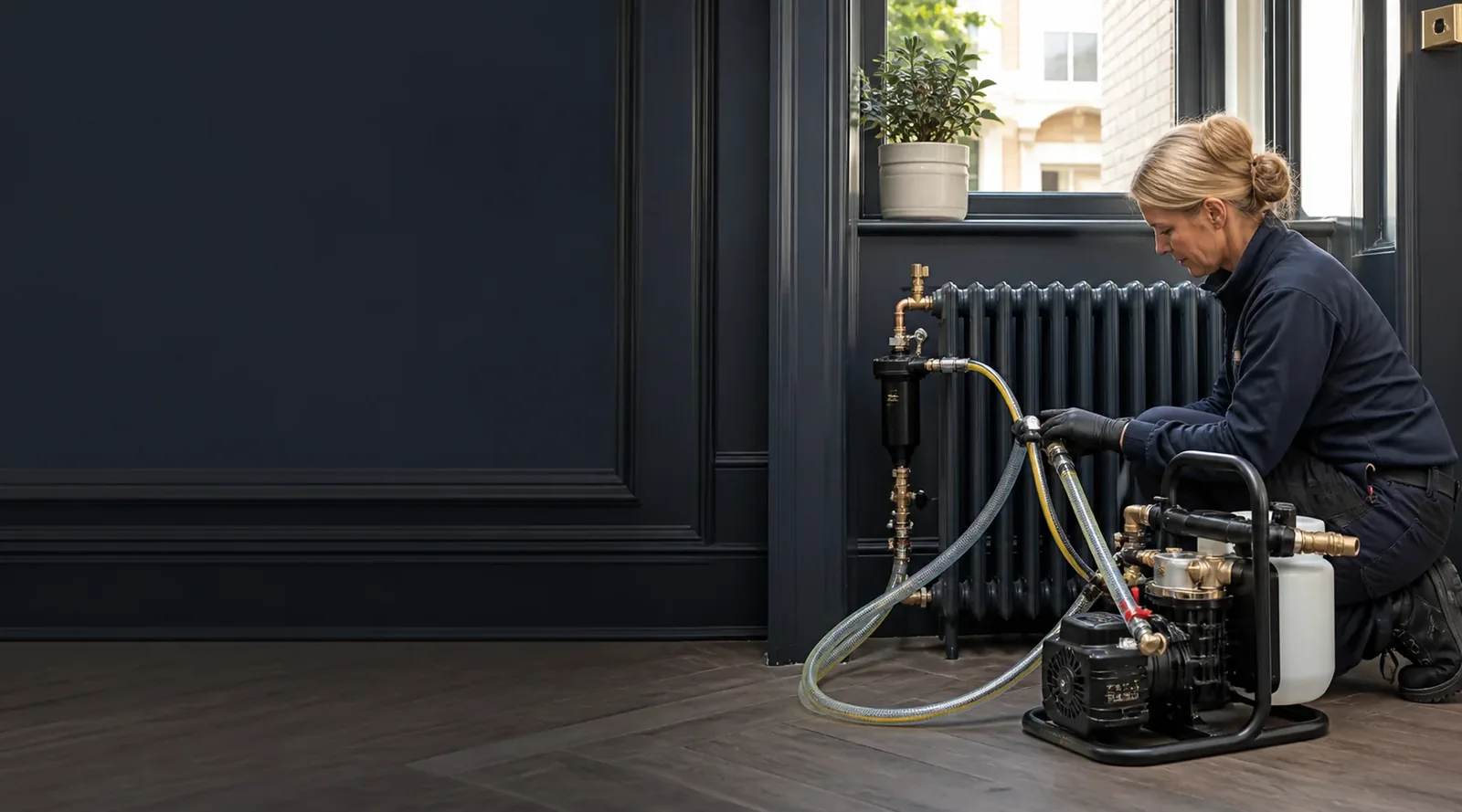
A radiator that is cold at the bottom but warm at the top usually has restricted water flow through its lower channels. Magnetite sludge is a common cause, but it is not the only one: a partly closed or stuck valve, poor balancing, a weak pump or badly arranged pipework can produce a similar pattern. Bleeding is unlikely to cure a cold bottom because trapped air normally collects at the top. Before paying for a power flush, compare this radiator with the rest of the system and check the simple controls.
Read the temperature pattern before touching anything
Run the heating long enough for it to settle, then compare radiators carefully with the back of your hand without touching exposed pipework that may be very hot. A distinct warm band across the top with a cool lower third suggests sediment. One cold vertical edge points more towards a flow problem through that radiator. If the inlet pipe is hot but the outlet stays cold, the valve or internal passage may be restricting circulation.
If every radiator is only lukewarm, the individual radiator may be innocent. Check the thermostat demand, programmer and boiler display. A system-wide problem belongs with a boiler diagnostic visit, particularly if there is an error code, unusual noise, loss of pressure or repeated shutdown.
Why sludge settles at the bottom
Heating systems contain steel radiators, water and oxygen. Corrosion can create black magnetite particles. These circulate, collect in slow-flow areas and eventually form a dense deposit in the radiator’s lower waterways. Repeatedly topping up a sealed system introduces fresh oxygenated water and can accelerate corrosion; a pressure loss therefore deserves investigation rather than routine refilling.
Sludge can also affect pumps, valves and boiler heat exchangers. That does not mean every cool patch justifies flushing the entire property. Diagnosis should establish whether contamination is local, widespread or merely one factor alongside poor balancing.
Checks a householder can make without draining the system
- Confirm the heating is actually calling for heat and note any boiler message.
- Open the thermostatic radiator valve to its highest setting and make sure curtains or furniture are not trapping the sensor.
- Check that the lockshield cap has not been disturbed; do not turn it at random if the system was previously balanced.
- Compare the affected radiator with the nearest and furthest radiators.
- Record whether the problem began after building work, a new boiler, a radiator replacement or a long summer shutdown.
A thermostatic valve pin can stick after months in one position. Removing only the plastic head may expose the pin on many designs, but models differ. Do not loosen the metal valve body, union nuts or gland. If the pin does not move gently, book radiator repair or replacement instead of using pliers and risking a leak.
Why bleeding may make no difference
Bleeding releases air from the top. It is appropriate when the top is cold, the radiator gurgles and the lower section warms. With a cold bottom, opening the bleed screw may release only water and reduce pressure without shifting sediment. Never remove the screw completely, and do not bleed a hot system.
If you have already bled several radiators, check the boiler pressure only when the system is cool and follow the appliance manual. Continual pressure loss, water from a relief pipe or the need for frequent topping up calls for professional attention.
Balancing, local flushing and a full power flush
Balancing adjusts flow so nearby radiators do not take most of the hot water. It is a measured process using the lockshield valves, not simply opening every valve. It suits a system where radiators warm at different speeds but are internally clear.
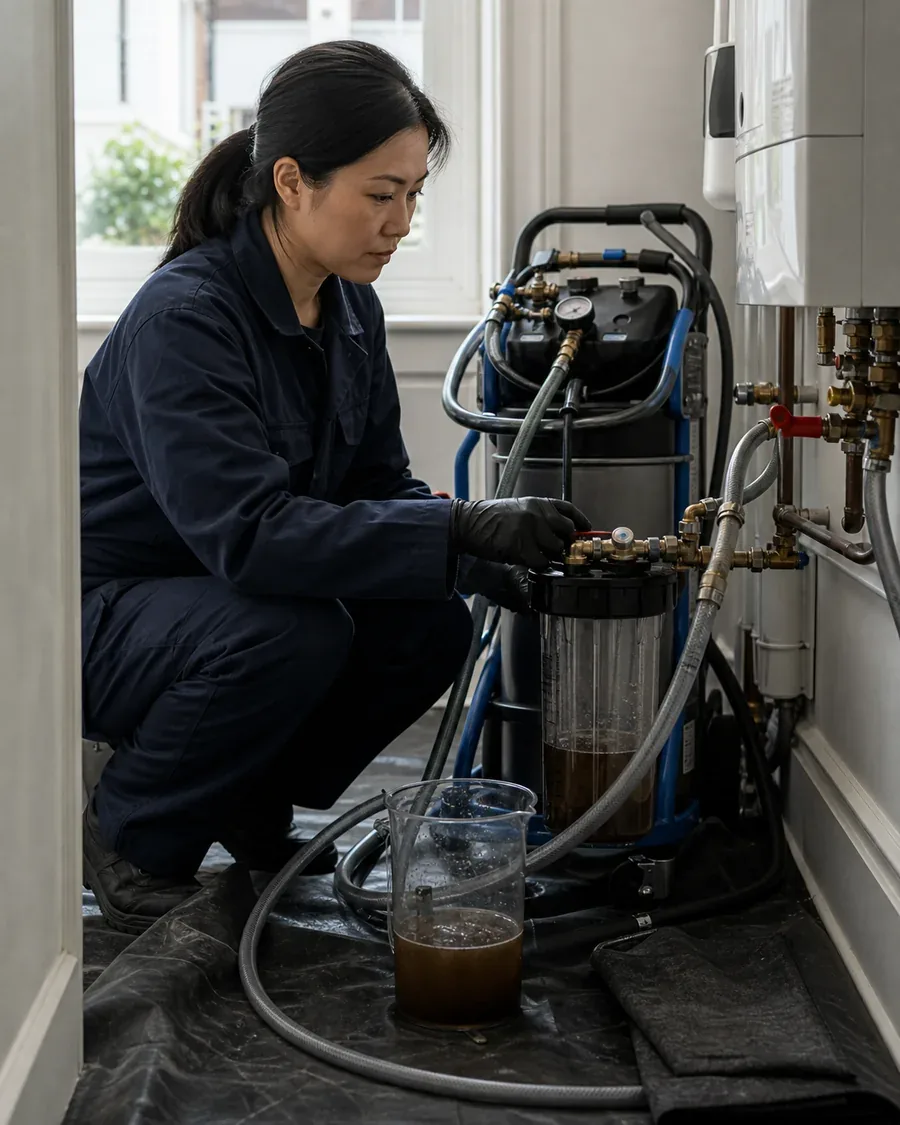
A single contaminated radiator can sometimes be isolated, removed and flushed outside. The engineer must protect floors, cap pipework and assess whether the deposit is only local. A central-heating power-flush assessment is more credible when several radiators have cold lower areas, dirty bleed water, noisy circulation or recurring contamination. Cleaning chemicals and magnetic collection equipment should be chosen for the system materials.
Evidence to ask for before agreeing to a flush
Ask what observations support the diagnosis. Useful evidence includes temperature comparisons, water samples, magnetic debris, restricted flow and the number of affected emitters. Ask whether valves, pump performance and balancing have been checked. A quotation should state how radiators are treated, how vulnerable components are protected, whether inhibitor is added afterwards and what result is realistically expected.
Old radiators can reveal pinhole leaks after deposits are disturbed because corrosion may already have thinned the metal. That is not proof that cleaning caused sound metal to fail, but it is a risk the provider should discuss before work begins. Very deteriorated radiators may be better replaced.
When the problem is bigger than one cold patch
Call promptly if there is water near electrical fittings, a boiler fault, rapid pressure loss, banging, an overheating smell or a leak at a valve. Turn the heating off if water is escaping and keep people away from hot water. For pipework and leak issues, heating and plumbing support is the more relevant route than another attempt at bleeding.
Use the heat pattern as a triage clue: a cold top suggests air, a cold bottom suggests restricted circulation, and a cold panel supplied by a hot pipe suggests a valve or flow issue. Use the pattern to guide diagnosis, but have the whole system checked before committing to an expensive treatment.
Do not confuse a cold radiator with a cold room
A radiator can be hot and still fail to heat a room if it is undersized, covered, boxed in or fighting severe heat loss. Conversely, a radiator with a modest cool strip may be delivering useful heat. Judge the room temperature, radiator surface pattern and system behaviour together. If a room never reaches its thermostat setting, ask whether emitter output and building heat loss were considered, especially after an extension, insulation change or switch to lower flow temperatures.
Reflective foil, decorative covers and moving furniture are not remedies for internal blockage. Covers can also affect thermostatic valve sensing. Make one reversible change at a time and compare the room under similar weather and thermostat conditions.
After treatment, insist on commissioning evidence
A flush is not finished when dirty water stops appearing. The engineer should restore correct pressure, vent air, confirm circulation, rebalance where required, check for leaks and add the correct inhibitor concentration for the system. Ask what ongoing check is recommended and keep the service record. If the cold area returns within weeks, the cause may be ongoing corrosion, poor system design or debris that was not fully removed.
Never rely on radiator water colour alone. Clear water can still have chemical imbalance; black water can come from a small local pocket. A system assessment combines samples with temperature and flow evidence.
