
Fuse Box Keeps Tripping: A Safe Room-by-Room Fault Check
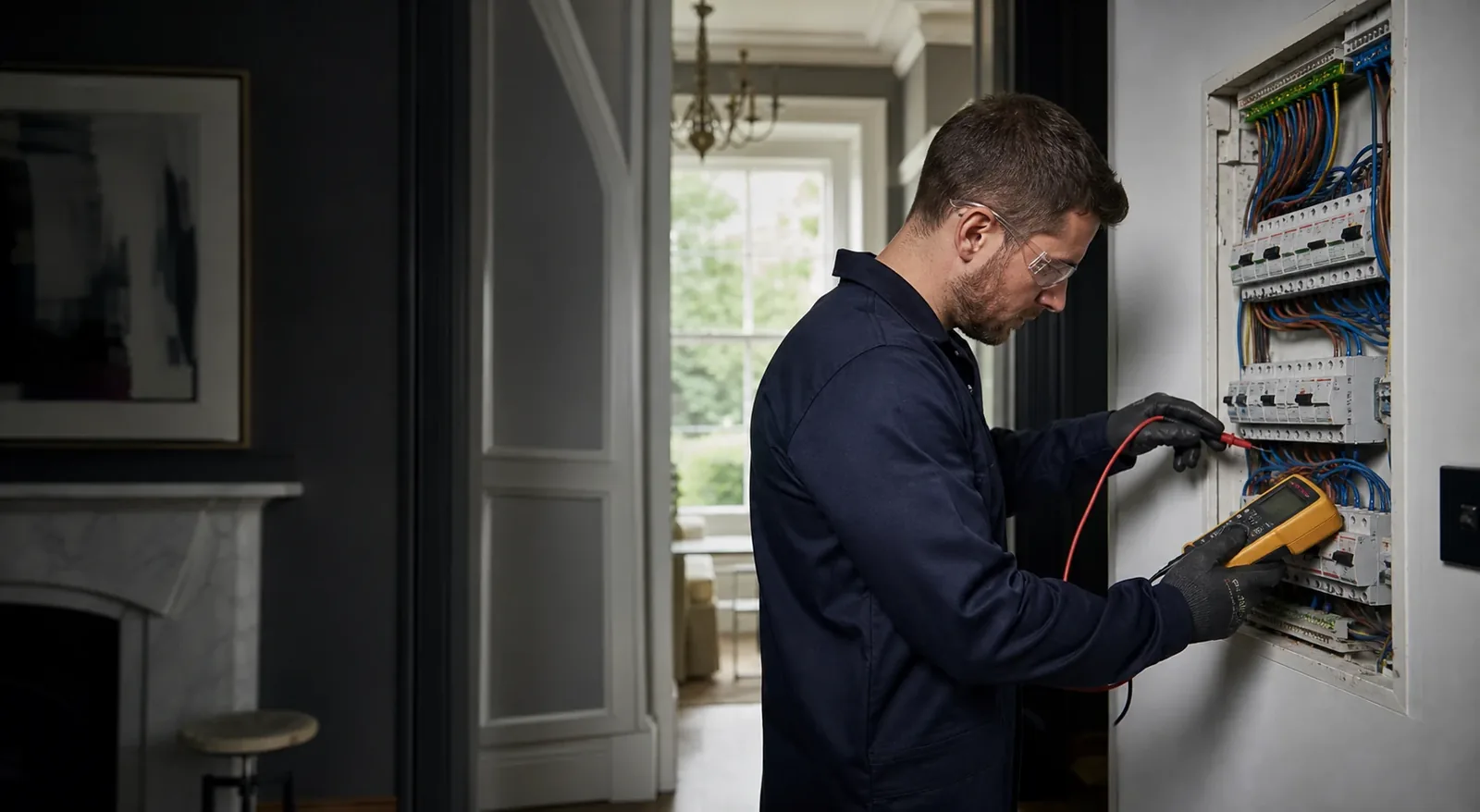
If the fuse box keeps tripping, leave the affected circuit off when there is a burning smell, heat, buzzing, visible damage, water near electrics or a person has received a shock. Otherwise, you can safely note which protective switch moved and unplug portable appliances before one controlled reset. Do not repeatedly force the switch back on. Tripping is a safety response, not a nuisance to bypass.
First identify what actually tripped
Modern consumer units may have circuit breakers, RCDs, RCBOs or a combination. Photograph the board before moving anything and read the labels. A single breaker may indicate one circuit; an RCD may disconnect several. Old or unclear equipment should not be dismantled. Never remove the cover.
If the board is hot, damaged, crackling or smells burnt, keep away and call a qualified electrician. Electrical Safety First lists arcing sounds, burn marks, overheating and repeated tripping as warning signs that should not be ignored.
A safe room-by-room isolation check
- Switch off and unplug ordinary portable appliances on the affected circuit.
- Leave fixed appliances, damaged plugs and anything difficult to reach alone.
- With dry hands and a dry floor, reset the protective device once.
- If it stays on, reconnect one known-good portable appliance at a time.
- Stop when the fault returns; leave the suspect item unplugged and label it.
This check is for information, not proof. A fault can be intermittent and an appliance can trip only when heating, pumping or under load. If the circuit trips with everything portable disconnected, leave it off and book an electrical fault-finding visit.
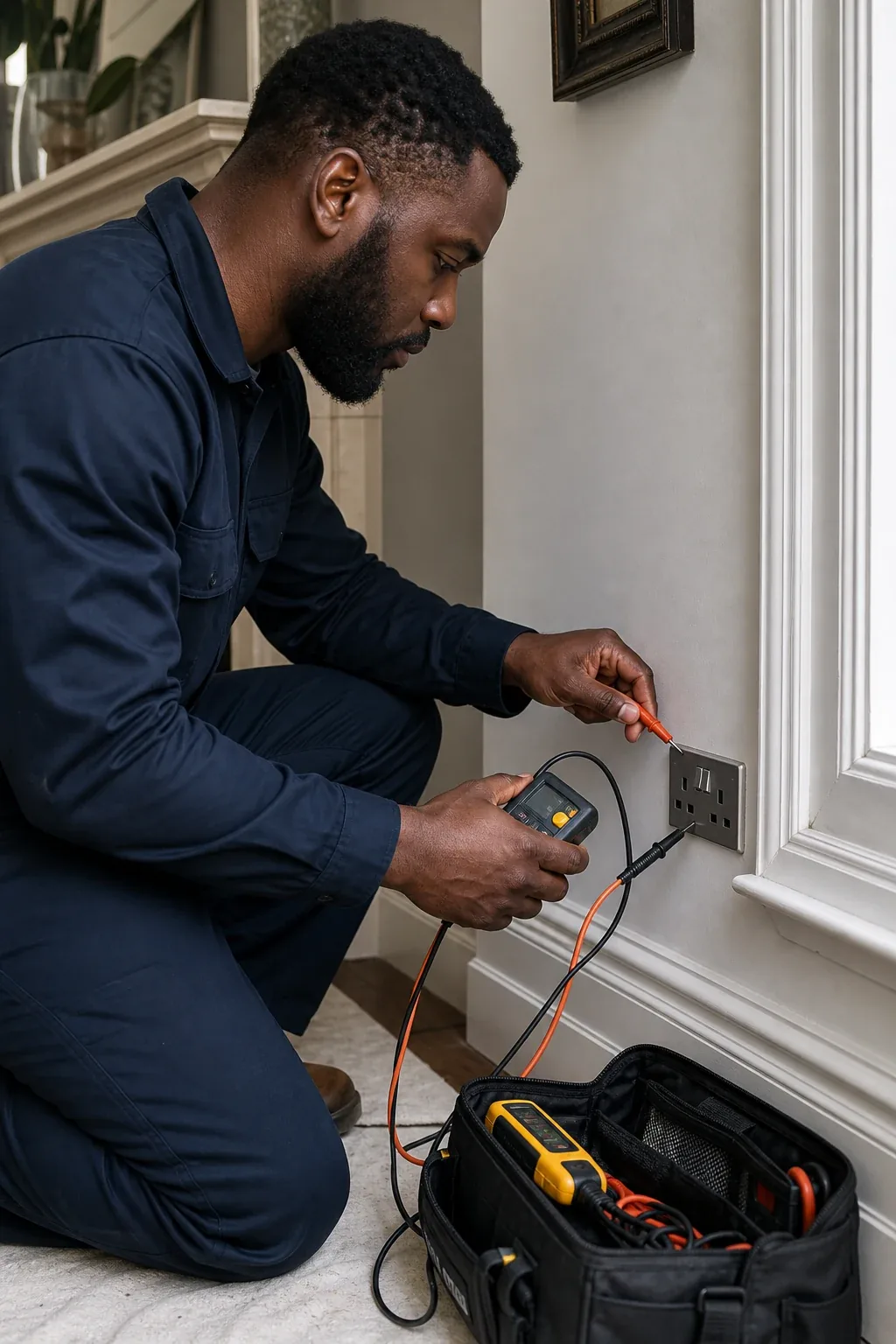
What the timing tells you
It trips immediately
An immediate trip can indicate a short circuit, serious insulation fault or an appliance still connected. Do not keep testing. A recent nail, screw, leak or DIY alteration increases the urgency.
It trips after several minutes
Heating elements in kettles, ovens, washing machines and immersion heaters may fail only after warming. Record which devices were operating. The appliance may need an appliance repair specialist, but the fixed wiring must be considered if the evidence is unclear.
It trips during rain or after a leak
Outdoor sockets, lights and damp junctions are possibilities. Do not touch wet electrical equipment or investigate outdoors in bad weather. Isolate if safe and arrange urgent inspection.
Overload and earth leakage are different problems
An overload occurs when demand exceeds what a circuit and protective device are designed to carry. Earth leakage means current is escaping from its intended route; an RCD detects an imbalance and disconnects supply. Both can appear as “the fuse box tripped”, but the diagnosis and remedy differ.
Do not solve overload by fitting a larger breaker or fuse. Protective ratings relate to cable and circuit design. Changing them without engineering assessment can remove protection and create a fire risk.
Why kitchens create confusing patterns
Kitchens combine high-power appliances, water and several circuits. A kettle, toaster and washing machine may not all share the same route. Integrated appliances may be connected at inaccessible points. Do not pull a heavy machine across a wet floor or reach behind it while energised.
Write down the programme stage. A dishwasher that trips only when heating differs from one that trips as soon as the door closes. That detail helps decide whether appliance diagnosis or fixed-wiring testing comes first.
When the consumer unit needs assessment
Repeated tripping does not automatically mean the board needs replacing. The protective device may be correctly responding to a downstream fault. An electrician should test the circuit and device rather than sell a new board on symptom alone.
A consumer-unit assessment becomes relevant where equipment is damaged, lacks appropriate modern protection, has no capacity for planned work or an inspection identifies defects. Any replacement must be designed, installed, tested and certified correctly.
Rental property: document and report
Tenants should report faulty wiring and unsafe sockets promptly in writing. GOV.UK states that landlords must keep the electrical system safe and supplied appliances safe. Include photographs of the board position, the time of the trip and what was running; do not open equipment to provide evidence.
Information that saves diagnostic time
- Which switch moved and its label
- Whether it resets with appliances unplugged
- Weather, leaks or recent drilling
- Appliances running and their cycle stages
- Any heat, smell, sound or visible marking
- How often the event occurs
Restoring power is secondary to finding why the protective device operated under load. It is to preserve the warning, reduce immediate risk and give a competent person a clean sequence of facts. One controlled reset can distinguish a transient event; repeated tripping needs a diagnosis.
Do not use trial-and-error on safety-critical circuits
Circuits serving smoke alarms, medical equipment, heating controls or security systems need special care. Tell the electrician what loses power before isolating anything. If a vulnerable person depends on powered equipment, follow the equipment provider’s outage plan and seek urgent help rather than continuing a household test.
Never hold a breaker in the on position, tape it up or replace wire fuses with makeshift material. Do not use an extension lead from another room as a permanent workaround, particularly across wet areas, doors or stairs.
After the fault is found
Ask for the test result and exact remedial work, not merely “all sorted”. A repaired circuit should be appropriately tested. New work may require certification depending on its scope. Keep documents with the property records and tell a landlord or future electrician about water ingress or cable damage.
If an appliance caused the trip, label it and prevent reuse until repaired or disposed of responsibly. A reset that now holds does not prove the appliance is safe; intermittent insulation faults can disappear when cold or dry.
Power cuts and supplier faults
If neighbouring properties and street lighting are also off, the issue may be outside your installation. Check the distribution network operator’s outage information using a charged phone. Do not open the consumer unit or assume the absence of power makes damaged wiring safe. If only your property is affected, preserve the position of protective devices for the electrician.
What not to photograph or touch
A clear picture of the closed consumer unit and switch positions can help, but never remove a cover for a better photograph. Keep hands away from exposed conductors, damaged accessories and water. If a burning smell persists after isolation or smoke appears, leave the property, call emergency services when necessary and warn others. The diagnostic convenience of a close-up image is never worth approaching an active electrical hazard.
