
Rats in the Garden: What Attracts Them and What to Do First
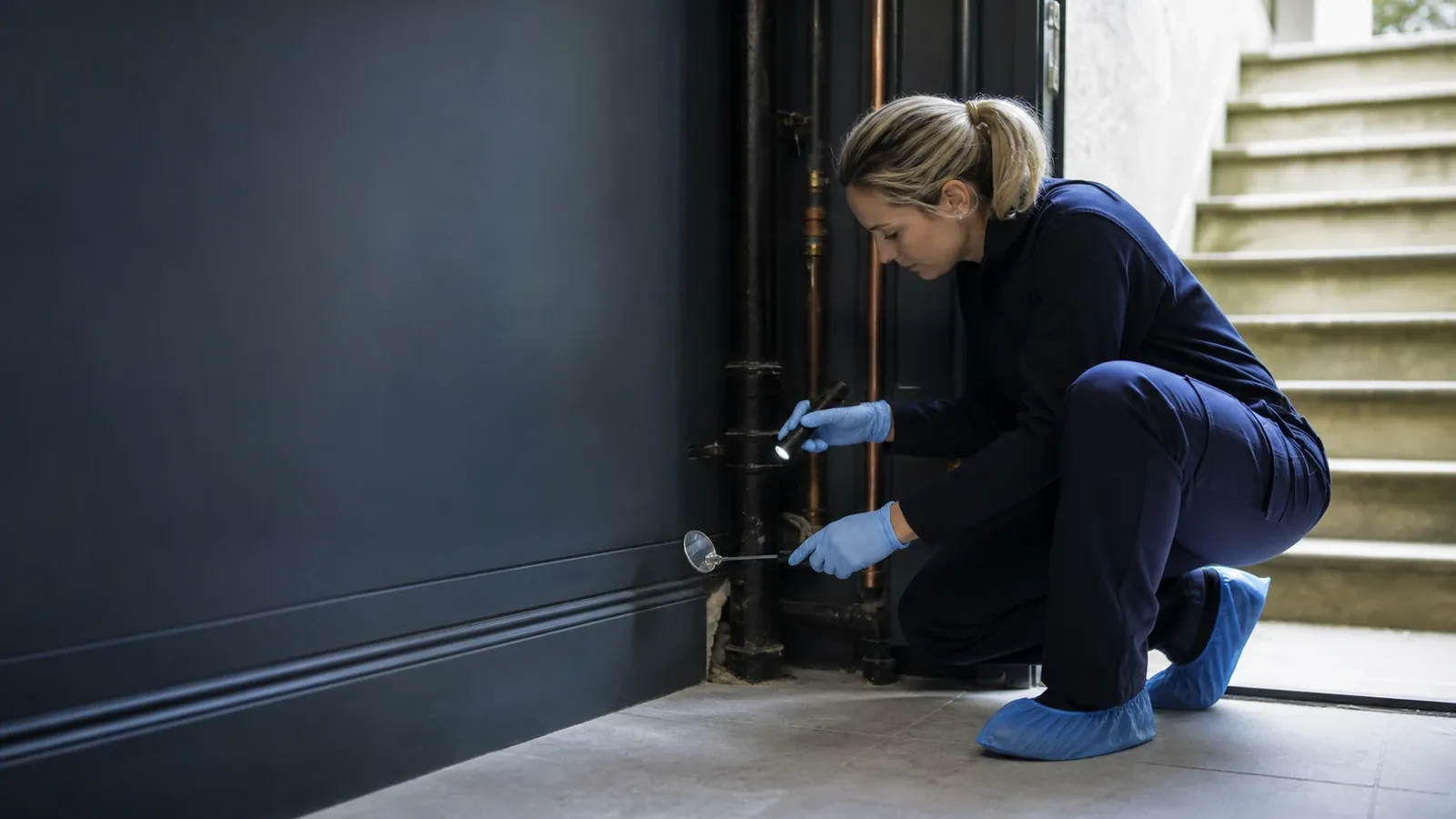
Rats visit gardens for food, water and shelter. Remove accessible feed and rubbish first, secure bins and compost, clear dense harbourage and inspect routes to the building. Do not scatter poison or seal an active burrow without identifying the species and context. A rat seen once may be passing through; repeated daylight sightings, fresh droppings and active burrows justify prompt professional assessment.
Find the resource before chasing the animal
Check bird feeding, pet food, fallen fruit, open compost, rubbish bags, barbecue residue and chicken feed. Water can come from ponds, dripping taps and trays. Shelter includes decking voids, sheds, dense ivy and stored materials against fences.
Stop feeding birds temporarily if seed is accumulating on the ground. Store feed in robust sealed containers and clean spills. Do not create a sudden inaccessible food source while leaving indoor routes open; inspect the house perimeter at the same time.
Signs that distinguish a route from a nest
A route may show repeated narrow runs, greasy marks at a gap or droppings along cover. An active burrow has a clear entrance, fresh soil and footprints or smooth edges. Do not put your hand inside. Photograph from a safe distance and check whether the opening is beneath a shed, decking, compost or a structural foundation.
What to do in the first 24 hours
- Keep children and pets away from droppings, burrows and traps.
- Secure waste and remove ground-level food.
- Photograph signs and note times and routes.
- Check doors, drains and service penetrations into the house.
- Contact the council or a rat-control professional if signs are repeated or close to the building.
Clean droppings without making dust
Do not sweep or vacuum dry droppings. Ventilate enclosed spaces, wear disposable gloves, dampen contamination with an appropriate disinfectant and wipe it up. Follow product contact time and disposal instructions. Heavily contaminated sheds, insulation or food areas need professional cleaning advice.
Why poison is not a casual garden product
Rodenticides can harm pets, wildlife and predators that eat poisoned rodents. They have label restrictions and require secure placement, monitoring and carcass recovery. A bait box is not automatically safe merely because it has a lid. Professional control should document risk, product, location and follow-up.
For a non-chemical or integrated approach, ask about habitat reduction, proofing, traps and monitoring. The non-toxic pest-treatment options page is a useful comparison when poison exposure is a particular concern.
Drains deserve attention when the route makes sense
Rats can exploit damaged drainage, but not every garden rat came through a drain. Warning signs include activity around inspection chambers, recurring soil disturbance near pipes, drain smells or evidence inside ground-floor toilets. Do not enter a chamber or improvise smoke tests. A drain-rat investigation is more specific than surface baiting where drainage defects are suspected.
Proof the building, not the whole ecosystem
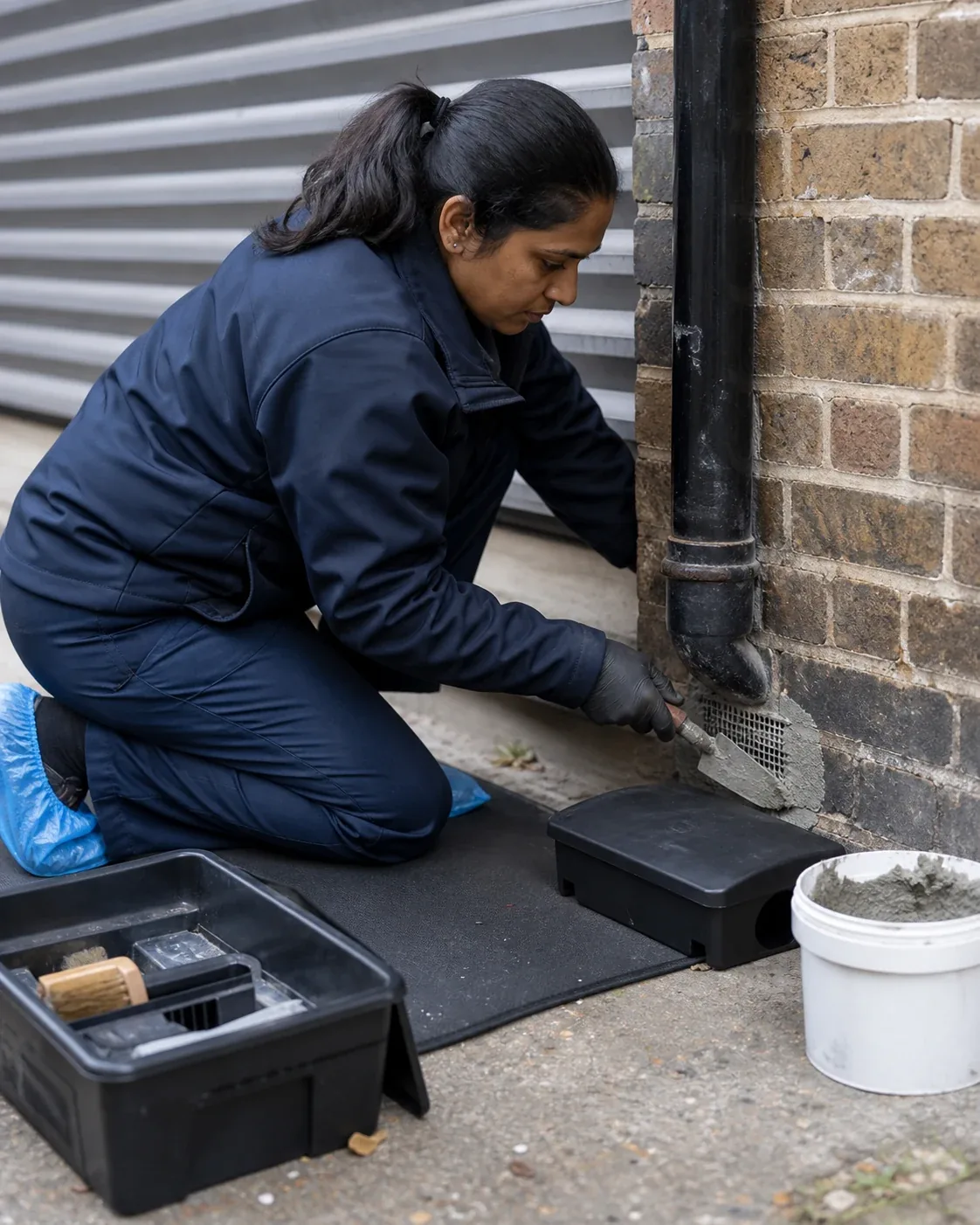
Inspect gaps under doors, broken grilles and openings around pipes. Use durable materials suited to the opening and preserve necessary ventilation and drainage. Never block a flue, air brick, weep hole or shared drain without expert assessment.
Garden tidy-up helps by exposing runs and removing harbourage, but a sterile garden is neither possible nor necessary. Store timber off the ground, keep vegetation manageable near walls and repair sheds rather than indiscriminately removing habitat across the site.
Neighbours, landlords and shared boundaries
Rats do not respect property lines. In a rented home, report structural gaps, defective bins and drain concerns in writing. In flats or terraces, activity may involve communal refuse or shared drainage. Share factual observations with neighbours or managing agents rather than transferring bait across boundaries.
What a professional visit should include
A competent survey looks for species, activity level, food, harbourage, entry points, drain involvement and risks to non-target animals. Ask what proves success, how often devices are checked, who removes carcasses and which repairs prevent recurrence. For uncertainty between rodents or wider pest activity, start at the pest-control service hub.
When a daytime rat is significant
Daylight alone does not prove a huge infestation; disturbance, easy food or seasonal pressure can alter behaviour. But repeated daytime sightings, animals entering the home, gnawed cables, extensive droppings or a burrow beside foundations raise urgency. Keep records and act before the route becomes established.
The first useful action is not buying the strongest product. It is removing resources and learning the route. Control without food management invites replacement animals; tidy-up without proofing leaves the same doorway open.
Burrow closure comes after activity assessment
Filling a hole does not establish that it is inactive. Animals may excavate beside it, become trapped or divert towards a building. A professional can monitor use and choose timing. Never pour fuel, bleach, boiling water or expanding foam into a burrow; these methods create chemical, fire and animal-welfare risks without solving the surrounding resources.
If the hole is near foundations, drainage or utility services, avoid digging. Photograph dimensions and location and ask the relevant property professional to assess structural implications.
Measure success over time
Success means no fresh droppings, sightings, feeding damage or monitored route activity across an appropriate follow-up period, alongside corrected food and access conditions. One quiet night is weak evidence. Keep dates and check the same locations under similar conditions.
After control, maintain robust bins, clean beneath bird feeders and inspect seasonal vegetation. If activity resumes, compare the new route with the original survey; recurrence can expose a missed drain or neighbouring source rather than treatment “wearing off”.
Garden wildlife can be mistaken for the target
Hedgehogs, mice, squirrels and birds may disturb feed or appear on night cameras. Identification matters because control methods, legal protections and non-target risks differ. Photograph tracks and droppings without handling them and ask the surveyor to confirm the species. Never place a device where pets or protected wildlife can reach it merely because the hole looks rat-sized.
Do not move the problem indoors
After seeing a rat, avoid carrying unchecked garden cushions, feed bags or stored boxes straight into the house. Inspect them outdoors, discard contaminated food and clean safe washable items appropriately. Keep doors closed while working near sheds. If gnawing appears on electrical equipment, isolate it and arrange competent testing; rodents can damage insulation where the defect is invisible from the plug end.
Wear robust gloves when moving garden storage, but do not reach into blind voids. Broken glass, nails and contaminated nesting material may be present. Bag waste without compressing it and follow council disposal rules. If a strong decay smell or fly activity develops in an inaccessible area, request carcass location and removal rather than masking the odour.
