
Radiator Cold at the Top: How to Bleed It and When Not To
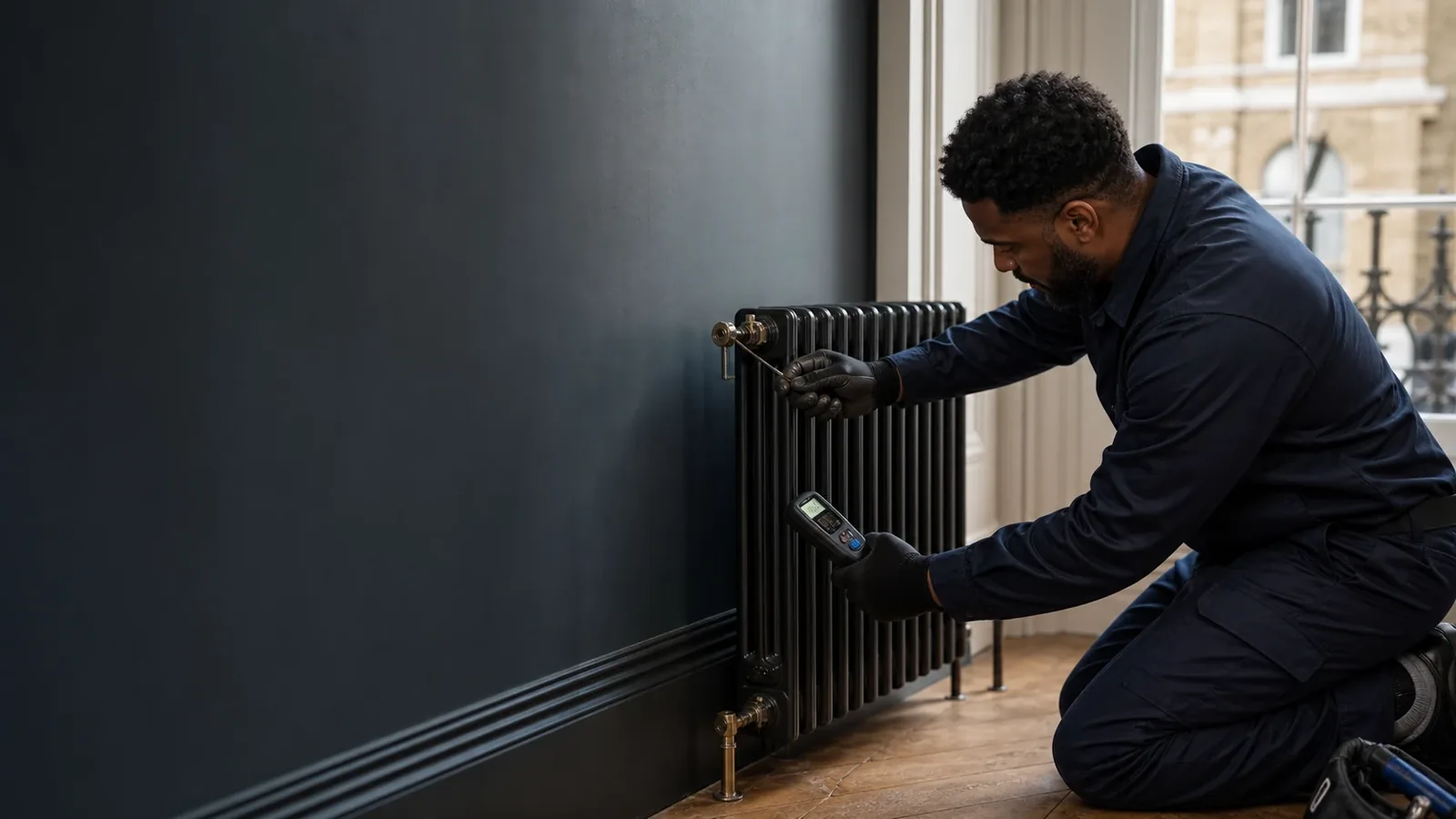
A radiator cold at the top but warm at the bottom usually contains trapped air. Bleed it only when the heating is off and the radiator has cooled, using the correct key and a cloth to catch water. Stop if the bleed valve is damaged or seized, water is very hot, the boiler repeatedly loses pressure, or you are unsure how to restore pressure for that system. Cold tops across several radiators can indicate a wider circulation or pressure problem.
Confirm that the pattern really points to air
Run the heating, then switch it off and let surfaces cool before working. A cool top band with a warmer lower area, sometimes with gurgling, supports trapped air. A cold bottom points more towards sludge or restricted flow. A radiator cold from end to end may have a closed valve, stuck thermostatic pin or balancing problem.
Where the radiator itself leaks, has damaged valves or stays cold after safe checks, use radiator repair and replacement rather than repeatedly bleeding it.
What you need — and what you do not
Use the correct radiator key or approved tool, a cloth, small container and gloves. Protect the floor. Do not use pliers on a square bleed screw; rounding it can turn routine maintenance into a valve replacement. Do not remove the screw from the valve body.
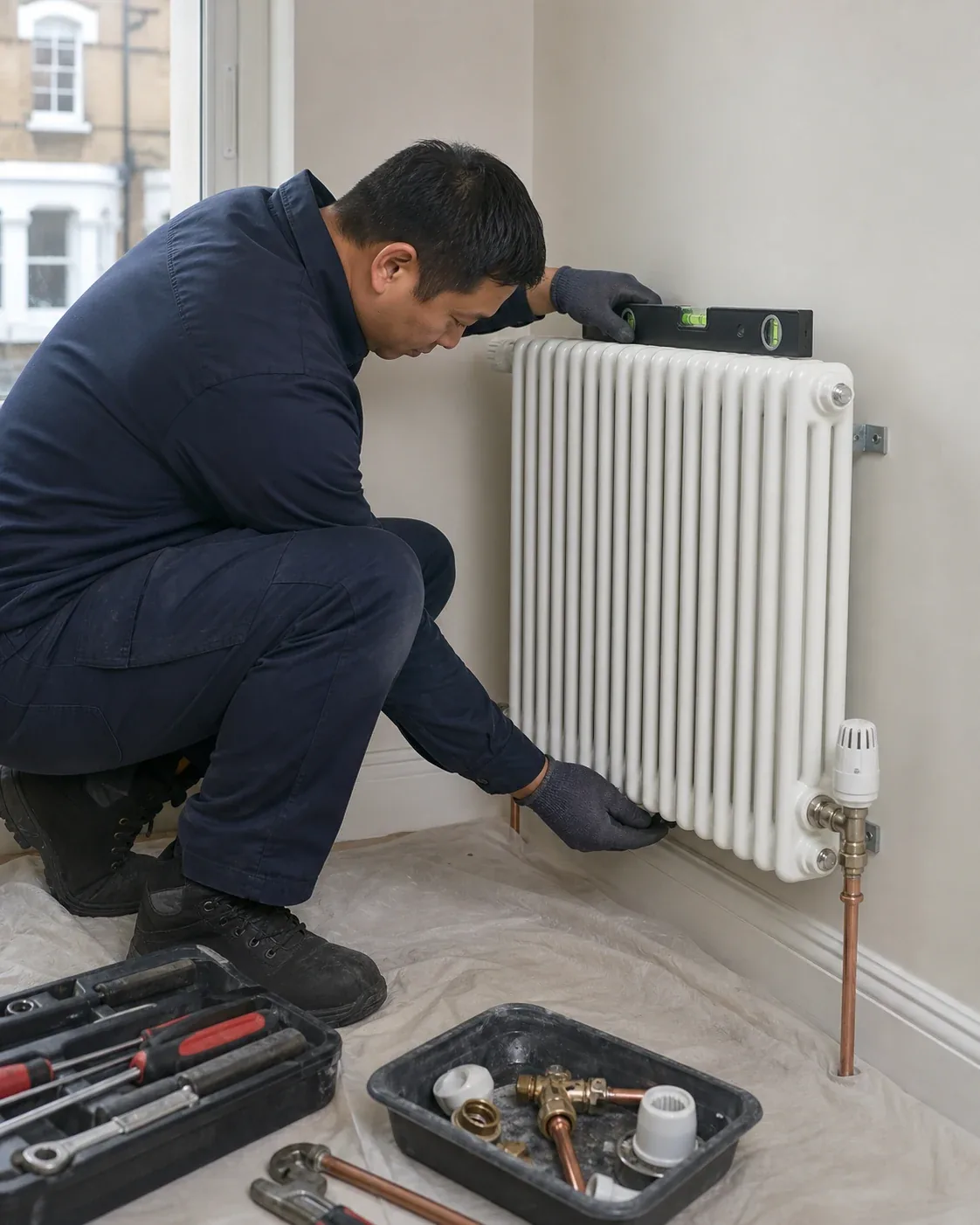
Bleeding one radiator safely
- Turn the heating off and wait for the radiator to cool.
- Identify the bleed valve near the top edge and position the cloth and container.
- Insert the correct key and turn slowly anticlockwise by a small amount.
- Listen for escaping air; keep hands away from the opening.
- When a steady trickle of water replaces the hiss, close the valve gently clockwise.
- Wipe dry and check for seepage.
Do not overtighten. A small brass screw can be damaged by force. If water appears immediately with no air, close it; bleeding was not the missing solution.
If several radiators need bleeding
Follow the boiler or heating-system instructions. A common practical approach is to begin downstairs and work upwards, but system layouts differ. Keep track of which radiator releases significant air. Repeated air in the same high point can reveal a leak, pressure issue or system fault.
Check system pressure only if your system has a gauge
Sealed systems may lose indicated pressure when air is released. Check the boiler manual for the correct cold range and repressurising method. Never guess, and never leave a filling loop open. Open-vented systems behave differently and may have no user pressure gauge.
If pressure drops repeatedly, rises excessively when hot or a relief pipe discharges, book boiler and heating diagnosis. Continual topping up adds fresh oxygenated water and may worsen corrosion.
When not to bleed
- The heating or radiator is still hot
- The valve is rounded, painted over, leaking or seized
- There is water near electrical equipment
- You cannot identify the system pressure procedure
- The boiler shows a fault or loses pressure repeatedly
- The radiator is cold at the bottom, not the top
Why air entered the system
Air may remain after filling, repairs or radiator replacement. Persistent gas can also be associated with corrosion or a system drawing in air. Bleeding treats the pocket, not the reason it returns. Note dates and volume rather than making monthly bleeding an unquestioned routine.
The balancing problem that looks similar
If the top is warm but the far end remains cool, flow distribution may be poor. Balancing adjusts lockshield valves so radiators share hot water correctly. Randomly opening every lockshield can make nearby radiators dominate. Ask for measured balancing rather than adjusting hidden valves by feel.
After bleeding: check the result properly
Restore the system according to its instructions, then run heating and allow it to stabilise. Check the radiator from top to bottom, listen for gurgling and inspect the valve for moisture. One radiator may warm more slowly than another because of its position; compare the pattern, not the first minute.
Cold at the bottom requires another route
Dark system water, cold lower sections and several poorly circulating radiators can point to magnetite or other circulation restrictions. Do not assume that automatically means a full flush. A power-flush assessment should check temperature, valves, pump and water condition before treatment is quoted.
Information to give the heating engineer
State which radiators are affected, top/bottom pattern, noises, boiler pressure cold and hot, recent work and how often air returns. Photograph the valve and boiler display without opening covers. That record separates an isolated maintenance task from leakage, corrosion or circulation trouble.
Bleeding is a useful small job when the symptom matches. The moment the valve, pressure or repeated recurrence becomes the problem, stop treating the air and diagnose the system.
Troubleshooting air that comes back
If the same radiator needs bleeding again within days or weeks, inspect visible valves and pipe joints for moisture and record boiler pressure when cold. Do not add leak sealer without professional advice; it can affect narrow waterways and components. Air can enter through a leak too small to leave a dramatic puddle, and corrosion can generate gas internally.
Automatic air vents are not household bleed screws
Boilers and heating systems may contain automatic vents inside appliance covers or near plant. Do not loosen them or remove a boiler casing. Water, electricity and combustion components create risks beyond ordinary radiator maintenance. Give the engineer the location of noises, but leave internal venting to the competent trade.
Thermostatic valves can disguise the result
Open the thermostatic radiator valve fully before comparing heat, unless the room is already too warm. Curtains, covers and furniture can trap heat around the sensor and close the valve early. A stuck pin may leave the entire radiator cool; that is different from an air pocket at the top. Do not loosen the metal valve body to investigate.
Systems with communal or district heating
Flat occupants may not control boiler pressure or central pumps. Follow building instructions, tell management before draining or bleeding where required and report simultaneous faults in neighbouring flats. A communal engineer may need to restore system pressure. Never operate shared plant or locked valves.
Why water colour is only one clue
A small amount of dark water can reflect local sediment, while apparently clear water does not prove correct inhibitor concentration. Capture a photograph only if it can be done safely without extra draining. Professionals combine water condition with temperature, flow and system history rather than prescribing a flush from colour alone.
Record the final valve condition and keep the radiator key in a known safe place. That small note prevents another occupant opening the wrong fitting later.
