
Brown Patches on a Lawn: A Visual Guide to the Most Likely Causes
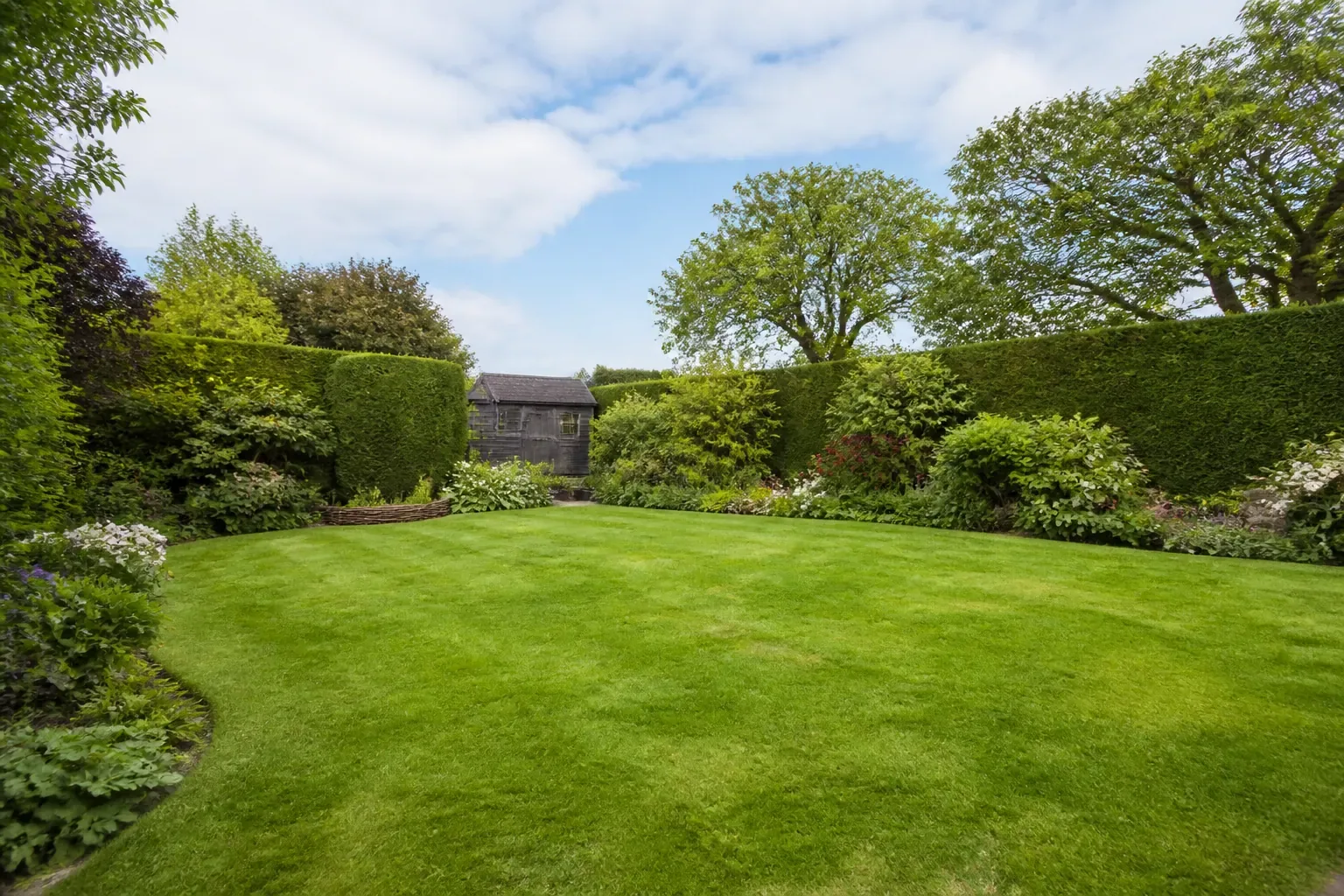
The outline, season and root condition of a brown lawn patch are more useful than colour alone. Crisp straw areas after heat often mean uneven water or shallow roots; small spots with dark green margins can follow dog urine; turf that lifts easily may contain larvae; soft spreading patches in damp weather suggest disease or drainage stress. Check soil moisture and mowing history before applying feed.
Make a patch map
Photograph from the same point every three days. Sketch sprinklers, tree canopy, slopes, paths, pet routes and recent spill sites. A perfect arc beside a sprinkler is mechanical evidence. Parallel pale stripes may follow mowing or product application. An irregular patch under a roof drip has a different water history from a circle in open grass.
Push a long screwdriver into healthy and affected soil after ordinary watering. Resistance only in the brown zone suggests compaction or dry soil. Easy entry at the surface followed by hardness can reveal shallow wetting. Avoid probing where shallow services may run.
Drought is often a distribution problem
Stressed grass turns dull before it browns, and footprints remain because blades recover slowly. Place straight-sided tins across the lawn during one irrigation cycle. Different depths show poor coverage. A few minutes every day may wet only the surface; deeper, less frequent watering is generally more useful where soil and restrictions allow.
If water runs off clay, extra minutes do not mean deeper moisture. Aeration and gradual soil improvement may be more valuable than opening the tap further.

Dog urine: look for the ring
Small straw spots surrounded by vigorous green growth often follow concentrated nitrogen and salts. Rinse a fresh event promptly with plain water where practical. Do not apply bleach, washing-up liquid, salt or improvised “neutraliser”; these can create another injury.
For recurring damage, guide the dog to a durable designated area and reseed during suitable growing weather. Questions about urination frequency belong to a vet, not a lawn chemical.
Mower scalping follows the ground
Brown crowns on humps, tight turns and slopes immediately after cutting suggest scalping. Measure cutting height on a level surface and inspect the blade. A blunt blade tears tips and gives the whole lawn a pale cast rather than isolated dead circles. Avoid removing a large share of leaf after a holiday or wet spell.
Do not mow saturated soil. Wheels compact roots and shear soft turf. An ongoing garden maintenance plan can coordinate cutting height with weather and growth.
The gentle lift test
Tug affected turf. If it peels back with little root resistance, inspect the soil interface for larvae. Chafer grubs are creamy and C-shaped; leatherjackets are grey-brown and legless. Identification and life stage matter because control timing differs.
Birds feeding do not prove an infestation; they also take worms. Count and photograph larvae in a measured area and consult a lawn-care specialist before buying pesticide or nematodes. Target species, temperature and soil moisture decide whether a biological treatment can work.
Wet-weather disease has softer clues
Fungal problems develop with prolonged leaf wetness, weak airflow, excess nitrogen or thatch. Look early in the morning for fine fungal threads, coloured margins or spots merging over days. Drought and disease can coexist where drainage varies, so a photograph alone is not always diagnostic.
Remove fallen leaves, avoid evening irrigation and improve airflow where sensible. Extra feed may create soft vulnerable growth. Seek expert or laboratory identification before an expensive treatment if the pattern is unusual.
Ask who used the garden
A sharp patch near a shed, barbecue, mower or path may be fuel, hot water, cleaner, de-icer, cement wash or fertiliser scorch. Ask everyone what occurred. Keep product details and do not hose an unknown substance towards drains or neighbouring soil.
Repair only after the cause is inactive
Rake material once you know it is dead, relieve compaction or correct water distribution, then overseed with a suitable mix. Keep seed evenly moist and protect it from traffic. New turf gives quicker cover but fails again if the soil problem or pet route remains.
Where shade, worn access, shrubs and drainage overlap, a broader gardening assessment is more useful than isolated patch repair. The reliable order is outline, moisture, roots, recent event and only then remedy.
Keep a recovery record
Photograph after treatment using the original viewpoint. Record rain and watering rather than relying on memory. New shoots at the margin, stronger root hold and no expansion are better recovery signs than a temporary green colour from feed. If the boundary continues to travel, stop adding products and revisit the diagnosis.
A lawn can show several problems at once. Split it into zones and test each theory against its own evidence. That avoids treating a dry sprinkler shadow, dog route and wet fungal corner as one mysterious disease.
Shade is a growing condition, not a disease
Grass beneath dense trees or beside a north-facing wall may thin, then expose soil that dries or stays wet depending on roots and drainage. Compare hours of direct light in spring and summer. Raising mowing height, reducing wear and choosing a shade-tolerant seed mix can help, but no grass variety thrives in permanent darkness. Sometimes a mulched or planted shade bed is the more honest design.
Tree roots compete for water, while canopy intercepts light rain. Do not sever substantial roots to improve turf. Changes around protected trees or roots near structures need appropriate advice.
Fertiliser scorch follows application geometry
Spilled granules can create a dark green margin around a dead centre; overlapping spreader passes make stripes. Keep the product label and note rate, date and weather. Brush granules from paths so rain does not wash them into one edge. Never double-apply because a treated strip is hard to see.
After suspected over-application, follow label guidance and seek specialist advice. More fertiliser cannot repair fertiliser burn. Wait for recovery evidence before reseeding, because excessive salts may remain in the root zone.
New-build lawns have hidden history
Thin topsoil over rubble, compacted construction traffic and buried debris create patches that reappear despite good surface care. Compare soil depth with a small proper inspection in several safe locations. Water that ponds beside one area or grass that repeatedly yellows in the same outline suggests a root-zone limitation.
A renovation plan may require decompaction, imported suitable topsoil and regrading rather than another bag of seed. Ask where spoil will go and how levels will protect damp-proof courses, drains and neighbouring properties.
Choose success measures before treatment
For drought, measure even moisture and stable colour. For compaction, look for improved infiltration and root depth. For larvae, repeat a measured inspection at the appropriate life stage. For repair, count germination and closure rather than judging one bright photograph. A defined measure prevents switching products every weekend and gives the lawn time to respond.
