
Is Professional Oven Cleaning Worth It? Cost, Time and Results Compared
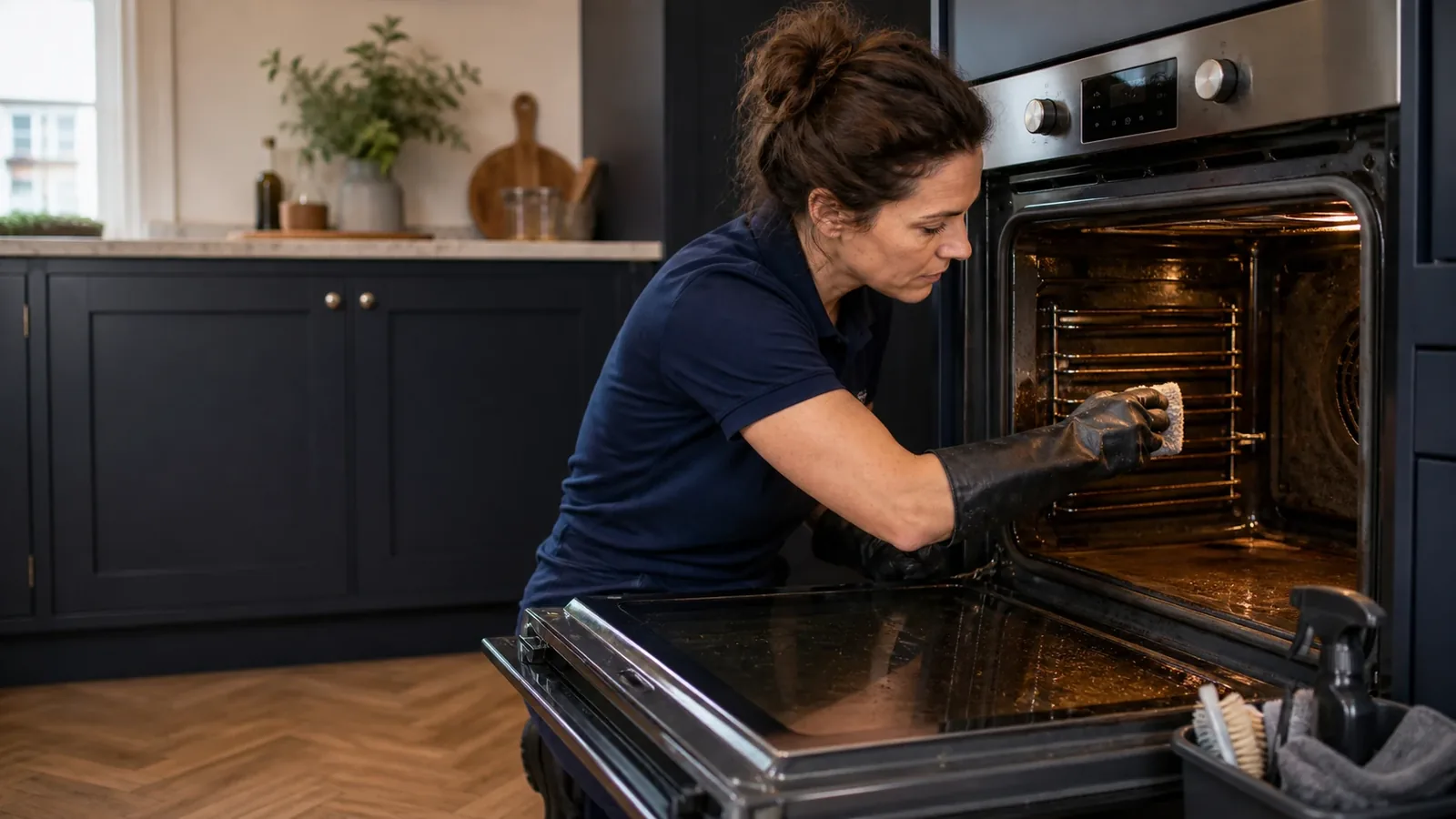
Professional oven cleaning is usually worth paying for when baked-on carbon, multiple racks and awkward removable parts would take you several hours, or when you need a predictable result before a tenancy handover. DIY cleaning is reasonable for light grease and regular maintenance. Compare the complete scope, time, ventilation and risk to finishes—not only the advertised price.
Use the cold-oven test
When the appliance is cold and isolated as its instructions require, remove the loose racks and look at four zones: door glass, cavity roof, fan cover and rack supports. Light translucent grease that wipes with an approved product is maintenance. Thick black carbon, residue behind removable glass and heavily coated supports turn the job into detailed restoration.
Check the manual before removing anything. Some doors, liners, seals and fan covers are not customer-serviceable. If glass is cracked, wiring is damaged, the door does not close or the oven trips, cleaning stops and repair takes priority.
Price the hours you will actually spend
A DIY comparison includes buying compatible product, protecting the floor, applying it, waiting, scrubbing, rinsing, drying, cleaning tools and disposing of residue. It also includes the chance that one stubborn area needs a second session. If you enjoy the work and already own supplies, that time may be acceptable.
A professional quote should say whether it covers a single or double oven, racks, trays, removable side supports, door glass and accessible fan cover. Hobs, extractors, range cookers and heavily carbonised trays are often separate. A low headline has little value until those boundaries are written.
What a cleaner can remove safely
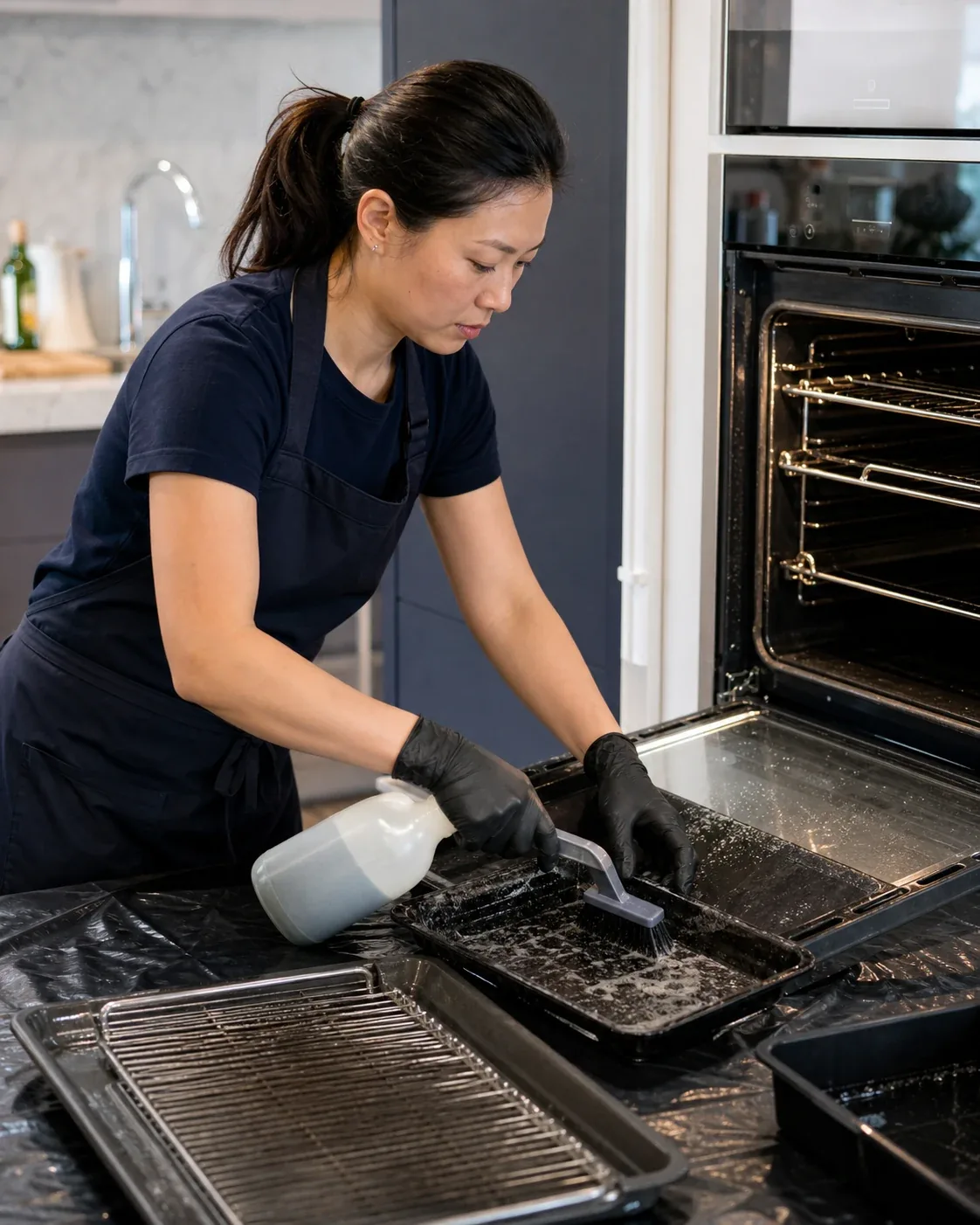
Experienced cleaners may remove manufacturer-designed components to reach grease lines, using a controlled dip-tank method for suitable racks and trays. They should photograph or remember orientation and refit every fastener correctly. Electrical elements, sensors and gas components are not casually dismantled for a brighter photograph.
Ask how aluminium, catalytic liners, self-clean panels, rubber seals and printed control markings are protected. Caustic product can discolour aluminium and damage some finishes. “Professional strength” is not a substitute for material identification.
DIY makes sense for a maintained oven
Wipe spills once the cavity is safely cool and use only products allowed by the manufacturer. Soak compatible racks separately, keep liquid away from vents and controls, and wear the protection stated on the label. Ventilate the room and keep children and pets away.
Never mix oven cleaner with bleach, descaler or another chemical. Do not line the cavity floor with foil unless the manufacturer expressly permits it; reflected heat and blocked airflow can damage enamel or elements. Avoid metal scrapers on coated glass.
Pyrolytic cleaning changes the calculation
A pyrolytic oven heats the cavity to a very high temperature and locks the door. Remove accessories that the manual excludes, wipe heavy loose deposits and follow the cycle exactly. It uses energy and can produce odour, but it may reduce the need for chemical cavity cleaning.
Do not start pyrolysis if the door, lock, seal or appliance has a fault. Catalytic liners and steam-assisted programmes are different systems. Identify which one you own; advice for one can ruin another.
Tenancy handover: evidence and scope matter
An inventory may record the oven, hob, trays and extractor separately. Cleaning the cavity while leaving greasy filters or missing racks can still create a dispute. Compare check-in photographs and tenancy terms rather than relying on a generic “professional clean required” phrase.
If the property needs wider end of tenancy cleaning, decide whether oven work is included or booked separately. Coordinate timing so the oven is not used after completion and surrounding kitchen surfaces receive their final wipe.
What results are realistic?
Grease and carbon can often be substantially removed, but cleaning cannot restore enamel already etched, scratched or discoloured. Clouding between sealed glass panels, corrosion and failed coatings may remain. A responsible provider points out permanent damage before work instead of promising “as new” under every condition.
Take before photographs in neutral light. At handover, inspect racks, corners, glass and refitted parts. The door should open and close correctly, and no loose component should remain on the worktop.
Cleaning cannot repair a fault
An oven that fails to heat, overheats, sparks, trips or displays an error needs diagnosis. Carbon may smoke, but removing it will not restore an open element or defective thermostat. Use an oven repair service for mechanical or electrical symptoms and tell the cleaner if a repair is pending.
Similarly, a gas smell is not cleaning work. Turn the appliance off, follow gas-emergency guidance and use an appropriately registered engineer.
Questions that make quotes comparable
- Which exact appliance components are included?
- Are trays, racks, hob or extractor extra?
- Which parts will be removed?
- How are floors, cabinets and sensitive finishes protected?
- Is VAT, parking and travel included?
- How long before the appliance can be used?
- What existing damage will be recorded?
For a defined visit, Alesta’s professional oven cleaning service is the relevant destination. Send photographs and the appliance type so the estimate reflects condition rather than a minimum example.
A simple value decision
Choose DIY when the oven is maintained, the manual permits the method, you have ventilation and the available time matters less than the fee. Choose professional cleaning when carbon is established, access is awkward, the appliance is large, or a deadline makes a predictable scope valuable. Choose repair—not cleaning—when operation is unsafe or faulty.
Afterwards, use trays to catch permitted spills, wipe fresh residue once cool and schedule light maintenance before carbon hardens. The best professional clean buys back a manageable starting point; keeping that starting point is what makes the cost worthwhile.
Plan the appointment around ventilation and access
Clear worktops and the floor immediately around the appliance, but leave fixed connections alone. Tell the cleaner about parking, stairs and a range cooker in advance. Keep pets in another safe room and ask how the kitchen will be ventilated while products or the dip tank are in use.
If the oven sits below a gas hob or beside delicate painted cabinetry, point that out before work. The operative should protect adjacent finishes and avoid resting hot or contaminated parts on household surfaces.
Environmental claims need specifics
“Eco-friendly” can refer to formulation, packaging, dose or disposal, and does not automatically mean harmless. Ask which products are used, whether safety data is available and how spent solution and carbon residue are handled. A product still needs correct contact time, ventilation and protective equipment.
Using less chemistry may be a preference, but mechanical effort and heat also have costs. Compare a clearly described method rather than choosing from a green label alone.
Frequency is condition-led
There is no universal six-month rule. A frequently used family oven without trays may build carbon quickly; an occasional oven wiped after spills may need professional work rarely. Inspect rather than schedule blindly. Smoke from fresh food residue calls for prompt cleaning, while electrical smoke calls for isolation and repair.
Set a simple trigger: when door glass cannot be inspected, grease reaches inaccessible edges, or routine wiping no longer controls residue, reassess the professional option.
