
Tenant Move-Out Inspection Checklist for London Landlords

A landlord’s move-out inspection should compare the property with the signed check-in record, not with an idealised “as new” condition. Work through the home in the same order as the inventory, take dated photographs, record keys and meters, and separate dirt, damage, missing contents and ordinary wear. A proposed deduction needs evidence of the starting condition, the change and the reasonable cost of putting that change right.
Before the tenant hands back the keys
Arrange the inspection for the end of the tenancy, once possessions have gone but before cleaners, contractors or new occupants alter the scene. Ask the tenant to attend if practical. Bring the check-in inventory, any mid-tenancy inspection notes, a charged phone, torch, socket tester only if you are competent to use it, and a key schedule.
Do not arrive with a list of deductions already decided. A stain reported six months earlier, a replacement appliance agreed by email or a pre-existing cracked tile can look new if the correspondence is not beside the original inventory. Put those records into one folder before entering the first room.
Start outside the front door
Photograph the door, frame, number, locks and communal threshold. Count every returned key, fob, parking permit and remote against the signed schedule. Try keys from both sides without forcing a stiff mechanism. If a lock needs attention, record the symptom separately from the checkout report; an independent inventory clerk can document condition, but should not be expected to diagnose a security fault.
In a flat, include any balcony, storage cage, parking bay or bin area granted by the tenancy. Note only areas for which the tenant was responsible. Damage in a communal corridor should not quietly migrate into the tenant’s report because it happens to sit outside their door.
Use the inventory’s room order
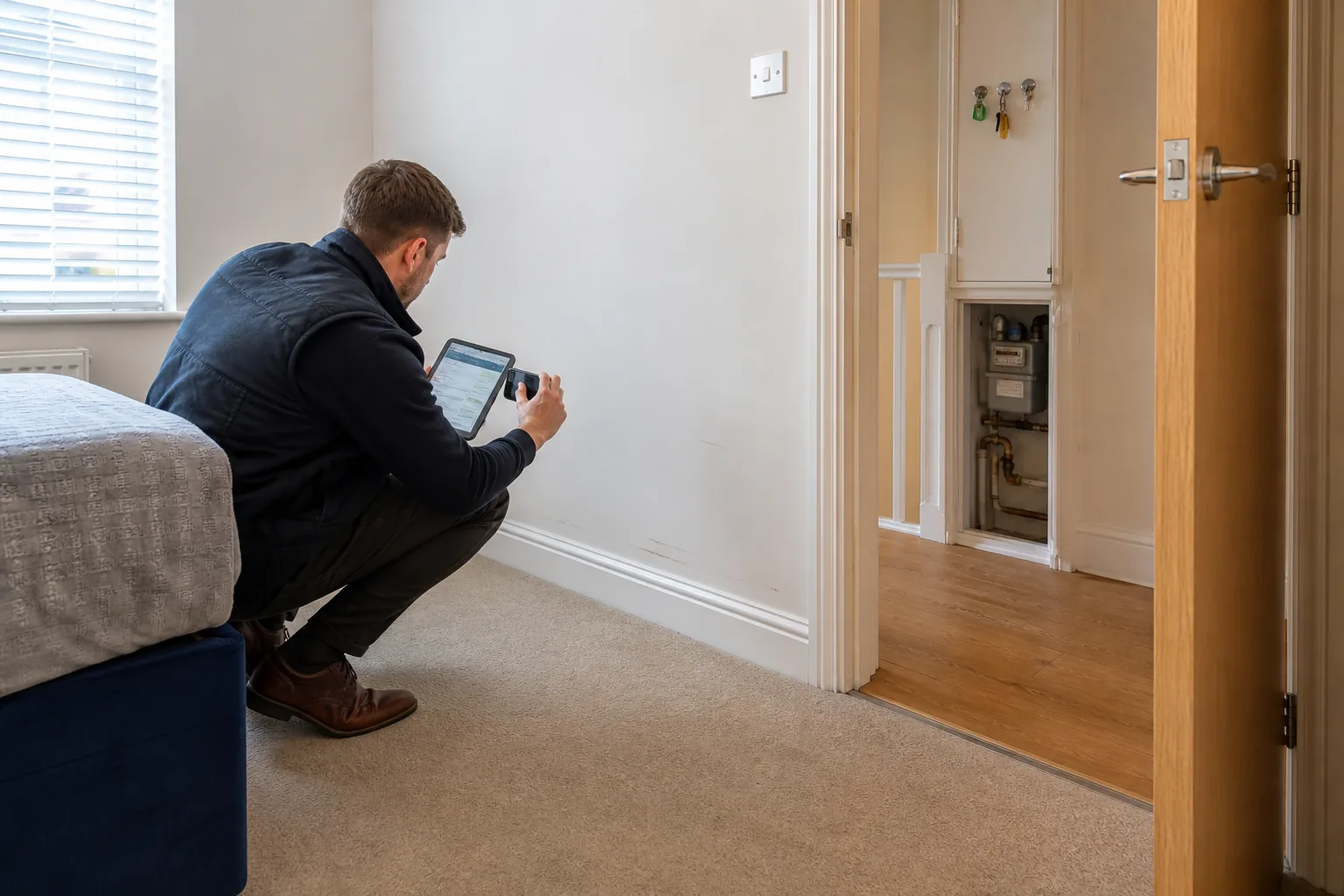
Stand in the doorway and take one wide photograph before close-ups. This anchors later images to a room. Compare walls, floor, ceiling, windows, doors, lights, sockets, fixed furniture and listed contents in the same sequence as check-in. Photograph the inventory page number or use a file-naming system so a mark in the second bedroom cannot later be confused with the first.
Descriptions should be observable: “three 4 cm dark scuffs beside the desk position” is useful; “wall ruined” is not. Include scale and context. A close-up of a chip proves the chip exists, while a wider view shows whether it is on a worktop edge, a cupboard door or an item that was already due for replacement.
Cleaning and damage require different evidence
Grease on an extractor grille, limescale on a shower screen and dust on skirting are cleaning matters. A cracked basin, torn vinyl or broken hinge is damage. Keep separate headings even if one contractor might address both. A professional end-of-tenancy cleaning service can quote for removable soil; it cannot make a worn enamel bath new or repair a failed appliance.
Check the standard recorded at move-in. If the property was described as domestically clean rather than professionally cleaned, the checkout comparison remains the documented starting standard. Avoid treating a receipt as proof that every surface was perfect; photographs and written condition are stronger evidence of the result.
Fair wear is not a single percentage
Consider the item’s age and original quality, the tenancy length, number of occupants and normal use. A light carpet in a hallway will age differently from one in a spare room. A landlord cannot reasonably charge the full price of a new item when the old one had already delivered much of its useful service.
This does not mean every change is wear. An iron-shaped burn, a door puncture or an unauthorised paint colour may require a remedy. The report should state the physical difference first. The later deposit proposal can then consider repair, cleaning, partial contribution or no claim.
Test supplied items without dismantling them
Switch on lights, operate accessible window catches, run taps briefly, flush toilets and check supplied appliances through normal user controls. Record model and any error code. Do not remove electrical covers, open a boiler case or keep running an appliance that leaks, smells hot or trips a protective device.
If something fails, note exactly what happened and whether the check-in or maintenance history mentions it. “Oven not working” is weak; “display illuminates, fan starts, cavity remains cold on the selected programme” gives a repairer something usable. Diagnosis belongs to the appropriate trade, not to an inventory adjective.
Kitchen and bathroom details that often cause disputes
Open cupboards and drawers listed in the inventory, but do not photograph private documents left behind more than necessary. Check appliance interiors, trays and removable shelves. In the bathroom, distinguish wipeable residue from failed sealant, mould within silicone, defective extraction and damp affecting the building fabric.
Report a slow drain or leak promptly rather than presenting it as a cleaning deduction. Water faults can worsen after the tenant leaves. Photograph the first visible point, isolate only where safe and arrange the relevant assessment.
Meter readings and services
Photograph each meter reading with enough surrounding detail to identify the meter and serial number. Record whether it is gas, electricity or water and note the date and time. Do not guess digits obscured by glare; take a second image from another angle. Send readings through the agreed process and keep the originals.
Check smoke and carbon-monoxide alarms using their test controls where the manufacturer permits, but do not certify them through a checkout report. A failed or missing safety device requires prompt action under the landlord’s separate obligations.
Abandoned possessions need a controlled process
Do not place belongings on the pavement or mix them immediately with clearance waste. Photograph items in position, secure the property and follow the tenancy terms and applicable notice process. Medicines, identity papers, photographs and apparently valuable objects deserve particular care.
Once authority to dispose is clear, use responsible waste removal and retain the collection paperwork. The clearance record should identify what left and when; it should never be used to conceal uncertain ownership.
Write the report before memory fills the gaps
Complete it promptly, attach images to the relevant room and invite the tenant to add factual comments. Keep the original files rather than screenshots stripped of dates. If a contractor quote supports a proposed deduction, ensure it addresses the recorded issue and does not include unrelated improvement.
The final question for every proposed claim is simple: can another person see what existed at check-in, what existed at checkout, how normal use was allowed for and why the proposed remedy is proportionate? If not, gather better evidence or withdraw the assumption.
