
Door Lock Stiff or Jammed? Lubrication, Alignment and Repair Explained

Stop forcing a stiff door lock. Test a spare key and turn the lock once with the door open. If it works freely open but binds when the door is closed, alignment is the likely starting point. If it remains stiff in both positions, examine the key and cylinder or mechanism. A key that is bending, cracking or becoming harder to withdraw should be taken out of use before it snaps.
A two-minute test that separates lock from door
Open the door and support it normally; do not lift it by the handle. Insert the best-condition key fully and turn gently. Then operate the latch with the handle. Repeat after closing the door without slamming it. Write down whether resistance occurs while lifting the handle, turning the key, withdrawing the key or releasing the latch.
This distinction matters on multipoint uPVC and composite doors. The cylinder may be sound while hooks and rollers are loaded against their keeps. On a timber door, seasonal swelling or hinge movement can shift the latch relative to the strike plate.
Try the spare key before buying lubricant
Compare both keys on a flat surface. Look for a bent blade, rounded cuts, cracks around a plastic head or a fresh copy with rough edges. A poorly cut duplicate can be the only fault. Do not file a security key by eye; use the original or obtain an authorised copy where the key system requires it.
If one key works and the other does not, retire the bad key. If both behave identically, continue with the door-open comparison. Never add pliers for leverage: the extra force is transferred to a narrow section of key inside the cylinder.
Read the rub marks
With the door open, inspect the latch, deadbolt, hooks, rollers and frame keeps using a torch. Fresh bright metal, scraped paint or compressed weather seal can reveal contact. Close the door slowly and listen for the point at which resistance begins. Do not put fingers between the door and frame.
A temporary need to pull the door towards you while turning is evidence of alignment, not a satisfactory long-term operating method. Continued loading can wear the gearbox or leave a vulnerable occupant unable to secure the property.
When a small amount of lubricant is reasonable
Check the lock or door manufacturer’s guidance first. Some cylinders accept a dry specialist lubricant; others have different requirements. Apply very little to the key or designated point, operate it gently and wipe away excess. Cooking oil, heavy household oil and a flood of general-purpose spray can trap dust or migrate onto finishes.
Lubricant will not correct a dropped door, loose keep, failing gearbox or distorted key. If the improvement lasts only a day, that is a useful symptom to report to a professional lock repair service, not a reason to increase the dose.
Timber doors after wet or hot weather
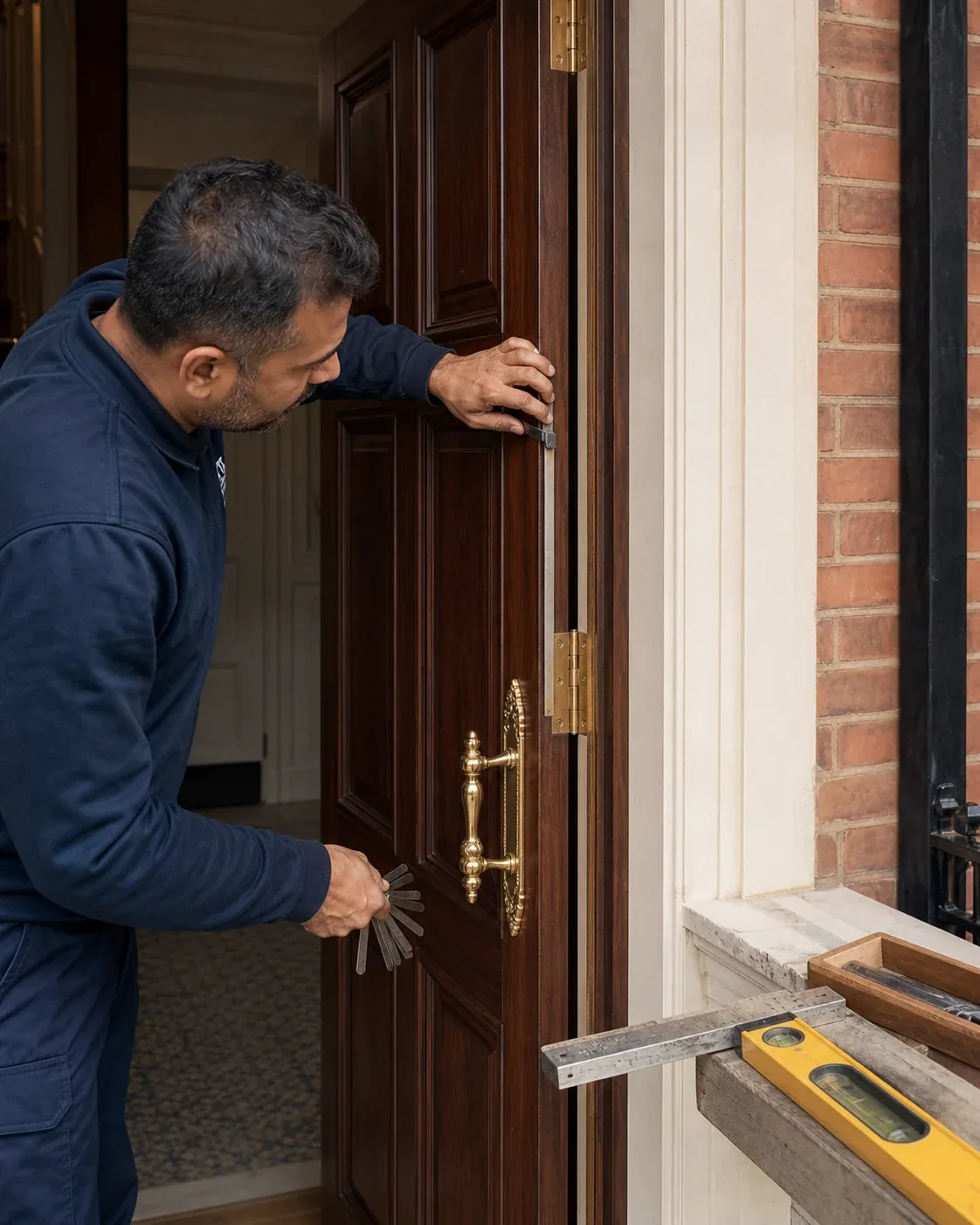
A timber door may absorb moisture and bind along an edge; heat can also move materials. Look for a continuous rub line rather than immediately planing the door. Check hinge screws and frame condition without overtightening or substituting unsuitable fixings.
Removing timber is irreversible and can create a draught when conditions change. If the door is fire-rated, forms part of a communal escape route or has smoke seals, alteration needs appropriate competence. Do not trim it as an ordinary sticking cupboard door.
uPVC and composite multipoint locks
Close the door and lift the handle without turning the key. Excessive force, a handle that does not reach its usual position or hooks that strike the keeps suggests alignment or mechanism trouble. Avoid repeatedly “working it loose”; a gearbox failure can leave the door locked shut.
A locksmith can assess hinge adjustment, compression and keeps before condemning the lock case. Ask which component is creating resistance. Replacing only the euro cylinder will not fix hooks that cannot enter the frame.
Signs the cylinder or lock is wearing internally
Concern rises when the key must be jiggled at a precise angle, rotation feels gritty in an open door, the plug turns without operating the bolt, or the key becomes difficult to remove. Metal particles around the keyway and intermittent operation with several good keys also justify inspection.
If the door still secures, arrange repair before the fault becomes a lockout. Where wear, damage or security requirements make repair poor value, compare lock replacement and installation against the exact door and insurance needs rather than accepting a generic cylinder.
What not to dismantle
Do not remove a cylinder or lock case while the door is closed unless you know the mechanism and can keep the property secure. Do not drill, pick or defeat a security feature based on an online clip. A failed attempt can damage the door and complicate non-destructive entry.
Tenants should report a worsening lock in writing; landlords should not defer a fault that affects safe access or security. For a communal entrance or fire door, involve the responsible building party because adjustment can affect other occupants.
If the key breaks or the door will not lock
Stop pushing the broken fragment deeper. Keep the other piece and avoid adhesives, which can bond the fragment inside the cylinder. If you are locked out, move to a safe place and contact London locksmith assistance. Confirm identity, charging basis and authority to enter before work starts.
If the door cannot be secured, treat it as an urgent security issue. Do not leave a ground-floor entrance merely pulled shut or advertise the fault by repeatedly testing it from outside.
Questions that improve the repair visit
Tell the locksmith the door material, lock type if known, whether the fault changes open versus closed, which keys were tried and whether weather or recent hinge work preceded it. Send clear photographs of the door edge and frame without sharing key-cut details publicly.
Ask whether the quote covers alignment, parts, labour, VAT and making good. After the work, test every key from inside and outside. The handle should travel normally, the latch should engage without impact and the key should turn without lifting, pulling or jiggling the door.
What a repair should leave documented
Ask the locksmith to identify whether the work corrected hinges, keeps, cylinder, gearbox or complete lock case. Keep the old part where appropriate or photograph its label, and note the new key quantity. If the lock forms part of an insurance requirement, confirm the replacement specification rather than assuming that a similar-looking faceplate is equivalent.
Check the door again after it has been closed for several minutes and, on a multipoint system, with the handle lifted in the normal way. Test from both sides while another adult is present so nobody is accidentally locked out. Smooth travel, positive engagement and easy key withdrawal are stronger completion checks than one quick turn while the locksmith holds the door open.
