
Authorised lockout entry
The locksmith checks the customer’s connection to the property, door state and visible hardware before discussing an opening approach. Communal access permission is arranged separately.
Access zones · key custodian · escorted route · secure return
A porter block, detached home or communal garage can place several controlled zones between the street and the faulty lock. A useful St John’s Wood booking assigns a custodian to each zone before the locksmith attends.
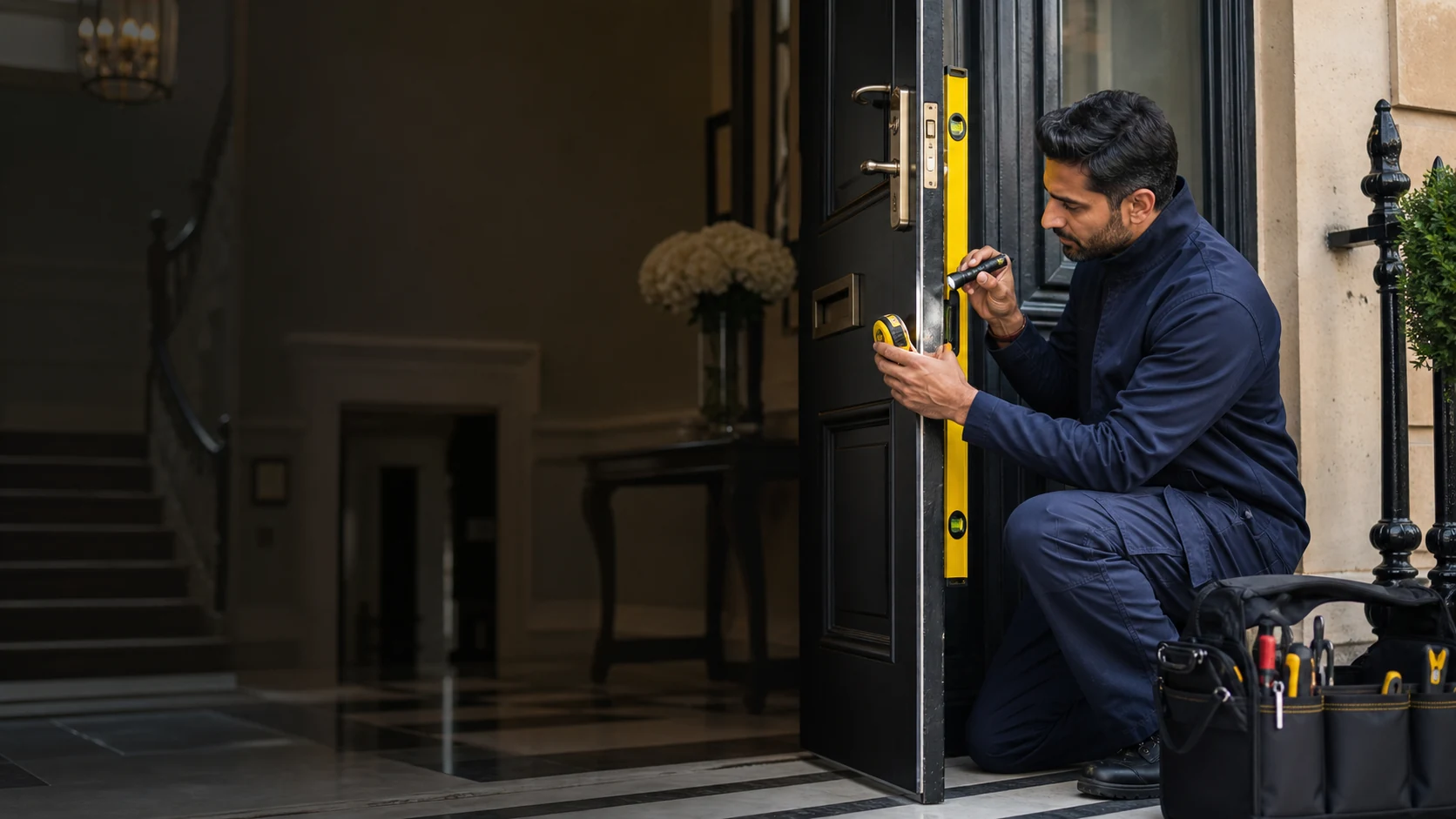
Zone the appointment
In a detached home, the resident may control the gate, side passage and front door. In a porter block, reception may admit the contractor while the resident opens the flat and management retains a garage key. These arrangements call for a zone plan rather than a single instruction to “ask at the desk”.
Write the route in order. State where the locksmith will meet the first contact, which doors need a key or escort, and who may authorise work at the destination. If the resident will be absent, confirm that the attending representative has lawful authority and can make decisions if the observed fault differs from the booking. Do not leave an unlabelled key with reception or assume a porter can approve a private lock replacement.
| Controlled zone | Likely custodian to confirm | Booking question |
|---|---|---|
| External gate or driveway | Resident, owner or estate contact | Will it be open, and where may tools be set down lawfully? |
| Porter desk and common route | Building manager or concierge team | Is the contractor booked, and which lift or stair should be used? |
| Private dwelling | Occupier, owner or authorised agent | Who verifies entry rights and approves the lock method? |
| Communal garage | Management or nominated garage key holder | Which bay, cage or personnel door is relevant to the request? |
| Plant, riser or controlled cupboard | Responsible building party | Does the locksmith need this area, and is access authorised? |
Prepare the destination
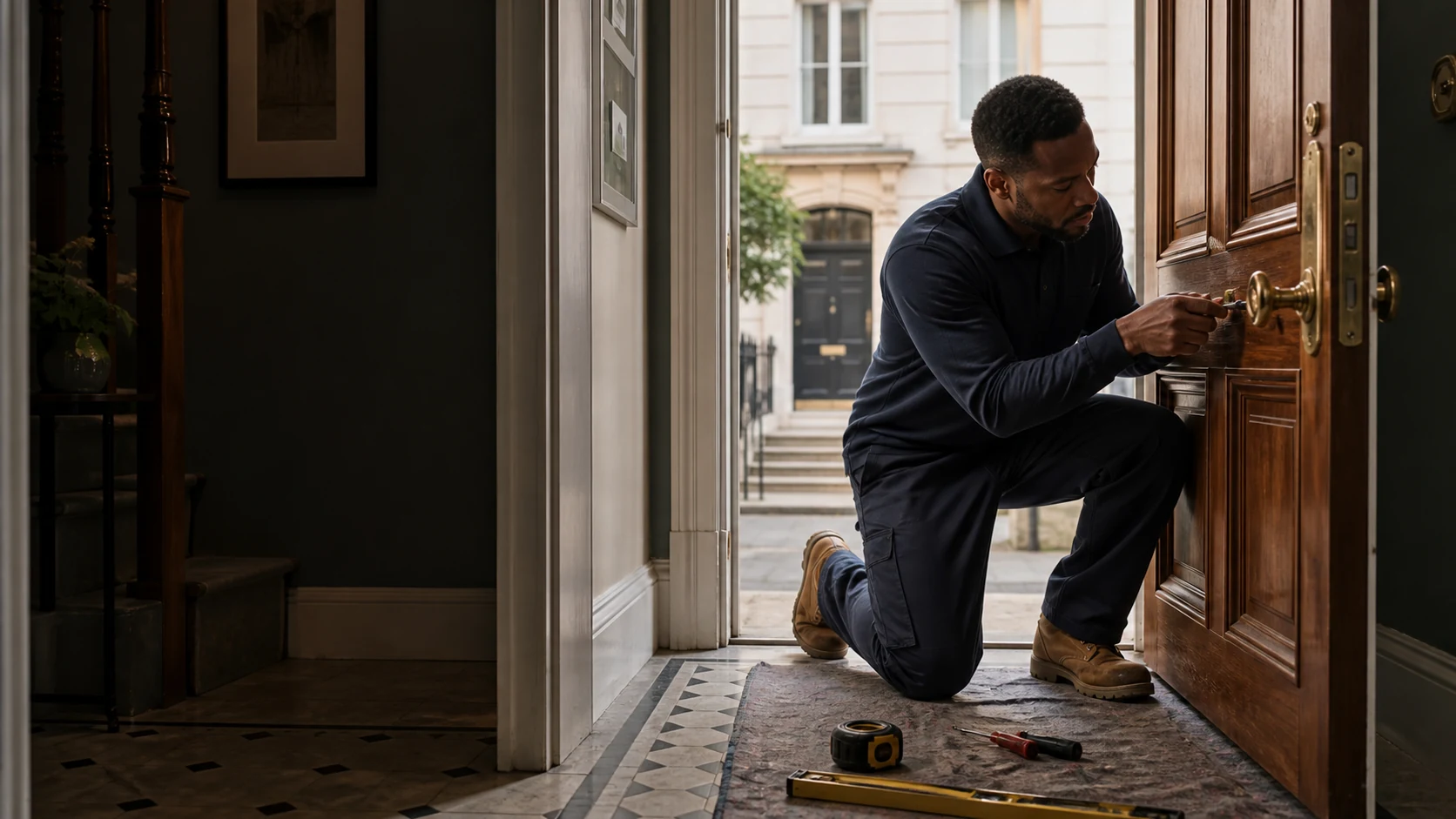
Tell the porter or household when tools will pass through and remove ordinary obstructions. In a garage, identify the personnel door separately from vehicle gates or powered shutters. A mechanical key problem on one item does not mean the locksmith is booked to repair every access system in that space.
At the faulty door, leave the lock assembled. Send safe photographs of the whole door, the edge and both faces of the hardware. If the key is broken, keep every piece and stop using improvised extractors. If a door is standing insecure, arrange an authorised person to remain with it; do not promise that another shared entrance can be left open.
Destination triage
| Reported problem | Safe preparation | Decision still needed on site |
|---|---|---|
| Resident cannot enter a flat | Arrange the common route and reasonable evidence of occupancy | Suitable opening method and any post-entry repair |
| House gate key is missing | Identify every authorised user and whether another lawful entrance exists | Key-control change, repair or replacement of the affected cylinder |
| Garage personnel door will not lock | Keep the area supervised and obtain management authority | Door alignment, lock repair or compatible hardware change |
| Communal door closes unreliably | Notify the responsible manager and prevent informal adjustments | Mechanical lock, closer, frame or powered-release responsibility |
| Key turns only when the door is pulled | Do not force it; state whether operation is different while open | Condition of the lock and the way the door meets the frame |
| Damage follows attempted entry | Preserve relevant evidence and protect people from the damaged area | Temporary securing, lock work and separate door reinstatement |
Mechanical locksmith scope
The locksmith checks the customer’s connection to the property, door state and visible hardware before discussing an opening approach. Communal access permission is arranged separately.
Key resistance, loose handles and poor latching are assessed with the complete door. A local component or adjustment may be relevant, but that follows examination.
Dimensions, function, key quantity and door preparation inform the selected part. Building rules or a controlled key arrangement should be supplied before ordering.
Extraction, opening and replacement are different decisions. Retaining the key pieces and avoiding further interference preserves useful evidence.
A personnel-door lock can be assessed as mechanical hardware. Vehicle gates, motors, remotes and access controls may need the building’s chosen specialist.
A temporary secure closure may be the immediate outcome. Door leaf, frame, glazing and decoration can require a documented follow-on scope.
Price follows scope
No fixed figure can be created from the St John’s Wood name. Attendance, lock condition, method, labour, parts and site access shape the quotation. Ask for the work boundary and the consequences if one planned zone is unavailable.
| Input | Details to provide | Point to confirm |
|---|---|---|
| Arrival route | Gate, reception, parking or unloading information and escort | Any effect of waiting for a custodian or missed building window |
| Door assessment | Direct symptoms, open or closed state and visible condition | Whether diagnosis precedes a final repair scope |
| Opening work | Authority, known hardware and immediate security requirement | Approval before a method that sacrifices hardware |
| Replacement part | Measurements, keys, function and building restrictions | Exact supplied item, fitting and old-hardware treatment |
| Garage or communal work | Written manager authority and affected users | Mechanical boundary versus powered or shared systems |
| Close-out | Testing, key recipients and borrowed building keys | Who accepts the door and signs keys back in |
If new damage or a different mechanism is found, the locksmith should pause and explain the evidence. The named approver can then accept a revised option or retain the original limit. Access to a property is not blanket approval for extra work.
St John’s Wood property context
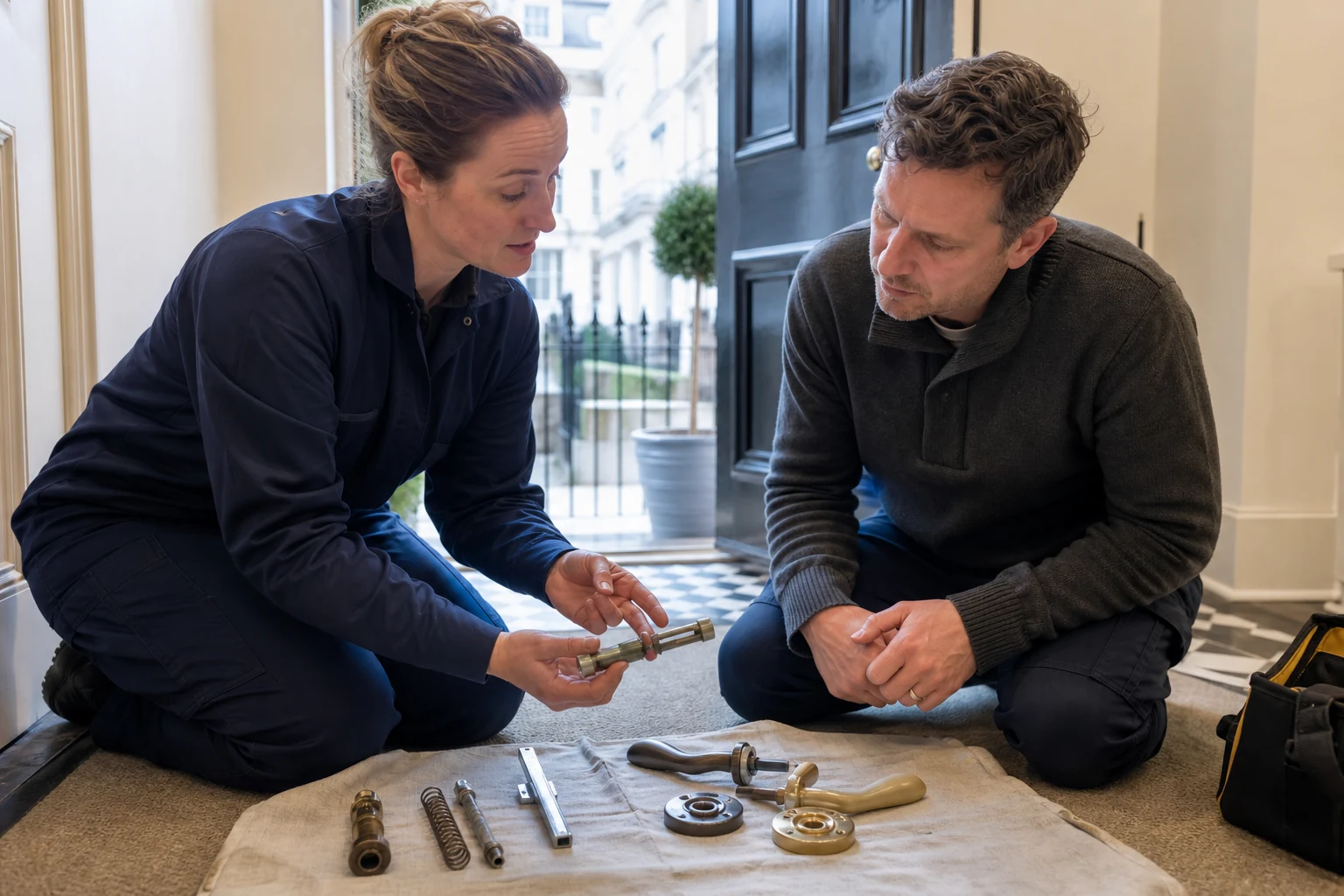
In a porter block, contractor registration can make the first stage straightforward. The unresolved detail is often farther inside: who opens the flat, whether the relevant garage area is available and who approves a change. Provide these names before attendance instead of relying on the porter to locate them.
At a detached property, the owner may control every zone, yet the route can still include a vehicle gate, side entrance or separate garage. Identify the door that has failed and keep powered systems outside the mechanical brief unless they are expressly included through the proper specialist. If the work is arranged by a household representative, state what decisions they may make.
Common parts need a careful finish and safe passage. Agree protection for lifts, floors or joinery and use the permitted route. Where a door is managed as part of the building’s fire precautions, obtain the responsible party’s hardware requirements rather than treating the existing appearance as a complete specification.
Return every zone
Test the repaired or replaced lock with the authorised person, then account for each key borrowed or supplied. Close gates, garage doors and communal entrances that were opened for the visit. A porter should receive building keys through the normal register, while private keys go only to the named custodian.
Record what could not be assessed and any non-mechanical fault referred elsewhere. If a temporary lock or closure was used, name the person arranging permanent work. This closes the security chain instead of ending the appointment at the moment the target key turns.
St John’s Wood locksmith FAQ
Yes where the building requires contractor booking. Give the desk the resident, flat, expected route and contact, while retaining approval of private work with the authorised client.
They can when the owner has granted appropriate authority. Clarify whether they may approve changed work as well as provide entry.
The freeholder, managing agent or authorised building representative should approve shared hardware. A bay user does not necessarily control the personnel entrance or gate.
Report the remote response and visible movement. A powered gate fault may require a gate or access-control specialist rather than ordinary mechanical lock work.
Use the building’s authorised sign-out process and record the recipient. Every borrowed key should be returned to the designated custodian after the route is secured.
Yes only with lawful access, clear owner authority and an agreed key handover. Name someone who can answer if the actual condition changes the proposal.
Ask for a separate boundary. Lock work, frame or leaf repair and decoration may be coordinated, but they are not automatically one service.
Test normal operation, count new keys, return route keys and tell management about any remaining shared-door or powered-system issue.
Nearby coverage
Nearby pages address their own property and access arrangements.
Assign a custodian to every zone
Send the St John’s Wood address, destination door, gate or porter arrangements, observed fault and named approver.
