
Regain authorised entry
The immediate goal is lawful access. Confirm what happens after the door opens if a component has failed or a destructive method becomes necessary.
Which door · whose authority · what outcome
Before choosing a locksmith service, identify the exact door and the person entitled to decide about it. A private lockout, an insecure communal entrance and a rear-door upgrade require different authority, urgency and follow-on work.
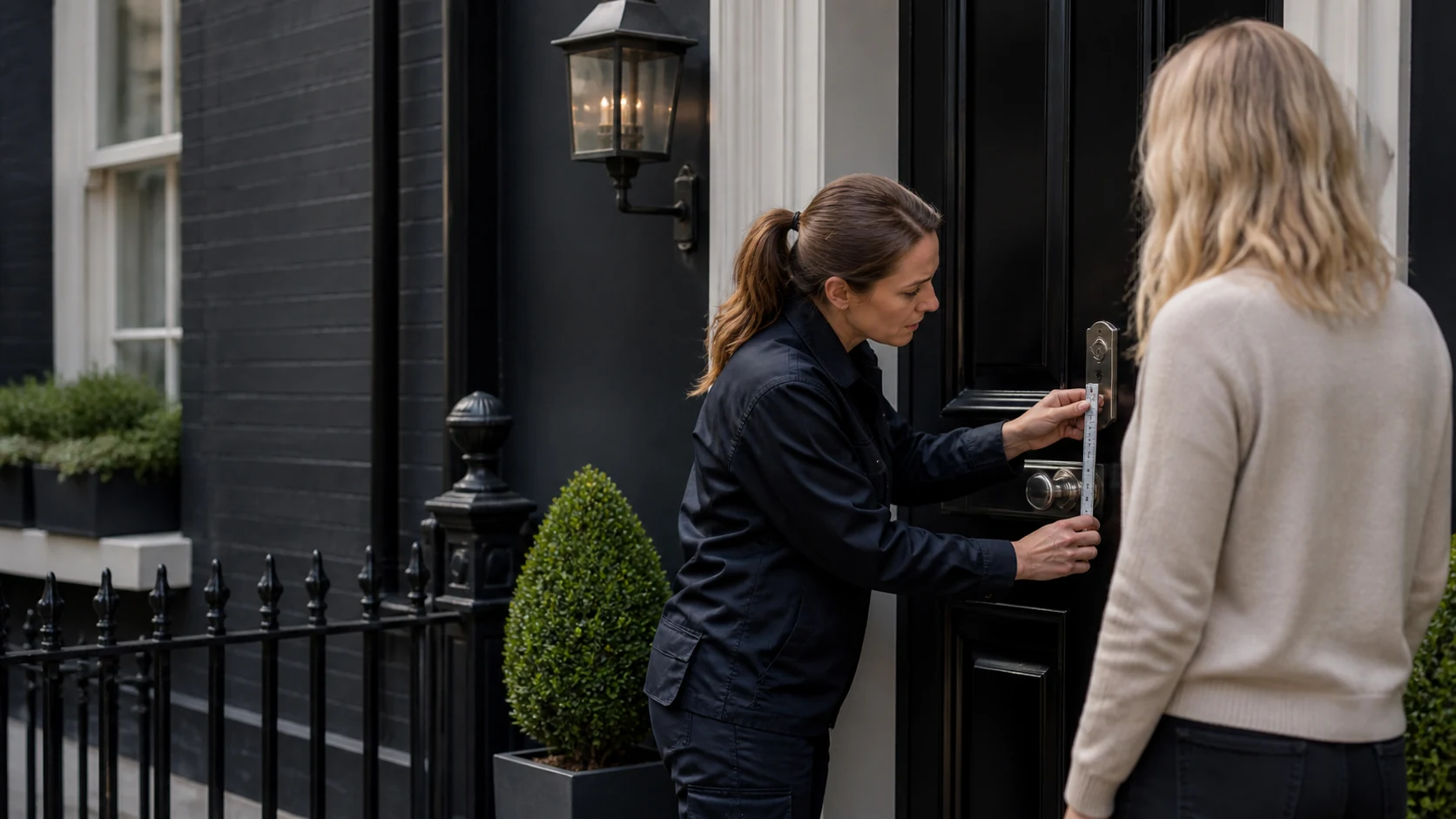
Responsibility-led decision guide
An Acton address may be a terrace, a purpose-built flat, a shared entrance or accommodation above commercial premises. Start by naming the door: street entrance, private flat door, rear garden door, store, gate or shop-adjacent residential door. Then state who owns, occupies or manages that opening. This avoids a resident commissioning work to a communal door or a shop employee being treated as authority for the flat above.
Next describe the present state. Are you unable to enter, unable to leave, able to use the door but concerned about missing keys, or planning a later upgrade? A door that is open but will not secure needs a different immediate outcome from a reliable lock due for planned replacement. If life is at risk, a crime is in progress or fire safety is compromised, use the emergency services or building procedure rather than relying solely on a normal locksmith booking.
| Door situation | Authority to confirm | Service route to discuss |
|---|---|---|
| Resident locked outside a private home | Occupancy, ownership or authorised management evidence | Opening method, verification and security after entry |
| Private door opens but will not lock | Occupier plus owner where alteration approval is needed | Fault assessment, temporary security and repair boundary |
| Common front door is damaged or unreliable | Freeholder, managing agent or authorised building representative | Communal mechanical work and any closer or access-control referral |
| Keys have left with a former tenant | Landlord or person empowered under the tenancy arrangements | Key-control change with an agreed issue for legitimate users |
| Rear door works but an upgrade is wanted | Property owner or authorised landlord | Planned survey, compatible hardware and making-good scope |
| Residential entrance shares a commercial route | Home occupier plus owner of any shared or trading area | Timed lawful access to the exact secured door |
Choose the outcome
The immediate goal is lawful access. Confirm what happens after the door opens if a component has failed or a destructive method becomes necessary.
A door that cannot lock may need assessment, temporary measures or a compatible repair. Keep it supervised and stop forcing the operating parts.
Stiff keys, handles or latches need the door, frame and connected hardware checked before repair or replacement is selected.
Lost, stolen or unreturned keys create a decision about authorised copies. Risk and property authority guide the scope.
Lock, door leaf, frame, glazing and alarm damage can sit in different scopes. Separate temporary securing from permanent reinstatement.
Record the desired function, existing preparation, compatible products, key quantities and finishes before ordering hardware.
Evidence at the door
Say whether the door is open or closed, what the key does, how the handle moves and whether the leaf reaches the frame normally. Keep broken key pieces and take context photographs from a safe position. Do not remove lock cases, faceplates or cylinders, and do not cycle a failing mechanism simply to make the symptom recur.
If the issue sits at a shared entrance, ask whether it affects one key holder or several users and whether a mechanical key, fob, intercom or powered release is involved. These details help management route the concern. They do not make the resident responsible for testing common electrical equipment.
For an above-shop flat, include the residential door, buzzer, floor and hours when the route can be used. Staff may control a gate without holding authority for the home. The locksmith needs the correct contact at every boundary.
Next-step matrix
| Finding or boundary | Locksmith contribution | Other action that may be needed |
|---|---|---|
| Mechanical private lock fault | Opening, diagnosis, compatible repair or replacement within authority | Landlord approval where the property agreement requires it |
| Door binds while lock operates away from frame | Explain lock and keep findings and any limited adjustment offered | Door, hinge or frame repair by the appropriate trade |
| Common door includes a powered release | Assess authorised mechanical components | Building manager, access-control engineer or electrician for powered elements |
| Forced entry has split the frame | Open or secure and specify viable lock work | Police, insurer and permanent joinery or door repair as relevant |
| Hardware works but keys are untrusted | Assess a compatible key-control change | Authorised key distribution by owner or manager |
| No suitable part can be confirmed at first attendance | Record identification details and keep the door safe within scope | Approve a later parts proposal rather than use an uncertain substitute |
Acton property context
Acton enquiries can involve terraces, purpose-built flats, shared common entrances and homes above commercial units. In a shared house, one occupant may arrange access to their room or report a front-door fault, while the landlord controls alterations affecting all tenants. In a purpose-built block, the apartment door and common lobby may have different repair routes.
A terrace may have front, rear and garden doors under one owner, yet each still needs its own system and symptom description. Above commercial premises, the residential route may use a side door, rear gate or stairs available only at agreed times. Give the correct entrance rather than the trading name alone.
These property forms provide planning questions, not facts about the fitted lock. Do not infer a security rating, fire-door status, tenure or response time from the area. Use current property records and the responsible person where a documented requirement matters.
| Setting | Evidence to prepare | Decision clarified |
|---|---|---|
| Terraced house | All included exterior doors, alternative access and owner instruction | Whether the brief is one fault or a wider planned door schedule |
| Purpose-built flat | Floor, private entrance, common route and building contact | Resident lock work versus management-controlled access |
| Shared rented home | Occupants needing keys, tenancy contact and exact affected door | Who can approve alteration and receive the handover |
| Flat above commercial space | Residential doorway, shared gate, opening hours and route holder | Lawful attendance without assuming business authority |
| Common entrance with intercom | Key, latch, closer, fob and release observations reported separately | Mechanical locksmith task versus powered access work |
Quotation decision
A locksmith price depends on access, timing, door state, method, labour, compatible parts and follow-on work. It cannot be responsibly inferred from “Acton” or a generic service label. The written scope should make conditional decisions visible.
The quote identifies the private or common entrance and does not drift across the address.
Attendance, opening, securing, repair and planned replacement are not treated as synonyms.
The person approving parts or destructive work is available when the decision arises.
Door repair, access control, decoration and extra keys are stated rather than assumed.
At handover, test the agreed functions, count supplied keys and record any limitation. If the service stops after assessment, request a concise finding and the next authorisation route.
Acton locksmith FAQ
Give the exact private door, whether anybody is inside, what happened to the key and how you can show occupancy, ownership or authorised management.
Not on personal instruction alone. The landlord, freeholder or managing agent should confirm work that changes access for other legitimate users.
Report mechanical key and latch behaviour separately from fob, intercom and powered release symptoms. Management can then appoint the locksmith or electrical access specialist needed.
Lock work and temporary securing may be offered, but permanent repair to the leaf, frame, glazing or finish can require a separate door or joinery scope.
The authorised landlord or owner should decide the key-control response, included doors and new key issue. Avoid changing a shared lock without preserving current occupants’ access.
Only where they genuinely control and are authorised for that route. Provide the residential contact and do not assume commercial staff can approve work to the home.
Only if the quote identifies them. Ask whether attendance, opening, labour, hardware, supplied keys and making good are included or conditional on assessment.
Send the whole door, handle and lock faces, door edge, frame and the route to the exact entrance. Never dismantle hardware for a photograph.
Confirm they address the same door, authority, access timing, method, product, key count, testing and exclusions. Different outcomes should not be compared as equivalent prices.
Nearby coverage
Use task links for the service itself and currently available area pages for surrounding property context.
Route the right outcome to the right person
Send the current door state, authority, access route, safe evidence and desired outcome before opening, repair or replacement is agreed.
