
Multipoint diagnosis
Handle, cylinder, gearbox, strip and alignment are checked as a system.
Pedestrian door · driveway system · apartment entrance · multipoint identity
A driveway gate, garage control and front multipoint door may share an approach while remaining different systems. A Woodford booking should identify the pedestrian lock first and keep powered vehicle access outside an assumed residential locksmith scope.
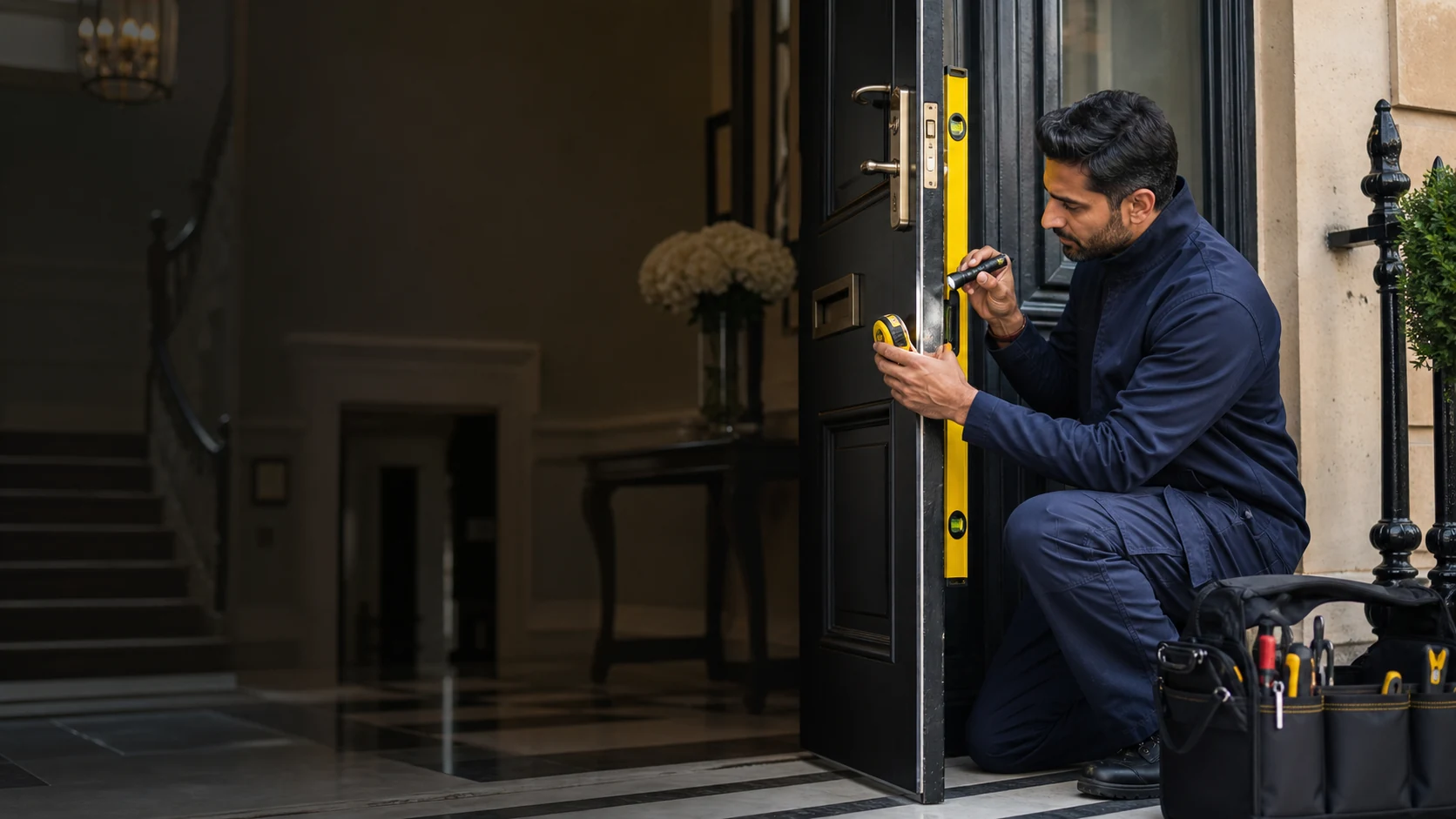
Entrance-system map
State whether the reported issue affects a powered driveway gate, a garage door, a pedestrian side gate or the main dwelling entrance. A remote control that fails belongs to a different diagnostic route from a key that will not turn in a multipoint cylinder.
Give the lawful unloading place and the route to the exact door. If a gate must be opened by another person, arrange that contact. Do not leave powered equipment overridden or ask the locksmith to work on motors and controls without the relevant specialist scope.
| System | Controller | Booking boundary |
|---|---|---|
| Powered driveway gate | Owner, manager or gate service provider | Motor, remote and safety system outside ordinary lock work |
| Pedestrian gate lock | Owner or all authorised shared users | Mechanical latch and key work only after authority |
| Private front door | Resident, owner or authorised agent | Multipoint assessment at the dwelling entrance |
| Apartment common entrance | Freeholder or managing agent | Shared mechanical and powered systems coordinated by building |
| Individual flat door | Occupier or owner | Private hardware separate from common access |
Identify the multipoint door
Photograph the full door, handles, cylinder, visible edge strip and keeps. Record open and closed operation without force. The cylinder, spindle, gearbox, strip, hinges and frame work together; the driveway layout does not reveal which has failed.
Keep keys and fragments. Clear the internal approach and arrange both sides where lawful. In an apartment block, book the contractor route and obtain private or communal approval as appropriate.
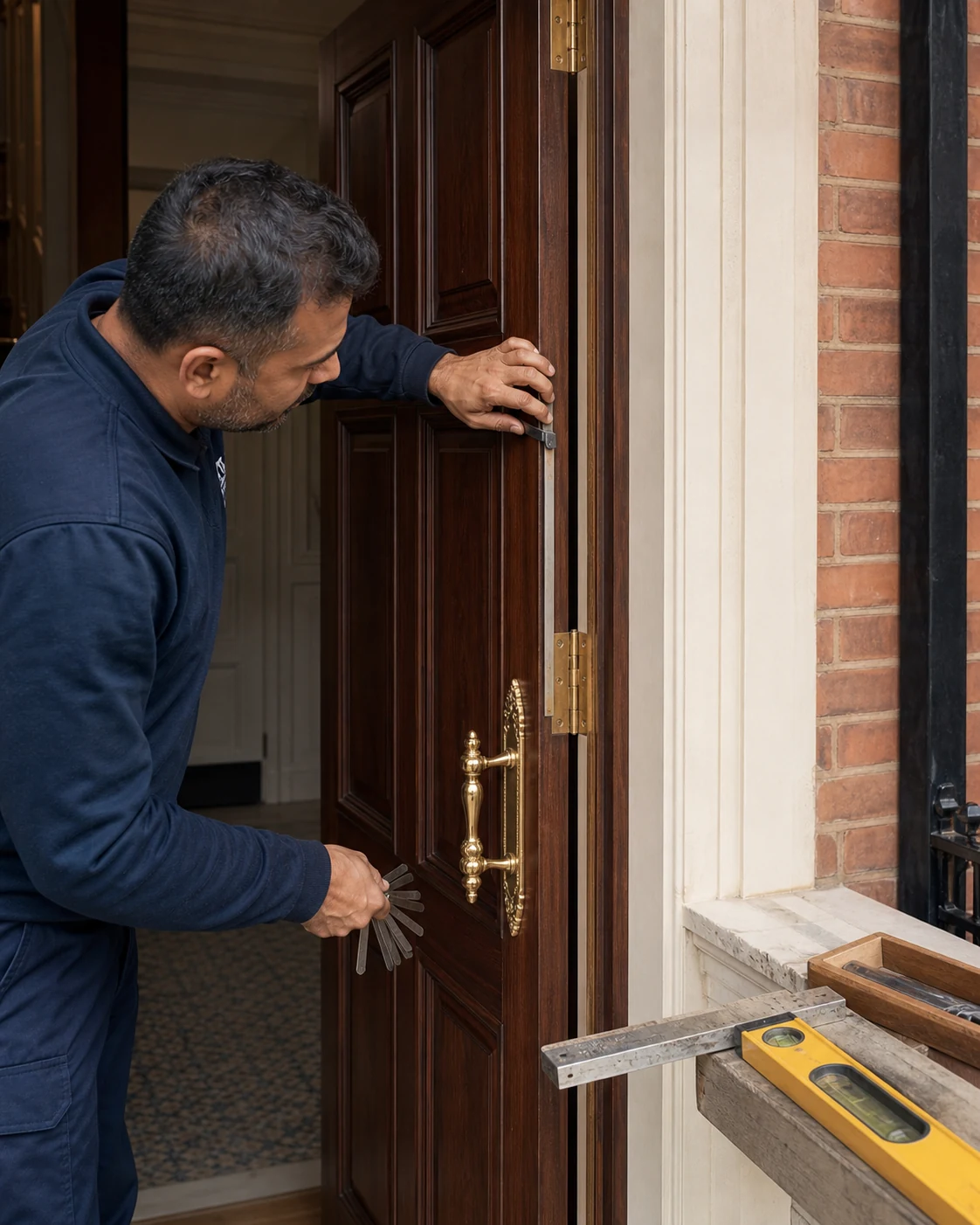
System symptom routing
| Observation | Safe action | Service boundary |
|---|---|---|
| Gate remote gives no response | Use the authorised gate-provider process | Powered access rather than door locksmith work |
| Pedestrian gate key is stiff | Stop force and confirm shared users | Mechanical lock plus gate alignment |
| Front-door handle will not lift closed | Record open operation if safe | Multipoint mechanism and frame engagement |
| Flat key turns but latch remains | Limit use and report door position | Private lock case, furniture and door pressure |
| Communal fob works but door stays shut | Notify building management | Access control and mechanical latch split |
| Door and frame are damaged | Protect the area and preserve evidence | Temporary security and separate door repair |
Appropriate service branches
Handle, cylinder, gearbox, strip and alignment are checked as a system.
A measured change addresses local damage or key control when retained parts work.
Fixings, spindle and gearbox connection determine a compatible repair.
Door contact and keep engagement are assessed before adjustment.
Authority and door state guide a suitable opening method.
Powered gates, garage motors and safety devices go to the correct specialist.
Quotation map
Woodford does not determine a fixed locksmith price. The quote follows the actual door, labour, method, parts and access. It should not imply that powered gate work is included.
| Line | Input | Output |
|---|---|---|
| Arrival | Driveway opening, parking and meeting contact | Agreed route to target |
| Assessment | Door symptoms and component evidence | Finding and limitations |
| Repair | Identified mechanical part | Labour, component and operation test |
| Replacement | Measurements, keys and compatibility | Specified hardware fitted |
| Shared entrance | Manager approval and user group | Building handover |
| Powered system | Gate, intercom or remote observation | Referral outside locksmith scope |
If a component differs from the expected one, send the evidence to the approver and revise the quote. Access through a driveway is not approval to alter its gate.
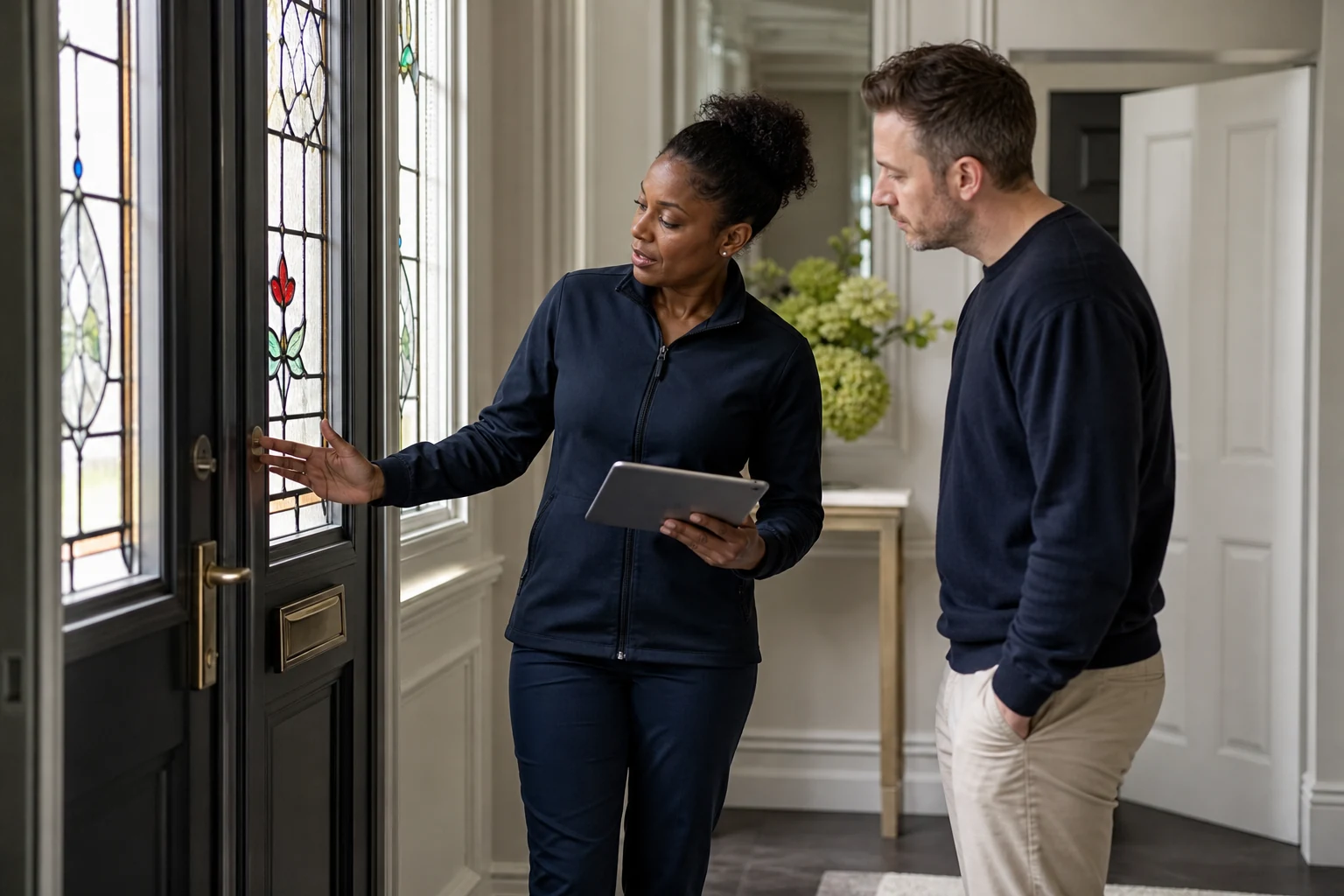
Woodford property context
A family house may combine driveway, garage and front door under one owner, but each system still needs its own service. Arrange safe vehicle and pedestrian access before work.
An apartment block adds management authority at the common entrance and private authority at the flat. Report similar symptoms separately rather than claiming one cause.
Multipoint doors can look alike while using different internal components. Measurements and examination, not development name or appearance, guide repair.
Pedestrian handover
Test closing, handle movement, locking, retention, unlocking and release. Count keys and confirm the gate or garage system was left under its proper controller.
Record powered faults, frame damage and inaccessible areas. The outcome should say exactly which pedestrian entrance now works.
Woodford entrance FAQ
Ordinary residential locksmith work does not automatically include motors, remotes or safety controls. Use the appropriate gate provider.
Arrange an authorised person or approved alternative route in advance. Do not leave the powered gate overridden.
Possibly, after ownership, weather exposure, gate alignment and mechanical hardware are assessed.
No. Edge-strip details and measurements are needed for reliable identification.
The freeholder or managing agent should authorise it and coordinate affected residents.
Yes with the occupier or owner’s authority and arranged building access.
Ask the provider to state attendance and access terms. Give accurate gate and meeting details beforehand.
Check the intended pedestrian door’s full operation and record unrelated gate or access-system issues separately.
Name the pedestrian entrance
Send the Woodford address, gate route, exact door, symptoms and authorised owner or manager.
Walking the authorised route
At the start of the appointment, meet at the boundary that a person normally uses. Name the pedestrian gate, apartment lobby or house door before presenting keys. A driveway may run beside that route, but its gate motor, remote controls and safety devices form a different system. The locksmith should not be asked to infer an electrical or powered-gate fault from a reluctant mechanical latch.
Follow the route at ordinary pace. Observe whether the pedestrian leaf closes by itself, whether its latch meets cleanly and whether a key or release is needed on either side. At an apartment block, continue only with management authority. At a family house, identify side and rear entrances that are excluded from the requested work rather than treating one inspection as a review of the entire boundary.
When a multipoint entrance is involved, compare mechanism movement with the door safely open and then at natural closure. Do not lift, pull or lean on the leaf to create a successful result. If pressure changes operation, record that fact for alignment assessment. The number of locking points does not by itself establish the source of resistance or the correct replacement.
A useful completion walk repeats the same route. The authorised person approaches, operates the correct credential, passes the pedestrian boundary, secures it and then uses the main entrance. The record should show each stage that was actually tested and distinguish any excluded driveway or access-control equipment.
Keys, fobs and remotes also need separate custody lists. Count only the items within the approved job. Do not label a key with a full address or place a gate code in an open property file. If former access is a concern, the owner or manager should decide which credentials are withdrawn and which systems require action beyond mechanical locksmith work.
Keep photographs focused on hardware and door condition. Avoid capturing vehicles, number plates, alarm panels or neighbouring entrances unless they are essential and authorised. The resulting record should explain the work without becoming a map of the property’s security arrangements.
Where a route is temporarily changed for deliveries or maintenance, do not treat that temporary path as the permanent access plan. Note the normal pedestrian boundary and record any test that could not be completed because the usual entrance was unavailable.
