
Lock repair
Repair is considered when inspection identifies a serviceable faulty component.
Repeatable test · one reporter · clear door state
When one person says a door sticks and another says it works, the next step is not a vote. A short, repeatable test can show whether the difference comes from the key, user action, door position or changing contact at the frame.
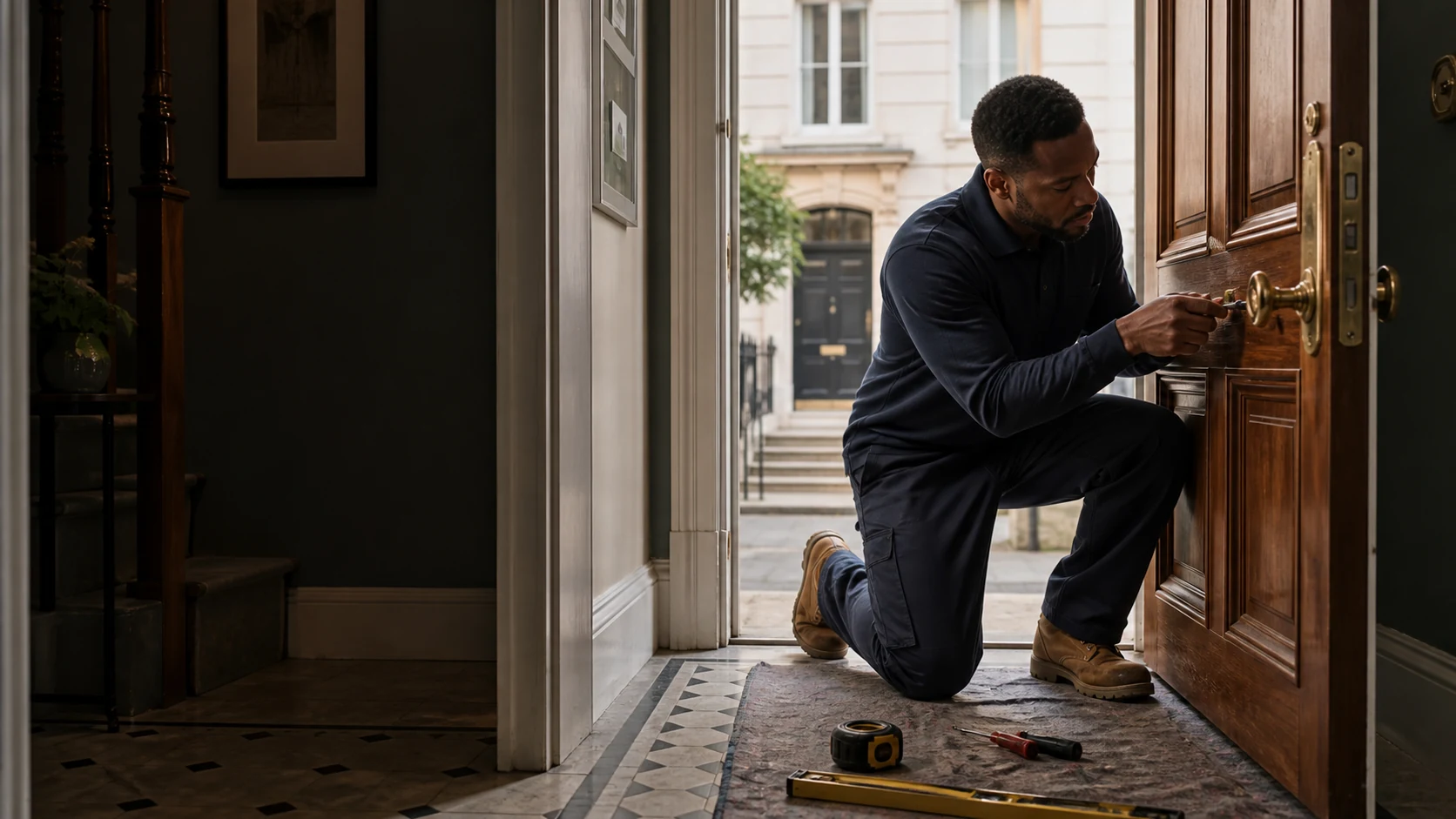
A repeatable household test
Choose one adult who is authorised to operate the entrance and knows when to stop. Use the same undamaged key and ordinary hand pressure. Record the starting position of the door, the action attempted and the exact point where movement changes. A second person can watch, but should not pull or push the leaf at the same time.
Do not perform repeated cycles when a key bends, a handle feels loose, the leaf is insecure or an emergency exit is affected. The purpose is to make genuine reports comparable, not to reproduce a fault at any cost. Photos of the door edge and frame can support the note, provided they do not expose identifying key details.
| Test condition | Ordinary action | Record | Stop when |
|---|---|---|---|
| Door open and stable | Turn the sound key gently | Range, resistance and bolt movement | Key flexes or mechanism binds |
| Door meeting frame | Bring it to natural contact | Top, side or threshold contact | Force would be required |
| Door closed | Operate handle and key normally | Pressure, sound and failed stage | Person or property may be trapped |
| Door released | Open using the usual method | Latch withdrawal and handle return | Furniture becomes loose |
| Second sound key | Compare once if safe | Same or different result | Either key shows damage |
| Communal route | Observe only with authority | Which exact door is affected | Security or safe exit is compromised |
Reconciling different reports
People naturally operate doors differently. One person may lift a handle fully, another may pull the leaf towards the frame, and a child or older resident may use less force. Record those actions without assigning blame. The relevant fact is the movement needed to make the door work.
If the problem is intermittent, note the genuine occasion, door position and user action. Do not ask several people to try increasingly forceful methods. A locksmith can compare the safe observations with the door’s mechanical condition and alignment.
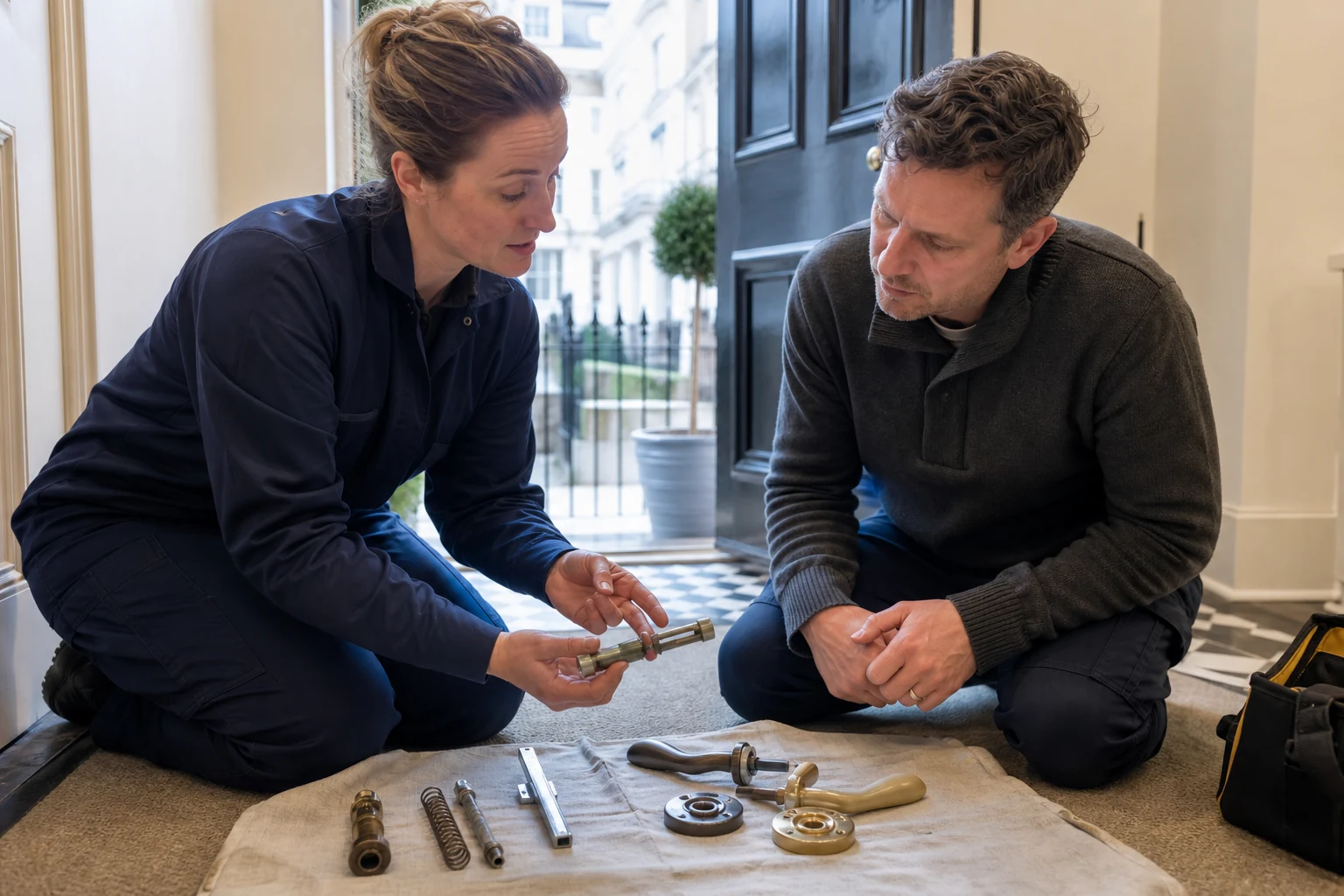
Report to inspection
| Reports received | Comparable condition | First inspection question |
|---|---|---|
| One key works, one does not | Compare condition of authorised keys | Is wear or distortion changing engagement? |
| Door locks for one user only | Record lift, pull or push applied | Does operation depend on door pressure? |
| Works open, resists closed | Separate free movement from frame engagement | Where do leaf and locking points meet? |
| Fails after the closer acts | Observe natural closing without interference | Does the latch meet its keep consistently? |
| Private door works, communal door fails | Label the two entrances | Who controls and maintains the affected door? |
| Fault appears at irregular times | Keep genuine event notes only | Is there changing contact or component wear? |
Fault-led locksmith work
Repair is considered when inspection identifies a serviceable faulty component.
Open and closed behaviour is compared before hinges or keeps are altered.
Sound and damaged keys are identified without forcing either through the lock.
Dimensions, door construction and required operation guide compatible hardware.
Identity, authority and the precise door state are confirmed before access work.
Shared-door findings are recorded for the responsible owner or managing agent.
A result sheet, not a generic promise
A Crouch End address does not fix the cost. Diagnosis, access, labour, compatible parts and door preparation influence the quote. The written scope should state the tested condition so everyone knows which reported problem the work is intended to resolve.
| Record line | Before work | After work |
|---|---|---|
| Authorised tester | Named person and available keys | Named person witnesses final test |
| Door state | Open, closed and pressure-dependent result | Same sequence repeated safely |
| Finding | Component, key or alignment evidence | Finding retained in property record |
| Work scope | Repair, adjustment or measured replacement | Completed items checked against approval |
| Parts and keys | Specified items and key quantity | Parts fitted and keys counted |
| Limitations | Excluded joinery, structure or communal work | Remaining concerns and referral recorded |
When the observed fault changes during inspection, pause and explain the new evidence. An initial request to repair a lock should not become unapproved door or building work.
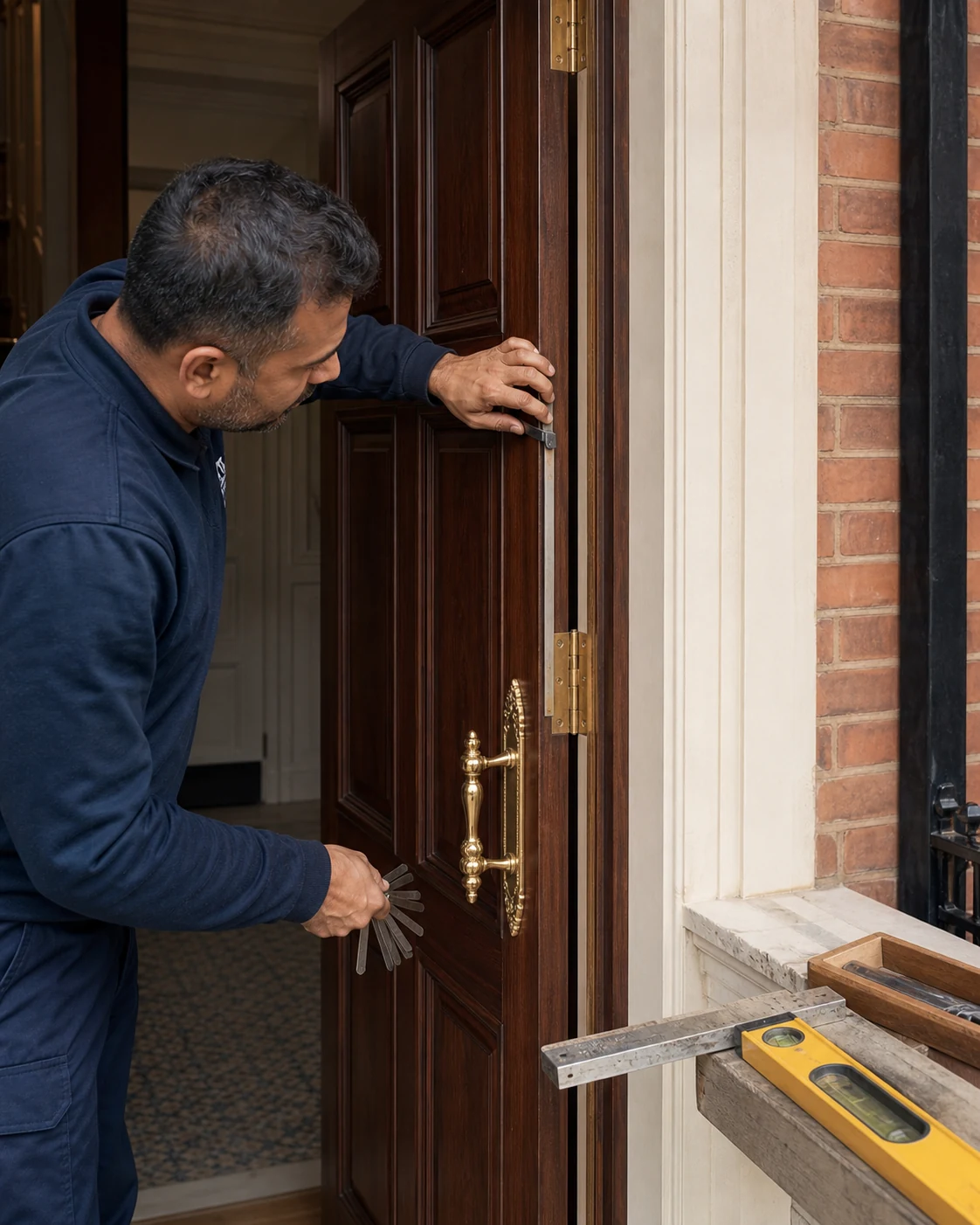
Crouch End property context
A Victorian terrace may have altered timber, older cut-outs and visible furniture. Record these features, but do not assume age explains a stiff key or reluctant latch.
In a converted house, the street door and flat door can have different owners and symptoms. Write two records, arrange authority for each and prevent a communal complaint from being attached to a private lock.
A family home can produce several honest but inconsistent accounts. Use one controlled test, then note differences in reach or technique that matter to normal operation. The aim is reliable use by authorised household members, not a demonstration that only one person can make the door work.
UPVC, composite and timber entrances behave differently and may use different locking arrangements. Identify construction and visible hardware before discussing parts. Do not diagnose the internal mechanism from an external photograph alone.
Preparing the appointment
Choose one contact to meet the locksmith and another decision-maker only if necessary. Gather sound keys, broken fragments, management authority and the short test record. Leave the lock, keeps and hinges untouched. Temporary tape, lubricant, improvised tools or fresh adjustment can erase the evidence that separates a lock fault from door pressure.
At arrival, identify the exact door before discussing solutions. Demonstrate one safe cycle if possible. If the door is insecure, jammed or part of an escape route, describe that immediately and keep people clear rather than continuing the comparison.
After approved work, the same authorised tester should repeat the original conditions. Check the key with the door open, then normal closing, latching, locking and release. Other household users can then confirm ordinary operation without adding force or compensating movements. Record any limitation that remains.
Crouch End repeatable-test FAQ
Use one authorised adult who can operate the door normally and stop at resistance. Other accounts can be written down without repeated trials.
Record if that is already needed, but do not increase force. Pressure-dependent operation is evidence for an alignment and mechanism assessment.
Compare only known authorised keys that appear sound, and stop if one bends, catches or shows damage.
Keep genuine notes of when it occurred, including door position and action. Do not manufacture a failure through repeated operation.
No. Door age is context; condition, dimensions, function and the identified fault guide repair or replacement.
The freeholder, managing agent or other responsible party should confirm authority. Private-flat permission does not automatically cover a communal door.
Repeat the original safe test and confirm closing, latching, locking, unlocking and release with the authorised keys.
Keep the original observation, finding, approved work, parts, key count, final test and any remaining limitation or referral.
Make the report repeatable
Send the Crouch End address, exact door, authorised contact, sound-key status and the observed result in each door position.
When the result changes
If the door behaves differently after the first note, add a new entry with the actual condition instead of rewriting the earlier account. A changed sound, new contact point or newly damaged key may alter the inspection order. Preserve both observations so the locksmith can see what changed and when.
After completion, ask household users to report any recurrence in the same neutral format. The door position, key used, action and resistance point are more useful than a conclusion about the cause. Stop immediately if safe locking or release is uncertain.
