
Homeowners
Share your practical return-to-use plan without assuming the visit includes unrelated domestic tasks.
Barnes · Kitchen and utility detail belong in one brief
Kitchen and utility detail belong in one brief.
Review the utility area before storage and laundry items return.
A utility room can collect fitting dust and packaging while attention stays on the kitchen. For your Barnes enquiry, describe the kitchen-to-utility connection. Identify the actual flooring material rather than relying on its stone-like appearance.
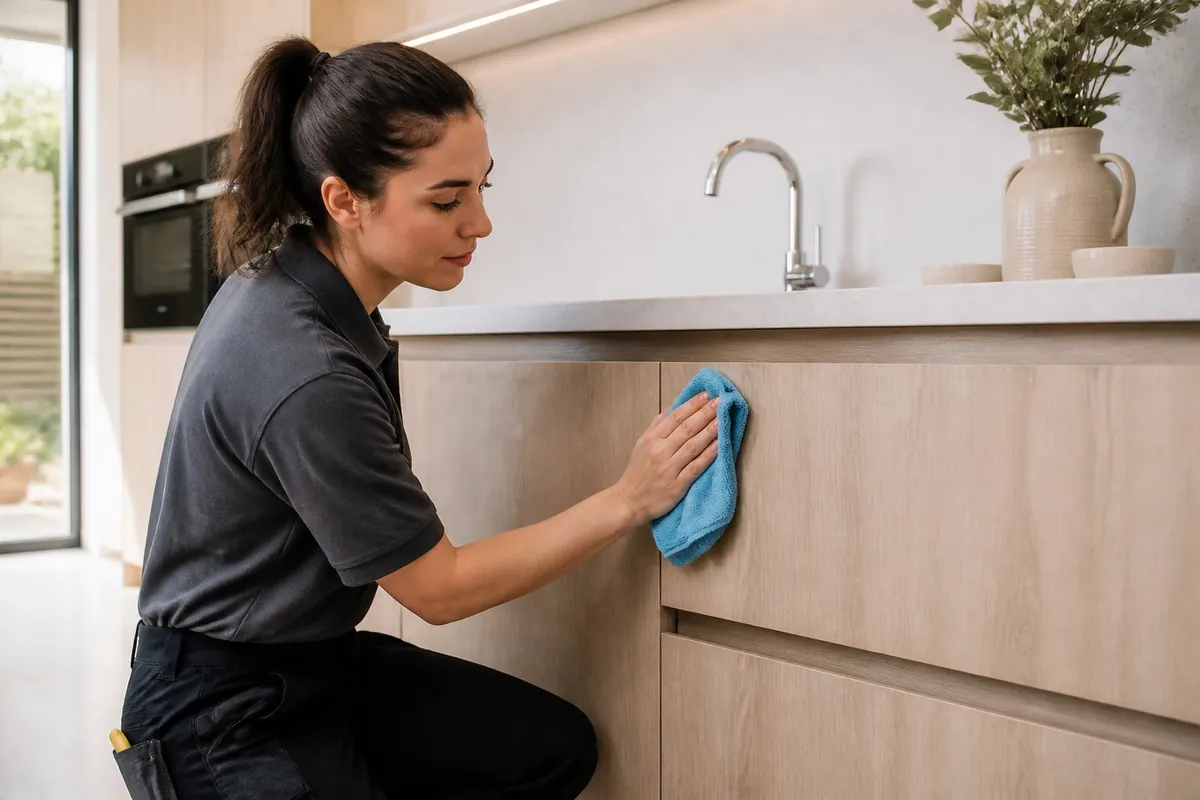
Illustrative renovation scene; no customer job or measured result is represented.
Who is planning the handover?
Share your practical return-to-use plan without assuming the visit includes unrelated domestic tasks.
Explain what was changed and who can approve the scope before promising a cleaning outcome to an incoming occupant.
Commercial or contractor requirements should be confirmed directly, rather than inferred from residential examples.
Barnes / the specific room brief
A utility room can collect fitting dust and packaging while attention stays on the kitchen.
This Barnes planning example centres on kitchen and utility-room renovation. A utility room can collect fitting dust and packaging while attention stays on the kitchen. The useful inspection route follows the kitchen-to-utility connection, with attention to utility fittings and stone-effect floor edges.
Identify the actual flooring material rather than relying on its stone-like appearance. Keep any care notes for stone-effect flooring available when discussing the visible marks.
Agree which entrance gives practical access to both rooms. Review the utility area before storage and laundry items return.
Room-by-room brief
Explain where fitting dust remains around the units. Internal storage and specialist marks should not be silently added.
Name the tiles and fittings affected by the works; glass or difficult residue needs clear discussion.
Check reachable frames and floors, and mention any dust inside storage rather than assuming it is included.
The room may retain furniture; explain which surrounding surfaces remain reachable for the requested cleaning.
A scoped quote
From £29/ hour
Confirm the rate applicable to the enquiry; cleaning equipment and materials form part of the service.
Accessible detail, dust and condition influence time. Window tasks, waste collection and specialist treatment are separate considerations.
| Project | Pricing basis | What to describe |
|---|---|---|
| Smaller refurbishment | From £29/hour; scope confirmed | Reachable edges, recent work and coating guidance |
| Kitchen or bathroom work | From £29/hour; scope confirmed | Sanitaryware or cupboard exterior detail |
| Whole-property renovation | Quote based on the released areas | Room schedule and surface-care needs |
| Commercial refurbishment enquiry | Quotation after requirements are confirmed | Proposed tasks and handover arrangements |
Based on Alesta’s published after builders cleaning rate. Building waste removal is quoted separately.
An ordered room release
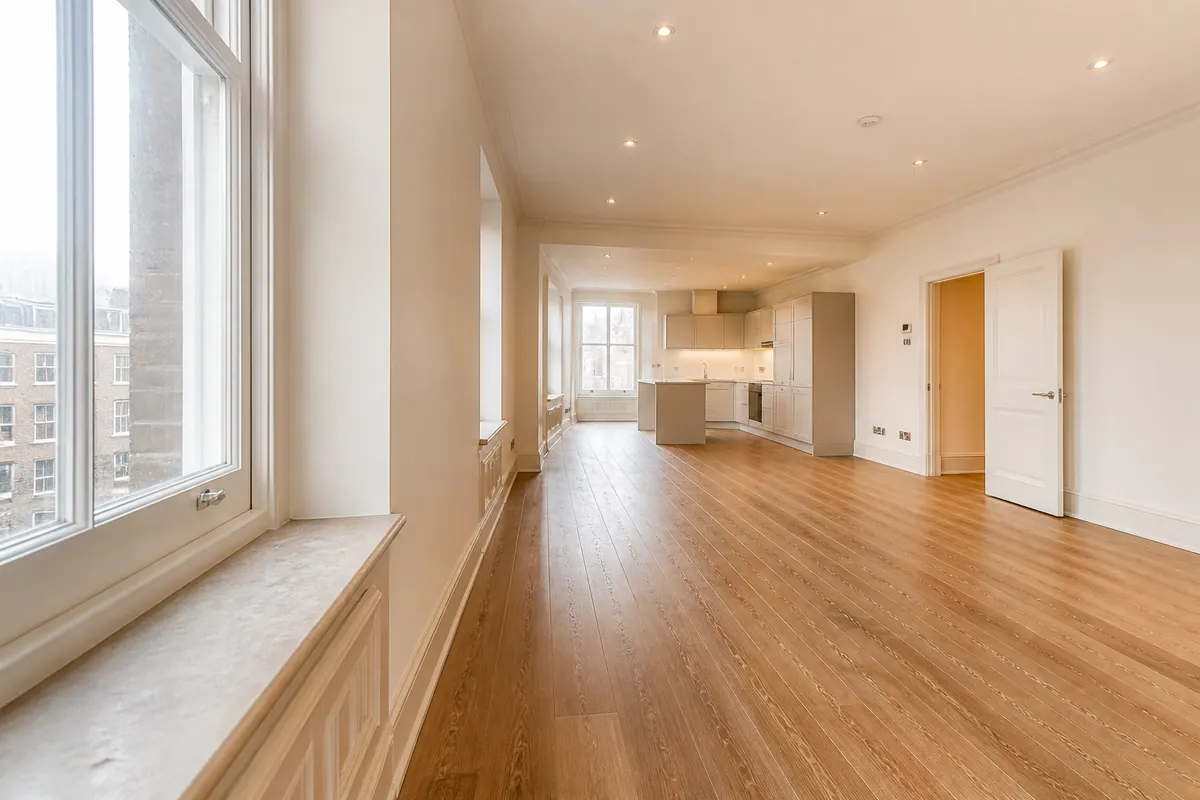
Set out what has finished and what remains.
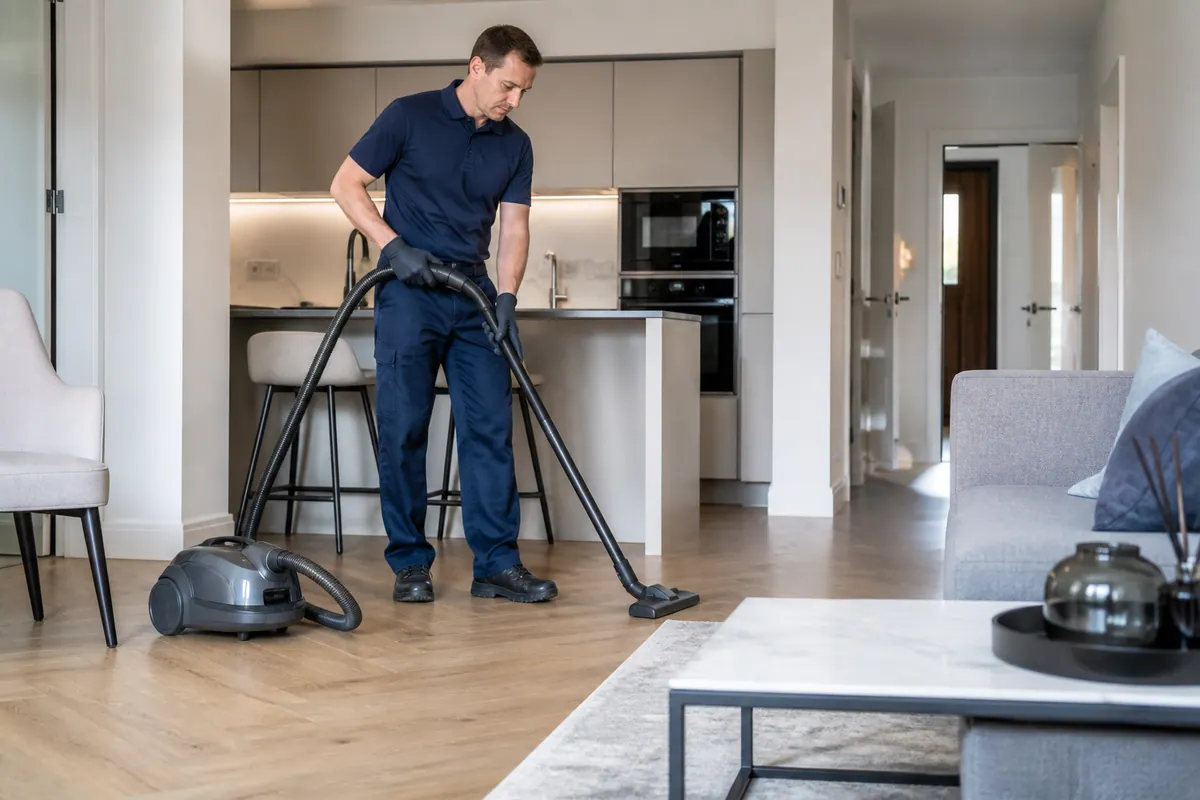
Address the identified deposits within the agreed work.
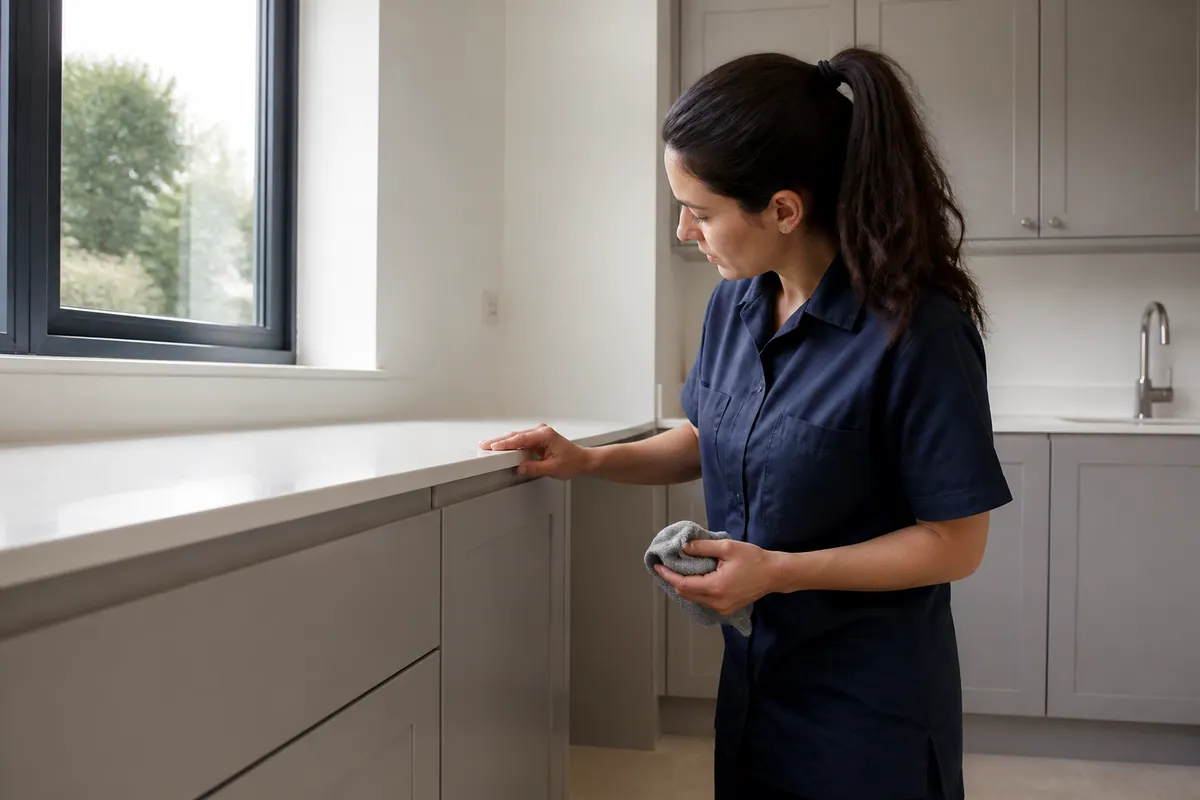
Check the work before the rooms are rearranged.

Plan furnishing once the scoped review is complete.
Different interiors illustrate the process rather than a guaranteed transformation.
Start with the work
These project types prompt useful questions; choosing one does not book a service or include every possible task.
A full refurbishment brief should identify finished areas, remaining obstructions and materials that cannot share one cleaning method.
Beyond the work zone
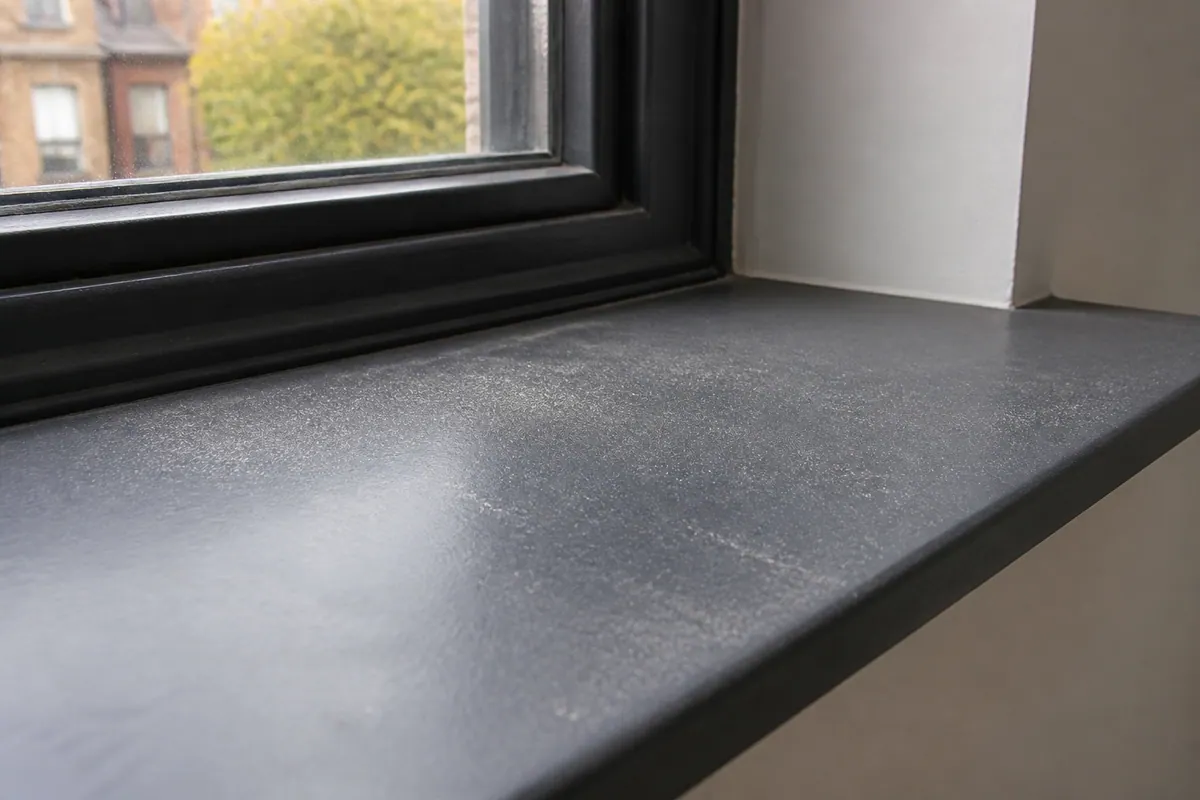
The work area is only the starting point.
A narrow approach can connect several spaces. Describe visible dust there even if the contractor worked behind one closed door.
Identify the affected surfaces for Alesta. Appropriate vacuuming, microfibre materials and products are selected around their condition and material.
A later sanding visit can undo the sequence. Mention returning trades before arranging the clean.
The dust route
This diagram suggests inspection points; it does not document a particular property.
Include the exposed tops and lips you want considered in the surface list.
A fitted room has edges behind and beside units that need an access check.
Flag new coatings on fittings before residue is approached with cleaning products.
Explain how dust reached neighbouring rooms; suitable floor care follows the material underneath.
Different issues / different scope
| Post-build issue | Example | How it is approached |
|---|---|---|
| Fine dust | Deposits on reachable ledges and external faces | Include the affected locations in the scoped tasks. |
| Loose cleaning remnants | Small deposits left across affected surfaces | Coverage depends on the agreed cleaning tasks. |
| Adhesive or labels | A label mark on an installed fitting | Ask about inclusion after the material has been assessed. |
| Paint, plaster or cement spots | A splash on a floor or fitting | No promise is made that every bonded mark will lift. |
| Protective film | Covering still attached to a fitted surface | This is not automatically part of a cleaning visit. |
Two separate jobs
A practical cleaning scope describes what can be reached and treated, not what must be carried away.
Explain what bulky items remain before a quote is agreed, so cleaning is not confused with removal.
Discuss building waste disposal ↗Different project briefs
An empty flat still needs its approach and connecting spaces included where dust is visible.
Check the connection to the adjoining room when describing kitchen dust.
Describe accessible fixtures without assuming treatment of every grout mark.
Describe the whole property in manageable surface and access groups.
Specify the renovation effects before adding any separate letting requirements.
Set out commercial requirements for discussion, including access and work still outstanding.
A useful distinction
Builder stage
Cleaning stage
Protect the new finish
Illustrative surface review.
A cleaning brief should name what lies beneath the residue.
Different finishes can meet at one fitting. Explain both materials where treatment of a deposit might touch either surface.
Keep newly applied sealants outside cleaning work until their instructions permit it.
Identify whether a specialist finish changes the proposed cleaning method.
Record installation marks on new fittings before discussing their removal.
At a glance
Build your brief
Prepare the facts before asking about timing.
Entering details here only organises your brief. Contact Alesta separately to discuss suitability and a quote.
Separate requests can change the visit. Explain window work, specialist surfaces and waste rather than assuming inclusion.
Discuss the brief: 020 3608 3976Glass after renovation
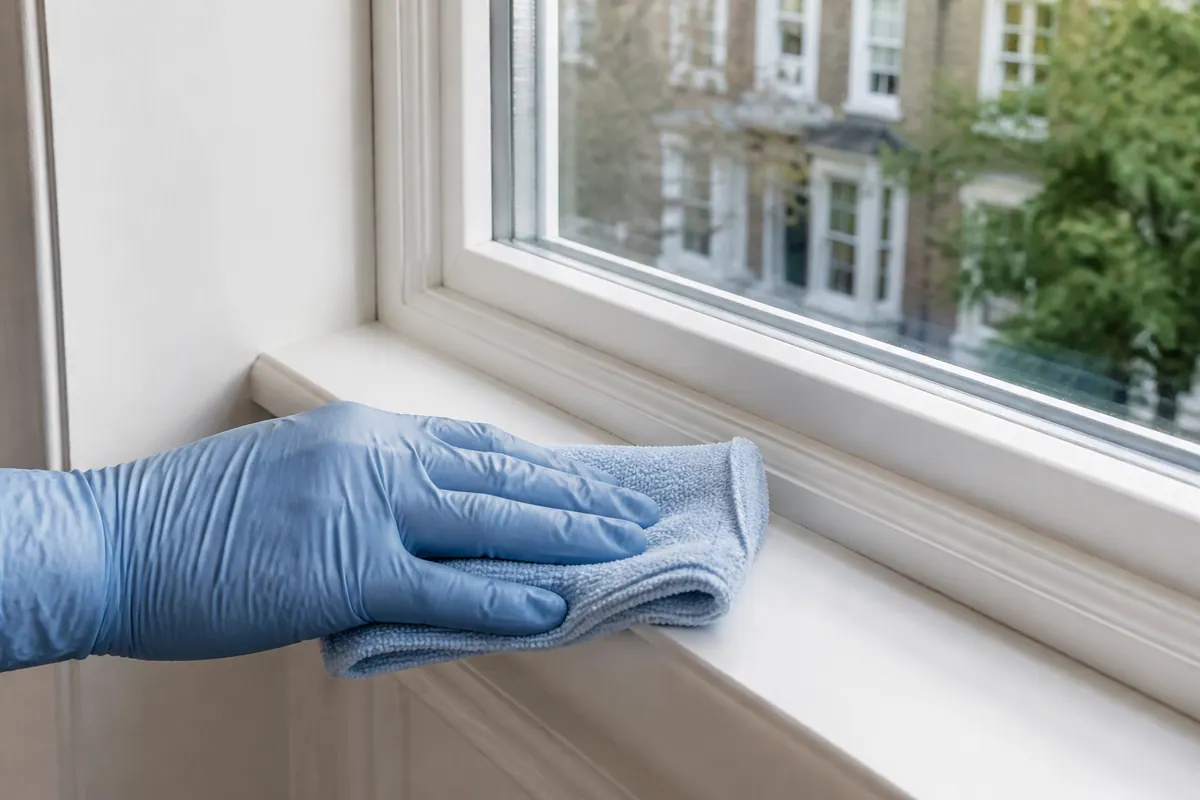
Do not assume the room clean includes every glass surface. List window requirements alongside the access details.
Explain any plaster or paint spots so the scope reflects their condition, not just the glass area.
Plan separate window cleaning ↗Service-area planning
Use the map to locate the Barnes service area, not an Alesta branch. Provide the actual address when asking about access and appointment availability.
For another nearby area, contact Alesta through the main after builders service to confirm coverage and availability.
Before the appointment
Give the enquiry a clear boundary: which installation ended, which surfaces remain exposed, and what must happen next. Photos can support a description but do not replace an agreed task list. A utility room can collect fitting dust and packaging while attention stays on the kitchen.
Give a contact who understands both building entry and the rooms being cleaned. That person should know what remains inaccessible. Agree which entrance gives practical access to both rooms.
Loose deposits may be straightforward to discuss, while a bonded mark can need another assessment. Neither should be treated without knowing the finish. Identify the actual flooring material rather than relying on its stone-like appearance.
Another room is relevant when it shows renovation effects, but the quotation must include it explicitly. Explain the affected detail. Here, inspect the kitchen-to-utility connection.
A scope-based quotation follows the published £29 hourly starting guide. Confirm the rate and requirements directly; equipment and materials for cleaning form part of the service.
Tell Alesta which trades are returning and what they will do. Dust-producing work after a clean may change the sensible sequence; do not assume later deposits are included in the visit.
The hourly cleaning guide does not absorb waste collection. Identify what needs taking away and arrange the relevant scope before it blocks surface access.
A window count is insufficient where construction deposits remain. Identify those marks and ask about appropriate assessment.
Access, detail and residue determine the workload. Explain the deadline without assuming a set duration is available. Review the utility area before storage and laundry items return.
The original material may set the boundary of what cleaning can achieve. Do not confuse that limit with a promise of repair.
Your project / the final clean
Describe the completed work and the areas it affected, then ask Alesta to confirm the practical scope for your property.
