
Accessible ledges
Describe the exposed ledges individually if fitted furniture creates several levels of detail.
Finsbury Park · New storage, accessible detail
New storage, accessible detail
A clear brief for filling the renovated rooms.
Internal alterations can leave dust around storage that is newly fitted but not yet filled. For Finsbury Park, identify the exposed surfaces and who can explain the project when the cleaning team is admitted.
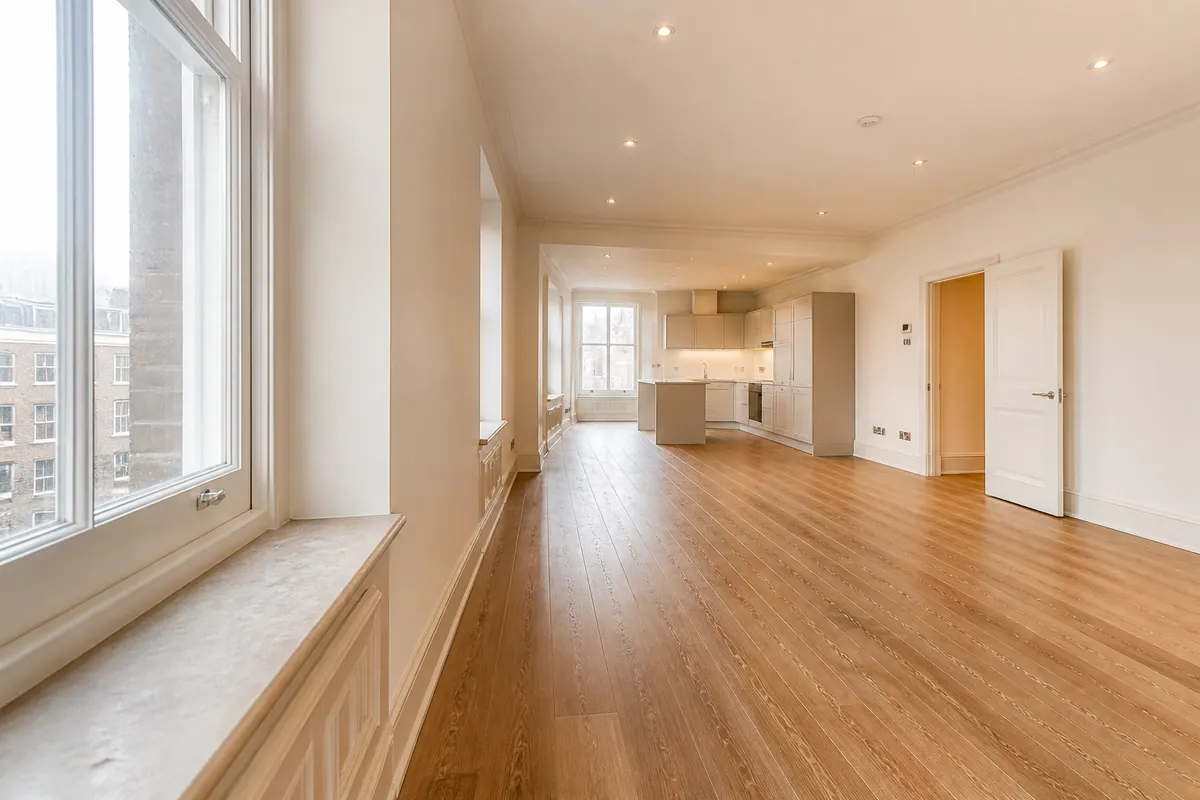
The image is illustrative and does not depict a customer job.
At your Finsbury Park property
Inspect exposed cabinet edges before contents are put away.
Name the person admitting the team and explain how they can confirm the room list. Clear the route around remaining boxes before assuming the new units are fully accessible.
Confirm any final drilling or fixing around the storage. A cupboard can appear complete while fitting work still needs to happen above or beside it.
Review accessible exteriors and the agreed surrounding edges before filling the units. Note any separate interior cleaning or installer follow-up still required.
Draw the cleaning boundary
These categories organise the conversation. They do not promise that every pictured detail is included.
Describe the exposed ledges individually if fitted furniture creates several levels of detail.
Door surrounds and low corners can need attention separately from the open floor.
Reachable fixture exteriors may form part of the agreement; special treatments need a separate decision.
Suitable floor work follows the actual material and available access rather than a uniform whole-home assumption.
A finish is not just a colour
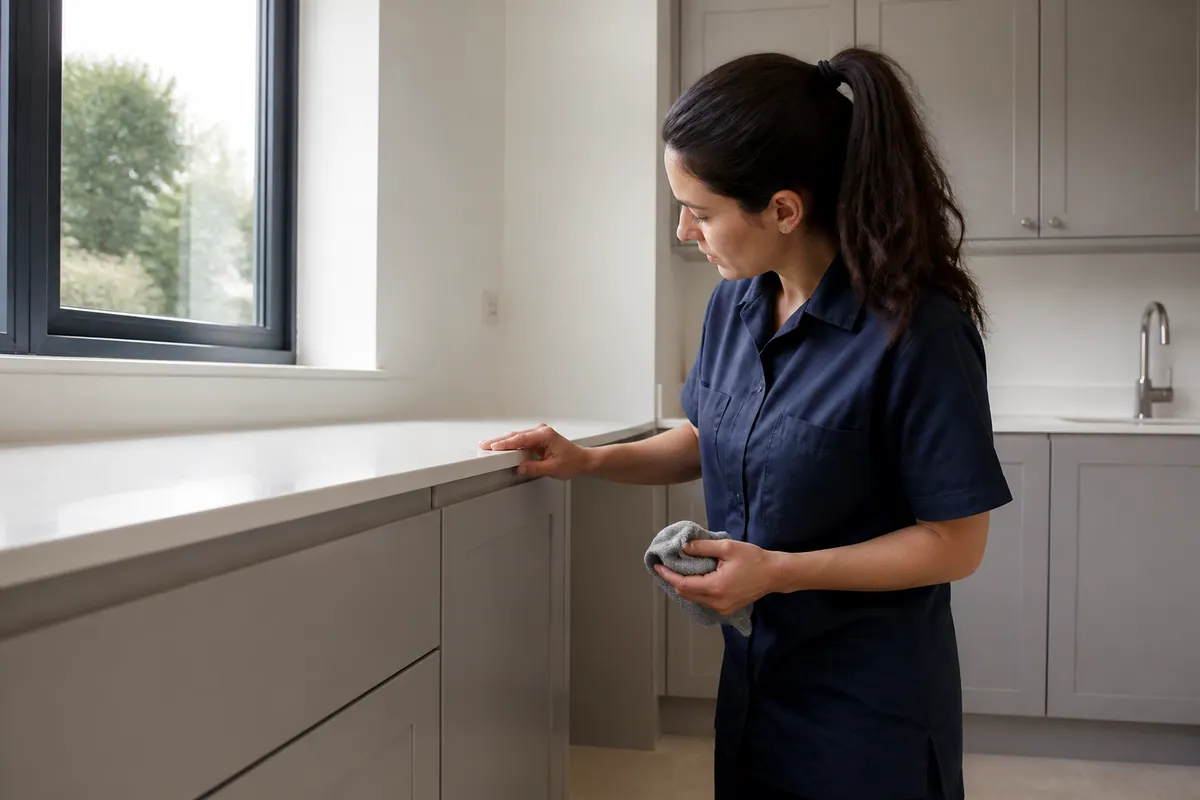
Illustrated material assessment.
The deposit cannot be assessed without the finish.
Share the storage manufacturer’s care information and distinguish protective material from residue. Hardware adjustments and installation scratches are matters for the fitter, not cleaning remedies.
Read the product’s cleaning-readiness instructions first.
Flag a surface with an unknown treatment history.
Give the condition of exposed cabinet faces.
Brief answers, clear limits
Address and access
Ask about service at your particular Finsbury Park address before relying on a date. The area marker does not indicate an Alesta premises.
For wider coverage questions, contact Alesta about the service for an address-specific answer.
Describe the Finsbury Park work
Describe the project through a category if useful, but do not assume all suggested tasks are included.
Explain what is complete and what still needs a trade. The cleaning plan should reflect that actual stage, not only the original renovation schedule.
Inspect the affected route
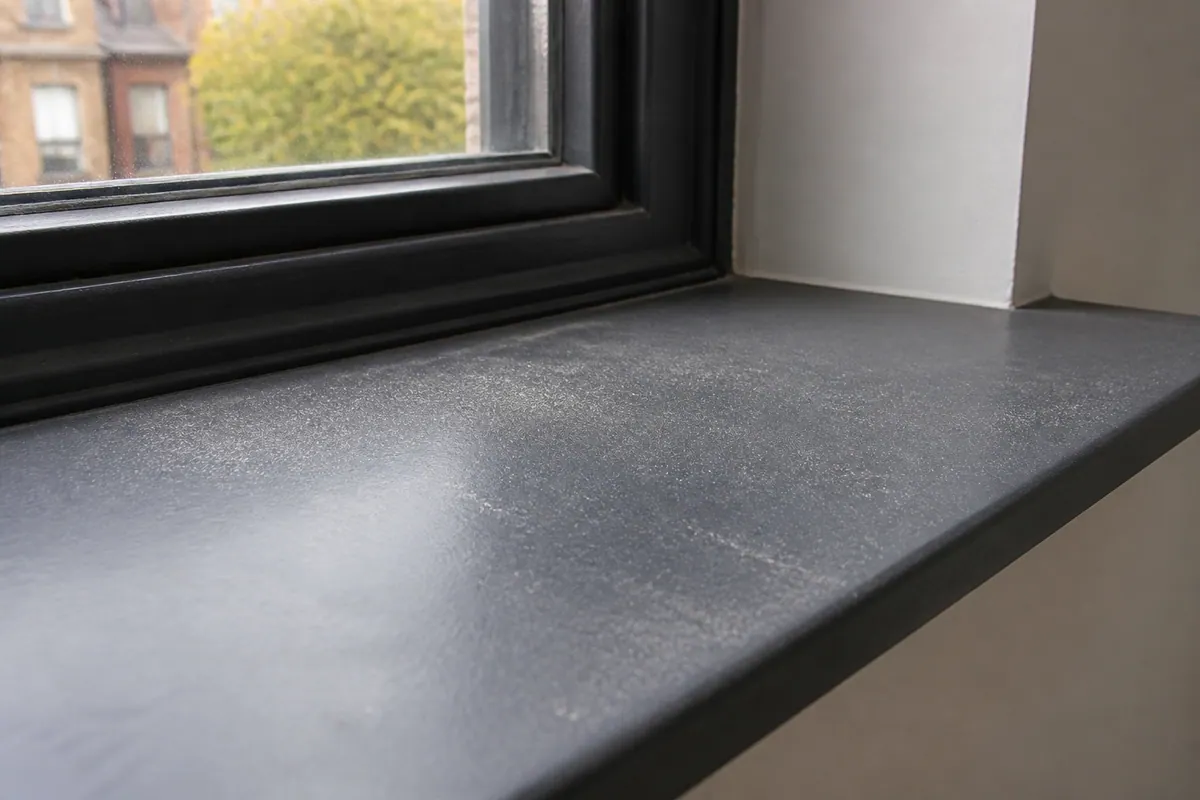
Dust patterns do not always match room names.
Inspect shelf edges and the floor beside the fitted units. If dust has reached inside storage, request that work expressly rather than treating every cupboard interior as included.
Reachability matters as well as dust level. Explain what is hidden by belongings so the proposed work reflects the condition the team will meet.
The final clean should not be expected to anticipate future work.
Quoting the Finsbury Park work
From £29/ hour
The published service includes cleaning equipment and materials. Check the applicable rate and tasks with Alesta before proceeding.
A lightly affected room and one with many installed surfaces present different workloads. Explain the difference before discussing a total.
| Work category | Price basis | Useful information |
|---|---|---|
| A defined work zone | Guide from £29/hour, not a total | Condition of the fitted-storage edges |
| Kitchen or bathroom installation | Hourly guide from £29 | Readiness of new fitted storage finishes |
| Whole-property scope | Agree cost against proposed work | Room access before filling the renovated rooms |
| Commercial scope discussion | Confirm the proposed arrangement | Suitability and property condition |
Based on Alesta’s published after builders cleaning rate. Bulky material needs separate pricing.
Identify before treating
| Remaining material | Example detail | Scope question |
|---|---|---|
| Fine deposits | fitted-storage edges | Check which surfaces can be cleaned safely. |
| Loose ordinary material | Small deposits after work | Use the agreed cleaning boundary. |
| Labels or adhesive | Labels or marks beside new fitted storage finishes | Do not assume label treatment from the general cleaning request. |
| Bonded building residue | Isolated spots near the fitted-storage edges | Safe removal cannot be assumed from appearance. |
| Unremoved covering film | Protection still on the fitting | Agree handling with suitable care information available. |
Keep clearance outside the dust brief
Define the cleaning work by the surfaces affected and their condition; bulk collection is not part of that definition.
Large packaging and building materials need a distinct agreement, even when clearing them first would help the cleaning sequence.
Ask about separate building waste collection ↗Different work leaves different detail
If rooms remain occupied, explain the boundary between daily use and renovation effects. Everyday housekeeping is a different request from this finishing stage.
Protective labels or film on new kitchen items need a responsibility check. Their removal is not automatically part of cleaning around the installation.
Check whether dust has reached the bathroom approach. That short connecting area can need a different description from the fixtures inside.
Explain where possessions or spare materials prevent access. The quotation should reflect reachable detail rather than a theoretical empty property.
If an agent holds the keys, provide a contact who can clarify new finishes and remaining works. Access and scope are separate pieces of information.
Site rules and the scope of a commercial visit require confirmation. This example is not evidence of an existing contract or specialist site service.
Check the conditions for arrival
Before the clean
For the appointment
Name rooms, not an unlimited checklist
Describe the fitted items and the care notes available for them. The kitchen’s overall size does not establish its cleaning workload.
Reachable sanitary detail may be included by agreement. Ask specifically about shower glass or other work beyond the named surfaces.
Name the bedroom finishes recently changed and any dust beyond those areas. This gives a clearer brief than an identical checklist for every room.
The living-room request can focus on accessible fittings, ledges and flooring. Delicate items and additional glass need their own discussion.
A sequence, not a completion guarantee
Establish which spaces can be reached on the day.
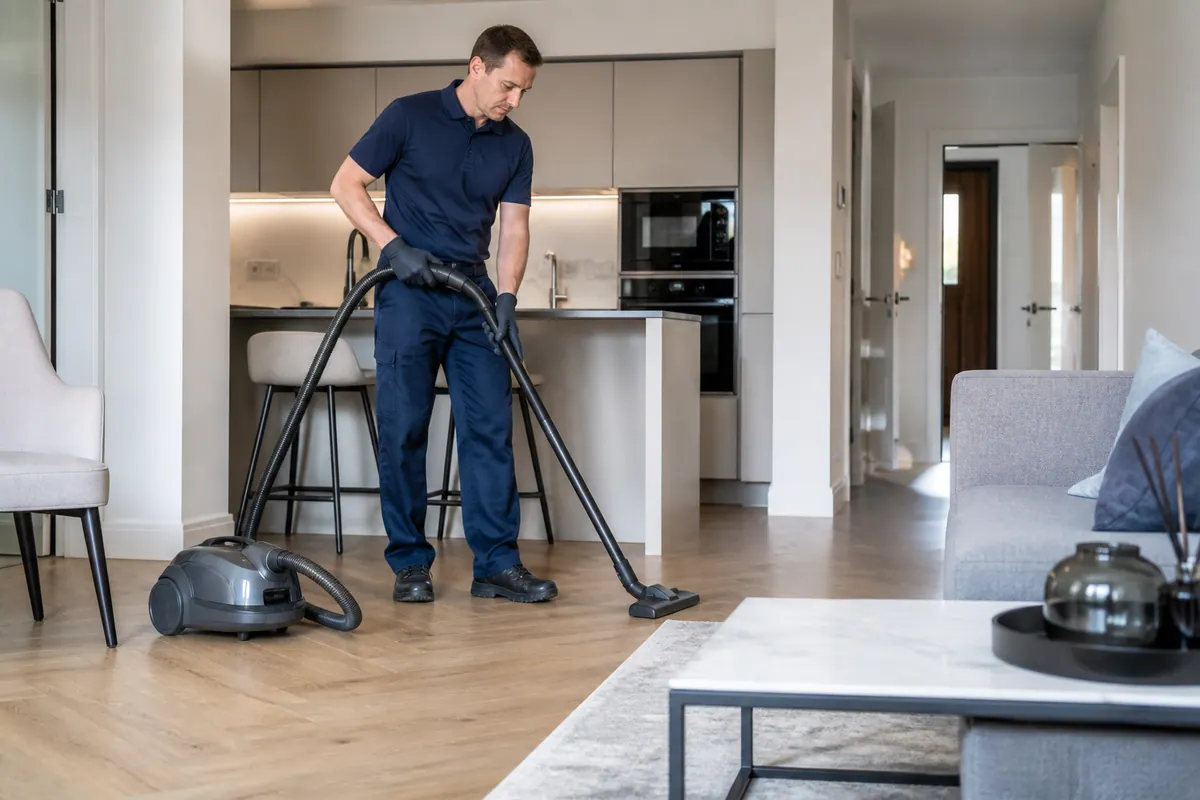
Work through the reachable surfaces included in the agreement.
Keep unresolved fitting issues on the trade’s list.

Use the review to clarify what still needs attention.
These are illustrative scenes, not successive photographs of a customer project.
Prepare a conversation, not a booking
Start with a practical outline of the property.
Record the internal work here, then specify storage access in the conversation. This private planning aid cannot inspect cupboard interiors and does not send a request, reserve a slot or set a price.
External storage detail and internal compartments are different requests. State what is actually wanted beyond the broad work type.
Talk through the room list: 020 3608 3976Make the responsible contact clear
Decide whether the storage will still be empty at the proposed visit. Exposed cabinet faces and internal compartments need separate descriptions, especially if boxes are already waiting beside the units.
Keep existing occupation marks distinct from deposits created by the works. Neither should be silently added to an unlimited cleaning expectation.
If trades return after cleaning, explain the intended sequence beforehand. A contractor request does not automatically cover later deposits.
Glazing is an explicit request
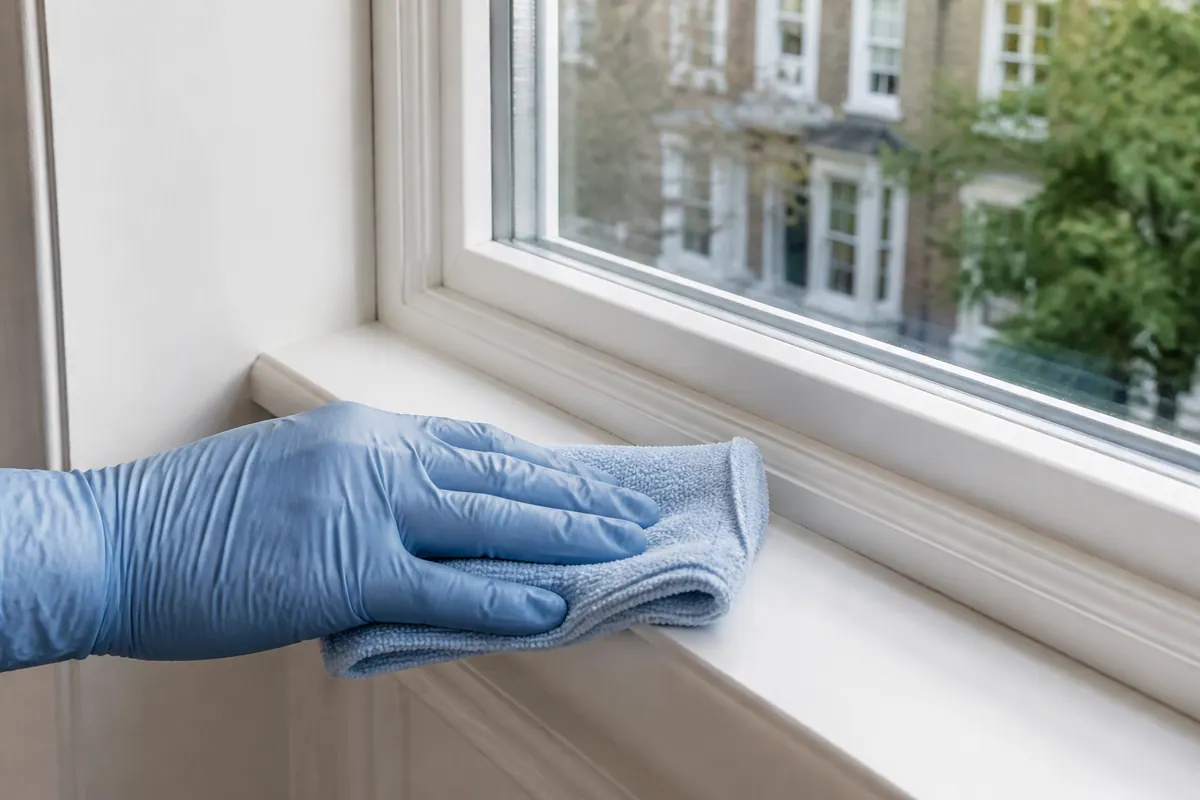
Glass within new storage needs to be named independently of apartment windows. Explain which surfaces are external and reachable before filling the units, rather than assuming the storage brief covers all glass.
Identify installation residue separately from general dust on glass. Safe removal and its inclusion must be confirmed.
Ask about the window scope ↗Questions for this project
Use fitted-storage edges as a starting point and explain which adjoining surfaces were affected. The quotation should follow the actual room condition.
Explain who can open the agreed areas and where equipment must pass. Access to fitted-storage edges should not depend on moving unmentioned materials.
Identify new fitted storage finishes and provide the applicable care notes. An unknown finish should remain a question rather than receive an assumed treatment.
There is no automatic rule based on the doorway. Include relevant adjoining deposits in the room list and confirm their scope.
The guide starts at £29/hour, including cleaning materials and equipment. It is not a project total; ask for the current scope and quotation.
Tell Alesta whether the proposed rooms remain subject to dusty tasks. The planned visit should reflect their actual completion state.
Building waste is a separate enquiry. Describe boards, rubble or packaging and the access for collection; cleaning does not automatically remove them.
Window and carpet services should be distinguished from ordinary finishing detail. The property condition and availability govern any arrangement.
Ask about timing with the full brief rather than selecting a fixed slot from the page. Different fittings and deposits create different workloads.
Where ordinary cleaning is unsuitable for new fitted storage finishes, specialist advice may be needed. Complete removal of all building marks is not an assurance.
Finsbury Park / next conversation
Tell Alesta which spaces are released and how they can be reached. The final cleaning plan should match those facts.
