
Accessible ledges
Dust may be visible on exposed ledges after the central floor looks tidy; name those needing attention.
Kentish Town · Let the finish set before the clean
Let the finish set before the clean
A clear brief for walking on the finished floors.
Flooring and decorating can finish on different dates. For a Kentish Town cleaning enquiry, identify the latest coating, the remaining dust and which surfaces are ready before choosing the finishing visit.
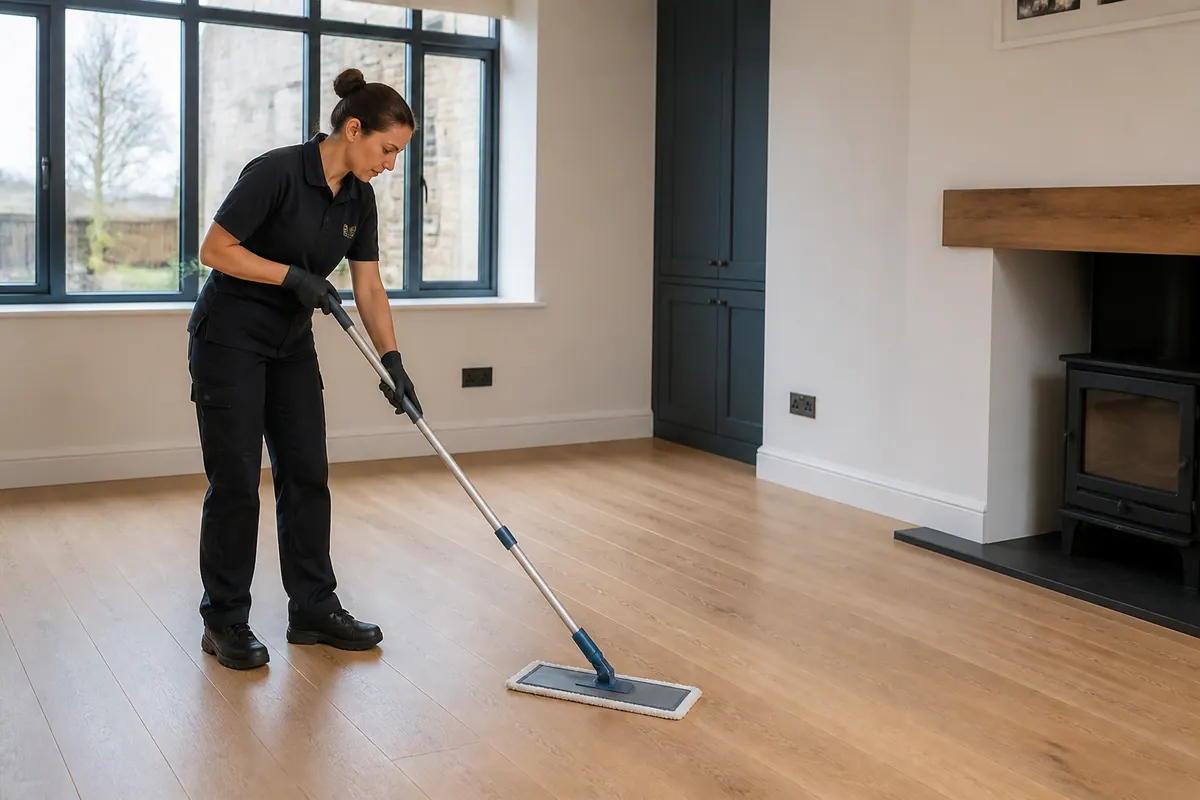
No customer outcome is represented by the illustration.
At your Kentish Town property
Start at exposed corners and follow the skirting line.
Confirm that the route to the affected rooms avoids finishes still drying. A room may be clear of tools but remain unsuitable for equipment access.
Compare the decorator’s completion date with the flooring guidance. Schedule around whichever requirement releases the surfaces later, rather than relying on the first trade to finish.
Review accessible edges and any remaining marks against the coating information. Cleaning cannot remove a defect sealed into the finish or repair an uneven application.
Draw the cleaning boundary
The diagram is a planning illustration, not a survey of this property. Agree the reachable surfaces with Alesta.
Dust may be visible on exposed ledges after the central floor looks tidy; name those needing attention.
A threshold can connect dusty and relatively protected areas; describe both conditions.
Describe the accessible fixture detail and any recently applied coatings before methods are selected.
The carrying route may cross materials with different care requirements; describe each transition.
A finish is not just a colour
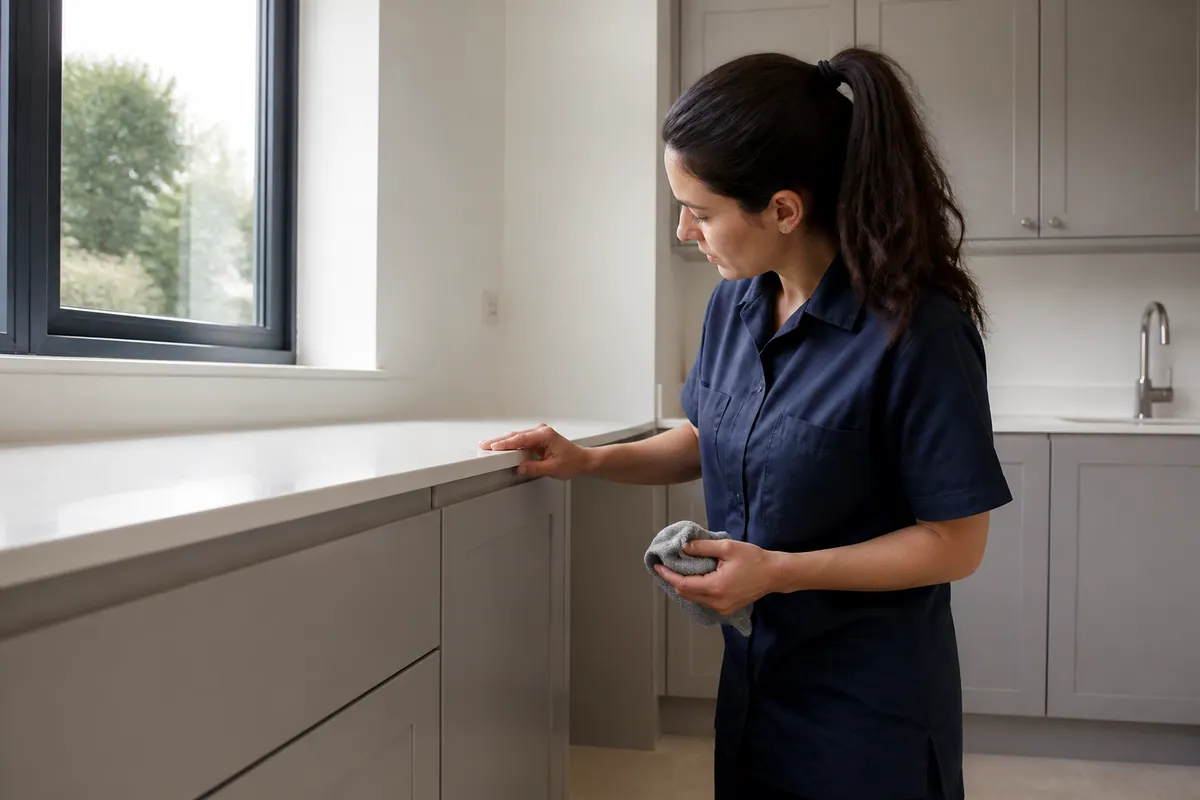
Illustrated material assessment.
Readiness and residue are separate questions.
Ask the flooring installer for the new coating’s cleaning instructions. A dry-looking surface is not a reliable substitute for the product’s stated readiness, particularly before damp cleaning.
Read the product’s cleaning-readiness instructions first.
Name the finish beneath any bonded residue.
Give the condition of exposed cabinet faces.
Brief answers, clear limits
Address and access
Use the service-area map to orient the request. Alesta needs your precise Kentish Town address and access arrangements to discuss attendance.
For another property, contact the main service team before assuming attendance.
Describe the Kentish Town work
Describe the project through a category if useful, but do not assume all suggested tasks are included.
For a complete refurbishment, identify the priorities within each room rather than expecting a single identical checklist everywhere.
Inspect the affected route
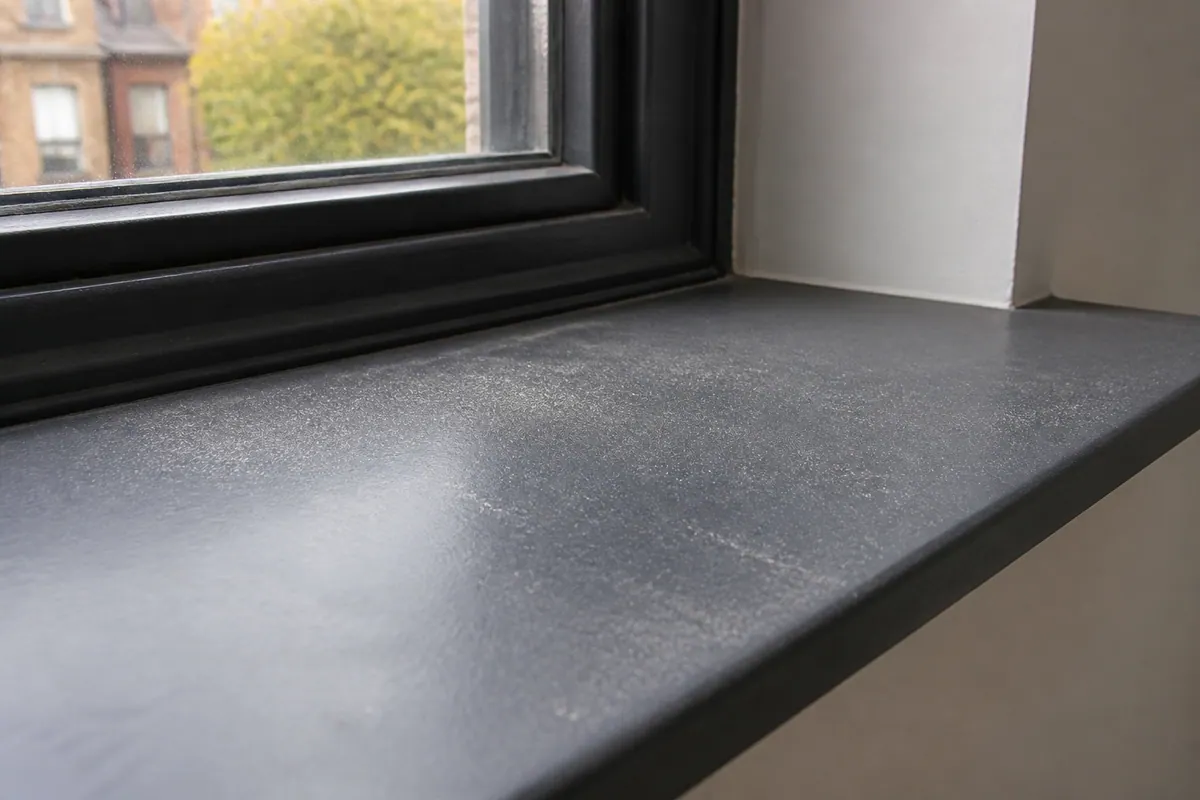
Include the edges in the first description.
Check floor edges where dust may have gathered during decorating. Loose deposits and marks trapped in a coating are not the same issue, so describe them separately.
The enquiry should follow the dust that is visible, not merely the contractor’s work-room label. Agree any adjoining areas explicitly.
Tell Alesta if a trade must return to the agreed rooms.
Quoting the Kentish Town work
From £29/ hour
The inclusion of cleaning equipment does not make specialist treatment automatic. Confirm both the price and the proposed tasks.
Dust level, reachable detail and the condition of surfaces affect time. Separate waste, glazing or specialist work should be identified before accepting a quote.
| Work category | Rate guide | Condition to describe |
|---|---|---|
| Limited room work | Guide from £29/hour, not a total | Condition of the new floor edges beside painted trim |
| Installed units and fixtures | Starting guide: £29/hour | Readiness of fresh floor coatings |
| Property-wide work | Price depends on the specified tasks | Room access before walking on the finished floors |
| Proposed commercial work | Specific commercial quote required | Project details and responsible person |
Based on Alesta’s published after builders cleaning rate. Building waste is a separate service enquiry.
Identify before treating
| What is visible | Example detail | Decision required |
|---|---|---|
| Light particulate deposits | new floor edges beside painted trim | Define the reachable dust-removal area. |
| Routine loose deposits | Light material beside fittings | Confirm inclusion among the surface tasks. |
| Possible sticky residue | Labels or marks beside fresh floor coatings | Check what the installer says about the material. |
| Resistant local marks | Isolated spots near the new floor edges beside painted trim | Assess bonded deposits before selecting products. |
| Surface protection film | A layer supplied with the item | Do not interpret protection removal as an automatic cleaning task. |
Keep clearance outside the dust brief
Define the cleaning work by the surfaces affected and their condition; bulk collection is not part of that definition.
A waste enquiry should explain volume, weight and collection access. The cleaning quotation cannot substitute for those details.
Ask about separate building waste collection ↗Different work leaves different detail
The final carrying route can hold deposits after the work room is cleared. Check the doorway and passage before deciding the apartment brief is complete.
Name the kitchen exteriors you want considered, including the worktop material. An installation mark may need a different decision from settled dust.
Check whether dust has reached the bathroom approach. That short connecting area can need a different description from the fixtures inside.
Identify different floor products across the property. A common completion date does not make the same cleaning method suitable everywhere.
If an agent holds the keys, provide a contact who can clarify new finishes and remaining works. Access and scope are separate pieces of information.
A commercial brief should identify responsibilities for access and remaining materials. Any agreement follows that conversation, not a general page example.
Check the conditions for arrival
Before the clean
For the appointment
Name rooms, not an unlimited checklist
Point out where installation deposits remain around the kitchen. Separate expected surface cleaning from adjustment or repair of new units.
Flag the surfaces most recently installed in the bathroom. A visible spot is not proof that a safe routine removal method exists.
A bedroom kept closed during renovation may still need a check at its doorway. Describe what is visible before expanding the scope.
The living-room request can focus on accessible fittings, ledges and flooring. Delicate items and additional glass need their own discussion.
A sequence, not a completion guarantee
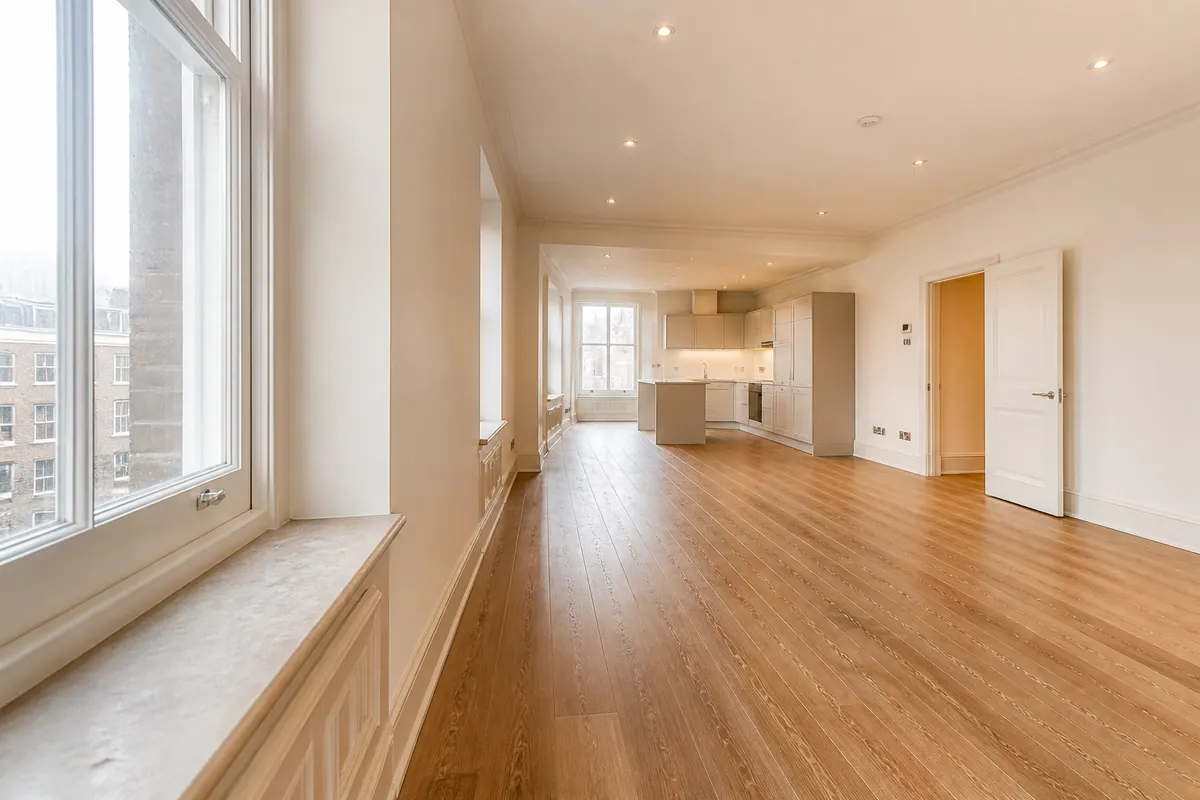
Identify the areas released after the last dusty task.
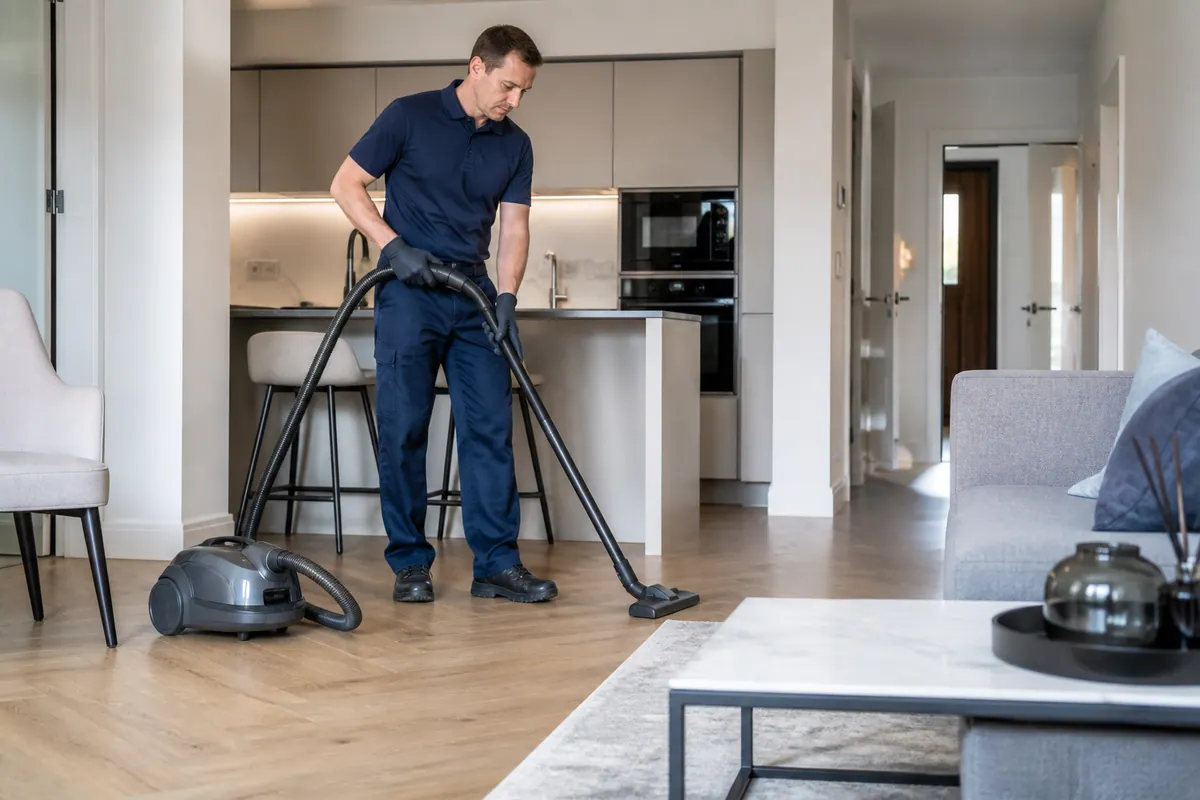
Apply the scoped detail with methods suited to the finish.
Identify any mark requiring a separate decision.
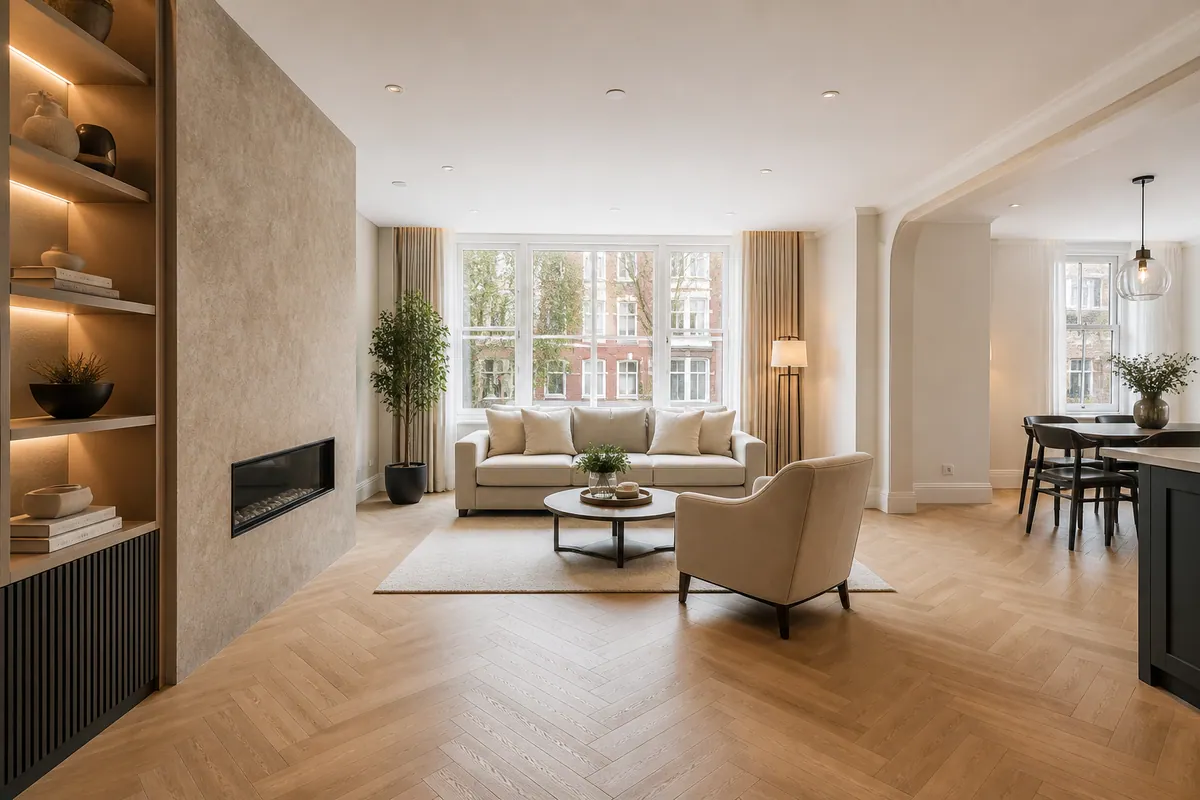
Keep furnishing plans aligned with the room’s condition.
Illustrative images show the planning stages, not evidence of one job.
Prepare a conversation, not a booking
Use the choices to organise the condition notes.
Include the floor work in the note, then supply its coating guidance directly. This tool cannot determine readiness or costs and does not transmit the answers or book attendance.
Bring the flooring and paint guidance together. Neither the dust setting nor room count establishes surface readiness.
Talk through the room list: 020 3608 3976Make the responsible contact clear
Compare the flooring and decorator’s instructions rather than choosing whichever date comes first. The clean needs a usable route as well as surfaces ready for the proposed contact.
Give the keyholder a clear refurbishment brief. A tenancy inventory and the finishing-clean agreement are separate documents.
Contractors should ask whether the project is suitable and explain access responsibilities. Commercial coordination is not an implied agreement.
Glazing is an explicit request
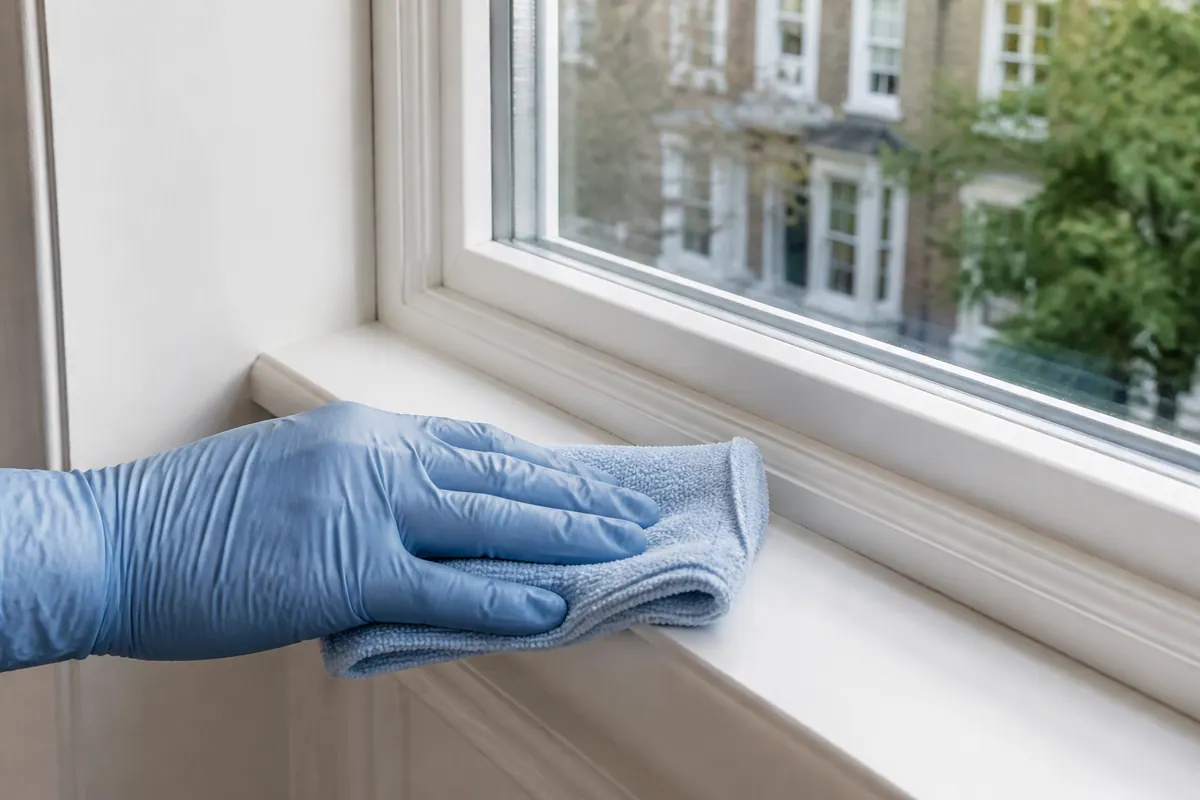
Window work following floor and paint changes should consider access across the new surface. Explain the pane positions and flooring readiness rather than assuming glazing can be reached as soon as decorating looks finished.
Hard paint or cement deposits need assessment against the glazing. An ordinary window service is not a guarantee that all construction material will disappear.
Ask about the window scope ↗Questions for this project
Tell Alesta what changed around new floor edges beside painted trim. Identify surfaces that remain blocked or protected so the proposed work reflects real access.
Tell Alesta how the agreed surfaces can be reached on the day. Any change to access around new floor edges beside painted trim should be communicated beforehand.
Describe the actual coating or material behind the visible residue. With fresh floor coatings, safe treatment must be established rather than promised.
Explain where dust appears outside the original work area. Alesta can discuss that extension without turning new floor edges beside painted trim into an unlimited whole-home brief.
Alesta’s published starting rate is £29/hour. Check the current quotation for the condition described; included cleaning supplies do not make extras automatic.
Explain any returning trades before arranging the appointment. New deposits after the visit are not automatically covered by the earlier scope.
No automatic bulk clearance forms part of the finishing visit. Give the type and amount of material remaining for a distinct quotation.
Explain those requirements in advance so the separate tasks can be considered. A builders-clean request alone does not include them.
Ask about timing with the full brief rather than selecting a fixed slot from the page. Different fittings and deposits create different workloads.
Some deposits cannot be treated safely without risking fresh floor coatings. Record the issue separately instead of assuming a stronger product must solve it.
Kentish Town / next conversation
Bring the room priorities and any uncertain marks to the first conversation. The aim is a clear scope rather than an assumed standard package.
