
Carpet Smells After Cleaning: Causes, Drying Errors and Remedies
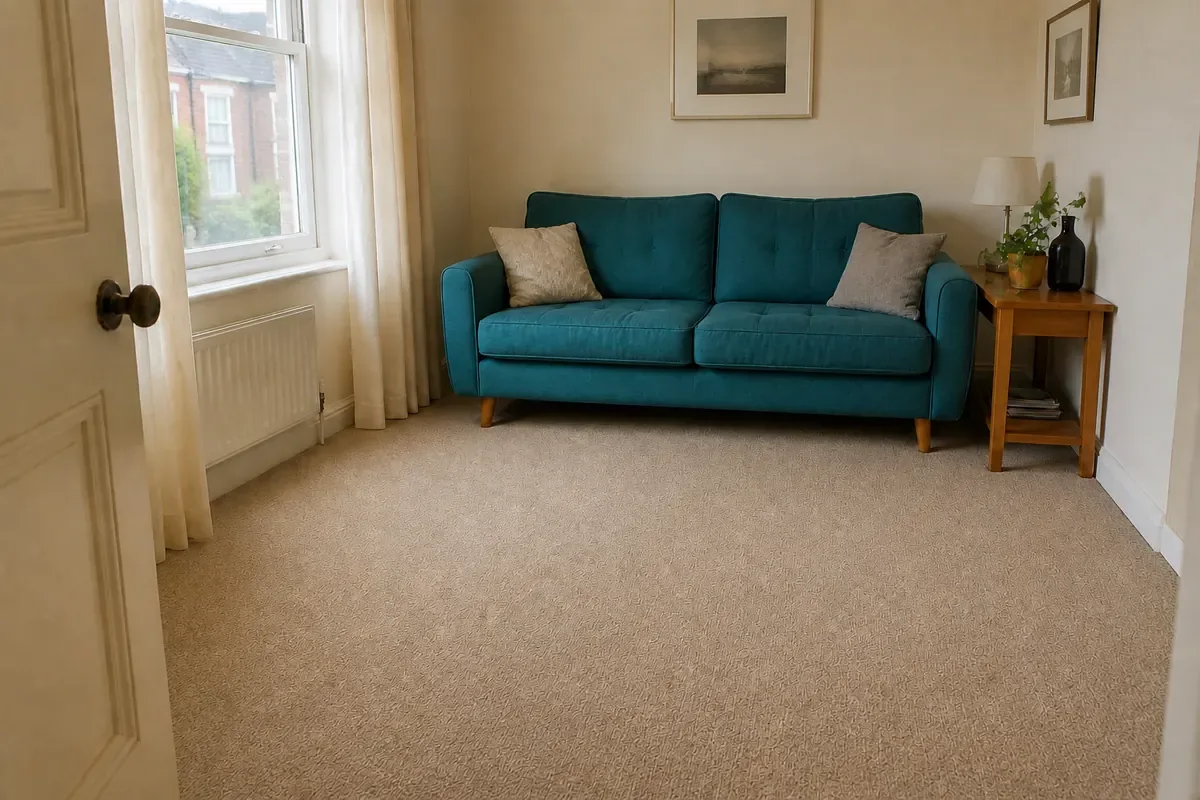
A musty carpet after cleaning is usually still wet below the surface, has detergent left in the pile, or has reactivated an old contamination in the backing or underlay. Open two windows if the weather allows, move air across rather than directly down at the pile, and keep feet and furniture off it. Do not add perfume, bicarbonate of soda or another wet shampoo. If the smell is getting stronger after 24–48 hours, or returns whenever the room becomes humid, arrange an inspection of the backing and underlay.
First decide what the smell actually resembles
“Damp” covers several different odours. A faint wet-wool or textile smell immediately after extraction can disappear as a natural-fibre carpet dries. A sour, cellar-like smell that develops the next day is less reassuring. A sharp chemical scent suggests excess product or inadequate rinsing. Cat urine can seem stronger after cleaning because moisture dissolves dried residues and carries the odour upwards.
Write down when the smell began and where it is strongest. Check the room at floor level, then compare the centre with edges, door bars, the space beneath a radiator and any former stain. If one square metre smells while the rest is neutral, a local spill or wet underlay is more plausible than a whole-room drying problem.
The towel test finds moisture your hand misses
Press a clean white cotton towel firmly onto three areas for ten seconds. Do not rub. If the towel feels cool and damp, or picks up colour or soil, the carpet is not ready for furniture. Repeat at an edge, because extraction passes often remove more water from the open centre than from the perimeter. A dry-feeling pile does not prove that the backing is dry.
Look at the skirting line too. Air movers, open doors and ordinary foot traffic can dry the top while moisture remains where the carpet meets a wall. Where a heavy item sat during cleaning, trapped air may have slowed evaporation. Put furniture on protective tabs only if the cleaner supplied them, and do not replace flat-based boxes or mattresses until the test is dry.
Dry the room, not just the visible fibres
Create cross-ventilation when outdoor air is reasonably dry. A fan should move air along the carpet; setting a domestic fan inches above one patch can chill the surface without drying the whole room evenly. Moderate background heat helps, but a portable heater aimed at wet carpet is a fire and material-damage risk. In cool or humid weather, a dehumidifier in a closed room can be more useful than an open window. Empty its tank and follow its clearance instructions.
Leave internal doors open only if that improves airflow and does not spread a strong contamination odour through the home. Run an extractor in an adjacent bathroom or kitchen only when it actually exhausts outdoors. Do not assume a recirculating cooker hood removes moisture; many return filtered air to the room.
Why a carpet can be too wet
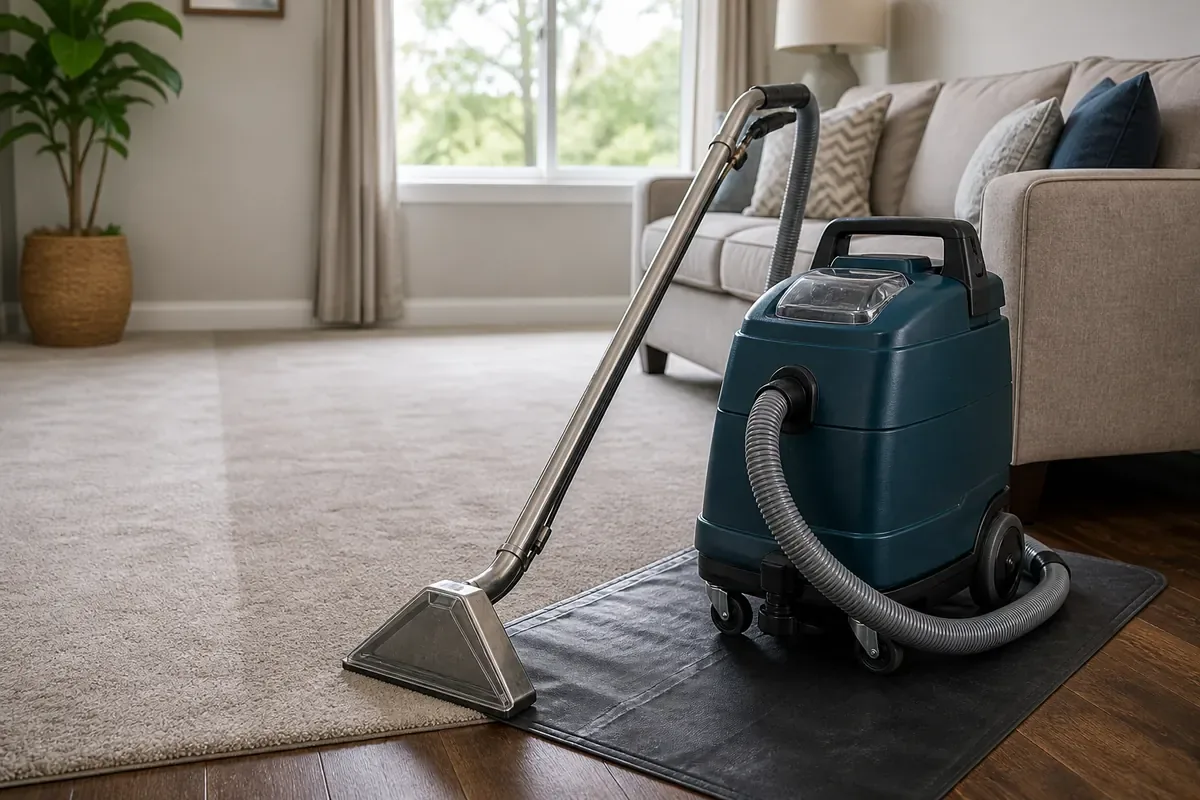
Over-wetting is not simply “too much water”. Slow passes, an unsuitable domestic machine, a blocked recovery path, worn seals, overfilled tanks or too few dry extraction passes can all leave liquid behind. Dense wool, deep pile and absorbent underlay extend drying. So do closed London flats, shaded basement rooms and cool autumn weather.
If a hired machine repeatedly stops recovering dirty water while solution continues to dispense, stop. Check only the user-serviceable tank, float and hose described in its manual. More passes with poor suction make the imbalance worse. For corrective work, ask a professional carpet extraction service to measure moisture and assess whether rinsing and stronger recovery are appropriate.
Residue has a different feel from damp
Detergent residue often leaves pile tacky or stiff once nominally dry. It attracts fresh soil, so traffic lanes darken unusually quickly. Foam reappearing under a slightly damp white towel is another clue. Do not neutralise an unknown alkaline product with vinegar: fibre, dye and backing chemistry matter, and mixing products can set stains or create fumes.
A technician may use a controlled rinse after identifying the fibre and product history. Tell them the machine and shampoo used, dilution, number of passes and anything applied before cleaning. “Normal carpet cleaner” is not enough information because spot removers, pet products and laundry detergents behave very differently.
When the source sits under the carpet
Floodwater, repeated pet urine, plant-pot leakage and an old plumbing escape can penetrate the backing. Surface extraction may improve appearance while the underlay remains contaminated. Warning signs include an odour confined to one patch, discolouration returning from below, damp gripper rods, a smell that revives on humid days, or a carpet that feels loose after drying.
Do not pull up fitted carpet beside live sockets, sharp gripper strips or unknown contamination. Ask whether lifting, underlay replacement and subfloor treatment are needed. A specialist rug-cleaning assessment is the better route for a removable rug because its dyes, fringes and foundation require a different drying set-up.
Browning and colour change are not odour problems
Brown or yellow marks that rise as a carpet dries can result from soil wicking or cellulosic material migrating from backing. Scrubbing the mark while wet can spread it. Photograph the boundary, let the carpet dry fully and contact the original cleaner promptly. Colour loss, by contrast, will not wipe onto a towel and cannot be “cleaned back in”.
If the same event affected a sofa, avoid copying the carpet method onto upholstery. Fabric codes, fillings and drying paths differ; use an upholstery cleaning assessment for cushions or a sofa base that still smells.
What to ask the cleaner who did the work
- Which cleaning and spotting products were used, and at what dilution?
- Was a rinse applied after the prespray?
- Did the operative notice pet contamination, backing damage or unusually slow recovery?
- What drying time was expected for this fibre and room?
- Will they return to take moisture readings rather than simply deodorise?
A responsible return visit should identify whether moisture, residue or subsurface contamination is present. Fragrance alone is not a remedy. Once the source is known, the answer may be more airflow, a controlled rinse, local subfloor work or replacement of contaminated underlay. Those are very different jobs, which is why the smell and location matter.
A sensible 48-hour response
During the first day, ventilate or dehumidify, keep the area clear and test several zones. By the second day, a properly drying carpet should feel neutral and the odour should be fading, not intensifying. Seek help sooner for sewage, floodwater, electrical risk, widespread saturation or anyone experiencing breathing difficulty. Otherwise, preserve photographs and product details and request a moisture-led inspection. The objective is to remove the cause, not win a short contest with air freshener.
If the carpet has no sour or localised odour and the question is simply when the room can return to use, compare the fibre and conditions with the guide to normal carpet drying times.
