
Cockroach Eggs in the Kitchen: How to Identify the Signs Safely
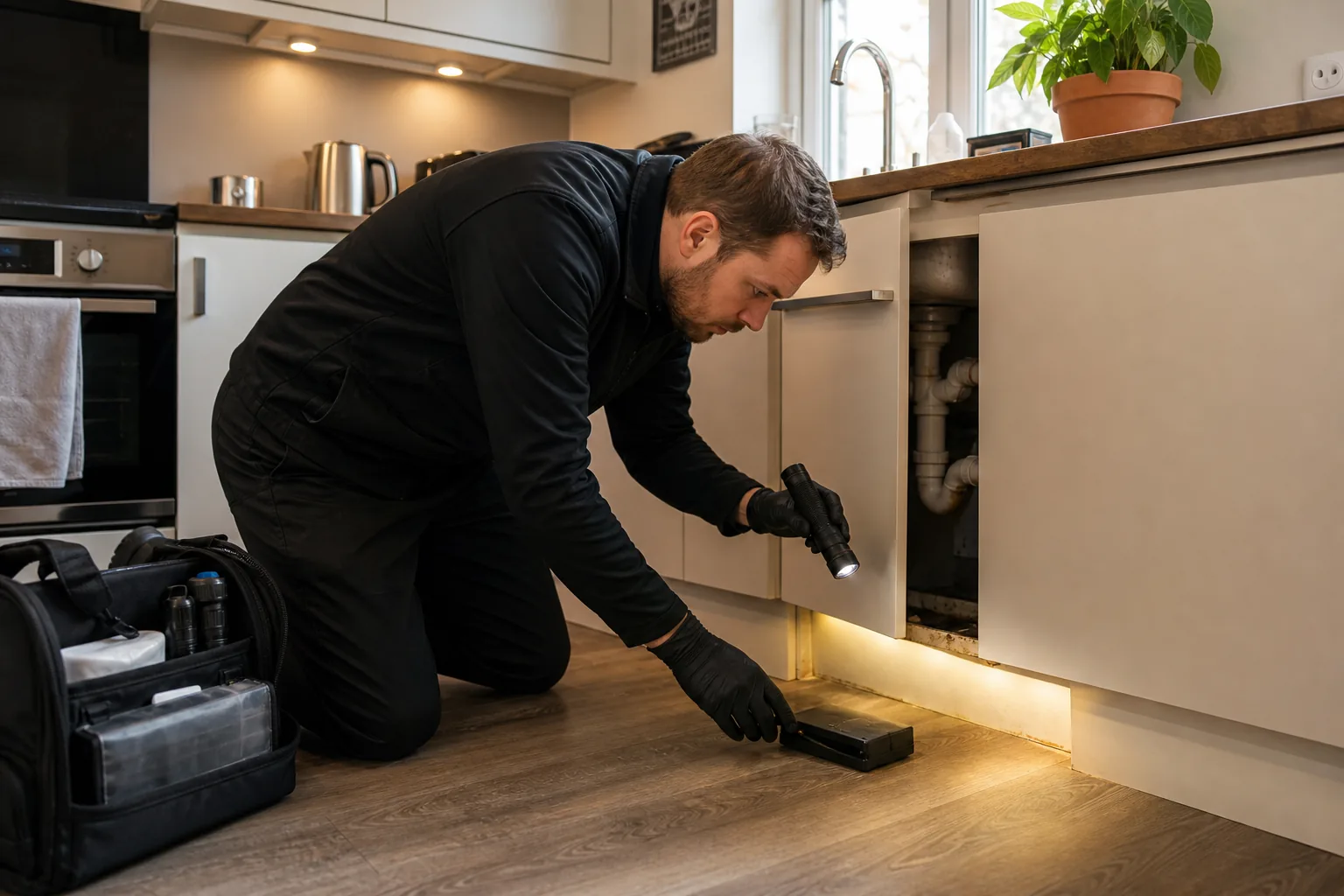
Cockroach eggs are enclosed in a small capsule called an ootheca, not scattered as loose white grains. German cockroach cases are usually light to medium brown, ridged and roughly the size of a small bean or grain of rice; females may carry them until close to hatching. A single case is useful evidence, but pantry-moth pupae, fly cases, seeds and food debris are often misidentified. Do not handle it with bare fingers or spray the area before identification.
Look at shape, seam and location
An ootheca is elongated with a distinct ridged seam along one edge. Colour and size vary by species and age, so internet photographs are not enough. Photograph the object beside a ruler, then collect it with gloves or tweezers into a sealed clear container if this can be done without crushing it.
Finding a case beside warm kitchen equipment, in a cupboard hinge or along a tight crack is more suggestive than finding a similar object loose in a bag of dried food. A cockroach-control inspection should confirm species before treatment.
Where a kitchen survey should start
Use a torch around the fridge motor area, dishwasher void, sink cupboard, boiler cupboard, cabinet hinges and pipe penetrations. Cockroaches prefer narrow, warm, sheltered spaces near food and moisture. Do not pull out integrated or heavy appliances yourself or remove electrical covers.
Check for live insects, cast skins, pepper-like droppings and a persistent oily or musty odour. One type of evidence can mislead; several signs in the same harbourage are stronger.
How to preserve evidence without spreading it
Seal the specimen and label room, exact position and date. Take photographs before cleaning. If it is inside a removable food package, seal the entire package rather than carrying the loose object through the home. Do not post an unsealed specimen or bring it to another property.
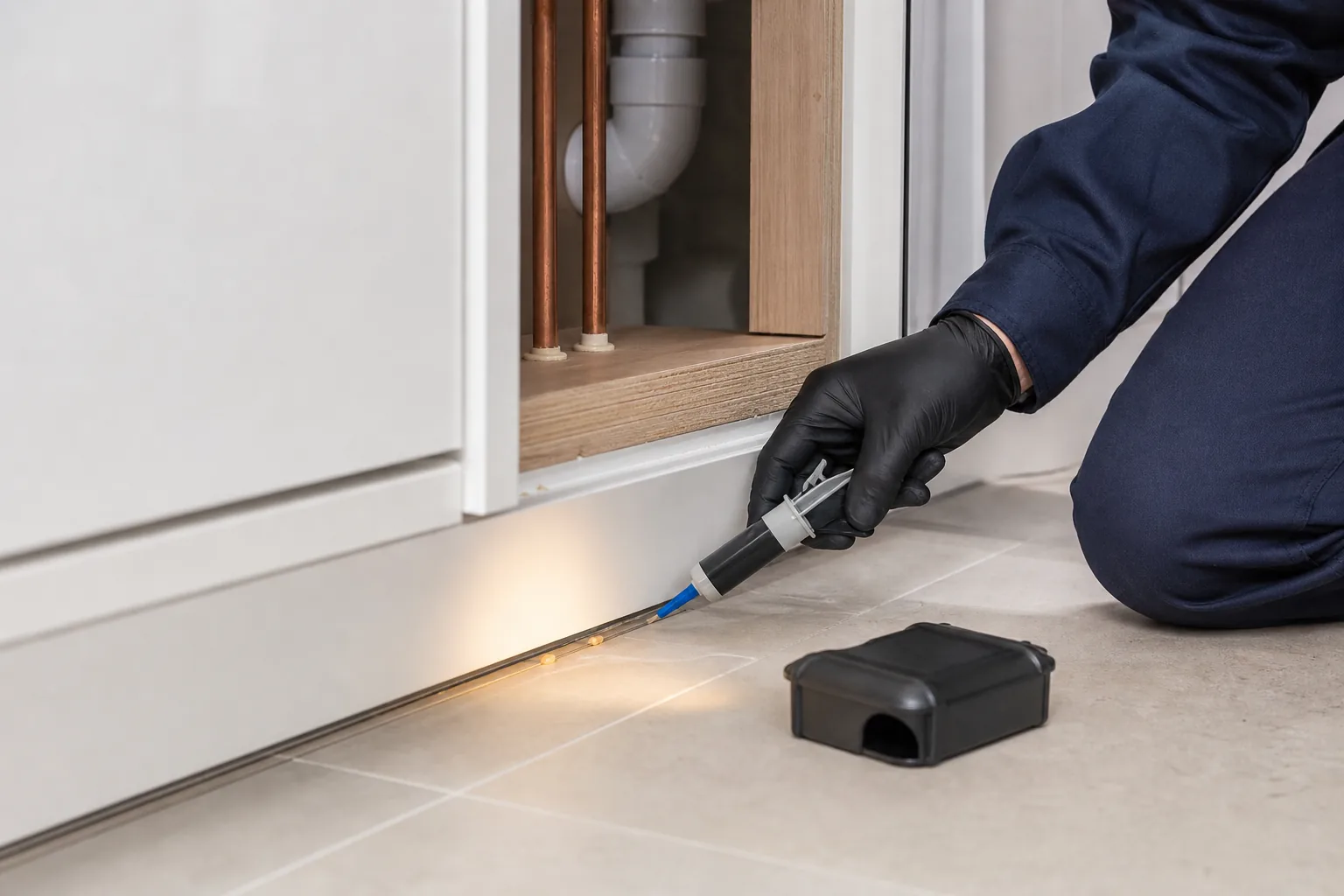
Sticky monitoring traps can help map activity when placed flat along edges and behind safe accessible equipment. Number and date them. Keep traps away from children and pets and do not place them on food-preparation surfaces.
Clean for control, not cosmetic reassurance
Remove accessible grease and crumbs, store dry food and pet feed in sealed containers, empty rubbish regularly and dry sinks overnight. Repair dripping taps and report leaks. Vacuum cracks with a bagged machine only if the treatment provider advises it; seal and dispose of the bag immediately.
Do not move infested small appliances to a bedroom or another flat. Bag them in place and ask the technician how they should be inspected. Cardboard boxes provide harbourage and should not be carried around casually.
Why a visible egg case changes the plan
An egg case can contain multiple developing nymphs. Some insecticides do not penetrate it reliably, and a carried case may hatch after adult activity appears to stop. Follow-up monitoring therefore matters. A one-off aerosol spray that kills exposed insects does not prove control.
Products that make identification and treatment harder
Foggers and broad repellent sprays may scatter cockroaches deeper into cracks or neighbouring units and contaminate bait placements. Loose insecticidal dust on worktops is unsafe. Never apply agricultural or overseas products without a UK-authorised label. Professional gel baits and insect growth strategies depend on species, placement and competing food.
For uncertainty about the insect, use the broader pest identification service before choosing a chemical.
Flats need a building-level view
Pipe risers, ducts and gaps connect kitchens. Tell the landlord or managing agent in writing, especially if signs occur near shared services or communal waste. Treating one unit while an adjacent harbourage remains can lead to recurrence. Keep photographs and trap dates; they make coordinated inspection easier.
Food safety after a kitchen finding
Discard open food and packaging contaminated with insects, droppings or gnawing. Clean food-contact surfaces with an appropriate labelled product and follow contact time. Do not prepare food in the affected area until contamination is removed. Commercial kitchens should follow their documented food-safety and pest-control procedures.
When it may be a different pest
Stored-product insects leave larvae, webbing, pupal cases or beetles in dry goods. Flies can leave barrel-shaped pupae near waste. Carpet beetle cast skins look hairy. Photographing the object and its food or material context helps the technician choose the right identification route. Once treatment boundaries are confirmed, routine domestic cleaning can support kitchen hygiene without disturbing monitors or bait.
What the treatment plan should tell you
Ask which species was identified, where harbourages and routes are, how food and water sources should be managed, which products are used, and what preparation is required. Confirm pet, child and food-area precautions. Follow-up should include monitoring for nymphs and newly hatched activity, not only dead adults.
The safe response is identification, containment and mapping. A brown capsule in a kitchen is not automatically a cockroach egg case, but a confirmed ootheca means the hidden population and connected spaces need attention.
German and Oriental cockroach cases are not identical
German cockroaches are the common small indoor species in warm kitchens; the female often carries the egg case close to hatching. Oriental cockroach cases are darker and may be deposited in sheltered locations. Species matters because temperature preference, harbourage and movement differ. Do not use colour alone: preserve the case and seek identification.
Adult photographs should include the body from above if safe to capture. Avoid crushing the specimen, because body markings and antennae assist identification. Never chase insects into electrical equipment with liquid spray.
Egg cases in second-hand appliances
Warm motors, cardboard packaging and internal voids make used kitchen appliances a transport route. Inspect outside before bringing an item into the flat, paying attention to vents and cable recesses without opening panels. If signs exist, bag or isolate the item and contact the seller and pest professional. Switching it on in the kitchen can warm a hidden harbourage.
Why daytime sightings raise concern
Cockroaches are generally more active in darkness. Repeated daytime activity may follow disturbance, food access or crowding, but it is not a reliable population count by itself. Note the route and nearby harbourage. A single adult on a worktop and several nymphs in a hinge require different mapping, yet both justify prompt inspection.
Follow-up after the visible insects stop
Keep dated monitors in the agreed positions for the full follow-up period. Do not clean away labelled bait placements unless instructed. Report nymphs, carried egg cases and fresh droppings. Seal service gaps only in coordination with control, so insects are not diverted into untreated units. Success means monitoring is quiet and environmental sources are corrected, not merely that no adult crossed the floor today.
Keep a copy of preparation and aftercare instructions where every occupant can see it. One person spraying over bait or moving monitors can undermine the whole flat’s evidence and treatment.
