
Flickering Lights in One Room: Bulb, Fitting or Wiring Fault?
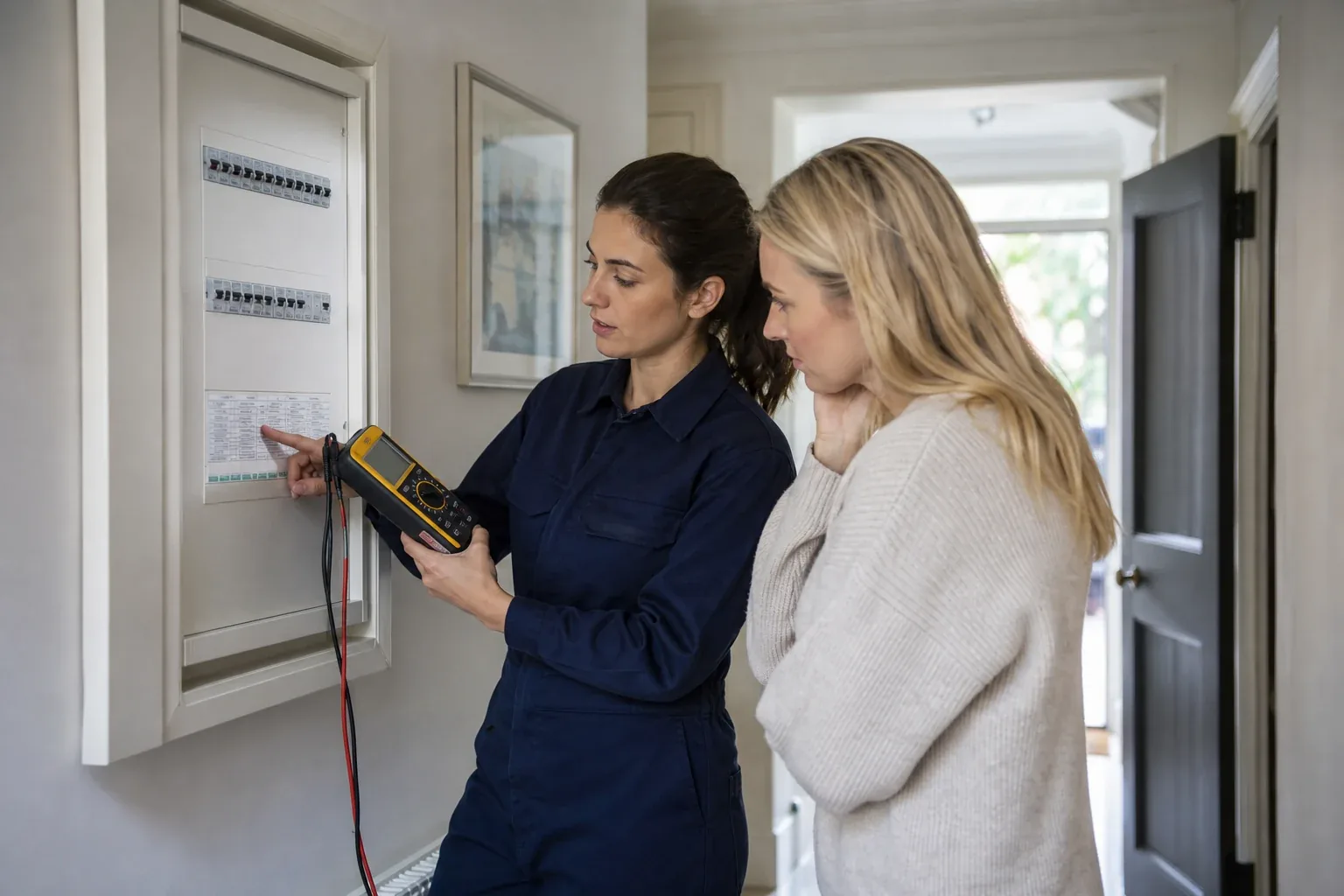
If lights flicker in one room, switch the light off and stop using it immediately if there is buzzing, heat, a burning or fishy smell, discolouration, sparks, water nearby or repeated circuit tripping. If none of those signs exists, try a known-compatible bulb and note whether one fitting or every light in the room is affected. Persistent flicker needs electrical testing; do not remove a fitting or touch wiring.
One lamp, one fitting or the whole room?
This distinction narrows the fault safely. One replaceable lamp may be loose, failing or incompatible with a dimmer. Every lamp in one fitting can point to the fitting or its connection. Several fittings in the same room raise the possibility of a switch, shared connection or circuit fault.
If lights in several rooms change together, or brightness varies when large appliances start, book an electrical fault-finding visit promptly and describe the wider pattern.
The bulb swap that provides useful evidence
Turn the light off and allow the lamp to cool. Isolate the circuit if the manufacturer’s replacement instructions require it. Fit only a lamp with the correct cap, voltage, maximum rating and dimmer compatibility. Do not use a damaged holder or reach an unsafe high fitting from furniture.
If a known-good compatible lamp is stable, dispose of the old lamp correctly. If flicker remains, stop swapping parts. The fitting, driver, dimmer or wiring now needs assessment.
LEDs expose compatibility problems
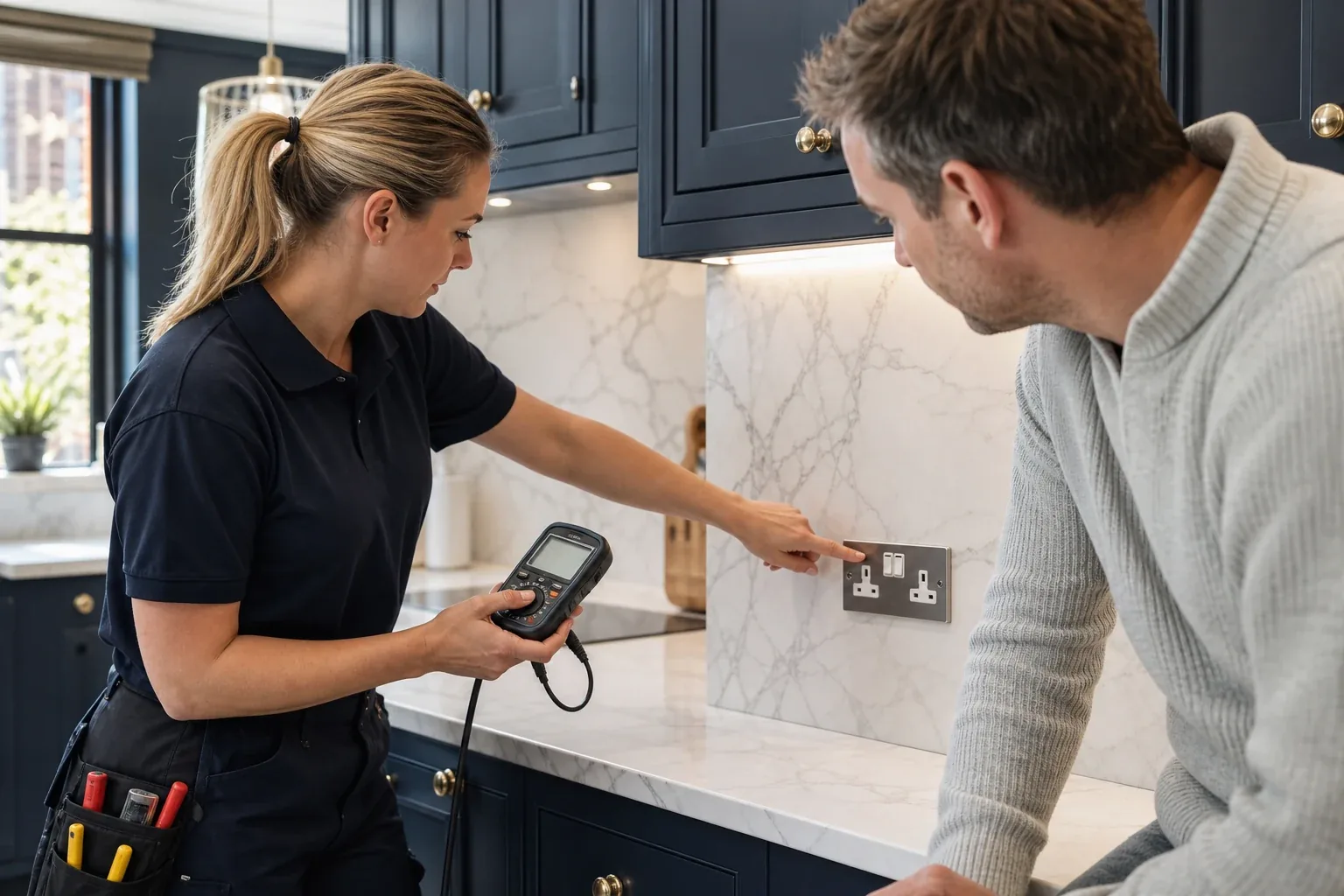
LED lamps use electronic drivers and draw power differently from older incandescent bulbs. An old dimmer may have an unsuitable load range; a supposedly dimmable bulb still needs a compatible dimmer. Flicker at one dimming position but not full brightness is a valuable clue, not permission to dismantle the switch.
Record bulb brand, wattage and dimmer model if visible without removal. A switch or dimmer replacement should be selected and installed for the actual circuit and lamps.
Timing patterns that matter
- Only at switch-on: lamp or driver start-up may be involved.
- After warming: a failing lamp, driver or loose connection may change with heat.
- When a washing machine, kettle or boiler starts: note whether other rooms also react.
- During wind or rain: external supply or moisture concerns increase urgency.
- After decorating or drilling: stop and report the work location.
A loose lamp is different from a loose connection
A screw or bayonet lamp that is not seated correctly can flicker, provided the holder is sound and cool. A loose electrical terminal behind the fitting or switch can arc and overheat. That is not a DIY tightening job. Never remove a ceiling rose, switch plate or downlight to “check the wire”.
Downlights and transformers
Multiple downlights may share a driver or transformer, or each may have its own electronics. Insulation, ventilation and fire-rated construction also matter. Do not pull downlights from ceilings, especially where heat damage or old insulation is suspected. Tell the electrician exactly which group flickers and whether individual lamps can be swapped safely.
Rental homes: report the symptom in writing
GOV.UK states landlords must make the electrical system safe. Send the date, room, affected fittings, photographs from a safe distance and any heat, smell or trip. Do not accept instructions to keep resetting or use a different high-powered lamp as a permanent solution.
Supply flicker versus an internal fault
If neighbouring homes or street lights flicker at the same time, contact the distribution network operator. If only your property or one circuit is affected, an internal fault is more likely. Do not open the meter cabinet or touch service equipment. Severe voltage variation, smoke or arcing warrants emergency action.
What an electrician may test
The electrician can assess lamp compatibility, dimmer operation, protective devices, connections, voltage stability and circuit condition. Ask what evidence identifies the cause and whether remedial work needs certification. A general electrician service is suitable when the extent is unclear.
Do not let intermittent mean harmless
A flicker that disappears can still reflect heat-sensitive electronics or a poor connection. Note the duration and conditions rather than waiting for permanent failure. Electrical Safety First warns against ignoring flickering, repeated bulb failure, unusual smells and discoloured or damaged accessories.
The safe diagnostic limit is intentionally narrow: try a correct lamp only in a sound, cool fitting; map whether the fault is one lamp, fitting, room or property; then stop. Anything behind the fitting belongs to competent electrical testing.
Make a simple symptom map
Draw the room and mark each fitting, switch and dimmer. Note which lamps flicker together and whether the effect happens at full brightness, only when dimmed or after a specific time. If a two-way light is controlled from two positions, record whether either switch changes the symptom. Do not operate a switch that is loose, cracked, hot or noisy.
Video can help capture intermittent flicker, but ordinary phone cameras sometimes show banding from healthy LEDs because the camera frame rate interacts with the light frequency. Treat video as timing evidence, not proof of a fault. Human-visible flicker and associated warning signs carry more weight.
Bulbs that repeatedly fail are part of the same story
A single old bulb can fail normally. Several early failures in one fitting may point to heat, vibration, incorrect rating, poor contact or supply issues. Keep packaging and dates if the pattern repeats. Do not keep fitting higher-wattage lamps; respect the fitting’s maximum rating and the manufacturer’s lamp specification.
Blackening, melted plastic or a scorched holder means stop. The condition of the accessory must be assessed before another lamp is installed. A flicker that temporarily stops after twisting a lamp can indicate poor contact, which may overheat.
After repair, ask what was tested
A useful handover identifies the cause, remedial work and test result. If a dimmer and lamps were incompatible, keep the compatible lamp specification. If a loose connection was repaired, ask whether heat damage affected the fitting or cable. If supply variation is suspected, ask who monitors it and for how long.
Keep invoices and certificates with property records. In a rented home, send the landlord written confirmation that the issue was addressed. If flicker returns, note whether it is identical or involves new fittings; do not assume the previous fault has simply “come loose again”.
Keep emergency access clear
Do not tape over a switch or leave furniture blocking the consumer unit as a reminder. Isolate and label only in a safe, clear way, then keep access available for the electrician. Make sure another adult in the property knows which room is affected. If smoke, visible arcing or fire develops, leave immediately and call the emergency services; do not return to operate electrical controls.
